
Rice cookers with PFAS-free pot coatings are drawing more attention in 2027 as buyers look for safer and easier-to-clean appliances. Models from GreenPan, AROMA, and GreenLife now pair ceramic surfaces with practical features like presets, auto-warm, and compact capacities. Some are built for small kitchens, while others suit larger meal routines. The differences matter more than they first appear, and a closer look reveals which options actually stand out.
GreenPan Rice Cooker with 10 One-Touch Presets
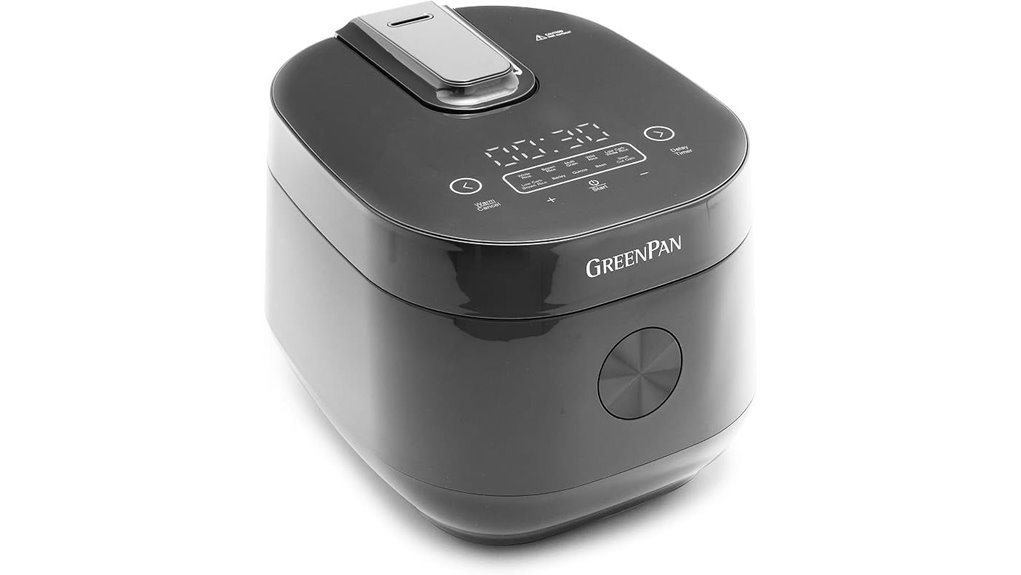
The GreenPan Rice Cooker with 10 One-Touch Presets is a strong choice for households that want versatile, PFAS-free cooking in one appliance, especially those preparing a mix of rice, grains, and simple one-pot meals. Its fuzzy logic system adjusts heat and time automatically for reliable results. Ten presets cover white rice, brown rice, multigrain, quinoa, beans, oats, and soup. The 8-cup cooked capacity suits meal prep, while the low-carb function can reduce starch by up to 33%. A PFAS-free ceramic coating, steamer insert, and dishwasher-safe parts support easy, healthier cooking and cleanup.
Best For: Households that want a versatile, PFAS-free rice cooker for preparing rice, grains, beans, soups, and healthier low-carb meals with minimal effort.
Pros:
- Fuzzy logic technology helps deliver consistent, reliable cooking results.
- 10 one-touch presets make it easy to cook a wide range of grains and dishes.
- PFAS-free ceramic coating, steamer insert, and dishwasher-safe parts support healthier cooking and easy cleanup.
Cons:
- 8-cup cooked capacity may be too small for larger families or big-batch cooking.
- Low-carb mode is useful, but it may not replace traditional cooking methods for every diet need.
- The many preset options may be more than some users need if they only cook basic white rice.
AROMA CoreCoat Pot-Style Rice Cooker with Ceramic Coating
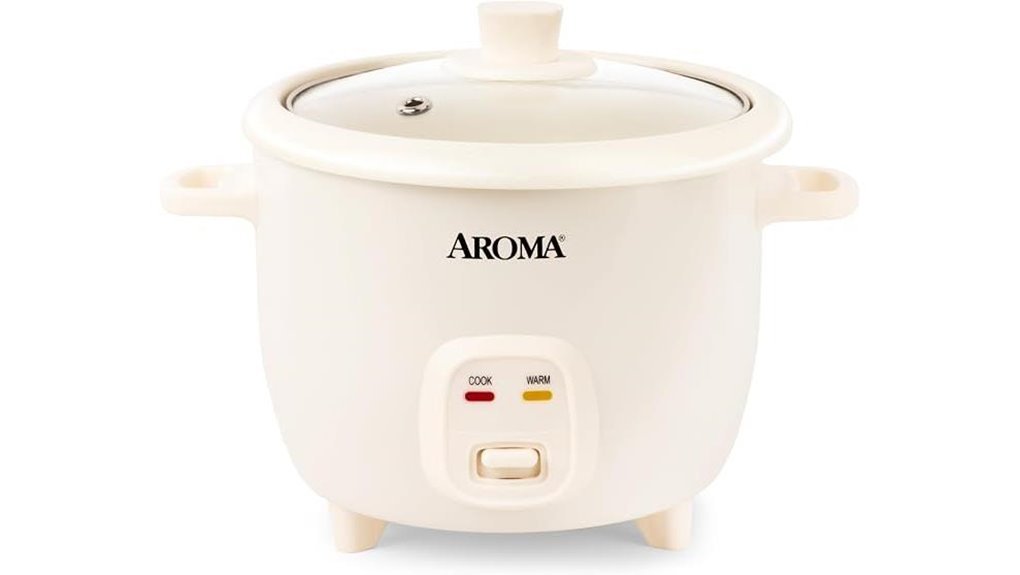
With its PFAS-free ceramic pot and simple one-touch controls, the AROMA CoreCoat suits cautious first-time cooks. The ARC-763C offers a 6-cup cooked capacity in a compact cream-colored body, measuring 9.06 by 7.87 by 8.66 inches and weighing 2.5 pounds. Its ceramic inner pot is free of PFAS, PTFE, lead, and cadmium, and the non-stick surface wipes clean easily. Indicator lights mark cooking and warming. Beyond rice, it handles oatmeal, pasta, and soup. A tempered glass lid, measuring cup, and spatula are included. At 300 watts, it favors basic, efficient use.
Best For: First-time cooks or small households looking for a compact, easy-to-use rice cooker with a safer ceramic non-stick pot and simple one-touch operation.
Pros:
- PFAS-, PTFE-, lead-, and cadmium-free ceramic inner pot for a more cautious cooking choice.
- One-touch control with indicator lights and automatic warm mode keeps use simple.
- Versatile enough for rice, oatmeal, pasta, soup, and other everyday dishes.
Cons:
- Small 3-cup uncooked capacity may be limiting for larger families or meal prep.
- Basic 300-watt design lacks advanced cooking settings or presets.
- Hand-wash care is recommended, which may be less convenient than fully dishwasher-safe options.
GreenLife Digital Rice Cooker, 2-Cups Uncooked/4-Cups Cooked, White
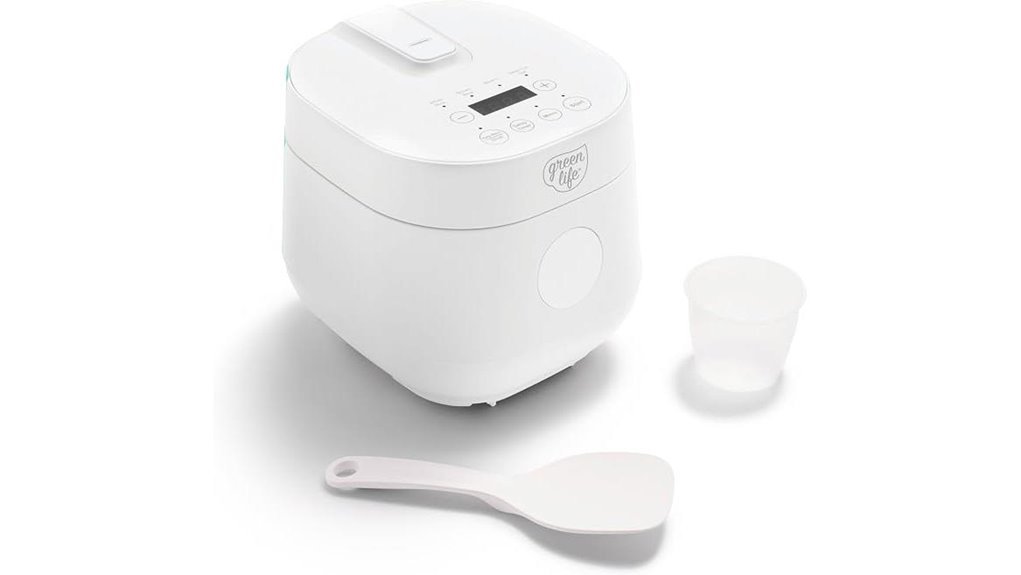
GreenLife’s compact 2-cup cooker suits small households needing PFAS-free convenience. The GreenLife Digital Rice Cooker, also sold as the Go Grains! Rice & Grain Cooker, offers a ceramic nonstick bowl derived from sand and free of PFAS. Its 4-cup cooked capacity fits modest portions, while white housing and a cool-touch exterior support safe handling. One-touch presets handle white rice, brown rice, quinoa, and steel cut oats. Smart fuzzy logic, a delay timer, and auto-warm improve consistency and scheduling. The dishwasher-safe pot, LED display, measuring cup, and spatula simplify use and cleanup.
Best For: Small households or individuals who want a compact, PFAS-free rice cooker with simple one-touch presets and easy cleanup.
Pros:
- Compact 2-cup uncooked capacity is ideal for small kitchens and modest portions.
- PFAS-free ceramic nonstick bowl and cool-touch exterior add safety and convenience.
- Smart fuzzy logic, delay timer, and auto-warm help deliver consistent results with flexible scheduling.
Cons:
- Small capacity may not be sufficient for larger families or meal prep.
- Limited to basic grain and oatmeal presets rather than more advanced cooking functions.
- Corded electric design and 240-watt power may feel less versatile than larger multicookers.
GreenLife Rice Cooker, 3-Cups Uncooked/6-Cups Cooked, Gray
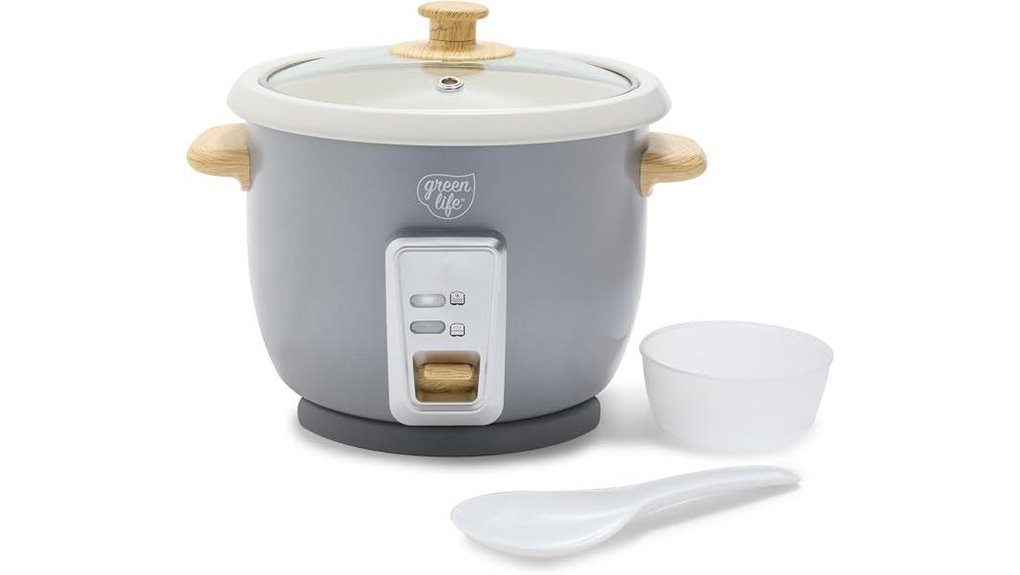
Ideal for small households, this compact GreenLife model cooks up to six cups of rice. It has a 3-cup uncooked capacity, a gray finish, and a PFAS-free ceramic nonstick interior designed for easier food release. The one-touch control offers white or brown rice settings, while interior measuring lines help maintain the right water ratio. After cooking, it automatically shifts to keep warm mode. The 300-watt, corded electric unit includes a removable pot, measuring cup, and rice paddle. Its dishwasher-safe parts and space-saving footprint suit apartments and small kitchens.
Best For: Small households, apartment dwellers, or anyone looking for a compact, easy-to-use rice cooker for everyday white or brown rice.
Pros:
- Compact, space-saving design fits well in small kitchens.
- One-touch white/brown rice settings with automatic keep warm mode.
- PFAS-free ceramic nonstick interior and dishwasher-safe parts make cleanup easy.
Cons:
- 3-cup uncooked capacity may be too small for larger families.
- Limited functionality compared with more advanced multi-cookers.
- Corded electric design offers no portability without a power outlet.
GreenPan Carb Reducing Electric Rice Cooker, 4-Cup 10-Preset
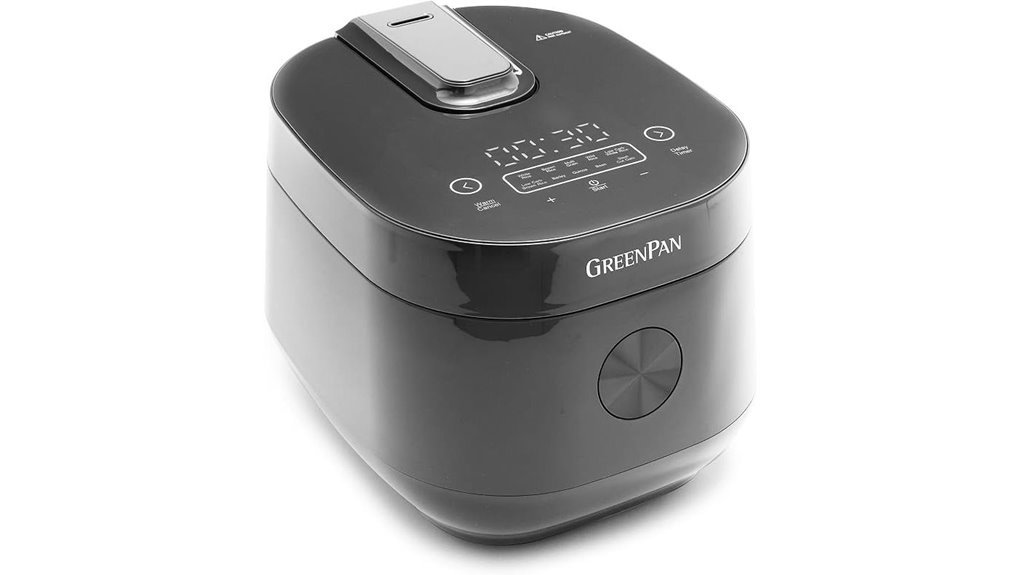
The GreenPan Carb Reducing Electric Rice Cooker suits health-conscious cooks seeking PFAS-free convenience. This 4-cup uncooked, 8-cup cooked model uses a removable ceramic nonstick bowl free of PFAS, and its carb reduction tray separates excess starch from rice and grains. Ten presets cover white rice, brown rice, multigrain, wild rice, low-carb options, barley, quinoa, beans, and steel cut oats. A 24-hour delay timer and keep-warm mode add flexibility. The 450-watt cooker includes a measuring cup, spatula, and dishwasher-safe components. Its cool-touch body and LED display support straightforward, safe operation.
Best For: Health-conscious home cooks who want a compact, PFAS-free rice cooker with carb-reducing functionality and versatile grain presets.
Pros:
- PFAS-free ceramic nonstick bowl with easy cleanup
- Carb reduction tray and 10 preset cooking options for rice, grains, beans, and oats
- 24-hour delay timer, keep-warm mode, and dishwasher-safe parts
Cons:
- Small 4-cup uncooked capacity may be limiting for larger households
- 450-watt power may cook more slowly than higher-wattage models
- Carb reduction feature may not be necessary for users who just want a basic rice cooker
Factors to Consider When Choosing Rice Cookers With Pot Coatings Free of PFAS in 2026
When selecting a rice cooker with a PFAS-free pot coating in 2026, the coating material should be examined for durability, heat performance, and clear verification of its non-PFAS status. Cooking capacity and preset options matter for matching household needs and improving meal consistency, while cleanup and care determine how practical the cooker will be over time. Safety features and convenience details such as cool-touch handles, auto shutoff, and simple controls can further shape the best choice.
PFAS-Free Coating Materials
PFAS-free coating materials, often made from ceramic or other natural sources, offer a safer nonstick surface for rice cookers by avoiding the chemical concerns tied to conventional coatings. These coatings are frequently derived from sand-based formulations and are designed to resist scratching and wear, supporting long-term use. Their smooth surfaces usually provide strong food release, which helps rice lift cleanly and simplifies cleanup without harsh scrubbing or chemical cleaners. Because they exclude PFAS, they also reduce exposure to substances associated with hormonal disruption and cancer concerns. Many ceramic options further appeal to buyers seeking lower environmental impact, since they can involve less damaging production and disposal than traditional nonstick materials. Overall, material choice directly affects safety, durability, and maintenance.
Cooking Capacity Needs
Capacity needs vary by household size and cooking habits, so choosing the right rice cooker starts with matching the bowl size to actual use. For one or two people, a 2-cup uncooked model, which yields about 4 cups cooked, is often adequate and easier to store. Small families and routine dinners may benefit from a 6-cup cooked capacity, while larger households or meal-prep users often need 8 cups uncooked or more. Those who host gatherings should favor larger bowls to reduce repeat cycles. Compact 2- to 3-cup units suit limited counter space and portability needs. Intended use also matters: cookers that handle rice, grains, or soups may require more room, especially when planning varied meals.
Preset Cooking Options
Beyond bowl size, preset cooking options are a major factor in choosing a rice cooker with pot coatings free of PFAS. Multiple one-touch presets let a single appliance handle different rice varieties and grains with greater consistency. Models offering at least 10 presets often cover white rice, brown rice, quinoa, beans, and similar dishes, reducing guesswork and helping produce dependable results. Some cookers also include low-carb or other health-focused settings, which may suit users seeking more tailored preparation. A built-in delay timer adds flexibility by allowing cooking to begin later, supporting planned meals and busy schedules. An intuitive interface matters as well; clear LED displays make it simpler to choose a setting, confirm selections, and track progress without confusion.
Cleanup And Care
Cleanup and care can be just as important as preset variety when choosing a rice cooker with a PFAS-free coating in 2026. Models with removable inner pots that are dishwasher-safe reduce effort after meals and help keep routine cleaning straightforward. Nonstick ceramic coatings free of PFAS can support easy food release, which limits residue and preserves the pot’s finish. User-friendly designs that wipe clean with a soft sponge are preferable because they lessen the need for harsh scrubbing. Auto-warm functions may also matter, since they help maintain serving temperature without leaving rice scorched or stuck to the pot. Care instructions should be reviewed closely, because some coatings need specific cleaning methods to retain their performance over time and avoid premature wear or dulling.
Safety And Convenience
Safety and convenience are central considerations when selecting a rice cooker with a PFAS-free pot coating in 2026, since these coatings help reduce exposure to potentially harmful substances while also supporting easier everyday use. PFAS-free surfaces eliminate the risk of harmful chemicals leaching into food, which supports safer meal preparation and greater confidence at the table. Their nonstick finish also makes cleanup fast and straightforward, limiting scrubbing after busy meals. Many models add convenience through clear digital displays, one-touch presets, and simple controls that reduce guesswork during cooking. Lightweight construction can further improve handling, whether the cooker is being moved, served from, or stored. Together, these features make PFAS-free rice cookers practical choices for households seeking healthier cooking and efficient routine use.
Frequently Asked Questions
How Do Pfas-Free Coatings Affect Rice Texture?
PFAS-free coatings can influence rice texture mainly by changing heat distribution and release behavior. When the surface is less slick than traditional nonstick layers, rice may need slightly more careful rinsing, water control, and resting time to stay fluffy and separate. Some coatings hold heat well and still produce tender grains, while others may create a firmer bottom layer. Results usually depend more on cooker design than coating type alone.
Are Pfas-Free Rice Cookers Safe for Dishwasher Cleaning?
Yes, many PFAS-free rice cookers are safe for dishwasher cleaning, but only when the manufacturer explicitly states dishwasher compatibility. A detached observer would note that some coatings, though PFAS-free, may still wear faster under high heat, harsh detergents, or repeated cycles. Hand washing often preserves performance longer. Stainless-steel inner pots usually tolerate dishwashers better than nonstick alternatives, while lids, valves, and seals may require gentler care instead.
Do Ceramic Coatings Need Special Utensils?
Ceramic coatings generally do not require special utensils, but they benefit from gentle tools. Silicone, wood, or soft nylon utensils help preserve the surface and reduce scratches. Metal spoons or forks can chip or abrade the coating over time, especially with frequent stirring. Even if the coating is durable, careful use extends its lifespan. Manufacturers’ instructions should still be followed, since some ceramic finishes vary in hardness and resistance.
How Long Do Pfas-Free Pot Coatings Typically Last?
PFAS-free pot coatings typically last an age, though not forever. In ordinary use, ceramic and similar nonstick finishes often remain effective for 1 to 5 years, depending on heat, utensils, washing habits, and build quality. Gentle care can stretch that lifespan, while metal tools, high temperatures, and abrasive scrubbing can shorten it dramatically. Wear usually appears as loss of slickness, staining, or small surface chips over time.
Can Pfas-Free Cookers Steam Vegetables Too?
Yes, PFAS-free cookers can steam vegetables too, provided they include a steaming basket or tray. Many rice cookers are designed for dual use, letting steam rise while rice cooks below. The detached view is that performance depends more on the cooker’s steaming capacity, lid seal, and basket size than on the coating itself. A PFAS-free inner pot simply affects the cooking surface, not the steaming function.
Conclusion
Choosing a PFAS-free rice cooker can feel like finding a clean, bright path through a crowded kitchen forest. Each of these five models offers a different blend of convenience, capacity, and peace of mind, from compact everyday cooking to smarter, more versatile meals. With ceramic and eco-friendly coatings leading the way, they prove that healthier choices can still be simple, reliable, and satisfying. In 2027, good rice starts with a safer pot.
