
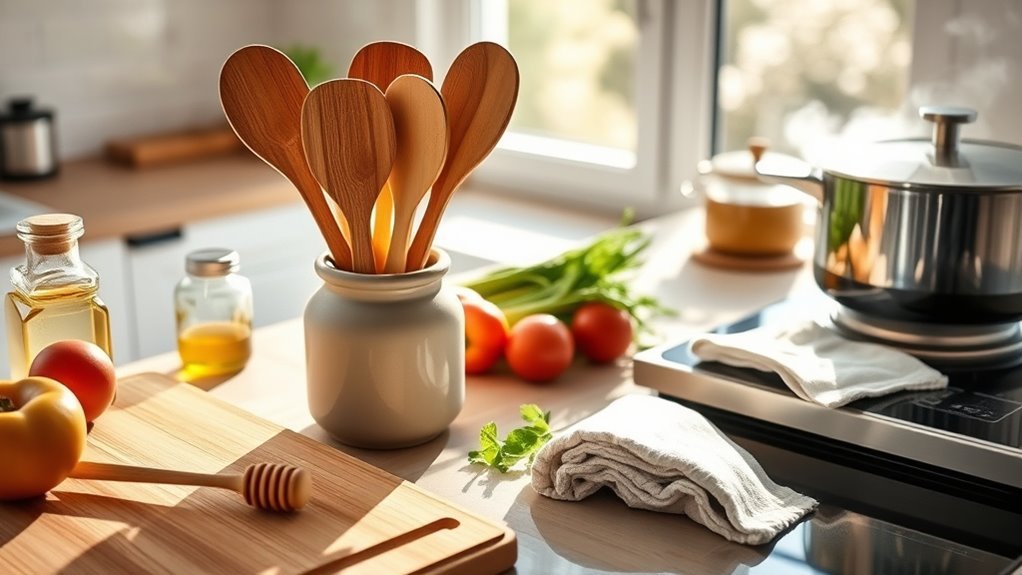
You may not realize that wooden kitchen utensils can have natural antibacterial properties, making them a safer choice for cooking. Crafted from materials like beechwood and hardwoods such as maple and cherry, these utensils offer several advantages over their plastic counterparts. However, not all wooden utensils are created equal, and understanding the nuances of safety and material sourcing is essential. What should you consider before choosing wooden utensils for your kitchen?
Are Wooden Utensils Safe for Cooking?
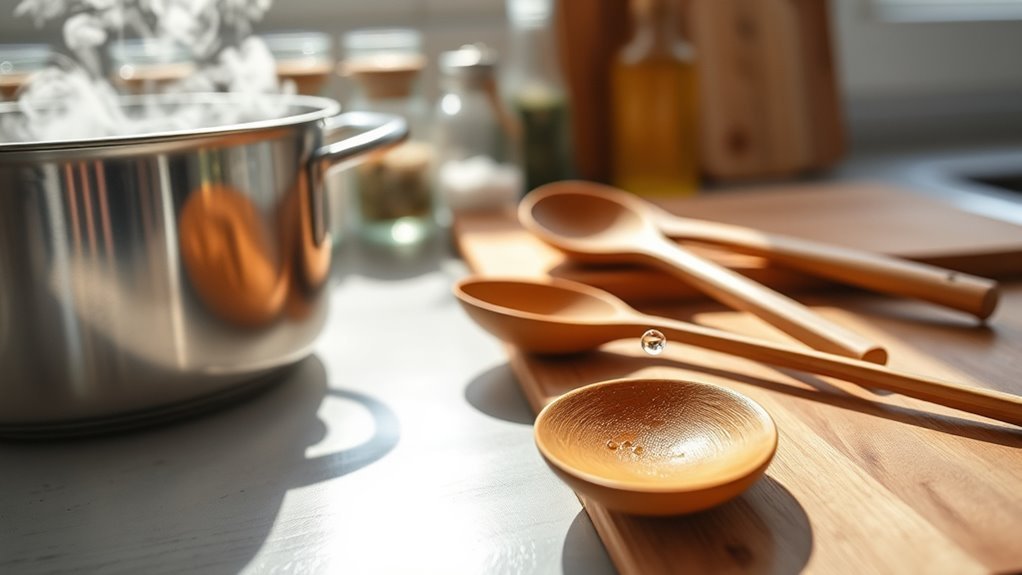
When considering your kitchen tools, you might wonder if wooden utensils are safe for cooking. The answer is a resounding yes. Wooden utensils are made from food-safe materials, like beechwood or FSC-certified wood, ensuring they’re free from harmful chemicals such as BPA and phthalates.
Unlike plastic or silicone, they don’t leach harmful additives when exposed to high heat, making them ideal for various cooking tasks.
Moreover, wooden utensils are naturally antibacterial, which adds an extra layer of safety in food preparation. With proper care—such as hand-washing and regular seasoning with food-safe mineral oil—you can enhance their durability and maintain their integrity.
When sourced responsibly, they also offer an eco-friendly choice for your kitchen. Embracing wooden utensils not only promotes a healthier cooking environment but also supports sustainable practices, liberating you from concerns over chemical exposure in your culinary adventures.
What Materials Make Up Wooden Kitchen Utensils?
Wooden kitchen utensils primarily consist of hardwoods like maple, cherry, walnut, and beech, chosen for their durability and natural antimicrobial properties. These materials offer a safer alternative to materials like plastic, which can leach harmful substances into your food.
High-quality wooden utensils are often treated with food-safe mineral oils or beeswax, enhancing their longevity and maintaining their appearance without the use of harsh chemicals. Typically crafted from a single piece of wood, these utensils minimize the risk of harmful adhesives and coatings common in lower-quality products.
Many brands emphasize sustainable sourcing, offering options made from FSC-certified birch wood, ensuring responsible forest management practices. This commitment to quality and sustainability makes wooden utensils not only practical but also a conscious choice for your kitchen.
How to Spot Nontoxic Wooden Utensils?
When you’re selecting wooden utensils, check for certifications like FSC to guarantee sustainable sourcing.
Inspect the material quality; solid wood is preferable to composites that may contain harmful glues.
Always verify that the utensils are free from harmful treatments and substances for your safety.
Check for Certifications
To guarantee you’re choosing nontoxic wooden utensils, look for specific certifications and labels that indicate safety standards. Here’s a quick reference to guide you:
| Certification | What It Means | Why It Matters |
|---|---|---|
| FSC-Certified Wood | Sourced from responsibly managed forests | Supports sustainable practices |
| Food-Safe Mineral Oils | Treated with safe finishes like oils/beeswax | Avoids harmful chemical coatings |
| Nontoxic Materials | Free from plastics and PFAS | Prevents leaching of harmful substances |
Research brands committed to using nontoxic materials and artisan-crafted wooden utensils. These typically avoid mass production methods that may introduce unsafe glues or finishes, ensuring your kitchen remains a safe space for culinary creativity.
Inspect Material Quality
Choosing the right wooden utensils involves careful inspection of material quality to confirm safety and durability.
Start by selecting utensils made from hardwoods like maple, cherry, or walnut, as they’re more robust and less prone to bacterial growth. Verify the wood is treated with food-safe mineral oil or beeswax, steering clear of those with mystery lacquers or synthetic finishes that may contain harmful chemicals.
Look for a uniform grain and smooth finish; rough or splintered surfaces can harbor bacteria and signal poor quality.
Be cautious with bamboo; only choose products clearly labeled as food-safe and free from toxic adhesives. Certifications like FSC also indicate responsible sourcing, adding another layer of safety to your kitchen choices.
What Are the Benefits of Using Wooden Utensils?
Using wooden utensils offers significant benefits, particularly their natural antimicrobial properties, which help reduce bacterial contamination during food prep.
They also provide heat resistance, ensuring you can cook at high temperatures without the risk of melting or leaching harmful substances.
These features make wooden utensils a safer and more effective choice in your kitchen.
Natural Antimicrobial Properties
Wooden kitchen utensils offer significant advantages due to their natural antimicrobial properties, making them a safer choice for food preparation.
Unlike plastic utensils, which can harbor harmful microbes, wood can absorb and neutralize bacteria, enhancing food safety. The porous nature of natural wood helps to absorb moisture, creating an environment less conducive to bacterial growth.
Certain types of wood, such as maple and cherry, are particularly effective due to their dense cellular structure, further reducing the risk of cross-contamination.
By choosing wood utensils, you’re not only prioritizing hygiene but also embracing sustainability, limiting reliance on plastic materials that may leach harmful chemicals.
In this way, wood utensils provide both safety and environmental benefits in your kitchen.
Heat Resistance Advantages
While many utensils can withstand some heat, wooden options excel in high-temperature environments, making them a reliable choice for various cooking tasks.
Here are some benefits of using wooden utensils:
- They withstand high temperatures without melting or warping.
- Unlike plastic, they maintain structural integrity and won’t release harmful chemicals.
- Their natural heat resistance allows for safe handling of hot dishes, reducing burn risks.
- Wooden utensils are gentle on non-stick and ceramic cookware, preserving their longevity.
- Their versatility makes them suitable for both hot and cold dishes.
With these advantages, wooden utensils not only enhance your cooking experience but also guarantee safety and longevity in your kitchen, making them an essential addition to your cookware collection.
How to Care for Wooden Kitchenware?
Caring for your wooden kitchenware is essential for maintaining its durability and aesthetic appeal. Start by hand-washing your wooden spoons and other utensils with warm water and mild soap. Avoid the dishwasher; it can warp and crack the wood.
After washing, dry your utensils immediately to prevent moisture absorption, which can lead to damage or bacteria growth.
To keep your kitchenware in top shape, regularly apply food-safe mineral oil or beeswax. This step hydrates and protects the wood, enhancing its longevity and appearance.
If odors develop, a mixture of baking soda and lemon juice works wonders for elimination.
Lastly, store your wooden items in a dry, shaded area, away from direct sunlight and excessive heat. This simple practice will guarantee your kitchenware remains solid and beautiful for years to come.
Common Mistakes to Avoid With Wooden Utensils?
When using wooden utensils, it’s crucial to be aware of common pitfalls that can compromise their longevity and safety. Here are key mistakes to avoid:
- Soaking in water: Prolonged exposure can warp, crack, or splinter your utensils.
- Using the dishwasher: High heat and moisture can damage wooden materials.
- Applying food oils: Oils like canola or olive can go rancid, harming both the utensil and your food.
- Neglecting hygiene: Always hand-wash your wooden utensils with mild soap and warm water immediately after use to prevent bacteria growth.
- Ignoring maintenance: Regularly apply food-grade mineral oil or beeswax to hydrate and protect your utensils.
How to Choose the Best Wooden Utensils for Your Kitchen?
How do you guarantee that your wooden utensils enhance both your cooking experience and kitchen safety? Start by choosing options made from FSC-certified wood, which secures sustainable sourcing and minimal chemical treatment.
Look for utensils crafted from food-safe materials like beechwood or olive wood, as they’re less likely to harbor harmful chemicals. Pay attention to the finish; utensils treated with food-safe mineral oils or beeswax provide better protection and durability than those covered in unknown lacquers.
Prioritize brands that highlight durability and ease of care, confirming they’re free from PFAS and other toxic substances.
Finally, select utensils designed for specific cooking tasks; this not only enhances usability but also helps maintain their integrity over time. By focusing on these factors, you’ll create a safer, more enjoyable cooking environment while embracing the benefits of wooden utensils.
Frequently Asked Questions
Why Do Chefs Not Use Wooden Spoons?
Chefs often avoid wooden spoons due to concerns about absorbency and maintenance. While wooden spoon benefits include warmth and a non-scratch surface, many prefer stainless steel or silicone for their durability and ease of sanitation.
These materials resist staining, warping, and bacteria retention, making them safer in high-heat environments. If you choose wooden utensils, remember to clean and oil them regularly to prolong their life and maintain their quality.
What Is the Safest Material for Kitchen Utensils?
The safest material for kitchen utensils is bamboo, thanks to its eco-friendly properties and non-toxic finishes.
Bamboo utensils are naturally heat resistant, making them perfect for various cooking tasks. They’re durable and less prone to harboring bacteria compared to other materials.
When choosing kitchen tools, look for options that prioritize sustainability and safety, ensuring you’re not only protecting your health but also the environment.
Embrace these choices for a liberated kitchen experience.
What Are the Downsides of Using Wooden Utensils?
Using wooden utensils can feel like wielding a trusty sword in the kitchen, but they come with downsides.
Durability concerns arise as they wear down over time, leading to staining issues and potential bacterial growth if not dried properly.
Their heat resistance isn’t ideal, either, as high temperatures can warp them.
Regular maintenance is essential to keep them functional, adding to your workload and potentially limiting their lifespan.
When Should You Throw Out Wooden Utensils?
You should throw out wooden utensils when you notice signs of damage, like deep cracks, warping, or peeling finishes.
Regular utensil maintenance tips, such as proper cleaning techniques, can help extend their life, but if they absorb strong odors or develop mold, it’s time to let them go.
Conclusion
In the culinary domain, wooden utensils stand as steadfast companions, blending safety and sustainability like a well-crafted recipe. By choosing high-quality, nontoxic options and nurturing them with care, you not only enhance your cooking experience but also embrace a healthier lifestyle. So, as you stir, flip, and serve, remember that these timeless tools can transform your kitchen into a haven of flavor and safety, ensuring every meal is a delightful dance of taste.
