
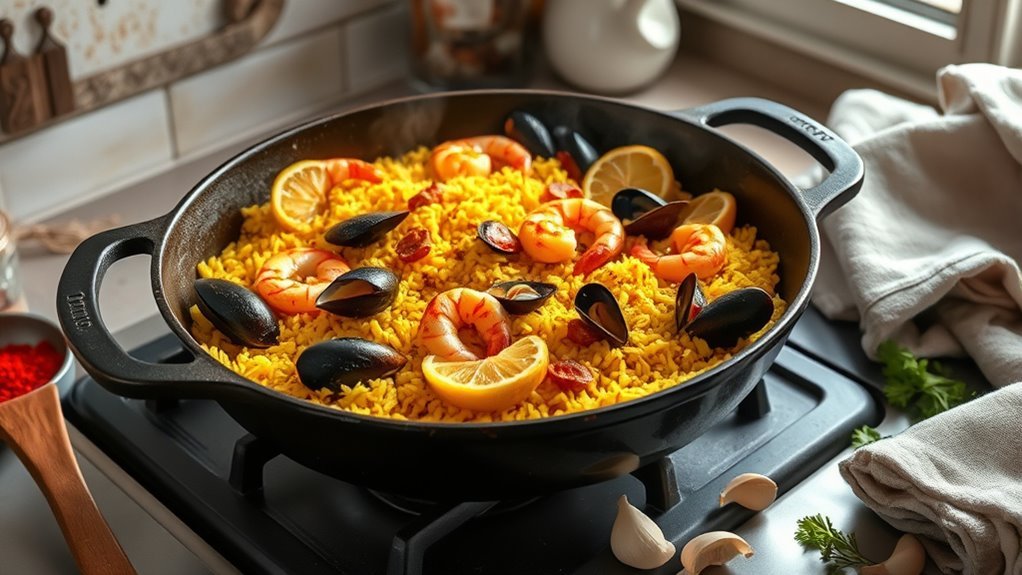
You might be surprised to learn that cooking paella in a cast iron pan can elevate the dish’s flavors considerably. This versatile cookware not only guarantees even heat distribution but also helps create the coveted socarrat, that delicious crispy rice layer at the bottom. If you’re curious about how to master this technique and explore various paella styles, keep going. There’s much more to discover that’ll transform your cooking experience.
Can You Cook Paella in a Cast Iron Pan?
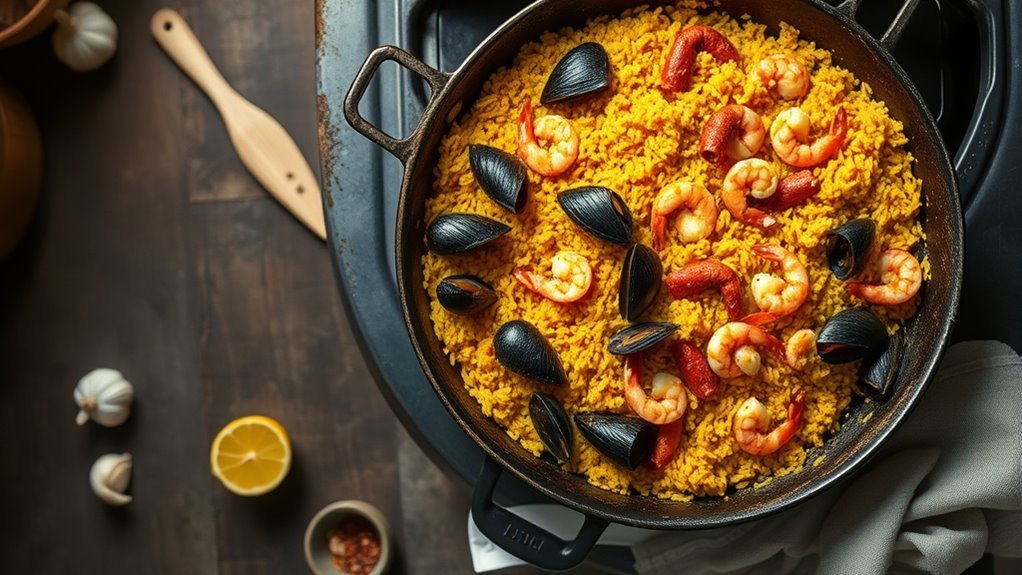
Absolutely, you can cook paella in a cast iron pan, and doing so can elevate your dish to new heights. A 12-inch cast iron skillet is perfect for this culinary adventure, providing ample space for your rice to expand and ensuring even cooking of chicken, seafood, and vegetables.
The heavy construction of cast iron allows for exceptional heat distribution, which is essential for developing that coveted socarrat—the crispy layer of rice that defines traditional paella.
The exceptional heat distribution of cast iron is key to achieving that coveted socarrat, the crispy layer that makes paella unforgettable.
When using your cast iron skillet, start with high heat to brown the meats, then dial it down to medium-low to let the rice cook evenly.
This pan’s versatility means you can shift from stovetop to oven, easily adapting to various cooking methods. Embrace the liberation that comes with mastering this iconic dish, and let your cast iron skillet be your trusted ally in creating an unforgettable paella.
Step-by-Step Guide to Making Paella
To make a delicious paella, you’ll need some essential ingredients and a few simple cooking techniques.
Start by sautéing your proteins, then toast the rice for that rich flavor.
Finally, master the socarrat for that perfect crispy layer, and you’ll impress everyone at the table.
Essential Ingredients Needed
When it comes to crafting a delicious paella, having the right ingredients makes all the difference. Here’s what you’ll need to create that authentic flavor:
- Short-grain rice: This is the heart of your paella, absorbing all those lovely flavors.
- Saffron: Essential for both color and depth, it adds a unique taste that defines paella.
- A mix of proteins: Include chicken, sausage, seafood like shrimp and mussels for a satisfying variety.
- Fresh vegetables: Bell peppers and peas not only add color but also enhance the dish’s freshness.
Don’t forget high-quality extra virgin olive oil for sautéing, and use a flavorful broth to cook the rice.
Fresh garlic, onion, and tomatoes create a robust base, while smoked paprika elevates the experience. Enjoy!
Cooking Techniques Explained
Immerse yourself in the art of making paella with these essential cooking techniques that guarantee a flavorful dish.
Start by sautéing proteins like sausage and chicken in your cast iron skillet, enhancing the flavor base. Once browned, add aromatics—onions, garlic, and tomatoes—before toasting the rice to infuse it with rich taste.
Next, pour in chicken stock mixed with saffron, stirring gently to distribute without breaking the rice. Cover the skillet, cooking on medium-low heat for 45 minutes to an hour until the liquid is absorbed and the rice is tender.
Finally, add seafood to steam on low heat, then increase the heat briefly for that perfect crispy layer.
Embrace these cooking techniques explained, and release your culinary creativity!
Achieving Perfect Socarrat
Achieving the perfect socarrat, that coveted crispy layer of rice at the bottom of your paella, requires precise techniques and a little patience. Follow these steps to guarantee success:
- Heat Your Pan: Use a well-heated cast iron pan to create a solid sear on the rice.
- Add Rice and Liquid: Once added, resist the urge to stir; this helps the socarrat form.
- Cook Over High Heat: Start on high for a few minutes to encourage caramelization, then lower to medium-low.
- Listen for Crackling: A gentle crackling sound indicates that the rice is toasting properly.
Finally, uncover the pan for the last minute to crisp the rice further, ensuring you achieve perfect socarrat.
Enjoy the liberation of flavor!
Must-Have Ingredients for Authentic Paella
To create authentic paella, you’ll need to focus on quality rice and essential seasonings.
Opt for Valencia or Bomba rice to achieve that perfect texture, while a pinch of saffron will bring vibrant color and flavor to your dish.
Don’t forget the extra virgin olive oil and smoked paprika; they’re key to enhancing the dish’s rich Spanish roots.
Essential Seasonings and Spices
When you’re crafting an authentic paella, the right seasonings and spices transform your dish from ordinary to extraordinary. Here are the essentials you can’t skip:
- Saffron: Just a pinch gives your paella its signature golden hue and unique flavor.
- Smoked paprika: This adds depth and a smoky essence, enhancing all the flavors beautifully.
- Garlic: Sautéed with onions, it creates a fragrant base that amplifies your dish’s taste.
- Fresh parsley: A vibrant garnish that not only brightens the presentation but also elevates the overall flavor.
Don’t forget to season with sea salt, as it balances and enhances the natural tastes of your seafood and meats.
Embrace these ingredients for a truly liberating culinary experience!
Quality Rice Varieties
Choosing the right rice is essential for crafting the perfect paella. Bomba rice is your best bet; this short-grain wonder absorbs liquid while keeping its firmness, soaking up all those delicious flavors without turning mushy.
Another excellent choice is Calasparra rice, hailing from Valencia, known for its high absorption capacity, making it a staple in traditional recipes.
While Arborio rice can work in a pinch, it tends to be creamier and strays from authenticity. Avoid long-grain varieties like basmati or jasmine, as they won’t absorb flavors effectively, leading to a less satisfying texture.
Why Cast Iron Is the Best Choice for Paella
Cast iron skillets stand out as the ideal choice for cooking paella, thanks to their remarkable heat distribution and retention. When you choose cast iron, you’re not just opting for a pan; you’re embracing a culinary tradition that enhances your dish.
Cast iron skillets are the perfect choice for paella, offering exceptional heat distribution and a rich culinary tradition.
- Even Heat Distribution: Guarantees your rice cooks uniformly, essential for achieving that perfect texture.
- High Heat Retention: Allows for both stovetop sautéing and oven baking, intensifying flavors.
- Enhanced Flavor: A well-maintained skillet adds a subtle, seasoned taste that elevates your paella.
- Versatility: Durable enough for grilling and campfire cooking, perfect for adventurous meals.
Plus, cooking in a cast iron skillet creates an impressive presentation, shifting seamlessly from stovetop to table.
This not only makes for a stunning centerpiece but also invites everyone to immerse themselves in your delicious creation.
Embrace the liberation of cooking with cast iron, and let your paella shine!
Tips for Achieving Perfect Socarrat
Achieving the perfect socarrat, that coveted crispy layer of rice at the bottom of your paella, requires a few key techniques that elevate your dish to new heights. Start with a well-seasoned cast iron skillet to guarantee even heat distribution. Once you add the stock, resist the urge to stir; this allows the rice to form that essential crust. Toward the end of cooking, increase the heat for a few minutes, but keep a close eye to prevent burning. Use a balance of medium-high and medium-low heat throughout to cook the rice evenly while developing socarrat. Finally, let your paella rest for about 5 minutes to enhance flavors and firm up that delicious crust.
| Step | Action | Tips |
|---|---|---|
| 1. Preheat | Heat your skillet | Guarantee it’s well-seasoned |
| 2. Add stock | Pour in without stirring | Form the crust |
| 3. Adjust heat | Increase towards the end | Monitor closely |
| 4. Rest | Let it sit for 5 minutes | Firm up the socarrat |
| 5. Serve | Enjoy your flavorful creation | Celebrate your success! |
Common Mistakes to Avoid When Cooking Paella
When cooking paella, it’s essential to avoid overcrowding your cast iron pan; cramming in too much seafood or meat can ruin that coveted crispy socarrat.
Choosing the wrong rice can also derail your dish, so stick with short-grain varieties like Bomba or Calasparra for the best results.
Keep these tips in mind, and you’ll elevate your paella game greatly!
Overcrowding The Skillet
One of the biggest mistakes you can make while cooking paella is overcrowding the skillet. When you cram too many ingredients in, you risk uneven cooking and soggy rice. Each grain deserves space to absorb liquid properly.
To avoid this, keep these tips in mind:
- Use a layer of rice about 1 inch thick for the perfect socarrat.
- Leave gaps between proteins like chicken or seafood to promote browning instead of steaming.
- Aim for a balanced distribution of ingredients to enhance flavor and texture.
- Resist the urge to add everything at once; this prevents excess moisture.
Incorrect Rice Type
Choosing the right rice is essential for making a delicious paella, as it greatly impacts texture and flavor. Using the incorrect rice type can ruin your dish. Stick with short-grain varieties like Bomba or Calasparra; they absorb liquid beautifully while remaining firm. Avoid long-grain or parboiled rice, as they won’t give you that authentic experience.
Here’s a quick reference to help you choose wisely:
| Rice Type | Absorption | Texture |
|---|---|---|
| Bomba | High | Firm |
| Calasparra | High | Firm |
| Long-Grain | Low | Mushy |
| Parboiled | Low | Dry |
Remember to toast your rice for extra flavor, and never stir once the liquid’s added!
Explore Delicious Variations: Seafood, Meat, and Vegetarian Paella
While exploring the vibrant world of paella, you’ll discover an enticing array of flavors and textures in its variations: seafood, meat, and vegetarian. Each type brings something unique to the table, making them perfect for any palate.
- Seafood Paella: Loaded with shrimp, mussels, and clams, this version shines with saffron’s authentic flavor.
- Meat Paella: Featuring chicken, chorizo, or rabbit, it starts with browning the meat to develop rich, savory notes before adding rice.
- Vegetarian Paella: Bursting with seasonal veggies like bell peppers and artichokes, it’s a colorful and healthy alternative.
- Cooking Techniques: Toasting the rice and achieving a proper socarrat enhances the dish’s texture and flavor.
Experimenting with these variations allows you to personalize your paella experience, liberating your culinary creativity while savoring delightful combinations of seafood, meat, and vegetarian options.
Clean and Maintain Your Cast Iron Skillet for Best Results
To keep your cast iron skillet in top shape, cleaning and maintenance are essential. Always clean and maintain your cast iron skillet for best results by using warm water and a stiff brush right after cooking. Avoid soap, as it can strip the seasoning. For stubborn food, sprinkle coarse salt and scrub gently. After washing, dry the skillet completely to prevent rust, then apply a light coat of vegetable oil before storing.
| Task | Instructions |
|---|---|
| Regular Cleaning | Warm water, stiff brush, no soap |
| Tough Stuck-On Food | Use coarse salt as a gentle abrasive |
| Re-Seasoning | Apply oil, heat at 350°F for 1 hour |
Remember to avoid cooking acidic foods in a newly seasoned skillet, as they can strip the seasoning and affect your dishes. Embrace these practices to enjoy your skillet for years to come!
Join the Paella Community: Share Your Experiences
Have you ever wondered how sharing your paella journey with others can elevate your cooking experience? Engaging with the paella community not only enhances your skills but also fosters connections with fellow enthusiasts.
Here’s how you can immerse yourself:
- Share Your Story: Post your unique paella variations on social media using hashtags like #danawhiterecipes.
- Inspire Friends: Tag friends in your comments, encouraging them to join you in this culinary adventure.
- Seek Feedback: Learn from experienced cooks who can offer invaluable insights into flavor combinations and techniques.
- Celebrate Heritage: Engage in discussions that reflect the cultural significance of paella, enriching your understanding and appreciation.
Serving Suggestions and Pairings for Paella
What makes a paella truly unforgettable? The right serving suggestions can elevate your dish from delicious to divine. Start by pairing it with a side of crusty bread or a simple green salad to balance the rich flavors. A chilled white wine like Albariño or Verdejo enhances the seafood and saffron notes beautifully. Don’t forget to garnish with fresh lemon wedges for that zesty brightness!
To create a festive dining experience, consider serving traditional Spanish tapas as appetizers. Here’s a quick guide to your serving options:
| Appetizer | Drink | Dessert |
|---|---|---|
| Patatas Bravas | Albariño | Flan |
| Olives | Verdejo | Churros with chocolate sauce |
| Croquetas | Cava | Tarta de Santiago |
| Gambas al Ajillo | Sangria | Crema Catalana |
These pairings will not only complement your paella but also make your meal truly memorable. Enjoy!
Frequently Asked Questions
What Cannot Be Cooked in a Cast Iron Pan?
You can’t cook certain foods in a cast iron pan due to its limitations.
Acidic ingredients like tomatoes might alter the flavor, while delicate fish can stick and break apart.
Foods needing precise temperature control, like candy, often struggle with heat retention issues.
Cooking with a lot of liquid, like soups, may lead to uneven results.
Finally, baked goods that require a non-stick surface can underperform without proper seasoning.
Choose wisely!
What Are Common Paella Mistakes?
When cooking paella, avoiding common mistakes is like steering clear of stormy seas. You’ve got to guarantee flavor balance by choosing short or medium-grain rice to soak up those delightful flavors.
Don’t stir once you add the stock; let that socarrat form. Keep ingredient quantities in check for even cooking, control your heat, and remember to let it rest.
These steps will guide you to a paella that sings with perfection!
What Can I Use if I Don’t Have a Paella Pan?
If you don’t have a paella pan, don’t worry! You can use alternative cookware like a cast iron skillet or a wide, shallow sauté pan.
These options distribute heat evenly, helping your rice cook perfectly and develop that sought-after socarrat crust. Just make sure the pan has a flat bottom to avoid uneven cooking.
Steer clear of non-stick pans; they won’t give you the authentic flavor you crave.
Get creative and enjoy!
What Is the Best Pan to Cook Paella In?
The best pan to cook paella in is a cast iron skillet. Imagine the rich aroma of saffron and seafood wafting through your kitchen as the heavy material captures and radiates heat evenly.
With a diameter of at least 12 inches, it cradles each grain of rice, ensuring they cook to perfection and form that coveted socarrat. Its versatility lets you shift from stovetop to oven, creating a delightful culinary masterpiece.
Conclusion
Now, picture the moment you lift that cast iron pan, revealing a golden crust of socarrat, its aroma wafting through the air. As you serve up each generous portion, the vibrant colors and flavors come alive, igniting your guests’ anticipation. With every bite, they’ll experience the perfect harmony of textures and tastes. So, why wait? Immerse yourself in the world of paella, and let your cast iron skillet transform your kitchen into a culinary masterpiece!
