
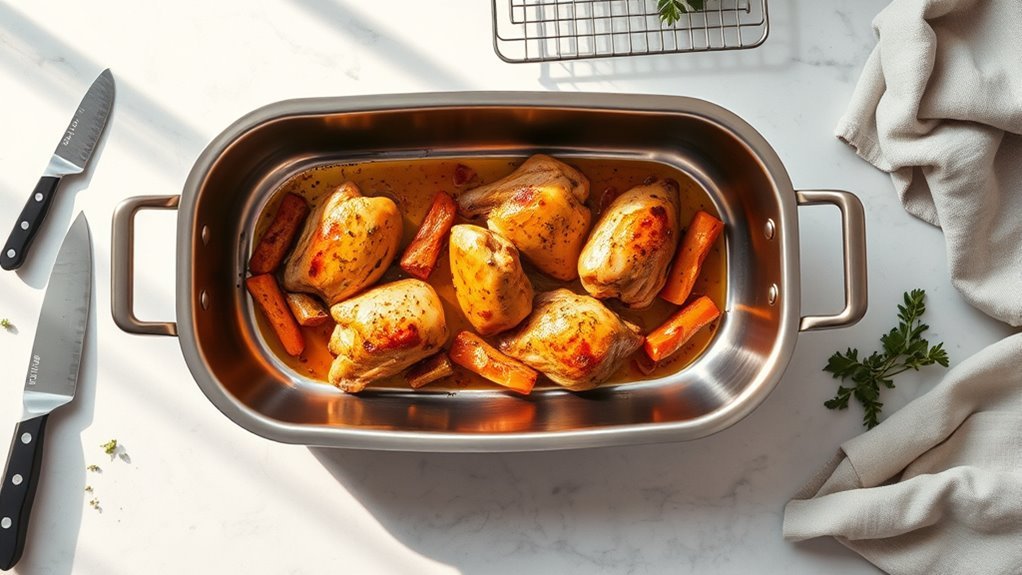
Think of a shallow roasting pan as your kitchen’s unsung hero. With its 2 to 3-inch depth, it promotes even cooking while capturing flavorful drippings. Whether you’re roasting a succulent chicken or baking a comforting casserole, this versatile tool has you covered. But what should you look for when choosing the right one, and how can you make the most of it? Let’s explore the essential details that can elevate your culinary creations.
How to Use a Shallow Roasting Pan for Perfect Results
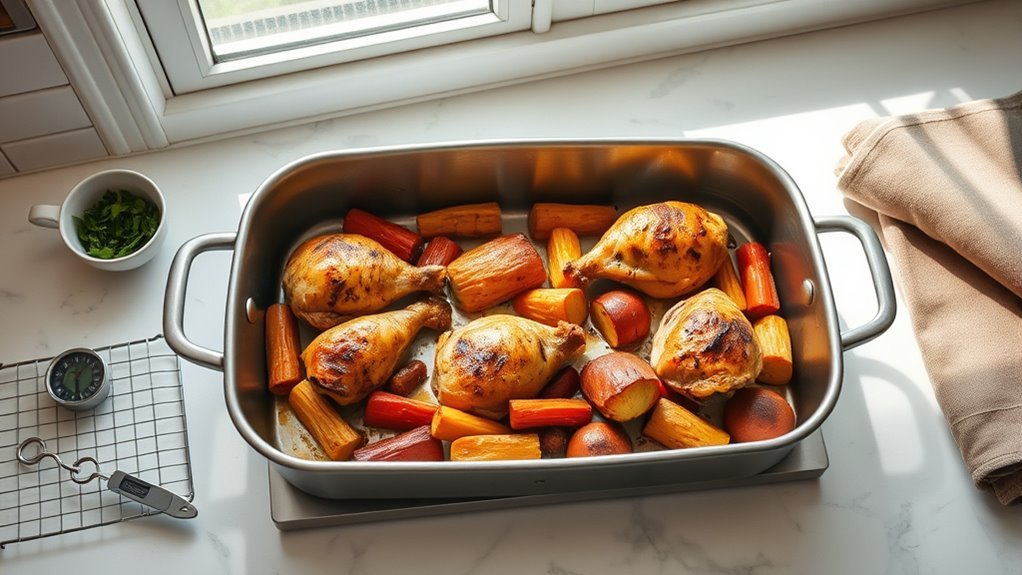
Using a shallow roasting pan can really elevate your cooking game. These pans, typically less than 3 inches deep, promote better air circulation, giving your veggies and smaller cuts of meat that perfect golden-brown finish.
To maximize flavor, position your shallow roasting pan directly above the heat source; this technique helps collect drippings beautifully.
Position your shallow roasting pan directly above the heat source to beautifully collect drippings and maximize flavor.
Adding a splash of water or broth can prevent drippings from burning and guarantees your dish stays moist.
When choosing a pan, look for materials like cast aluminum or dark enameled steel—these conduct heat effectively and enhance caramelization.
For the best results, avoid overcrowding the pan; allowing space lets each piece cook evenly, achieving that delightful texture we all crave.
With these tips, you’ll harness the power of shallow roasting pans and transform your cooking into a flavorful masterpiece.
Popular Uses for Shallow Roasting Pans
Shallow roasting pans are your go-to for a variety of cooking methods, making meal prep both easy and efficient.
Their design not only collects drippings effectively but also enhances flavor development, giving your dishes that extra oomph.
Whether you’re roasting veggies or baking a casserole, these versatile pans are perfect for achieving delicious results.
Versatile Cooking Methods
When it comes to versatile cooking methods, a shallow roasting pan truly shines in the kitchen. These pans, typically 2-3 inches deep, excel at distributing heat evenly and achieving that perfect browning.
You’ll find them indispensable for roasting crisp potatoes and carrots, thanks to their design that promotes air circulation. But it doesn’t stop there; shallow roasting pans are fantastic for baking dishes like lasagna or casseroles, ensuring even cooking without excessive moisture.
They’re also perfect for broiling, accommodating larger quantities for family meals. Plus, their accessibility makes basting and monitoring your food a breeze, enhancing flavors and cooking outcomes.
Embrace the freedom of cooking with shallow roasting pans for all your culinary adventures!
Efficient Dripping Collection
The design of a shallow roasting pan lends itself perfectly to efficient dripping collection, making it a favorite among home cooks. With low sides and a wide surface area, these pans facilitate even heat distribution while maximizing delicious drippings for gravies and sauces. Plus, many shallow roasting pans can go directly on the stovetop, allowing you to deglaze and fully utilize those rich flavors.
| Feature | Benefit | Ideal Use |
|---|---|---|
| Low Sides | Maximizes evaporation | Roasting vegetables |
| Wide Surface Area | Even cooking | Smaller cuts of meat |
| Direct Stovetop Use | Convenient sauce preparation | Deglazing for gravies |
| Efficient Dripping | Rich flavor extraction | Creating sauces and gravies |
Embrace the power of shallow roasting pans for your next culinary adventure!
Enhanced Flavor Development
Using a shallow roasting pan can greatly elevate the flavors of your dishes, thanks to its unique design that allows for ideal heat circulation.
The shallow profile not only maximizes surface area but also enhances browning and caramelization, resulting in richer flavors in roasted meats and vegetables. You’ll notice the delightful fond forming at the bottom, perfect for creating gravies and sauces.
Plus, shallow roasting pans excel at quicker, high-heat techniques, ensuring your food remains juicy rather than dried out. If you’re roasting poultry, the increased airflow guarantees crispy skin and even cooking.
Versatile for open roasting and broiling, these pans truly shine in promoting enhanced flavor development across a wide variety of dishes.
Essential Features to Look For in Shallow Roasting Pans
A quality shallow roasting pan is essential for achieving perfectly cooked meats and vegetables. Look for one with a depth of 2 to 3 inches; this allows for superior air circulation, ensuring even cooking.
Choose heavy-duty materials like stainless steel or cast aluminum for excellent heat conduction and durability. Reinforced edges and sturdy handles are must-haves—they provide stability and make it easier to transport your culinary creations, especially when they’re hefty.
If convenience is key, consider nonstick cookware, which simplifies food release and cleanup. Just keep in mind that a nonstick surface might impact the development of those delicious fond sauces.
Finally, select a size that suits your cooking needs, whether you’re preparing a cozy family dinner or hosting a larger gathering. With these features in mind, you’re well on your way to selecting the perfect shallow roasting pan for any occasion.
Best Materials for Shallow Roasting Pans You Should Consider
When choosing a shallow roasting pan, the material plays a vital role in your cooking experience.
You’ll want to take into account durability, heat conductivity, and whether you prefer nonstick options over traditional finishes.
Each material offers unique benefits that can enhance your roasting results, so it’s worth exploring what fits your needs best.
Material Durability Comparison
Choosing the right material for your shallow roasting pan can greatly impact your cooking experience. Here’s a quick comparison of materials to help you decide:
| Material | Durability | Key Features |
|---|---|---|
| Stainless Steel | High | Long-lasting, rust-resistant |
| Aluminum | Moderate | Excellent heat conductivity, may warp |
| Cast Iron | High | Superior heat retention, requires maintenance |
| Nonstick | Moderate | Easy to clean, less fond development |
Stainless steel is a robust option, perfect for a long-term investment. If you prefer nonstick roasting, it offers convenience but might lack in flavor depth. Weigh these factors to choose the best fit for your culinary adventures!
2. Heat Conductivity Factors
Understanding heat conductivity is vital when selecting the best shallow roasting pan for your kitchen. You want a pan that guarantees even cooking, and the material plays a significant role.
Consider these options for superior heat conductivity:
- Aluminum: Lightweight and heats up quickly, perfect for even cooking.
- Stainless Steel: Durable but may require a thicker base for effective heat conduction.
- Enamel-Coated: Offers good heat distribution and moisture retention, ideal for non-stick roasting.
- Cast Iron: Heavier but excellent for retaining and evenly distributing heat.
- Wider Surface Area: Promotes better air circulation, enhancing heat distribution for that crispy exterior on meats and vegetables.
Choose wisely to elevate your roasting game!
3. Nonstick Versus Traditional Options
The choice between nonstick and traditional materials for shallow roasting pans can greatly impact your cooking experience and the flavors of your dishes.
Nonstick roasting pans are fantastic for easy cleanup and prevent food from sticking, making them user-friendly, especially for novice cooks. However, they may limit the rich caramelization of drippings that develops in traditional pans.
On the other hand, steel roasting pans, particularly stainless steel, excel at heat conduction and fond development, enhancing the depth of your roasted flavors. They’re durable and versatile, suitable for both oven and stovetop applications, perfect for making gravies.
Ultimately, your choice hinges on your cooking style—whether you prioritize ease or flavor depth.
Choosing the Right Size Roasting Pan
When it comes to selecting the right size roasting pan, you’ll want to guarantee it fits your cooking needs perfectly. A shallow roasting pan typically ranges from 12 x 16 inches to 18 x 24 inches, catering to various sizes of meat and vegetables.
Here are some tips to help you when choosing the right size roasting pan:
When selecting a roasting pan, ensure it fits your food comfortably for optimal cooking results.
- Ascertain it accommodates your food without crowding.
- Aim for about an inch of space around the edges for even cooking.
- Remember, a shallow pan can hold up to a 15-pound turkey.
- Consider the material; heavier pans offer better heat distribution.
- Think about your gatherings; choose a size that suits your typical roast.
How to Keep Your Roasting Pan Clean and Lasting Longer
Keeping your roasting pan in top shape requires just a few simple steps that can make a world of difference.
After cooking, immediately soak your roasting pan in warm, soapy water to loosen food particles and prevent stubborn stains. To make cleanup even easier, line the pan with aluminum foil or parchment paper before use; this protects the surface and reduces scrubbing later on.
Avoid abrasive cleaners or scouring pads, as they can scratch and deteriorate your roasting pan.
Regularly inspect it for warping or damage; catching these issues early can extend its lifespan.
For long-lasting quality, opt for high-quality materials like stainless steel or cast aluminum, which resist wear and tear.
Avoid These Common Mistakes With Shallow Roasting Pans
While shallow roasting pans offer fantastic advantages for achieving perfectly browned and crispy dishes, avoiding common mistakes is essential to maximizing their potential. Here are key pitfalls to watch out for:
- Overcrowding the pan: Fitting too much food can lead to steaming instead of roasting, ruining that crispiness you crave.
- Ignoring heat placement: Always place the pan directly above the heat source to enhance flavor and guarantee even cooking.
- Neglecting cooking times: Foods may cook faster in shallow pans, so keep a close eye to prevent overcooking.
- Adding excess liquid: Too much broth or water can turn your dish soggy, defeating the purpose of roasting.
- Skipping seasoning: Don’t forget to season your ingredients well; the shallow design helps flavors develop beautifully.
Recommended Brands and Models for Shallow Roasting Pans
Finding the right shallow roasting pan can elevate your cooking experience, and several brands stand out for their quality and performance. When choosing a pan, consider materials like stainless steel, cast aluminum, and enameled metal. Each option offers unique heat conductivity and durability.
Here are some recommended brands:
| Brand | Key Features |
|---|---|
| ProCook | High-quality construction |
| M&S | Durable and versatile options |
| Savory | Reliable performance for all meals |
These shallow roasting pans come in various sizes, catering to both small and large meals. They excel in open roasting, enhancing heat circulation for better browning of meats and veggies. Plus, many are designed for easy maintenance, making them perfect for regular use. With these recommendations, you’ll find a pan that suits your culinary adventures!
Frequently Asked Questions
What Is Considered a Shallow Roasting Pan?
A shallow roasting pan has a depth of 1 to 2 inches, perfect for your roasting techniques.
This design allows heat to circulate freely, ensuring even cooking and crispy finishes. Ideal for smaller cuts of meat, vegetables, or fish, it elevates your dishes while letting drippings collect below for rich sauces.
With materials like aluminum or stainless steel, these pans are durable and easy to handle, making your cooking experience both efficient and enjoyable.
What Can I Use if I Don’t Have a Shallow Roasting Pan?
If you don’t have a shallow roasting pan, don’t fret; the kitchen’s a treasure chest of alternative cookware! A large baking sheet or a rimmed cookie sheet can catch those delicious drippings while letting air dance around your food.
Consider a cast iron skillet for that perfect sear before oven magic. Even a Dutch oven, lid off, can create a warm embrace for your meal.
Embrace these improvised solutions and release your culinary creativity!
Can I Use a Baking Pan Instead of a Roasting Pan?
Yes, you can use a baking pan instead of a roasting pan, but be aware of the roasting pan differences.
A baking pan’s shallow design may hinder heat distribution, especially with larger cuts of meat. For better results, elevate your meat on a cooling rack, allowing drippings to collect below.
This way, you can still create flavorful gravies. Explore baking pan alternatives, but remember, for big roasts, a true roasting pan is ideal for juicy success!
Is a Cookie Sheet a Shallow Roasting Pan?
No, a cookie sheet isn’t a shallow roasting pan.
While cookie sheets offer versatility for smaller baked goods, they lack the depth and higher sides needed for roasting meats and vegetables.
The differences in their designs mean cookie sheets can’t handle drippings or sauces effectively, which are essential for creating flavorful gravies.
If you want to master roasting, investing in a shallow roasting pan will elevate your culinary adventures!
Conclusion
In the world of cooking, “a good tool makes a good cook.” A shallow roasting pan is your secret weapon for achieving perfectly roasted meats and veggies. With its ability to enhance flavors and promote even cooking, it’s an essential addition to your kitchen arsenal. By choosing the right size, material, and maintaining it well, you’ll enjoy delicious meals for years to come. So, embrace your shallow roasting pan and elevate your culinary creations!

