
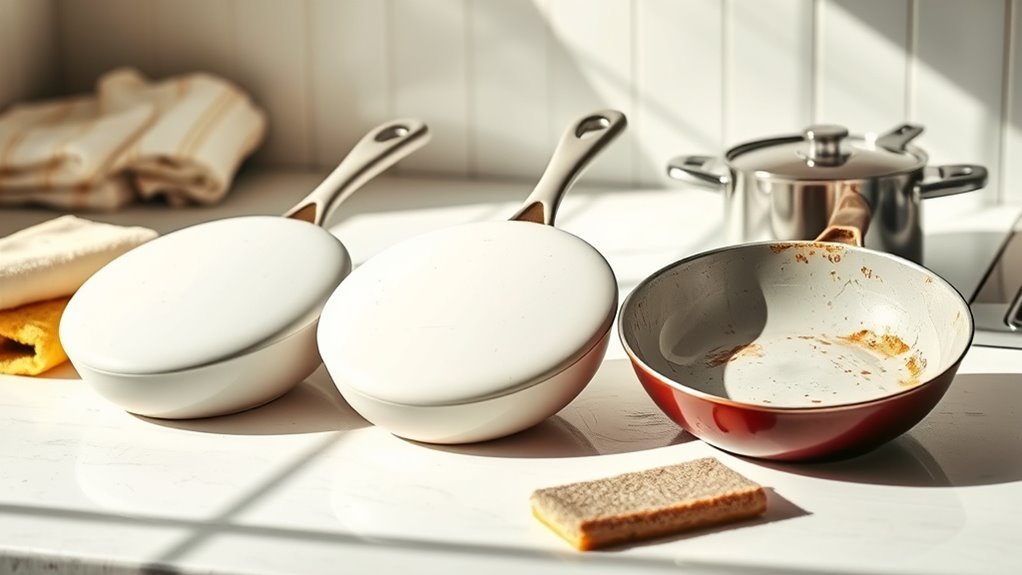
Did you know that the lifespan of ceramic pans can vary considerably based on how you use and care for them? While some might last only a year or two, high-quality options can endure up to five years with proper maintenance. Understanding the factors that influence their longevity is essential for making the most of your cookware. So, what should you know about extending their life and recognizing when it’s time for a replacement?
How Long Will Your Ceramic Pans Actually Last?
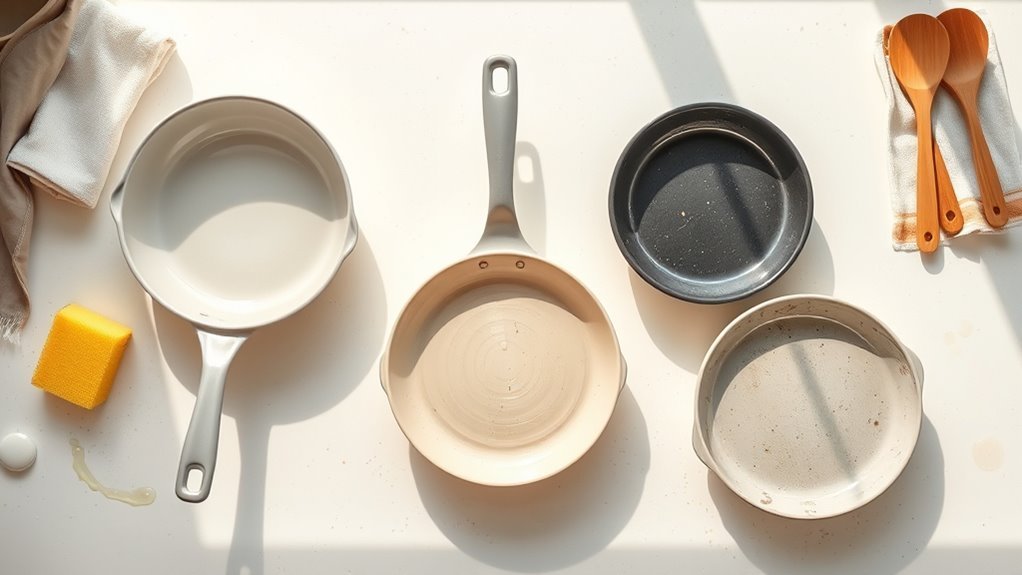
When you invest in ceramic pans, you might wonder how long they’ll last under your care. Typically, the lifespan of ceramic pans ranges from 1 to 3 years, depending on your usage and how well you maintain them.
To extend the life of high-quality ceramic coatings, practice proper maintenance. Use non-metal utensils and avoid high heat, which can damage the non-stick surface. Regular hand washing with soft sponges is essential; dishwashers can wear down the ceramic coating faster.
Watch out for signs of wear, like scratches, chipping, or peeling. These indicate it’s time for replacement.
With careful care, some high-quality ceramic pans can even last up to 5 years. By being mindful of your cooking habits and taking steps for easy cleaning, you can enjoy the benefits of your ceramic pans for as long as possible.
Key Factors Influencing the Lifespan of Ceramic Cookware
Understanding the key factors that influence the lifespan of ceramic cookware can help you make informed choices and get the most out of your investment.
The quality of the durable materials and non-stick coating plays a crucial role; higher-quality pans typically last longer. Proper care is essential—avoid metal utensils and opt for gentle cleaning methods to prevent damage.
Cooking at high heat can degrade the non-stick coating faster, so stick to low to medium cooking settings for better longevity. Be alert for replacement signs like visible scratches, peeling coatings, or if food starts to stick despite your best maintenance efforts.
Regular upkeep, such as letting pans cool before washing and using non-abrasive sponges, can greatly enhance their performance over time.
Best Practices for Extending the Life of Ceramic Pans
To keep your ceramic pans in top shape, following specific best practices can make a significant difference. By being mindful of how you use and care for them, you can enjoy healthy cooking for years to come.
- Avoid metal utensils: They can scratch the non-stick surface.
- Cool to the touch: Let your pans cool before cleaning to prevent thermal shock.
- Use low to medium heat: High temperatures can degrade the ceramic coating over time.
Always hand wash your ceramic pans with a soft sponge and mild detergent, as dishwasher use can lead to wear and tear.
When storing, stack them with protective liners or cloth to maintain their non-stick properties.
These simple care tips will help extend the life of your ceramic pans and keep them performing at their best, so you can focus on delicious meals without worrying about replacement signs.
When to Replace Your Ceramic Pans: Key Signs
A ceramic pan’s lifespan can vary, but knowing when to replace it is vital for safe and effective cooking. Keep an eye out for these key replacement signs:
| Replacement Signs | Description | Action Needed |
|---|---|---|
| Visible Scratches | Scratches or chips compromise safety and function. | Replace immediately. |
| Food Sticks | If food sticks despite care, non-stick properties are failing. | Consider replacement. |
| Discoloration | Stains that won’t clean may affect performance. | Time for a new pan. |
| Unusual Smell | Smells or smoke during cooking indicate coating breakdown. | Replace right away. |
Proper care can extend your ceramic pans’ life, but when these signs appear, it’s imperative to prioritize cooking safety. Don’t risk your health—replace those pans when needed!
Choosing High-Quality Ceramic Pans for Longevity
When choosing ceramic pans for longevity, focusing on quality can make all the difference. Opting for high-quality options guarantees your cookware lasts longer and performs better.
- Look for reinforced ceramic coatings with materials like diamond or titanium for enhanced durability.
- Select pans with a robust stainless steel base for improved heat conduction and compatibility with induction stoves.
- Regularly inspect for wear signs, such as chipping or peeling of the non-stick coating.
Frequently Asked Questions
How Often Should You Replace Ceramic Pans?
You should replace your ceramic pans every 1 to 3 years, depending on their durability and your cooking techniques.
Regular maintenance tips, like avoiding metal utensils and overheating, help preserve their non-stick properties and surface integrity.
Watch for signs of wear that affect heat distribution and food safety.
Brand comparisons can guide you through price ranges, while user experiences provide insights into longevity, ensuring you make informed choices for your kitchen.
What Are the Negatives of Ceramic Pans?
What’s the point of a pan that doesn’t hold up?
Ceramic pans face durability concerns like limited scratch resistance and color fading. Their non-stick performance can dwindle over time, affecting cooking efficiency.
Plus, they’re sensitive to heat retention and thermal shock, risking warping.
Maintenance tips include avoiding metal utensils and high heat.
Weigh price against longevity—sometimes, spending a bit more pays off in the long run.
Staining issues can also detract from their appeal.
When Should You Throw Out a Ceramic Pan?
You should throw out a ceramic pan when you notice signs of damage like chipping, cracking, or peeling of the non-stick properties.
If the cooking surface shows scratches or discoloration, it’s time for a replacement to guarantee food safety.
Regularly inspect your pan for these issues and consider its ceramic pan lifespan.
Proper care, like avoiding overheating and using gentle cleaning techniques, can help maintain its quality longer, but know when to let go.
Why Can’t You Use Olive Oil on Ceramic Pans?
You can’t use olive oil on ceramic pans because its low smoke point can lead to burning and sticky residue, compromising their non-stick properties.
When you cook at high heat, olive oil can break down, causing polymerization effects that damage the ceramic coating and lead to oil absorption. This not only affects food safety but also flavor transfer.
For better results, stick to oils with higher smoke points like avocado or grapeseed oil.
Conclusion
In the end, the lifespan of your ceramic pans hinges on your care and choices. Imagine the frustration of a beloved pan suddenly failing, leaving you scrambling for alternatives mid-cooking. By following best practices and recognizing when it’s time for a replacement, you can enjoy seamless cooking experiences. Don’t wait for those alarming signs to appear—invest in quality and nurture your cookware, and you’ll savor countless delicious meals without worry. Will your pans stand the test of time?

