
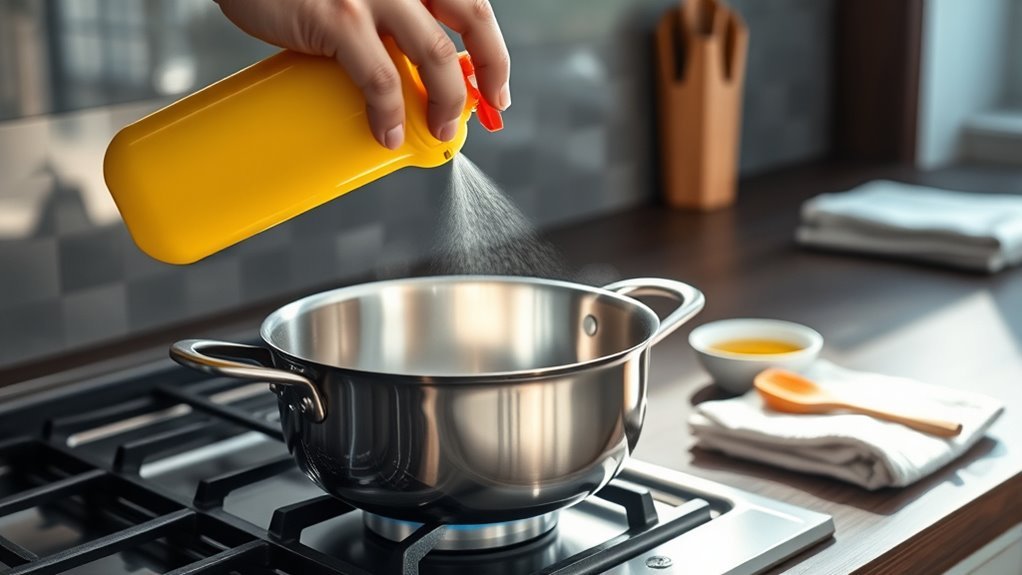
You might wonder if using cooking spray on stainless steel pans is a smart choice. While it seems convenient, many cooks find that it can lead to sticky residues and poor food release. This raises important questions about whether cooking spray truly enhances your cooking experience. If you’re curious about the best alternatives and how to maintain your cookware, keep exploring. The answers might surprise you.
Using Cooking Spray on Stainless Steel Pans: Yes or No?
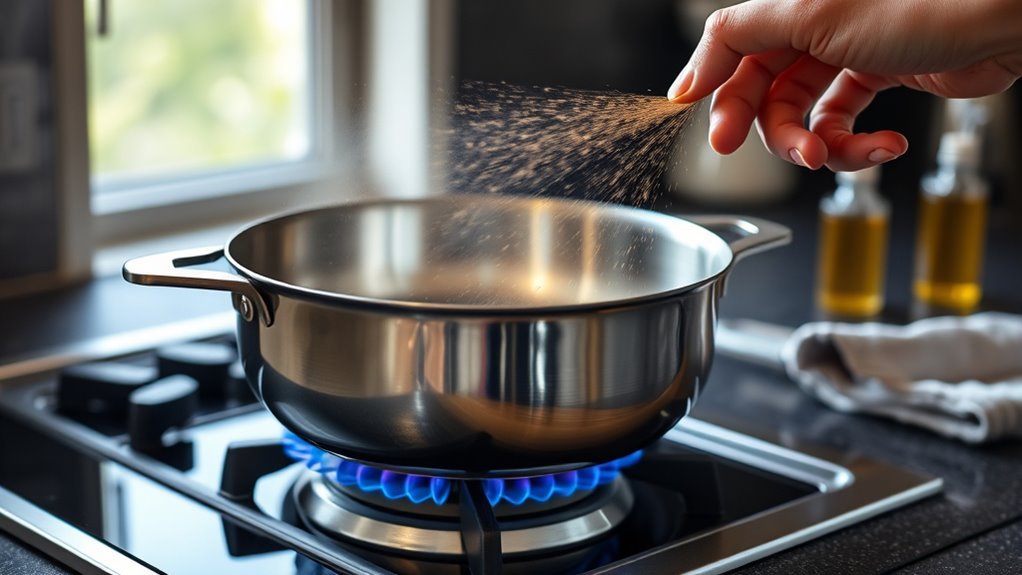
When it comes to using cooking spray on stainless steel pans, many cooks wonder if it’s a good idea. While cooking sprays can help prevent sticking, frequent use can lead to a sticky layer that traps food and affects your cooking performance.
To keep your pans in top shape, consider preheating them properly on Sauté mode. This enhances their natural nonstick properties, reducing the chance of sticking.
Many users find that alternatives like olive oil or butter not only prevent sticking more effectively but also add delicious flavor. They emphasize the importance of controlling your cooking temperature and oil application for the best results.
If you do opt for cooking spray, be diligent about cleaning the surface to avoid gunk buildup. Ultimately, while cooking sprays can work, traditional oils often deliver a better cooking experience without the hassle of residue.
How Does Cooking Spray Impact Stainless Steel Performance?
Using cooking spray on stainless steel pans can greatly impact their performance. While it seems convenient, cooking spray can lead to gunk buildup that affects the pan’s nonstick surface.
At high temperatures, the ingredients in cooking spray polymerize, creating a sticky film that traps food, making release difficult. Instead of relying on cooking spray, consider using traditional oils. A small amount of oil can enhance the nonstick effect when properly preheating your pan.
Many users find that avoiding cooking spray not only improves their cooking experience but also prolongs the lifespan of their stainless steel cookware. Regular use of cooking spray may require deeper cleaning methods, like soaking and scrubbing, to tackle stubborn spots.
Why Cooking Spray May Not Be the Best Choice?
Though cooking spray might seem like a quick solution for preventing food from sticking, it often leads to more problems than it solves. Over time, the additives in cooking spray can create gunk buildup on your stainless steel pans, interfering with their nonstick properties. This sticky layer makes food more likely to stick, resulting in uneven cooking and frustrating cleanups.
Unlike traditional oils, which can enhance the seasoning and improve the pan’s nonstick surface, cooking sprays often require more frequent maintenance. When you preheat your stainless steel pan before adding oil, you’re not just preventing sticking; you’re also maximizing the oil’s effectiveness.
Many users find that opting for traditional oils yields better cooking results and simpler cleanup. So, if you’re looking for liberation in your cooking experience, ditch the spray and embrace the benefits of quality oils for your stainless steel cookware.
Top Oils to Use Instead of Cooking Spray
Switching from cooking spray opens up a world of flavor and cooking efficiency with traditional oils. Instead of relying on spray, consider using olive oil for its rich taste and moderate smoke point, which enhances the nonstick properties of stainless steel.
For high-heat cooking, avocado oil is your best bet, boasting a smoke point of around 520°F. Grapeseed oil also works well, offering versatility with its neutral flavor and a high smoke point of 420°F.
If you crave richness, butter can add delightful flavor, but be cautious with temperatures to avoid burning. Coconut oil is another option, great for medium-heat cooking, with a smoke point of about 350°F.
Each of these oils can create a thin layer of oil that supports daily use while elevating your culinary experience. Embrace these options for a liberating cooking journey!
Prepare Your Stainless Steel Pan for Cooking
To achieve the best results when cooking with your stainless steel pan, start by preheating it on Sauté mode until it shows “HOT.” This step is essential, as a properly heated pan creates a natural nonstick surface, making it easier for your food to cook evenly and release without sticking.
Next, use a small amount of high-smoke point oil, like avocado or grapeseed oil, to enhance that nonstick property and add flavor.
Use a dash of high-smoke point oil, such as avocado or grapeseed, to boost nonstick properties and infuse flavor.
Once your oil is added, allow your food to sear undisturbed for a few moments; it’ll naturally release from the pan when it’s ready.
Don’t forget to keep the cooking surface clean—any residue can compromise performance.
For daily care, wash your stainless steel pan with warm, soapy water, avoiding harsh scrubbing pads to preserve its integrity.
Treat your cookware with respect, and it’ll reward you with delicious meals time and time again.
How to Clean Cooking Spray Residue
Even with the best cooking practices, cooking spray can leave stubborn residue on your stainless steel pans. To tackle this, start by warming the pan slightly and filling it with hot, soapy water. Let it soak for 10-15 minutes to loosen the cleaning spray residue.
After soaking, grab a soft sponge or create a gentle paste with baking soda and water. Carefully scrub the affected areas, steering clear of harsh materials that might scratch your pan’s surface. Rinse the pan thoroughly under warm water to guarantee all soap and residue are washed away.
Once clean, dry the pan immediately with a soft cloth to prevent water spots and keep its shine.
To prevent future buildup, consider switching to a small amount of traditional oil instead of cooking spray, and always preheat your pan before cooking. This simple routine will keep your stainless steel pans in great condition!
How to Keep Your Stainless Steel Pan in Great Shape
While stainless steel pans are durable and versatile, keeping them in great shape requires some care and attention.
Start by preheating your pan on Sauté mode until it indicates “HOT.” This enhances its nonstick properties. Next, use a small amount of oil or butter to create a thin coating that helps prevent food from sticking.
After cooking, clean your pan promptly with warm water and a gentle scrub, avoiding harsh materials that could scratch the metal. To maintain its shine and protect against rust, regularly season your stainless steel pan with a thin layer of oil after cleaning.
Be mindful of what you cook; avoid extremely acidic foods like tomatoes or vinegar-based dishes, as they can damage the surface and affect your pan’s longevity.
With these simple steps, you’ll guarantee your stainless steel pan remains a trusted kitchen companion for years to come.
Frequently Asked Questions About Cooking Spray and Stainless Steel
What should you know about using cooking spray on stainless steel pans? Cooking spray might seem convenient, but it can cause gunk buildup, affecting your pan’s nonstick properties. This means more frequent cleaning for you.
To minimize sticking, always preheat your stainless steel pan on Sauté mode until it indicates “HOT” before adding oil or food. Many users find success without cooking spray by using a small amount of oil, which can enhance flavor while keeping the cooking surface clean.
If you’re looking for alternatives, consider high smoke point oils like avocado or grapeseed. These oils not only improve cooking results but also help avoid residue buildup.
Regular maintenance, including thorough cleaning and proper oil application, is essential for preserving the performance and longevity of your stainless steel cookware. By choosing wisely, you can enjoy cooking without the hassle of residue.
Frequently Asked Questions
How Do You Keep Things From Sticking to Stainless Steel Pans?
To keep things from sticking to stainless steel pans, follow these non-stick tips: Preheat your pan until it’s hot, then apply a small amount of high-smoke point oil.
Master heat control; avoid drastic temperature changes that can cause sticking. Allow food to sear before flipping.
Regularly clean your pans to prevent gunk buildup, and consider pan seasoning techniques to enhance the surface.
With these methods, you’ll enjoy effortless cooking!
Can I Use Pam Cooking Spray on Stainless Steel?
You can use Pam cooking spray on stainless steel, but it mightn’t be your best choice.
Cooking spray alternatives like olive oil or butter offer better food release and reduce sticking.
For ideal stainless steel maintenance, preheat your pan until it’s hot, then apply a small amount of oil.
This oil application method creates a natural non-stick surface, ensuring your meals slide right off without the hassle of gunk buildup.
Why Not Use Pam Cooking Spray?
You shouldn’t use Pam cooking spray because it can create sticky gunk on your stainless steel pans, making cleanup a hassle.
Instead, opt for cooking spray alternatives like olive oil or butter, which enhance flavor without harmful residues.
For healthy frying options, try proper oil application techniques to guarantee even coverage.
What Is the Best Oil for Stainless Steel Pans?
When it comes to stainless steel pans, think of oil as your cooking ally. Avocado oil and grapeseed oil are top choices, boasting high smoke points that fight sticking.
While olive oil offers delightful benefits, it’s best for lower heats.
If you’re exploring butter alternatives, coconut oil can add a unique flavor twist.
Just remember, a small amount goes a long way in enhancing your culinary creations and liberating your cooking experience!
Conclusion
To sum up, while it might be tempting to use cooking spray on your stainless steel pans, it’s better to steer clear. The residue can hinder performance and make cooking a hassle. Instead, opt for oils like olive or avocado for a smoother experience and enhanced flavor. With proper care and cleaning, your stainless steel cookware will last longer and perform better. Embrace these tips, and you’ll enjoy cooking with your stainless steel pans to the fullest!

