
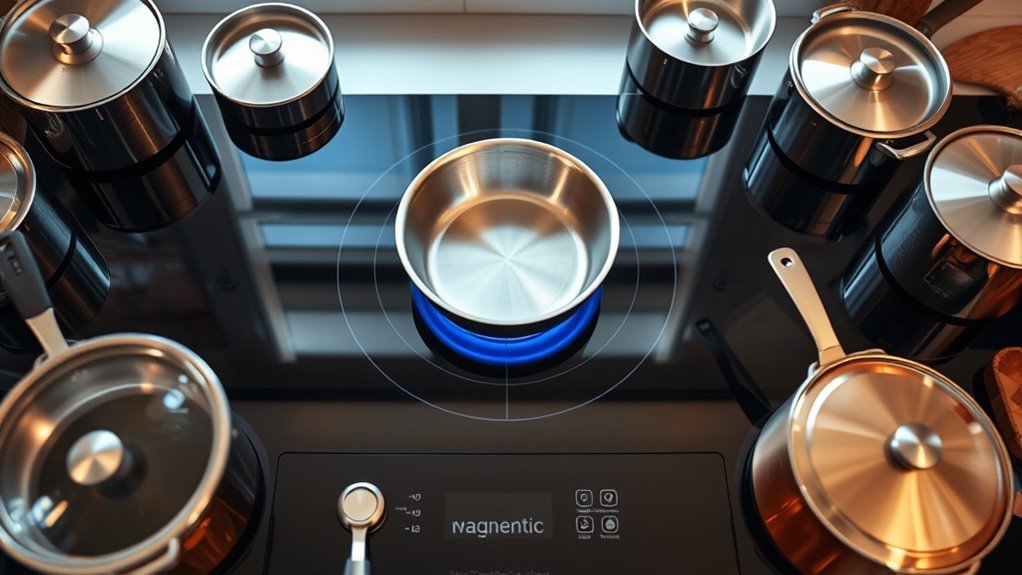
Induction pans are specialized cookware that can transform your cooking experience. Unlike traditional pans, they harness magnetic energy to heat up quickly and evenly. This means no more hot spots or wasted energy. If you’ve ever wondered how this technology works and what sets these pans apart, you’re in for an enlightening exploration. Let’s uncover the key features and benefits that make induction cookware a smart choice for any kitchen.
What Makes Induction Cookware Unique?
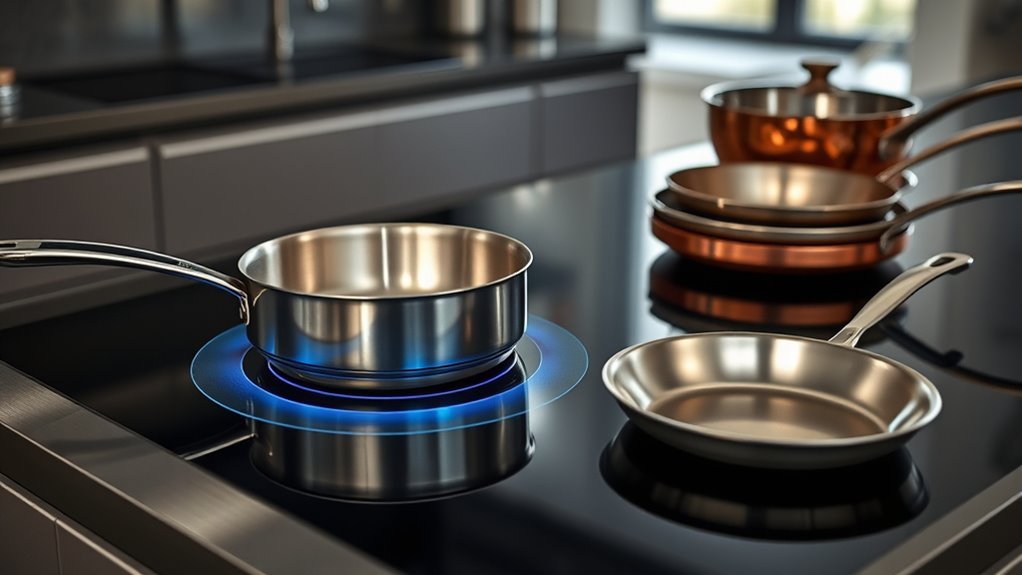
Induction cookware stands out because it uses a magnetic base, which allows it to heat directly on induction cooktops. This unique feature, often crafted from magnetic stainless steel or cast iron, generates an electromagnetic field that induces electric currents within the cookware itself. As a result, the pot or pan becomes the heat source, enabling rapid and even heat distribution.
You’ll love how quickly your meals come together, thanks to precise temperature control that eliminates the guesswork. Unlike traditional methods, where heat radiates away, induction cooking keeps the cooktop surface cooler, considerably reducing the risk of burns. This means you can focus on your culinary creations without worry.
Just remember, to harness the benefits of induction cooking, your cookware must be compatible—non-magnetic materials like aluminum won’t work here. Embrace the liberation of efficient cooking with induction cookware, and watch your kitchen transform!
How Do Induction Pans Generate Heat?
Induction pans generate heat through an intriguing magnetic field created by electric currents flowing beneath your cooktop.
When you place a compatible pan on the surface, the magnetic field induces electric currents within it, leading to rapid and efficient heating.
This direct heat generation allows for precise temperature control, making your cooking experience both faster and more enjoyable.
Magnetic Field Interaction
At the heart of induction cooking lies a fascinating interplay of magnetic fields and electric currents. When you place induction cookware—like magnetic stainless steel—on the cooktop surface, an electric current flows through coils beneath it, generating a magnetic field.
This field induces electric currents within the ferromagnetic base of your cookware, causing it to heat directly. Unlike traditional methods, this direct heating allows for rapid temperature adjustments, making your cooking experience more efficient.
Impressively, up to 90% of energy converts into heat, while the cooktop surface remains cool to the touch, reducing burn risks.
With the right induction pans, you can enjoy a safer, more responsive cooking journey that empowers your culinary creativity.
Direct Heat Generation
The magic of cooking on an induction cooktop comes from the direct heat generation of the pans used. When you place induction cookware—like cast iron or magnetic stainless steel—on the cooktop, electric current flows through coils beneath the surface.
This creates a magnetic field that induces electric currents within your pan, generating heat directly. As a result, your cookware heats up faster than traditional methods, making cooking a breeze.
Plus, the cooktop itself remains cooler, minimizing the risk of burns and enhancing safety. With induction cooking, you’re not just preparing meals; you’re embracing a liberating, efficient way to cook that empowers you to explore flavors without the hassle.
Enjoy the precision and speed of this innovative cooking method!
Key Materials That Make Cookware Induction Compatible
To make your cookware induction-compatible, it’s essential to focus on the right materials that can interact with magnetic fields.
Typically, cast iron, steel, and magnetic stainless steel are your best bets, while other materials like aluminum or glass need a magnetic base to work.
A quick magnet test can help you determine if your pots and pans are ready for induction cooking.
Key Materials Overview
Understanding the key materials that make cookware induction compatible is vital for anyone looking to enhance their cooking experience. Induction pans rely on magnetic materials like cast iron and stainless steel cookware. These materials guarantee efficient heat transfer, allowing your meals to cook evenly. Significantly, some modern designs feature layered constructions, combining magnetic stainless steel with aluminum cores for peak performance.
Here’s a quick overview of compatible and non-compatible materials:
| Material | Compatibility | Notes |
|---|---|---|
| Cast Iron | Induction Compatible | Excellent heat retention and even cooking |
| Stainless Steel | Induction Compatible | Must be magnetic for efficiency |
| Aluminum | Non-Compatible | Requires a magnetic base to work |
| Glass | Non-Compatible | Not suitable unless modified |
Magnetic Material Requirements
When choosing induction cookware, it’s crucial to recognize that magnetic materials form the backbone of effective heat transfer.
For cookware sets to be induction compatible, they must have a magnetic base, typically crafted from cast iron, steel, or magnetic stainless steel. Aluminum, glass, and copper won’t work unless they include a magnetic layer.
Want to test your cookware? A simple magnet test can quickly confirm compatibility; if it sticks, you’re good to go!
Even ceramic-clad and enameled pots can be induction compatible, provided they contain an iron layer.
Just be cautious—high nickel content in some stainless steel can inhibit those magnetic properties, making them unsuitable for induction cooking.
Choose wisely to heat the cookware effectively!
Testing for Compatibility
Before investing in induction pans, it’s essential to know how to test their compatibility with your induction cooktop. The key lies in the materials used. Here’s a quick guide to help you:
- Magnetic Base: Look for pans made from cast iron or magnetic stainless steel.
- Magnet Test: Stick a magnet to the bottom; if it holds, you’re good to go.
- Avoid Non-Magnetic Materials: Aluminum, glass, and copper won’t work unless they’ve a magnetic layer.
Be cautious with stainless steel—high nickel content can reduce its magnetic properties.
Many induction pans also feature a compatibility symbol, making your search easier.
With this knowledge, you’ll confidently choose cookware that works seamlessly with your induction cooktop.
How to Use the Magnet Test: Is Your Cookware Good for Induction?
To guarantee your cookware is induction-compatible, try the simple magnet test—it’s quick and effective. Just grab a magnet and bring it close to the base of your cookware. If it sticks firmly, you’re in luck! Your pot or pan is likely made from cast iron or magnetic stainless steel, which heats efficiently on induction cooking surfaces.
On the flip side, if the magnet doesn’t cling or only has a weak grip, your cookware may not be suitable for induction. Non-compatible materials like aluminum, glass, and copper won’t attract a magnet unless they’ve a magnetic layer.
For added confidence, check for any induction-compatible symbols on the packaging. This double-check verifies you’re investing in cookware that will provide effective heating and enhance your culinary experience.
Embrace the freedom of cooking with the right tools!
Benefits of Using Induction Pans in Your Kitchen
Induction pans offer a transformative cooking experience, as they heat up quickly and efficiently, converting up to 90% of energy into usable heat. This means you save time and energy while enjoying the benefits of induction.
Induction pans heat quickly and efficiently, converting up to 90% of energy into usable heat, saving you time and energy.
With their innovative design, these pans provide:
- Precise temperature control for instant adjustments, enhancing your cooking accuracy.
- Even heating that eliminates hot spots, ensuring your food cooks uniformly.
- A cooler cooking surface, markedly lowering the risk of burns and making your kitchen safer.
Additionally, the easy-to-clean surface minimizes the chances of food spills burning onto the cooktop, simplifying post-cooking maintenance.
Plus, using induction cookware future-proofs your setup, as they’re compatible with induction cooktops and still work on gas and electric stoves.
Embrace the liberation of a more efficient, safe, and enjoyable cooking experience with induction pans in your kitchen!
Care Tips for Maintaining Your Induction Pans
Proper care is essential for keeping your induction pans in top shape and ensuring they serve you well for years to come. Follow these tips to maintain their surface and maximize their lifespan:
| Care Tip | Description |
|---|---|
| Hand Washing | Always hand wash your induction pans to preserve their integrity. |
| Avoid Abrasive Scrubbers | Steer clear of abrasive scrubbers that can scratch surfaces. |
| Thoroughly Drying | Dry your pans completely to prevent water spots and rust. |
| Store Induction Pans | Use felt protectors or towels between pans to avoid scratches. |
| Cool Before Washing | Let your cookware cool completely before washing to prevent warping. |
Debunking Myths: What People Get Wrong About Induction Cooking
When it comes to induction cooking, many misconceptions can cloud your judgment and lead to confusion. Let’s clear the air about induction cookware and its benefits:
- Cookware compatibility: Only pots and pans made from magnetic materials, like cast iron or stainless steel, work effectively on induction cooktops.
- Speed: Induction cooking isn’t slower than traditional electric cooktops; it heats pans faster due to direct energy transfer, making meal prep a breeze.
- Safety: Many think induction cooktops are dangerous, but they actually feature cooler surfaces and reduced fire hazards, making them safer than gas stoves.
Understanding these truths can empower your cooking style and help you embrace the innovation of induction cooking.
You’ll find a wide variety of aesthetically pleasing cookware options that fit your needs, allowing you to enjoy this efficient and safe cooking method without any misconceptions holding you back.
Choosing the Right Induction Cookware for Your Needs
How do you choose the right cookware for your induction cooktop? Start by ensuring your induction cookware has a magnetic base—materials like cast iron and magnetic stainless steel work best. A quick magnet test can confirm compatibility; if it sticks, you’re good to go!
Next, think about your cooking preferences. Consider cookware size, weight, and handle comfort to enhance your cooking experience. High-quality options often feature layered constructions, like aluminum cores in stainless steel, which improve heat distribution and minimize hot spots.
Consider your cooking preferences; the right size, weight, and handle comfort can elevate your culinary experience.
Investing in complete cookware sets can also provide consistent performance and compatibility, making your induction cooking journey smoother. Whether you’re simmering sauces or searing meats, the right induction cookware empowers you to harness your culinary creativity while enjoying the efficiency of induction cooktops.
Embrace the liberation of cooking with tools that truly fit your needs!
Frequently Asked Questions
What Cannot Be Cooked on Induction?
You can’t cook with non-magnetic materials like aluminum, glass, or copper on induction cooktops.
While induction cooking benefits from excellent heat distribution efficiency and low energy consumption, using incompatible cookware can lead to frustration. Adjust your cooking techniques accordingly, as these pans won’t heat up.
Plus, improper use can even damage your cooktop. Embrace the safety features of induction by ensuring your cookware is magnetic for a smooth, efficient cooking experience.
What Is the Difference Between Normal Pans and Induction Pans?
Induction pans differ from normal pans mainly in material types and heat distribution.
You’ll find induction pans often use magnetic stainless steel or cast iron, while normal pans may have non-stick surfaces made from aluminum or copper.
Induction cooking offers superior cooking efficiency and energy savings, converting up to 90% of energy into heat.
Additionally, induction pans tend to be lighter, making them easier to handle, enhancing your cooking experience.
What Happens if You Use Regular Pans on an Induction Stove?
If you try using regular pans on an induction stove, you’ll find they won’t heat up at all.
For instance, imagine attempting to sauté vegetables in a beautiful aluminum skillet—it just sits there, cold.
With induction heating, energy efficiency relies on cookware materials that possess magnetic properties.
Without them, you miss out on ideal cooking performance and safety features, risking frustration instead of liberation in your culinary journey.
Always check your pans first!
How Do You Know if a Pan Is Induction?
To know if a pan’s induction-compatible, grab a magnet! If it sticks, you’ve got a winner with good magnetic properties.
Look for induction materials like cast iron or magnetic stainless steel; they guarantee ideal heat distribution and energy efficiency.
Non-compatible options, like aluminum or glass, won’t cut it unless they’ve got a magnetic layer.
Check for symbols on the packaging to make your cookware compatibility search easier and elevate your cooking techniques!
Conclusion
Induction pans truly revolutionize cooking, harnessing magnetic fields to deliver swift, precise heat. You might think only certain materials work, but many stainless steel and cast iron options are induction-compatible. This versatility means you can enjoy the benefits of induction cooking, whether you stick to gas or electric stoves. So, embrace the efficiency and even heat distribution of induction cookware—it not only enhances your culinary experience but also makes cooking more enjoyable and convenient!

