
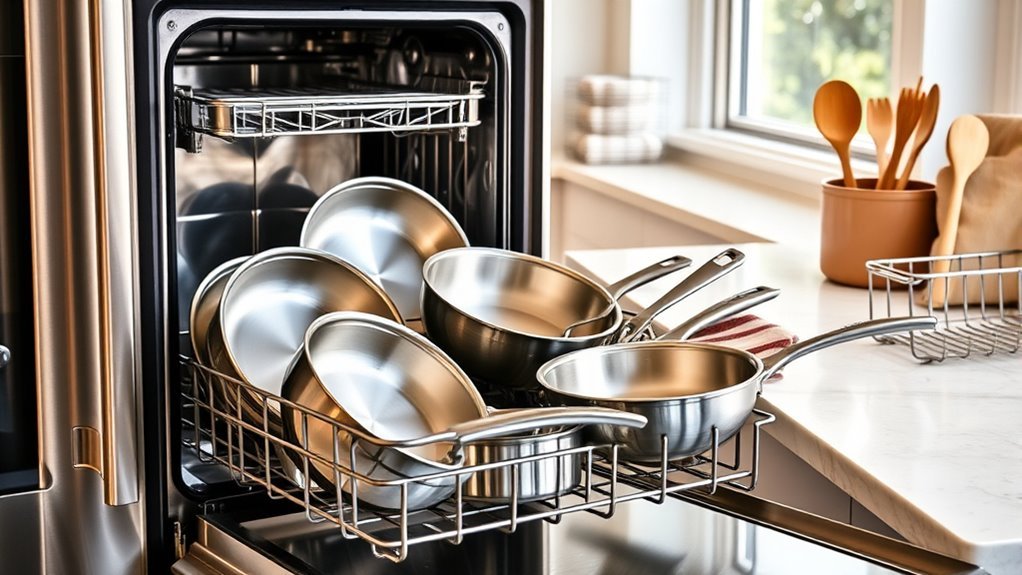
About 70% of nonstick failures are linked to dishwasher use, so you’ll want to think twice before tossing a USA Pan into the cycle. You can hand-wash most USA Pans safely, but harsh detergents and high heat can erode Americoat coatings and stress the aluminum-steel bond. Keep following to learn practical, step-by-step care, simple fixes for burnt-on food, and when an accessory can actually go in the dishwasher.
Are USA Pans Dishwasher Safe?
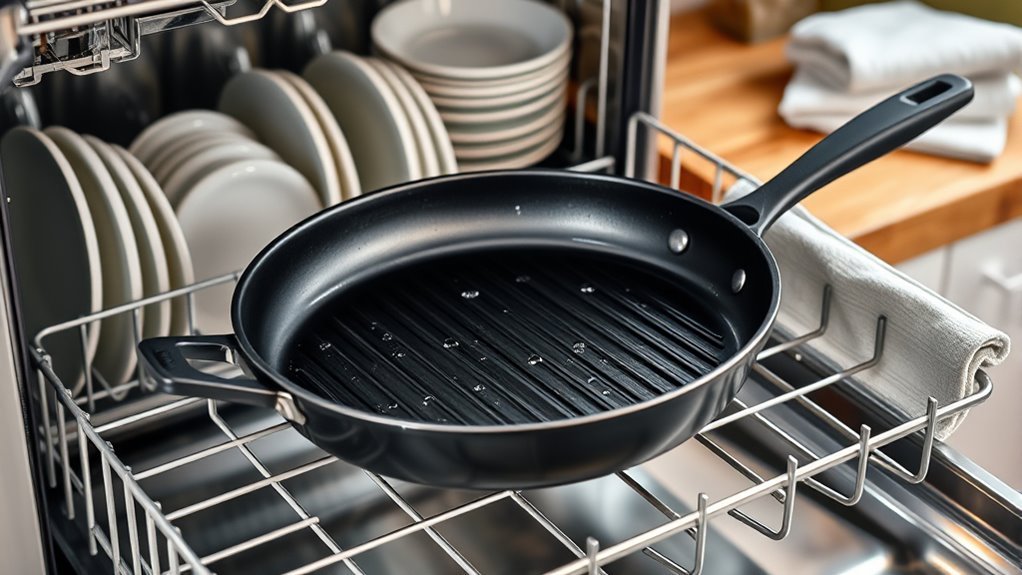
Wondering if you can toss your USA Pan in the dishwasher? You can’t. USA Pans aren’t dishwasher safe: dishwasher detergents contain chemicals that can erode the nonstick coating and damage the aluminum-steel structure that gives your bakeware reliable release.
You’ll want to choose handwashing to protect performance and extend lifespan. In this care guide, use mild dish soap and a soft sponge, avoiding abrasive cleaners or steel wool that scratch or degrade the surface.
Many users are surprised—it’s a common misconception that all bakeware can brave the dishwasher. Embrace the simple ritual of gentle cleaning; it’s a practical act of preservation that frees you from premature replacement cycles.
How to Hand-Wash USA Pans (Step-by-Step)
Start by filling your sink with warm water and a few drops of mild dish soap, then gently soak the pan for a few minutes to loosen baked-on residue without stressing the nonstick finish.
After soaking, use a soft sponge or nylon pad to wipe interior and exterior surfaces, working with light pressure to protect the nonstick coating. Target edges and the handle junction where crumbs collect, but avoid abrasive scrubbers that abrade the surface.
Rinse thoroughly with warm water to remove all soap and loosened particles; leftover detergent can alter flavors and undermine the coating over time.
Inspect for any remaining debris and repeat gentle scrubbing if needed. When clean, towel-dry or air the pan until you dry completely to prevent moisture buildup that could promote rust or deterioration.
Regularly hand wash to maintain longevity and consistent performance, asserting control over care to preserve your pan’s function and freedom from premature wear.
Removing Burnt-On Food, Stains, and Discoloration
When you get burnt-on food, start by soaking the pan in warm, soapy water or boiling a little water in it to loosen residue before you touch it.
Use gentle scrubbing tools—soft sponges or nonabrasive pads—and a mild abrasive stainless-steel cleaner for stubborn stains, avoiding harsh scrubbers that can damage the surface.
Wash soon after use to prevent staining and to keep discoloration and that oily feeling from baking mats to a minimum.
Soak To Loosen Residue
Soak your USA Pan in warm, soapy water for 15–30 minutes to loosen burnt-on food and stains before you scrub, which prevents you from having to use abrasive tools that can damage the nonstick surface.
Use this simple ritual to reclaim control over kitchen residue and extend pan life. For tougher buildup, boiling water in the pan can lift particles without harming the non-stick coating. Prompt attention minimizes discoloration and preserves finish.
- Fill pan with warm, soapy water to cover residues.
- Let sit 15–30 minutes; heat shortens dwell time.
- For stubborn spots, bring water to a gentle boil, then cool before draining.
- Rinse and follow with gentle cleaning as regular maintenance.
This method is evidence-based, practical, and protects your pan’s performance.
Gentle Scrubbing Methods
A few careful scrubs with a soft sponge or nylon pad will remove most burnt-on food and stains without damaging your USA Pan’s nonstick finish. First, lift residue by soaking in warm, soapy water or briefly boiling water. Then, apply gentle pressure and short, circular strokes to dislodge particles.
You’ll use gentle scrubbing methods that protect the non-stick coating while removing stubborn particles. Avoid metal scouring pads or harsh abrasives that erode the surface. Rinse and inspect; repeat soaking if needed rather than increasing force.
Regular maintenance cleaning after each use reduces buildup and simplifies future scrubbing. This practical, evidence-based approach lets you reclaim pans quickly and confidently, preserving performance and extending the pan’s service life for uncompromised culinary freedom.
Removing Stains Safely
After gentle scrubbing has loosened most residue, tackle burnt-on food, stains, and discoloration with targeted, safe methods that preserve your USA Pan’s nonstick finish.
You’ll protect performance and reclaim freedom from grime by using controlled, evidence-backed steps:
- Soak pans in warm water with mild dish soap to loosen burnt-on food; boil water briefly for stubborn bits, then use a soft sponge to lift residue.
- Mix baking soda and water into a paste for stains and discoloration; apply, wait a few minutes, then gently scrub and rinse.
- Rinse and perform regular handwashing to prevent future staining and maintain the nonstick coating.
- Never use harsh abrasives or steel wool; they abrade the coating and shorten bakeware life.
Why Dishwashers Damage Americoat Nonstick Coatings
You should avoid dishwashers because concentrated dishwasher detergents contain alkaline and oxidizing agents that chemically attack Americoat’s polymer surface.
High-temperature wash and dry cycles can thermally stress the aluminum-steel substrate and accelerate coating breakdown, while jets and loading movement create mechanical abrasion that strips the nonstick layer.
Handwashing with mild soap and a soft sponge prevents these chemical, thermal, and physical insults and helps maintain performance.
Dishwasher Detergent Chemistry
Think of dishwasher detergent as a chemical assault on Americoat nonstick surfaces: many formulations pack strong alkalis and phosphates that break down the polymer binder, while high wash temperatures and prolonged exposure accelerate coating wear and can cause peeling.
You want freedom from ruined bakeware, so understand the chemistry and act.
- Alkalis and phosphates in dishwasher detergents raise pH, attacking the nonstick coating and weakening adhesion.
- High-pH wash water can react with aluminum materials, producing gray discoloration and surface etching.
- Dishwasher cycles often dislodge gritty particles and employ abrasive cleaning tools that scratch and strip the coating.
- Regular handwashing with mild dish soap and a soft sponge preserves finish and performance.
Choose liberation: avoid harsh detergents, wash gently, and protect your pans.
High-Temperature Cycle Effects
Because dishwashers combine sustained high heat with pressurized steam and alkaline detergents, they create an environment that accelerates breakdown of Americoat nonstick surfaces: repeated cycles soften polymer binders, stress adhesion at the coating-to-metal interface, and can cause microcracks or delamination that reduce release performance and shorten pan life. You’ll find high-temperature cycles exceed routine use temperatures and, combined with harsh chemicals, undermine the Americoat coating despite its 450°F rating. To maintain longevity, avoid dishwasher exposure and use handwashing with mild dish soap and a soft sponge. Practical care liberates you from premature replacement.
| Risk Factor | Mechanism | Action |
|---|---|---|
| High-temperature cycles | Polymer softening | Handwash only |
| Harsh chemicals | Chemical attack | Mild soap |
| Steam/pressure | Adhesion stress | Dry thoroughly |
Mechanical Abrasion Risk
When dishwashers tumble pans against racks and blast them with abrasive detergents, they accelerate mechanical wear on Americoat nonstick surfaces and can abrade the polymer layer enough to expose the underlying metal.
You shouldn’t treat USA Pans as dishwasher safe if you want freedom from premature failure. Mechanical abrasion from detergent particles and loose utensils or grit removes polymer, while chemical action degrades release properties.
- Racks and moving water cause friction that abrades the nonstick coating.
- Dishwasher soaps contain harsh agents that worsen mechanical abrasion effects.
- Abrasive cleaners or steel wool—common in dishwasher toolkits—scratch and thin the layer.
- Handwashing with mild dish soap and a soft sponge preserves the coating and extends lifespan.
When to Use Parchment, Silicone Mats, or Foil
If you want the easiest release and least wear on your USA Pans’ nonstick surface, line the pan with parchment paper or a silicone baking mat for most baking tasks; reserve aluminum foil for roasting or when you need to catch drips, and never substitute wax paper.
Use parchment paper for cookies, cakes, and delicate bakes — it prevents sticking and guarantees easy food release without interacting with the nonstick coating.
Turn to silicone baking mats for high‑fat foods or repetitive sheet‑pan work; they boost nonstick performance and make cleanup effortless.
Choose aluminum foil when roasting vegetables or meats, or when you need to funnel juices, but position foil so it avoids direct contact with the pan’s surface edges to reduce scratching.
These simple choices help prolong the life of your USA Pans by minimizing abrasion and chemical stress on the coating.
Make a habit of lining strategically: it’s a small act that protects your cookware and frees you to cook boldly.
Temperature and Utensil Rules to Protect USA Pans
Keep your oven at or below 450°F to protect USA Pans’ silicone-enhanced coating from heat damage.
Use only silicone, nylon, or wooden utensils to prevent scratches that shorten the nonstick life.
Don’t cool a hot pan with cold water, since sudden temperature change can warp the metal and compromise performance.
Maximum Oven Temperature
Because USA Pans’ silicone-based nonstick is rated to 450°F (230°C), you shouldn’t bake above that temperature to avoid coating breakdown and premature failure.
You’ll protect the integrity of the silicone coating by observing the maximum baking temperature and following simple rituals. For ideal care, avoid dishwasher detergents that erode finishes and always hand wash with warm, soapy water.
- Preheat oven ≤450°F to preserve the nonstick silicone coating.
- Cool pans slightly before cleaning to maintain the pans’ shape.
- Never run them through a dishwasher; detergents speed deterioration.
- Avoid thermal shock—don’t add cold water to hot pans.
These practical limits free you to cook boldly while safeguarding longevity and the pan’s performance.
Safe Utensil Choices
After you’ve respected the 450°F limit and rinsed pans only after cooling, pay equal attention to the tools you use while cooking: silicone, nylon, or wooden utensils will protect the silicone-based nonstick from scratches, while metal or high-heat plastic can abrade the coating or melt when exposed to high temperatures.
Choose safe utensil choices that let you cook boldly without degrading the pan. Prefer silicone, nylon, or wooden utensils for stirring, flipping, and scraping; they won’t damage the nonstick coating or force premature replacement.
After use, handwashing with warm, soapy water and a soft sponge helps maintain the integrity of both surface and tool. This practical routine preserves performance and frees you from avoidable waste and repair.
Do USA Pan Cooling Racks and Accessories Go in the Dishwasher?
Wondering if you can pop USA Pan cooling racks and accessories into the dishwasher? Don’t — they aren’t dishwasher safe. Dishwasher detergents contain chemicals that can degrade the nonstick coating, so you should hand wash each piece with warm soapy water and a soft sponge to protect finish and function.
- Wash soon after use to avoid staining and residue buildup.
- Use warm soapy water; scrub gently with a soft sponge — avoid abrasive pads.
- Dry thoroughly right away to prevent rust and preserve longevity.
- Line with parchment or silicone mats when practical to minimize sticking and simplify cleaning.
This approach frees you from replacing warped or stripped racks and keeps your bakeware reliable. Caring for these accessories by hand not only protects the coating but also aligns with a practical, liberation-minded mindset: you control upkeep, extend service life, and reduce waste.
Warranty, Dishwasher Damage, and Claim Implications
If you want warranty coverage to stand, follow USA Pans’ care instructions exactly—handwash with warm water and mild soap and never use dishwasher detergents or abrasive cleaners that can strip the Americoat nonstick finish.
You’ll protect the nonstick coating and keep your warranty valid by avoiding dishwasher damage and obvious signs of improper maintenance like scratches or chemical etching.
Register your pans promptly so claims can be processed against the registered product record. If you submit a claim, expect inspection for evidence of dishwasher exposure or use of steel wool and harsh cleaners; findings of misuse commonly lead to denial.
Be clear and factual when filing: document purchase, registration, and the nature of the defect.
Follow care instructions going forward—handwashing is the prescribed, warranty-preserving practice. This practical approach minimizes disputes, preserves performance, and keeps you free from preventable rejection of valid warranty claims.
Simple Daily and Monthly Maintenance Habits for USA Pans
Since following USA Pans’ care rules keeps your warranty intact, make a simple habit of handwashing with warm, soapy water and a soft sponge immediately after use to prevent residue buildup and avoid dishwasher detergents that can strip the Americoat finish. You’ll liberate your time and cookware performance by staying consistent.
Handwash USA Pans promptly with warm, soapy water and a soft sponge to protect the Americoat finish and warranty.
- Rinse and hand wash bakeware promptly with warm soapy water; use a soft sponge to protect the nonstick silicone coating.
- Line pans with parchment to prevent sticking and reduce scrubbing—this preserves finish and flavor control.
- After drying, store USA Pans in a dry place; stack with protection (paper or cloth) to prevent abrasion of the coating.
- For monthly maintenance, inspect the pans for scratches or wear; record findings and act if degradation appears.
These practices are evidence-based, practical, and efficient: they prolong nonstick life, prevent moisture-related rust, and help you reclaim control over kitchen tools without relying on harsh dishwasher cycles.
When to Replace a USA Pan: Signs of Permanent Damage
When warping, peeling, or persistent discoloration starts to affect your cooking, it’s time to evaluate whether the USA Pan has reached the end of its usable life. Check for clear signs: uneven surfaces or warping that prevent full contact with heat, significant scratches or areas where the non-stick coating peels, and stains that won’t come out after proper cleaning.
These problems aren’t cosmetic — they change heat transfer, food release, and safety.
Also inspect for cracks, dents, or loss of structural integrity; any compromise in construction impairs functionality and increases risk during use. If you notice uneven baking or hot spots that cleaning and heat adjustments don’t fix, that’s another signal to replace the pan.
Prioritize pans that perform reliably; holding on to damaged cookware limits your control and freedom in the kitchen. Replace when performance or safety is compromised rather than waiting for failure.
Frequently Asked Questions
How Do I Know if My Pans Are Dishwasher Safe?
Check your cookware labels and manufacturer instructions first — they state dishwasher materials compatibility and surface coatings info.
If labels say dishwasher-safe and list heat resistance ratings, you’re fine; otherwise assume hand wash for safe cleaning.
Use care tips: soft sponges, mild soap, avoid abrasive cleaners to protect nonstick or metal coatings and prevent rust.
Evidence-based practice frees you to choose lasting, reliable care that protects performance and longevity.
How Do I Clean My USA Pans?
Start by handwashing with warm water, mild dish soap, and a soft sponge—you’ll see the nonstick stay intact.
Use parchment paper for easier cleanup and prevent sticking.
For stain removal, soak briefly and use a baking soda paste gently; avoid steel wool and abrasive cleaners.
Maintenance tips: clean promptly, dry fully, and store safely.
Choose safe materials and gentle cooking techniques; follow care instructions and respect heat resistance limits to preserve freedom.
What Is the Lifespan of USA Pan Bakeware?
You can expect USA Pan bakeware to last decades with proper care. Lifespan depends on bakeware materials, longevity factors like frequency of use, heat resistance limits, and maintenance recommendations such as handwashing and avoiding sudden temperature changes.
Follow usage tips to preserve nonstick performance; compare performance comparison to cheaper brands shows superior durability.
Warranty details include a limited lifetime warranty, so register and document issues to protect your investment and keep cooking liberating.
Why Shouldn’t Aluminum Pans Go in the Dishwasher?
Like a shield wearing thin, you shouldn’t put aluminum pans in the dishwasher because cleaning agents and dishwasher heat accelerate aluminum corrosion and metal reactions that strip non stick coatings.
You’ll see food residue bake on and discoloration, and high heat plus harsh detergents shorten lifespan impact by warping and dulling surfaces.
Handwashing with gentle soap preserves coatings, prevents stains, and lets you keep full control of cookware performance and longevity.
Conclusion
You wouldn’t toss a tuxedo into a mud pit, so don’t subject your USA Pan to a dishwasher’s chemical spa. Hand-wash with warm, soapy water, a soft sponge, and occasional soaking to keep Americoat intact—science, not superstition. Skip abrasive tools, parchment or silicone when appropriate, and heed warranty limits: dishwasher damage can void claims. Treat your pan with predictable care, and it’ll repay you with reliable, long-lasting performance—no courtroom drama required.

