
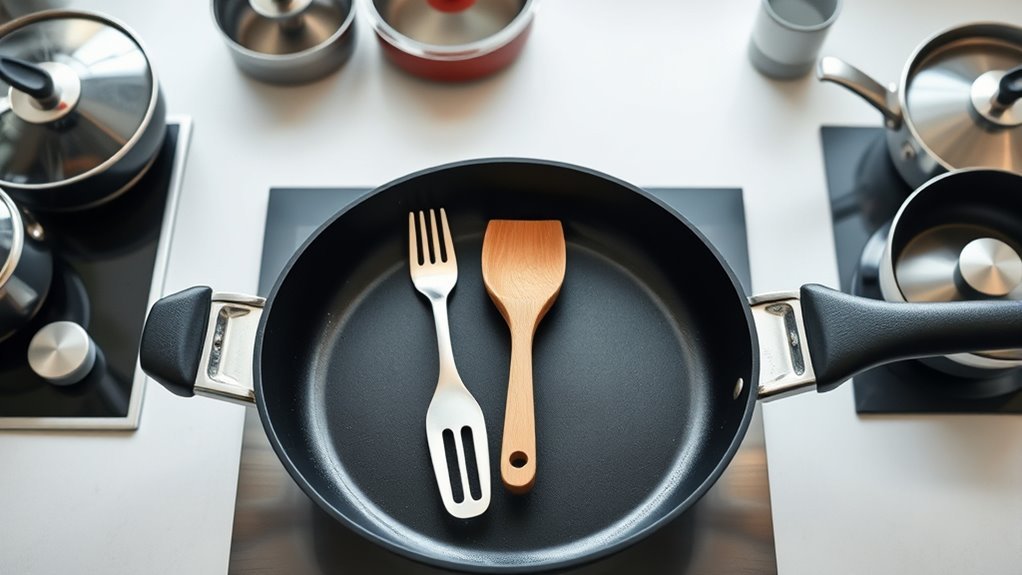
Did you know that nearly 70% of nonstick cookware users unknowingly damage their pans by using metal utensils? This common mistake can lead to scratches that compromise the nonstick surface and shorten the lifespan of your cookware. So, what can you use instead? Understanding the best utensils and what to avoid is vital for maintaining your kitchen investment. Let’s explore the safest options and essential tips to keep your nonstick pans in top shape.
Are Metal Utensils Safe for Your Nonstick Cookware?
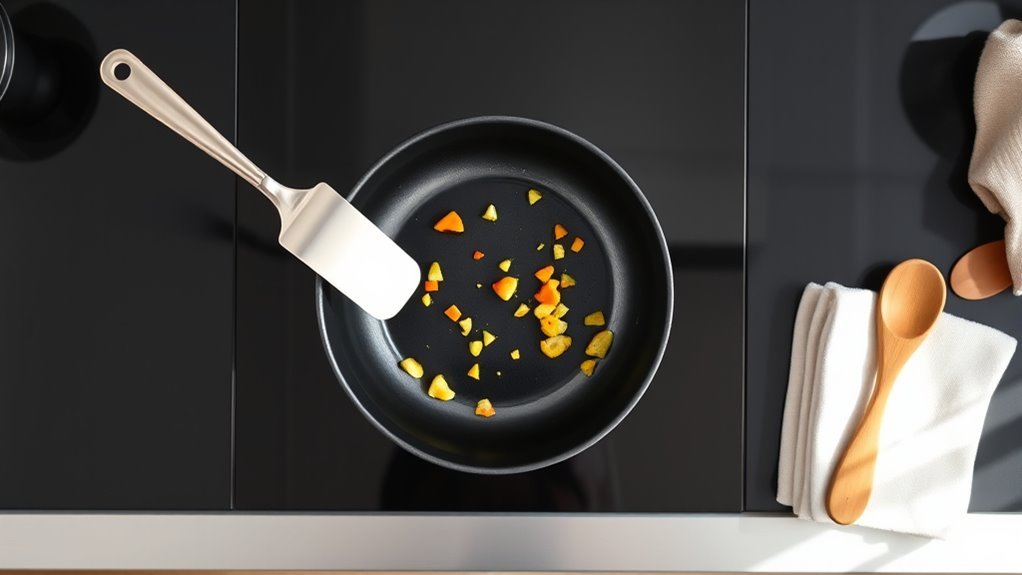
Are metal utensils really safe for your nonstick cookware? While it might seem convenient, using metal utensils can compromise the longevity of your nonstick pans. Even small scratches from these utensils can lead to reduced effectiveness and increased food sticking over time.
Traditional nonstick cookware isn’t designed to withstand the wear and tear that metal can inflict. However, some options, like titanium or stainless steel nonstick cookware, are metal utensil safe and resistant to damage.
If you want to protect your pans, consider switching to gentler materials like wooden utensils, silicone, or nylon. These alternatives minimize the risk of scratches, ensuring your cookware remains in top condition.
What Damage Can Metal Utensils Cause to Nonstick Surfaces?
Using metal utensils on nonstick surfaces can lead to significant damage, even if it seems harmless at first. These utensils can create microscopic scratches that affect cooking performance and cause food to stick over time. Even minor scratches compromise the integrity of the nonstick coating, leading to flaking and potential health risks. Regular use of metal utensils accelerates wear, shortening your cookware’s lifespan compared to gentler alternatives.
| Damage Type | Description | Impact on Cookware |
|---|---|---|
| Scratches | Microscopic damage to nonstick surfaces | Reduced performance |
| Flaking | Breakdown of nonstick coating | Health risks |
| Accelerated Wear | Faster degradation of cookware | Need for earlier replacement |
Long-term exposure may result in irreversible damage, making your cookware less safe. Choosing the right utensils is key to maintaining your nonstick surfaces.
How to Protect Your Nonstick Cookware From Damage
To keep your nonstick cookware in top shape, choosing the right utensils is just the beginning. Always opt for utensils made of silicone, wood, or nylon to protect the delicate surface. Avoid using metal utensils, especially those with sharp edges, as they can create microscopic scratches that degrade nonstick performance over time.
When cleaning, hand wash your pans with gentle sponges and steer clear of abrasive cleaners to maintain the integrity of the coating.
Storing your nonstick cookware with padding between pans is essential; this prevents scratches from stacking, which can lead to damage.
Regularly inspect your cookware for signs of wear, and if the coating shows significant damage, it’s time to replace it.
Top Utensils to Safeguard Your Nonstick Pans
When it comes to safeguarding your nonstick pans, choosing the right utensils is essential. To keep that non-stick coating pristine, opt for silicone or wooden tools. Silicone utensils are highly durable and heat-resistant up to 500°F, offering flexibility without scratching the surface.
On the other hand, wooden utensils provide a gentle touch, minimizing the risk of damage while being sturdy enough for various cooking tasks.
While nylon utensils can be acceptable, make sure they’re high quality and smooth; avoid those with sharp edges that could leave superficial scratches.
Remember, you should avoid metal utensils entirely, as they can create microscopic scratches, leading to decreased performance and potential flaking of your nonstick coating.
For the best maintenance, always choose utensils specifically rated for nonstick cookware. By making these smart choices, you’ll extend the life of your beloved pans and enjoy liberating cooking experiences!
Best Alternatives to Metal Utensils for Nonstick Cooking
When cooking with nonstick pans, choosing the right utensils is essential to preserving their surface.
Silicone, wooden, nylon, and bamboo options offer safe alternatives that won’t damage your cookware.
Understanding these materials and adopting safe cooking practices can help extend the life of your nonstick pans.
Recommended Utensil Materials
If you want to protect your nonstick pans, choosing the right utensils is essential. Here are some recommended materials that won’t scratch or damage your cookware:
- Silicone utensils: Heat-resistant up to 500°F, they mold to your pan’s shape without scratching.
- Wooden utensils: Gentle on nonstick surfaces, but remember to hand wash and occasionally oil them for longevity.
- Nylon utensils: Use high-quality, smooth options to minimize scratching, though they aren’t as heat-safe as silicone.
- Silicone-headed utensils with stainless steel cores: These combine durability and nonstick safety, like the Made In Rubber Spatula.
Avoid metal utensils entirely, as they can degrade the nonstick coating and lead to food sticking.
Choose wisely for stress-free cooking!
Safe Cooking Practices
Choosing the right utensils is just the beginning of protecting your nonstick pans. To maintain that pristine nonstick surface, opt for silicone utensils—they’re heat-resistant and gentle, ensuring your pans stay scratch-free.
Wooden utensils are another excellent choice; they’re durable and won’t harm your cookware, but remember to care for them properly to prevent warping. High-quality nylon utensils can work too, but use them cautiously as they might leave minor scratches over time.
Avoid metal utensils entirely; they’ll cause irreversible damage and compromise your pan’s performance. Regularly inspect your nonstick cookware for wear, and switch to softer cooking utensils when needed.
Embracing these safe cooking practices will extend the life of your beloved pans.
Maintenance Tips for Nonstick Cookware
To keep your nonstick cookware in top shape, it’s essential to adopt proper maintenance habits. Here are some key maintenance tips for nonstick cookware that’ll help you preserve its functionality:
To maintain your nonstick cookware, adopt essential habits for optimal performance and longevity.
- Hand wash your pans instead of using a dishwasher to avoid harsh detergents and high temperatures that can damage the coating.
- Use gentle sponges or cloths for cleaning to prevent scratches that degrade nonstick performance.
- Store your cookware with padding or separators between pans to avert scratches and maintain the coating.
- Regularly inspect your pans for scratches or peeling; replace them if the coating is considerably damaged.
What Steps to Take After Using Metal Utensils?
After taking steps to maintain your nonstick cookware, it’s important to assess any potential damage from using metal utensils. Inspect the surface for deep scratches, gouges, or peeling that might indicate serious issues.
If you notice only light surface marks without any change in performance, your nonstick pans may still be usable, but it’s wise to switch to softer utensils in the future.
Next, clean the pan gently with a non-abrasive sponge and mild detergent to prevent exacerbating any surface damage.
When storing your pans, be sure to place protective padding between them to avoid scratches during stacking.
Regularly check for signs of wear; if the nonstick coating appears considerably damaged, consider replacing the cookware.
This vigilance guarantees ideal cooking performance and prolongs the life of your beloved nonstick pans.
Your Top Questions About Nonstick Cookware Answered
You probably have questions about using nonstick cookware, especially when it comes to utensils.
Let’s clarify some common misconceptions and explore safe cooking practices to help you protect your pans. Knowing the right tools can make a big difference in both performance and longevity.
Common Utensil Misconceptions
What’s the real deal with using metal utensils on nonstick pans? It’s a common misconception that they’re completely off-limits. While many users report no significant damage, it’s wise to be cautious.
Here are some key points to keep in mind:
- Scratches on non-stick surfaces can lead to food sticking.
- Sharp edges can degrade the coating faster than you’d like.
- Ceramic cookware may handle light scratches, but performance can decline.
- Using gentle utensils like silicone or wood preserves your cookware’s longevity.
Choosing the right tools can guarantee your non-stick pans remain effective, maximizing your cooking experience.
Liberate your kitchen adventures by staying informed and making smart utensil choices!
Safe Cooking Practices
Choosing the right utensils is just one part of maintaining your nonstick cookware. While it might be tempting to use metal utensils, they can scratch your non-stick pans, leading to reduced performance and food sticking over time.
Pointy edges are especially risky, creating deeper scratches that degrade ceramic coatings quickly. To preserve your cookware, opt for silicone, wooden, or nylon utensils—they’re gentler and help maintain the coating’s integrity.
Regularly inspect your pans for scratches and practice safe cooking habits, like hand washing and avoiding abrasive cleaners. Always check the manufacturer’s guidelines to determine if your high-quality non-stick cookware can withstand metal utensils.
Protect your investment and enjoy hassle-free cooking!
Frequently Asked Questions
What Utensils Are Safe to Use on Nonstick Pans?
For nonstick pans, stick with silicone spatulas, wooden spoons, nylon tongs, and bamboo utensils.
These options protect your pan’s surface while you cook, ensuring a smooth experience without scratches. Silicone spatulas are flexible and heat-resistant, while wooden spoons offer a durable, gentle touch.
Nylon tongs can be handy for flipping without damage. Embrace these tools and enjoy cooking without worrying about ruining your nonstick cookware!
Can Metal Touch Teflon?
Metal can touch Teflon, but it’s risky. Metal utensil scratches can damage the Teflon coating durability, leading to flaking and reduced non-stick performance.
For safe kitchen practices, stick to silicone, wooden, or nylon utensils. These options help maintain the integrity of your nonstick pans and guarantee a smoother cooking experience.
Remember these nonstick cooking tips to prolong the life of your cookware and enjoy hassle-free meals without worrying about damaging your pans.
What Is the Best Type of Spoon to Use on a Non-Stick Pan?
The best type of spoon to use on a non-stick pan is a silicone or wooden spoon.
Silicone utensils offer heat resistance and flexibility, ensuring you won’t damage the nonstick coating.
Wooden spoons, on the other hand, provide gentle stirring without scratching.
Both options prioritize nonstick coating care while enhancing your cooking experience.
What Types of Utensils Are Best for Using Non-Stick Pans?
For non-stick pans, go for silicone spatulas, wooden spoons, or high-quality nylon utensils.
Silicone spatulas are heat resistant and soft, minimizing scratches.
Wooden spoons are gentle and durable but need maintenance.
High-quality nylon utensils can work too, as long as they’re smooth.
Avoid metal utensils, since they can scratch the non-stick surface.
Choosing the right tools helps you enjoy cooking while keeping your pans in great shape!
Conclusion
To keep your nonstick pans in top shape, it’s best to steer clear of metal utensils. Did you know that using metal can reduce your nonstick surface’s lifespan by up to 50%? By choosing silicone, wood, or high-quality nylon utensils, you not only protect your investment but also guarantee a smoother cooking experience. So, next time you’re in the kitchen, remember: your nonstick cookware deserves the best care to keep it performing beautifully for years to come!

