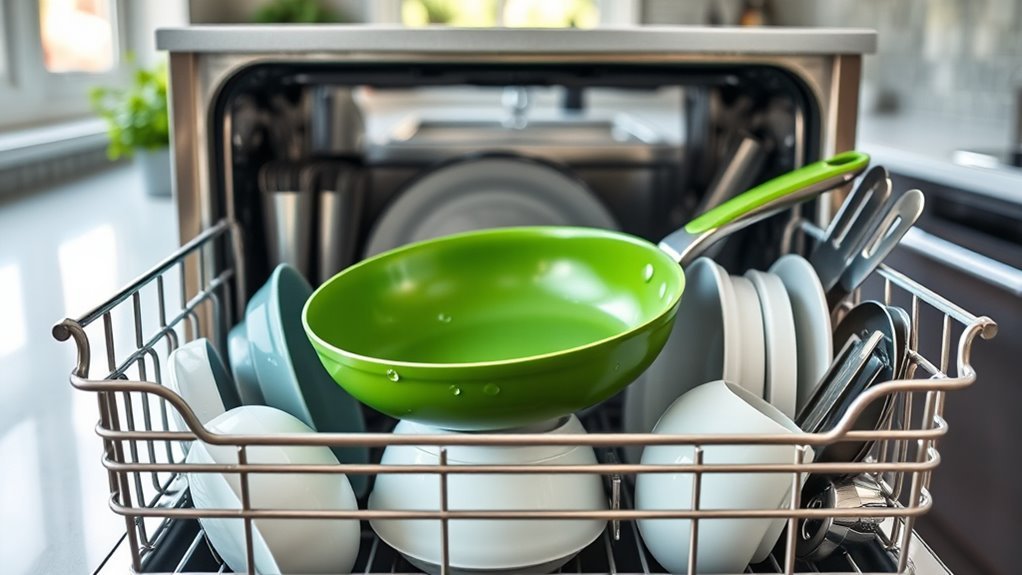
Imagine your favorite Green Pan, gleaming with its pristine ceramic nonstick surface, suddenly losing its luster. You might wonder, “Is it dishwasher safe?” The truth is, tossing it in the dishwasher can lead to serious damage. Understanding why hand washing is essential and exploring best care practices can help you maintain its quality. Let’s uncover the risks involved and the proper techniques to guarantee your cookware lasts for years.
Is Dishwashing Safe for Green Pans?
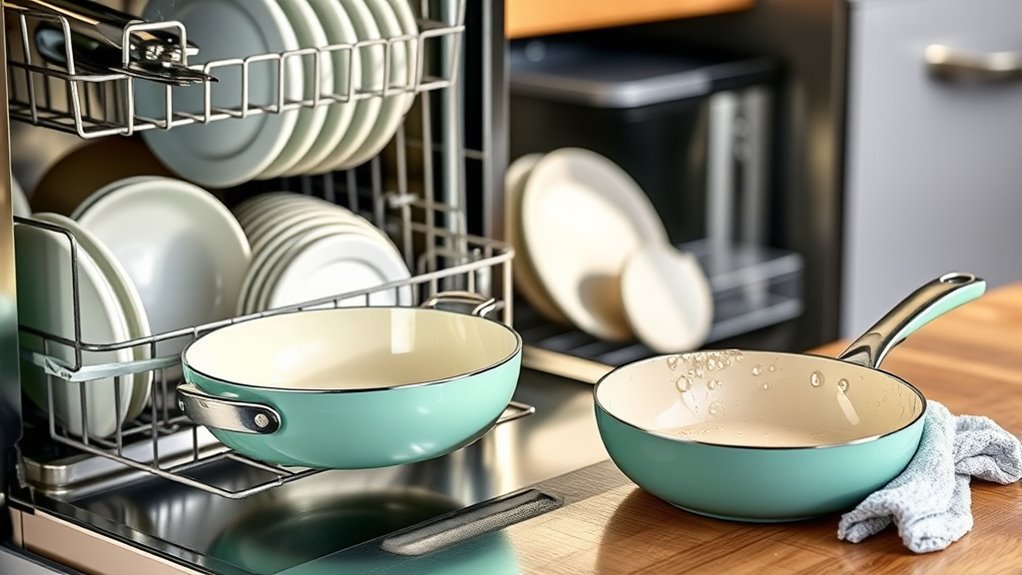
Is it really safe to toss your Green Pans in the dishwasher? While the idea of a hands-free cleaning method sounds liberating, it’s generally not recommended. The high heat and harsh detergents used in dishwashers can damage the nonstick surface of your pans, leading to structural failure or warping. This compromises their effectiveness and longevity.
Instead, consider the preferred cleaning methods: hand washing with warm, soapy water. Many users find it easy and satisfying, enhancing their overall experience with the product.
Following the manufacturer’s guidelines is vital for preserving the quality of your Green Pans over time. By opting for hand washing, you not only maintain the integrity of the nonstick surface but also guarantee your cookware remains in top condition for years to come.
Why You Should Hand Wash Your Green Pans
Hand washing your Green Pans guarantees their non-stick coating remains intact and prolongs their lifespan, as harsh dishwasher detergents can considerably damage the material. The high heat inside dishwashers can warp your pans, compromising their cooking performance.
By opting for hand washing, you preserve the integrity of the non-stick surface.
Opting for hand washing protects the non-stick surface, ensuring your pans maintain their performance and longevity.
Use a soft sponge or cloth to clean your pans, as abrasive materials can scratch and degrade the coating over time. Rinsing thoroughly after hand washing is essential to confirm no soap residue lingers, which can interfere with cooking and flavor.
Adhering to the manufacturer’s care instructions is vital for maintaining the quality of your Green Pans and assuring safe use.
Embracing hand washing not only enhances the functionality of your cookware but also empowers you to take charge of its longevity and performance.
Best Practices for Caring for Your Green Pans
To guarantee your Green Pans remain in top condition, adopting best practices for care is essential.
Hand wash your pans with warm, soapy water to maintain their nonstick surface and overall integrity. Use a soft sponge or cloth to avoid scratches that could compromise performance.
Steer clear of high heat and harsh detergents, as these can damage the ceramic coating. Regularly inspect your pans for signs of wear and tear; if you notice any damage, discontinue use to assure safety while cooking.
It’s also important to follow the manufacturer’s care guidelines, as they provide specific instructions tailored to your cookware.
Remember, while cast iron pans have their own maintenance routines, Green Pans require a gentler touch.
Dishwasher Risks for Your Green Pans
While caring for your Green Pans with proper washing techniques is essential, it’s important to understand the risks associated with using a dishwasher. The high heat and harsh detergents can damage the ceramic nonstick coating, leading to brittleness or loss of nonstick properties.
Over time, this exposure may cause structural failure or warping, compromising the performance of your sauté pan.
Manufacturers strongly recommend hand washing with warm, soapy water and a soft sponge to maintain the integrity of your cookware. This practice remarkably extends the lifespan and functionality of your Green Pans compared to using a stainless steel cookware set in the dishwasher.
Cleaning Products to Avoid for Green Pans
When cleaning your Green Pans, it’s crucial to steer clear of certain products that can compromise the ceramic nonstick coating.
Avoid harsh detergents and abrasive scrubbers; these can damage the finish and greatly shorten the lifespan of your pots and pans.
Never wash Green Pans in the dishwasher, as high heat and aggressive chemicals can lead to warping or brittleness.
Instead, opt for gentle, non-toxic dish soaps and soft sponges for hand washing. This approach helps maintain the integrity of the nonstick surface.
For optimal care, use gentle, non-toxic dish soaps and soft sponges to protect your nonstick surface.
After washing, rinse thoroughly to remove any soap residue, which can negatively affect cooking performance and flavor.
Regularly inspect your cookware for signs of wear and tear; if you notice any damage, discontinue use to guarantee safe cooking.
Your careful attention to cleaning will help preserve the quality of your Green Pans and enhance your culinary experience.
Frequently Asked Questions
Why Is Greenpan Being Sued?
GreenPan’s being sued over allegations that its ceramic nonstick cookware doesn’t deliver on durability and nonstick claims, leading to issues like chipping and scratching.
Customers are frustrated with premature wear, impacting their cooking experience. While GreenPan emphasizes rigorous testing and the benefits of their cookware, the lawsuit raises doubts.
If you’re looking for alternatives, consider brands that have a proven track record for durability and performance, ensuring you get the quality you expect.
Why Can’t You Use Olive Oil on Greenpan?
You can’t use olive oil on GreenPan because it has a low smoke point, around 320°F.
When heated beyond this, it can break down, leaving a sticky residue that damages the nonstick surface. This compromises cooking safety and may void your warranty.
Instead, choose oils like avocado or grapeseed, which withstand higher temperatures and guarantee your cookware lasts longer while delivering superior cooking results.
Prioritize the right oil for a liberating cooking experience!
What Are the Common Complaints About Greenpan?
Common complaints about GreenPan include issues with coating durability, where some customers report the nonstick surface wears off over time.
You might also notice discoloration after high-heat cooking. Be cautious with metal utensils, as they can scratch the surface.
Additionally, many users find the pans heavier than expected for daily use.
While marketed as dishwasher safe, hand washing is often recommended to preserve the pans’ quality based on customer experiences.
Why Is Everything Sticking to My Greenpan?
If everything’s sticking to your GreenPan, it’s likely due to improper cooking techniques.
Overheating can damage nonstick performance, while using metal utensils may scratch the surface. Not preheating the pan or skimping on oil also contributes to sticking.
Confirm you’re using the right amount of cooking fat and maintaining your pans according to the manufacturer’s guidelines.
Conclusion
To summarize, treating your Green Pans with care can keep them gleaming like new. Imagine the satisfaction of a perfectly sautéed meal, free from sticking, thanks to your well-maintained cookware. By hand washing with warm, soapy water and avoiding the dishwasher’s harsh embrace, you guarantee that their nonstick surface remains intact. Embrace these best practices to extend their lifespan, and enjoy the vibrant cooking experience that comes with your cherished Green Pans for years to come.