
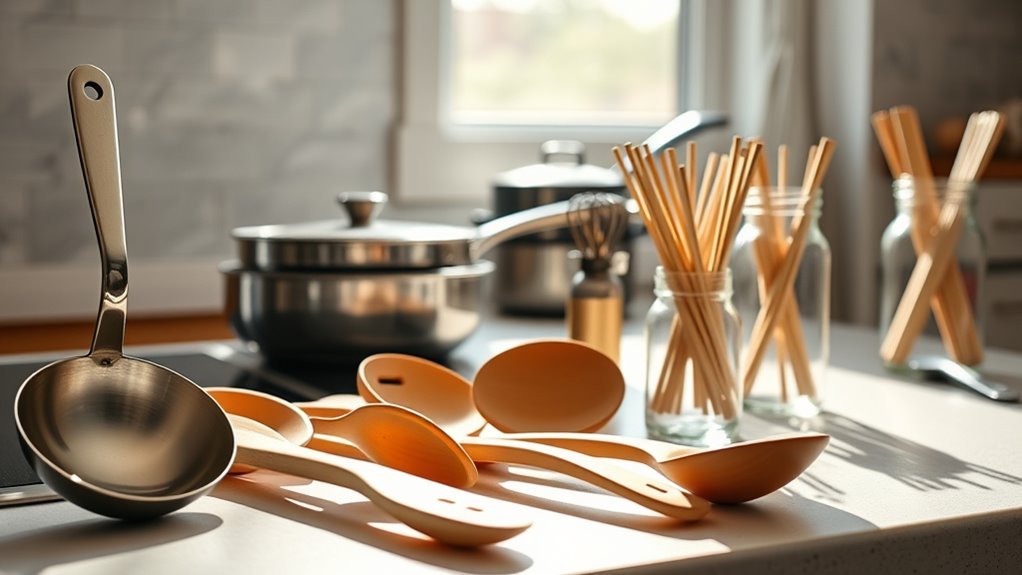
When my sister switched her nonstick spatula for a 100% platinum‑cured silicone turner, her scrambled eggs stopped tasting faintly “plastic.” You’ll want tools that won’t leach chemicals when heated, fit your cookware, and are easy to care for. I’ll walk you through which materials are safest, what to avoid, and simple buying checks so you can replace risky utensils with confidence—starting with the five pieces you really need.
Quick Answer: Which Non‑Toxic Utensils to Buy and Why
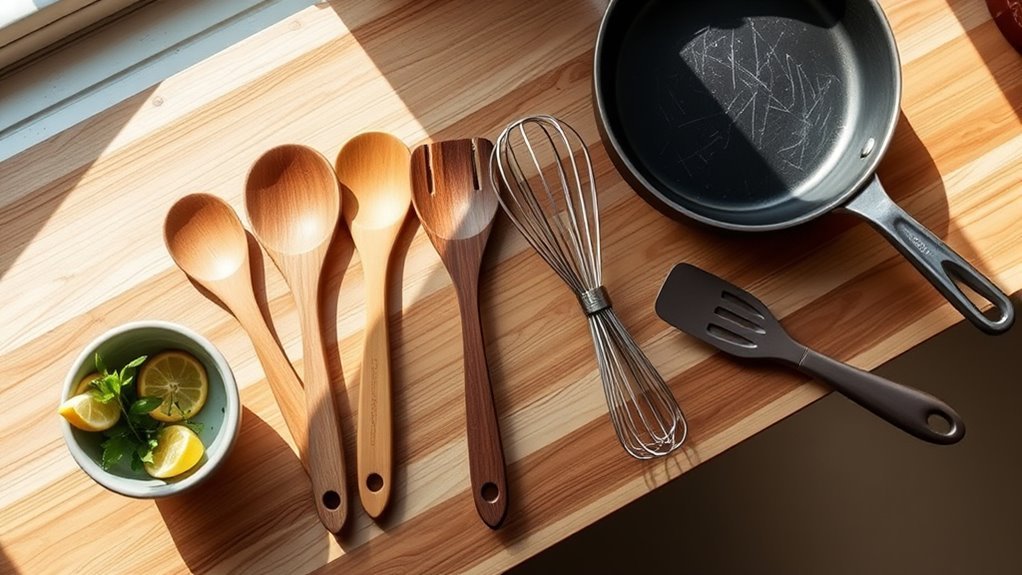
Looking for safe, long‑lasting utensils? You’ll want silicone utensils, stainless steel utensils, and wooden utensils as core non-toxic options.
Pick 100% platinum‑cured silicone: it’s heat-resistant to about 600°F, nonreactive, and won’t damage nonstick surfaces. For high‑heat searing and longevity, choose 18/10 or 18/8 stainless steel utensils — they resist corrosion and don’t leach toxins.
Natural, untreated wooden utensils (beech or maple) are biodegradable, safe across cookware types, and feel grounding; just hand wash and oil them periodically. Consider bamboo for a lightweight, compostable choice, but avoid coated pieces that may hide harmful chemicals.
Steer clear of plastic and nylon, which can degrade with heat and release BPA, phthalates, and microplastics into food.
These practical, evidence‑based picks free you from hidden exposures while supporting durable, repairable kitchen gear that aligns with a liberated, health‑forward lifestyle.
How to Choose Utensils by Cookware and Cooking Style
Match your utensils to the cookware you use—silicone for nonstick or enameled pans, and stainless steel for cast iron and stainless steel pots—to protect surfaces and get the best performance.
Pick tools that suit your techniques: stainless or metal for high-heat sautéing and frying, silicone for scraping and folding, and wood for gentle stirring.
Aim for a small, versatile set (flexible spatula, slotted spoon, ladle) made from food‑grade materials that fit both your pans and your cooking style.
Match Utensils To Cookware
Because different cookware materials respond differently to tools, choose utensils that protect surfaces and suit your cooking style.
When you use nonstick cookware, pick silicone or wooden utensils to avoid scratching the coating and keep the surface non-toxic.
For stainless steel cookware and traditional cast iron, metal utensils give you the leverage to lift and sear without damaging pans.
If you cook acidic dishes, prefer soft, non-reactive silicone so no harmful reactions occur.
Remember silicone resists high heat, so it covers many techniques safely.
For enameled cast iron, combine silicone and wooden utensils to preserve the enamel while still moving food effectively.
Match your cooking utensils to each pan’s needs and your desire for durable, safe, liberating kitchen tools.
Choose Tools By Technique
When you pick utensils by technique, think about how each tool interacts with your cookware and the heat you use: silicone—preferably platinum-cured—is best for nonstick and enameled surfaces.
Metal or high-quality stainless steel serves high-heat searing and heavy lifting, and untreated solid wood stays gentle and versatile across pans.
Match your choice to cooking technique: flexible silicone spatulas flip and scrape without scratching, while sturdy stainless steel turners handle high-heat cooking and heavy foods.
Choose food-grade silicone to guarantee non-toxic performance; avoid cheap blends.
Use untreated wooden utensils for stirring and sautéing when you want a chemical-free option that won’t damage surfaces.
Read cookware material guidelines and pick tools that respect both your pots and your desire for safe, liberated cooking.
Top 6 Non‑Toxic Utensil Materials
Pick the right material and your cookware will perform better and stay safer—here are six non‑toxic utensil materials that cover most home‑cooking needs. You’ll favor Stainless Steel for durability and non-reactivity; choose 18/10 or 18/8 for longevity. Use Wooden Spoons when you want a natural, antimicrobial option—handwash and oil them. Food-Grade Silicone handles High Temperatures and won’t scratch nonstick surfaces; pick BPA-free varieties. Bamboo is lightweight, eco-friendly, and biodegradable but avoid prolonged exposure to extreme heat. Titanium gives you a lightweight, corrosion‑resistant choice for intense heat, though it costs more. These options let you cook freely without compromising safety or performance.
| Material | Why it works |
|---|---|
| Stainless Steel | Durable, non-reactive |
| Wood | Natural, antimicrobial |
| Silicone | Heat-resistant, BPA-free |
| Bamboo | Lightweight, eco-friendly |
| Titanium | Lightweight, corrosion-resistant |
Materials to Avoid (Toxic Plastics, Nylon, Recycled Black Plastic)
Watch out for black plastics and nylon when choosing utensils, because they can release toxic additives and microplastics when heated.
Black recycled plastics may contain flame retardants from electronics that are linked to hormone disruption and other health risks.
For high-heat cooking, pick safer options like stainless steel, wood, or heat‑safe silicone to reduce your exposure.
Toxic Black Plastics
Because black plastics often hide harmful additives and contaminants, you should avoid them in your cookware and utensils. Toxic black plastics can contain brominated flame retardants and other harmful additives that enable chemical leaching into food, raising risks like endocrine disruption and chronic inflammation.
Recycled black plastics may carry heavy metals from e‑waste, so they’re not a safe shortcut. Avoid nylon utensils too: heat degradation makes them likely to release chemicals during cooking. Low-quality plastic utensils shed microplastics that contaminate meals and disturb gut microbiota.
Choose liberation in the kitchen by rejecting cheap, black, heat‑sensitive plastics and investing in solid alternatives—stainless steel, silicone rated for high heat, cast iron, or certified food‑grade wood—to protect your body and reclaim safe, honest cooking tools.
Heat‑Sensitive Nylon
When you cook at high heat, nylon utensils can warp, melt, and release chemicals into your food, so they’re a poor choice for stovetop or broiler work. You should avoid heat-sensitive nylon because it can degrade, leach toxins, and release harmful chemicals. Black nylon is especially risky — recycled sources may carry toxic flame retardants. Low-quality pieces shed microplastic shedding and contain fillers that contaminate meals. Choose liberation: reject unsafe plastics and opt for safer alternatives like stainless steel, wood, or high-quality food-grade silicone. Below is a quick comparison to help you decide.
| Material | Risk | Recommendation |
|---|---|---|
| Heat-sensitive nylon | High | Avoid near direct heat |
| Black nylon | High | Don’t buy recycled black |
| Silicone/Steel/Wood | Low | Prefer these alternatives |
The Essential Five‑Piece Non‑Toxic Utensil Set
If you want a compact, reliable base for everyday cooking, a five-piece non-toxic utensil set gives you the essential tools without excess clutter. You get a large spoon, slotted spoon, flexible spatula, turner, and ladle or tongs — an essential five-piece set that delivers extensive coverage for most tasks.
Choose non-toxic utensils made from platinum silicone for odor resistance, dishwasher-safe convenience, and heat-resistant performance up to 450°–600°, so acidic sauces won’t leach chemicals. If you prefer natural materials, wooden options like Jonathan’s Spoons offer antimicrobial properties and gentle care for cookware; with proper maintenance they can last for years.
The GIR Ultimate Utensil Set is an example that combines platinum silicone’s hygiene and longevity. Investing in this modest collection gives you versatility without waste: you’ll cook confidently, keep your kitchen lean, and free yourself from excess gadgets while covering everyday needs efficiently.
Best Non‑Toxic Picks by Material (Silicone, Wood, Stainless, Titanium, Bamboo)
When you choose utensils, match material to task: silicone gives heat-safe flexibility (typically 450°–600° for food‑grade grades) so you can stir nonstick pans without scratching them.
For everyday use, select hard, close-grained wood like maple or walnut and uncoated bamboo for natural durability and biodegradability, and remember they need handwashing and occasional oiling.
Stainless and titanium offer high-heat, nonreactive options if you need extra durability or lightweight performance.
Silicone: Heat-Safe Flexibility
Although it looks soft, high‑quality food‑grade silicone stands up to serious heat—typically 450°–600°F—so you can stir, flip, and scrape without melting or releasing chemicals into your food.
Choose silicone that’s 100% platinum-cured to avoid fillers that degrade; that limits chemical leaching and guarantees longevity.
Because silicone is nonreactive and nonporous, it won’t alter acidic sauces or harbor bacteria, and it’s dishwasher safe for easy cleanup.
It’s cookware-friendly — gentle on nonstick and enameled surfaces — making it a versatile choice for liberated cooks who refuse to compromise safety for convenience.
Avoid cheap, mixed plastics; they can break down at high temperatures.
In short: pick certified, heat-safe silicone and cook confidently.
Wood & Bamboo: Natural Durability
Because they combine durability with natural antimicrobial properties, wood and bamboo utensils make an excellent non‑toxic choice for everyday cooking.
You’ll appreciate wood’s natural durability—hard, close‑grained types like maple or walnut resist wear, last years with proper care, and carry antimicrobial benefits.
Bamboo offers a lightweight, eco‑friendly alternative that’s biodegradable and affordable, though it can degrade faster under high heat.
Both materials are gentle on cookware, protecting non‑stick and enameled surfaces while handling stirring, sautéing, and serving—versatile use that empowers you to cook confidently.
Note the maintenance needs: hand‑wash and oil wood with food‑safe mineral oil to prevent cracking; treat bamboo similarly and avoid prolonged heat exposure.
Choose these for safety, sustainability, and freedom from toxic plastics.
Silicone vs. Metal vs. Wood: Which to Use When
How do you choose between silicone, metal, and wood without overthinking it? You want non-toxic utensils that free you from worry and perform.
Use silicone for nonstick cookware: it’s heat-resistant (450°–600°F), flexible for scraping, and won’t scratch surfaces, though it can hold odors.
Reach for metal—stainless steel—for high-heat work and strength with stainless or cast iron, but avoid it on delicate nonstick.
Choose wood when you want a gentle, antimicrobial option that suits most cookware and adds a classic touch; it does need hand care and occasional oiling.
- Silicone: ideal for nonstick, flexible, heat-resistant
- Metal: durable, high-heat, best for stainless/cast iron
- Wood: antimicrobial, gentle, versatile across cookware
- Match material to task: scraping, searing, stirring
- Prioritize non-toxic materials and practical use
Pick tools that match your cooking style so your kitchen feels liberating and reliably safe.
Care, Cleaning & Disposal to Extend Lifespan
Choosing the right material is only half the story—how you care for, clean, and eventually dispose of utensils makes a big difference in safety and longevity.
You should hand-wash wooden utensils promptly, never soak them, and periodically rub food-safe mineral oil into the grain to prevent cracking and material degradation.
For silicone utensils, inspect them regularly for cracks or scratches; damaged items should be replaced because silicone is hard to recycle and harboring defects reduces hygiene.
Stainless steel utensils are durable and dishwasher-safe, but you’ll preserve their finish and avoid scratches by hand washing when possible.
Avoid prolonged soaking across all materials—wood and bamboo suffer most from water exposure.
When disposal’s due, seek recycling for stainless steel and bamboo where facilities exist; for silicone utensils, plan to replace rather than recycle.
These practical care and cleaning steps keep tools safe, reduce waste, and support your freedom to cook without compromise.
Common Safety Questions Answered (Silicone, Microplastics, Wood Bacteria)
What should you worry about when picking and using utensils made of silicone, plastic, or wood? You want non-toxic cooking tools that free you from hidden hazards.
Choose 100% platinum-cured silicone spatulas to avoid fillers and leaching when heated. Low-quality plastic utensils can shed microplastics and release BPA or phthalates—real health concerns—so limit their use.
Wooden utensils are naturally antimicrobial but need handwashing and occasional oiling to stay intact. Bamboo’s eco-friendly appeal is real, but avoid solvent-finished pieces.
- Prefer 100% platinum-cured silicone spatulas for heat safety and durability.
- Skip cheap plastic utensils to reduce microplastics and chemical exposure.
- Use wooden utensils for their antimicrobial properties; care for them properly.
- Choose uncoated bamboo or untreated wood to avoid solvent-based finishes.
- Wash silicone well after strong odors to prevent scent retention.
Stay practical and empowered: pick materials that match your values and care routines to protect health and the planet.
Practical Buying Checklist: Labels, Specs, and Red Flags
Because labels can hide important differences, scan product markings and specs before you buy to avoid costly mistakes: look for FDA-approved materials, 100% platinum-cured silicone, and stainless steel stamped 18/10 or 18/8; skip items that list generic “plastic” without certification or show warnings about BPA, phthalates, or flame retardants (black plastics are especially suspect); prefer FSC-certified, uncoated wood or bamboo and avoid glued composites that can off-gas formaldehyde.
When shopping for non-toxic utensils, read ingredient lists and seller notes: “food-grade” alone isn’t enough without FDA-approved materials. Favor stainless steel utensils with clear 18/10 or 18/8 stamps and avoid plated or mixed-metal items.
For silicone, insist on 100% platinum-cured silicone; it resists heat and lacks fillers that leach harmful chemicals. Reject any product advertising cheap plastics or vague recycling symbols—those often hide BPA or phthalates.
Choose FSC-certified wood, untreated and solid, and question bonded or laminated wood. Use this checklist to reclaim control over your kitchen and avoid hidden toxic exposures.
Frequently Asked Questions
What Is the Healthiest Material for Cooking Utensils?
The healthiest material for cooking utensils is stainless steel for its durability, heat resistance and non-reactivity.
You’ll weigh ceramic vs plastic and choose ceramic for non-toxicity, avoid plastic.
Bamboo benefits include sustainability and lightweight use; a wooden spatula offers antimicrobial properties.
Glass storage complements them.
Cast iron’s durable but reactive for some foods.
For eco friendly options pick stainless, bamboo, or high‑quality silicone after a durability comparison.
Which Is Safer, Silicone or Stainless Steel?
Both are safe: silicone wins for nonstick gentleness while stainless steel wins for rugged high-heat use.
You’ll weigh silicone durability against stainless steel conductivity; check heat resistance comparison and food safety standards to reduce chemical leaching risks.
Prefer food-grade silicone to avoid flavor absorption, and use stainless steel for heavy jobs.
Maintenance tips: dishwasher-safe silicone, occasional hand-wash stainless steel.
Consider environmental impact—steel lasts longer, silicone may degrade.
What Cookware Is 100% Non-Toxic?
No cookware is truly 100% non-toxic in all conditions, but you can choose ones that minimize risk.
You’ll want stainless steel, cast iron, enameled cast iron, glass cookware, titanium cookware, ceramic coatings, food grade silicone, and bamboo utensils.
Use well-made, food-grade products, avoid overheating, and replace damaged items.
That way you’ll reclaim safer cooking without compromising performance or your health.
What Are Some Non-Toxic Kitchen Utensils?
About 65% of people try safer kitchen swaps—so start bold: you can choose Bamboo spoons, Glass measuring cups, Silicone spatulas, Wooden cutting boards, Ceramic knives, Stainless steel tools, Reusable straws, and Non toxic bakeware.
You’ll get durable, low-reactivity utensils that reduce chemical exposure. Pick platinum-cured silicone, 18/10 stainless, and untreated bamboo or hardwood; clean and maintain them, and you’ll reclaim safer, freeing control over your cooking.
Conclusion
Think of your kitchen as a garden: the tools you choose are seeds that determine what grows. Pick 100% platinum‑cured silicone, high‑grade 18/10 or 18/8 stainless, responsibly finished wood or bamboo, or titanium, and you’ll harvest safer meals and less waste. Avoid black recycled plastics and nylon that can leach. Care for utensils properly, replace when worn, and check labels—small, evidence‑based choices yield healthier cooking and long‑term peace of mind.

