
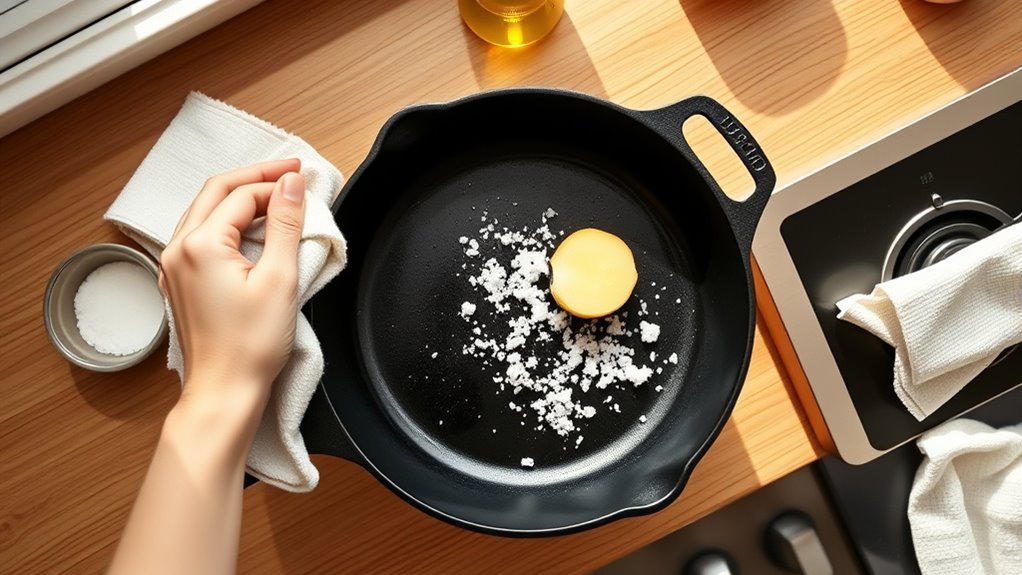
You’re holding a heavy, rustic pan that looks intimidating but cooks like a dream; you’ll want to treat it right from the start. You’ll get a solid, practical routine for a first clean, how to remove rust or stuck food without ruining seasoning, and exactly how to reseason so the pan performs. Keep going to learn the simple tools and step-by-step actions that make cast iron effortless to maintain.
Quick First-Time Clean for a New Cast-Iron Skillet (Step-by-Step)
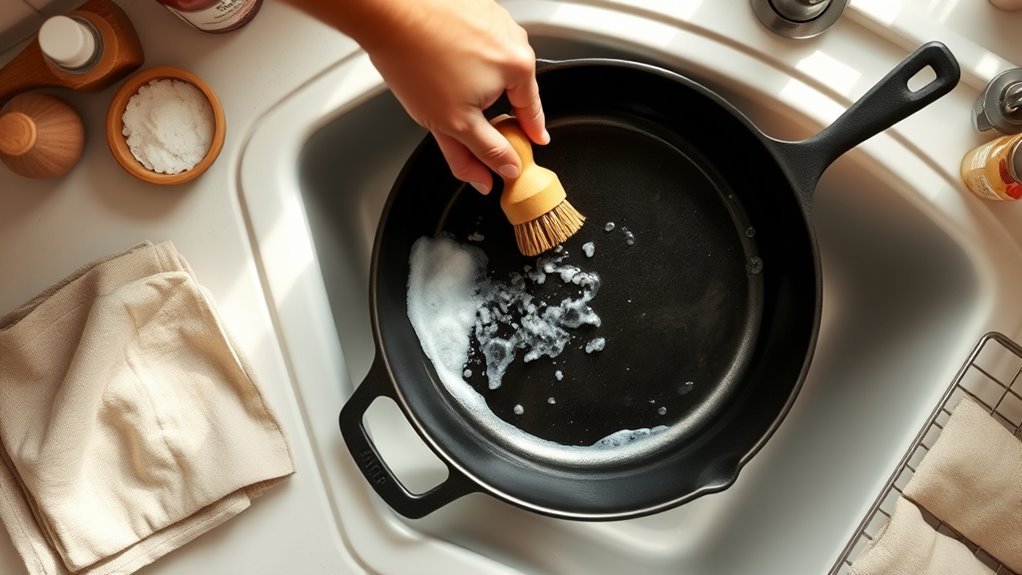
Start by washing your new cast-iron skillet with warm, soapy water and a non‑abrasive sponge to remove factory residue or dust; rinse thoroughly and dry completely with a paper towel or cloth to prevent rust.
You’ll be decisive: wash and dry until no moisture remains.
Apply a thin layer of neutral oil—vegetable or canola—over the entire surface, handle included, using a paper towel to spread and buff it evenly.
Coat the whole skillet, handle and all, with a thin layer of vegetable oil; buff evenly with a paper towel.
Preheat your oven to 450°F (230°C).
Place the oiled skillet upside down on the top rack with foil beneath to catch drips.
Bake for 30 minutes to begin to season cast iron and build a protective surface that’ll free you from disposable pans and fragile coatings.
Let the skillet cool inside the oven; this final step sets the layer and stabilizes the metal.
When it’s cool, you’re ready to cook and continue seasoning through regular use, gaining confidence and independence with each meal.
What to Know Before You Clean a New Skillet (Seasoning, Heat, Rust)
Your new skillet usually comes pre-seasoned with a soy-based oil, so you can use it right away after a quick wash.
Before cleaning, check the surface for any flash rust and let the pan cool to warm — washing it hot can harm the seasoning.
Start cooking on medium-low to learn its heat retention, and always dry and lightly oil the skillet after cleaning to protect the finish.
Seasoning Already Applied
Most new cast iron skillets arrive pre-seasoned, so treat that coating gently: wash the pan for the first time with warm, soapy water and a soft sponge, dry it thoroughly, then rub on a thin layer of neutral oil to lock in the seasoning and keep rust at bay.
You’re preserving a foundation that will improve with use; don’t strip it or test it with harsh scrubbing.
- Handle the seasoning like fragile armor: no abrasive pads.
- Use a non-abrasive sponge and mild soap on a new pan.
- After washing, dry it thoroughly—heat briefly if needed.
- Apply a thin coat of oil to the cookware while warm.
- Avoid acidic foods until the seasoning matures.
Protect the layer, build freedom in your kitchen, and let the skillet earn its nonstick power.
Check For Surface Rust
Before you scrub or season, inspect the surface for any reddish-brown spots—surface rust can appear even on pre-seasoned pans and should be removed before you proceed. You’ll want to check for rust across the whole skillet: edges, handle, and cooking surface. If you find rust, attack it with a rust eraser or fine steel wool until bare metal shows. Follow with warm soapy water to finish the cleaning process, rinse, and dry immediately. Oil lightly to reclaim protection and prevent repeat corrosion. You’re reclaiming control of your cookware—don’t accept damage. Use the table below to guide action.
| Problem area | Tool | Next step |
|---|---|---|
| Light spots | Rust eraser | Wash with warm soapy water |
| Heavy rust | Steel wool | Rinse, dry, oil |
Heat And Prewash Tips
If you’ve just unboxed a new cast iron skillet, give it a quick prewash with warm, soapy water to remove factory residue or dust, then dry it thoroughly—don’t soak it, which invites rust. Let these pragmatic steps free you from worry and get the pan ready for seasoning.
- Cool completely before cleaning to avoid thermal shock and potential cracking.
- Prewash quickly; scrub any factory oils or dust, then rinse and towel dry.
- Heat the skillet on low for a few minutes to evaporate leftover moisture so it’s bone dry.
- If you spot rust, remove it with a rust eraser or steel wool, then re-clean.
- Apply a thin layer of cooking oil and heat to set a resilient, liberating seasoning.
Gather Tools for Cast-Iron Care
Start by collecting a few simple tools that make cast-iron care quick and effective: a stiff-bristled brush or non-abrasive sponge, kosher salt for scrubbing, mild dish soap for occasional use, neutral oil (canola or vegetable) for re-seasoning, and a clean rag or paper towels for thorough drying.
You’ll want that stiff-bristled brush or non-abrasive sponge ready to lift residue without damaging your skillet’s seasoning. Keep kosher salt nearby as a natural, coarse abrasive you can use when scrubbing—no harsh chemicals needed.
Have mild dish soap like Palmolive Ultra Pure + Clear on hand for those rare times you need a deeper clean, but don’t make it routine; it can strip seasoning if overused.
After washing, dry the cast iron immediately and completely with a clean rag or paper towels to prevent rust. Finish by applying a thin coat of neutral oil to restore protection.
These simple tools set you free to maintain durable, reliable cookware.
Remove Stuck-On Food Without Harming the Seasoning
With your tools assembled, tackle stuck-on food while the skillet’s still warm so residues loosen more easily. You’ll free the pan without stripping its hard-won seasoning.
Pour a handful of kosher salt and add warm water; the salt acts as a gentle abrasive to remove stuck-on food without harm. Use a non-abrasive sponge or Dobie to scrub in circles; be firm but controlled.
- Pour boiling water for tougher bits, let it loosen, then scrub.
- Sprinkle kosher salt, add warm water, and work with a non-abrasive sponge.
- Use a wooden spatula to lift stubborn debris without scratching.
- Rinse, dry thoroughly over low heat to evaporate moisture.
- When dry, apply a light layer of oil to maintain the seasoning and prevent rust.
You’re reclaiming freedom in the kitchen: quick, effective cleaning keeps the skillet ready for the next meal while you maintain the seasoning and longevity of your cast iron.
Remove Rust Safely (New or Neglected Pans)
First check how bad the rust is so you know whether light scrubbing will do or if you need a vinegar soak for severe spots.
Use a rust eraser or fine steel wool with light to medium pressure to remove flaky rust, then wash with warm, soapy water and dry completely.
Once the pan’s clean and bone-dry, apply a thin layer of neutral oil and reseason to restore the protective coating.
Assess Rust Severity
A quick visual inspection will tell you whether the rust is superficial or extensive. You need to inspect for rust across the cooking surface, handle, and edges.
Decide your approach based on severity so you can reclaim the pan.
- Tiny reddish spots: ideal for light rust removal with a Scotch-Brite or rust eraser, using controlled pressure.
- Flaky, pitted areas: signal deeper corrosion; prepare for more work.
- Widespread reddish-brown coating: qualifies for severe rust treatment, like a vinegar soak to loosen scale.
- Post-clean check: confirm all rust is gone before washing with warm, soapy water and drying.
- Final step: re-season after cleaning with a thin oil layer to restore protection and prevent relapse.
Gentle Rust Removal
Now that you’ve judged how bad the rust is, you can begin gentle removal without harming the skillet’s seasoning. For light rust, grab a dry Scotch-Brite sponge or rust eraser and scrub firmly but calmly. For heavier rust, soak the pan in distilled white vinegar a few hours, then scrub. Rinse and wash thoroughly with warm soapy water, dry completely, and don’t let moisture linger. Apply a thin layer of neutral cooking oil to the surface to protect it. Establish a routine of light oiling to prevent recurrence and maintain the skillet’s seasoning. You’re reclaiming control — act decisively, preserve the iron, and let the pan serve you for years.
| Step | Tool | Result |
|---|---|---|
| Light scrub | dry Scotch-Brite sponge | Removes surface rust |
| Soak | vinegar | Loosens heavy rust |
| Wash | warm soapy water | Cleans residue |
| Dry | towel/heat | Prevents new rust |
| Oil | neutral cooking oil | Protects surface |
Reseason After Cleaning
Although the rust’s gone, you need to reseason the skillet right away to rebuild its protective, nonstick layer; scrub with a rust eraser or steel wool using light pressure, wash and dry completely, then apply a thin, even coat of neutral oil (canola or vegetable) over the whole surface.
You’ll reclaim a tool that serves freedom—rust happens, but you control the recovery. After washing, towel off and let it air dry fully; use a paper towel to wipe any remaining damp spots.
Apply a small amount of oil and spread it thinly. Bake upside down at 450–500°F for one hour, catching drips on a sheet. Cool in the oven until safe to touch; that’s the seasoning process that restores strength.
- Scrub gently with rust eraser
- Wash, rinse, air dry
- Wipe with paper towel
- Thin coat of oil
- Bake and cool
Drying and Oiling Cast Iron: The Three-Step Routine
Start by making sure your skillet is bone-dry before you put it away: wipe it with a clean paper towel or cloth, then set it over low heat for a few minutes to evaporate any lingering moisture. That drying step stops rust before it starts and frees you from constant worry about spots forming.
Next, remove the pan from heat and let it cool slightly so oil spreads easily without pooling. Apply a thin film of neutral oil—canola or vegetable—using a folded paper towel; rub it into every surface, inside and out, until the sheen is even but not greasy. This oiling protects the metal and preserves the seasoning you’ve worked to build, creating a reliable nonstick layer.
Store the skillet in a dry place. Repeat this wash-dry-oil routine after every cleaning to keep your cast iron strong, ready, and liberated from rust and sticky residue.
Reseason After Cleaning or Rust Removal
Once your skillet is bone-dry and lightly oiled from the three-step routine, you’ll want to rebuild and strengthen the seasoning layer after any deep clean or rust removal. You’ll do this deliberately to protect the metal and reclaim cooking freedom.
- Apply a very thin, even layer of neutral oil (canola or vegetable) over the entire cast iron skillet surface.
- Preheat the oven to 450–500°F so the oil polymerizes into a hard, protective seasoning layer.
- Place the skillet upside down on the top rack; set a baking sheet below to catch drips and prevent smoke.
- Bake for one hour, then turn the oven off and let the skillet cool inside to solidify the coating.
- Repeat the full seasoning bake 3–4 times to build a resilient, nonstick finish that resists moisture and future rust.
After this, your cast iron skillet will be stronger, ready for cooking, and less vulnerable—so you can cook boldly without fear of deterioration.
Everyday Cleaning Tips to Keep Cast-Iron Seasoning Strong
Keep your cast-iron skillet in top shape by cleaning it promptly after use with warm, soapy water and a non-abrasive sponge; this removes food without stripping the seasoning. You’ll prevent buildup and protect the pan’s surface when you rinse and dry it immediately.
Don’t soak cast iron skillets or leave them wet — that invites rust and undoes your work.
When residue clings, scrub with a handful of kosher salt and warm water; the salt abrasives free stuck bits without harming seasoning. Rinse, dry thoroughly over low heat or with a towel, then apply a thin layer of neutral oil while the skillet is warm to seal pores and repel moisture.
Cook with fatty foods regularly to strengthen the nonstick layer; every use is a chance to build seasoning.
Store your skillet in a dry place, and if stacking, tuck a paper towel inside to absorb moisture. These simple habits keep your cast iron reliable and free.
Troubleshooting Common Problems and When to Strip and Restart
When your skillet shows sticky spots, uneven seasoning, or rust, don’t panic—you can usually fix it without tossing the pan. You want a reliable cast iron skillet that frees you from disposable cookware—here’s how to troubleshoot and when to strip and restart.
If stuck-on food resists regular scrubbing, simmer water 3–5 minutes to loosen debris, then scrub.
Sticky or patchy seasoning means excess oil or low heat during seasoning; reset the surface by stripping and re-seasoning.
Minor rust responds to a Rust Eraser or steel wool—scour, wash, dry thoroughly, then re-season.
Severe rust or heavy buildup calls for a full strip (oven cleaner or vinegar soak) before you re-season for a fresh, durable layer.
- Simmer water to lift stuck-on food.
- Use steel wool or Rust Eraser for surface rust.
- Re-season after any scouring.
- Strip with oven cleaner or vinegar for heavy buildup.
- Never soak or use a dishwasher during cleaning.
Frequently Asked Questions
How to Clean Cast Iron Before First Time Use?
You wash it with warm, soapy water and a stiff brush to remove factory residue, rinse well, and dry completely to prevent rust.
Apply a thin oil layer for seasoning techniques, then bake upside down at 450°F for an hour. That builds your protective surface.
For rust prevention and maintenance routine, avoid harsh cleaning products later, wipe with a little oil after use, and follow cooking tips to preserve the pan’s freedom.
What Should I Do if I’m Using a Cast Iron Skillet for the First Time?
You’ll wash, dry, oil, and bake it to create seasoning techniques that free you from disposable pans. Use neutral oils, heat the skillet to polymerize the layer, then test cooking tips with simple sautéed vegetables or eggs to learn food compatibility.
Build a maintenance routine: clean with hot water, dry, and oil lightly. That prevents rust, lets you cook boldly, and gives you lasting, liberated cookware you can trust.
What Ruins a Cast Iron Skillet?
Like a betrayed ally, neglect and abuse ruin a cast iron skillet. You’ll invite rust without rust prevention: don’t soak or leave it wet.
Harsh detergents, dishwashers and abrasive scrubs strip seasoning techniques you worked to build. Cooking methods with strong acids too soon will eat the patina.
For freedom, follow maintenance tips: dry thoroughly, oil lightly, and follow storing guidelines so your skillet stays loyal and ready.
How to Clean a Cast Iron Skillet With Easy Off?
Don’t—Easy Off will strip seasoning and damage your skillet.
Use safe cleaning methods: scrub with kosher salt and warm water or a non-abrasive brush, rinse and dry thoroughly.
For maintenance tips, reapply a thin layer of cooking oils and heat to restore seasoning techniques.
Store your pan dry in a ventilated spot to prevent rust.
You’re free to cook boldly, but protect seasoning with proper cleaning, oiling, and storing practices.
Conclusion
Treat your skillet like a trusted workhorse: wipe away grit, dry it until it sizzles, and slick it with oil so the surface gleams like a well-worn saddle. Heat seals that protection, building layers of dark, resilient seasoning that’ll make browns and crusts release like memory. With simple cleansing, salt scrubs, and occasional reseasoning you’ll keep rust at bay and food sliding free—cook confidently, and your cast iron will grow more reliable with every meal.
