
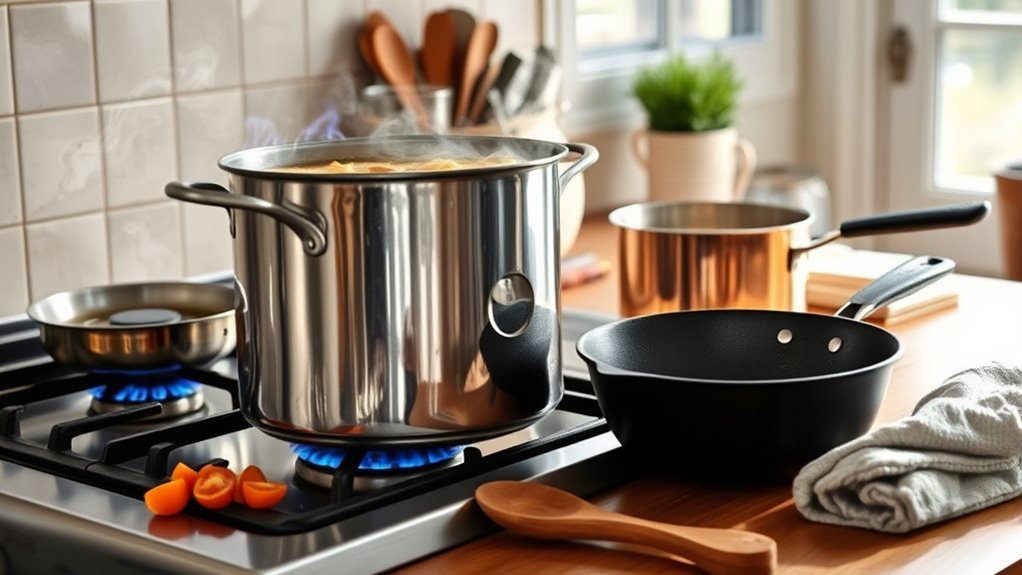
When you pick a metal pot, you want properties that match how you cook: fast, even heating for sautéing, strong retention for braises, and a non‑reactive surface for tomatoes or wine. Balance conductivity, heat capacity, and durability against weight, maintenance, and possible leaching. Different metals trade one strength for another, so knowing those differences will help you choose the right pot for the task—and there’s more to contemplate before you commit.
Quick Decision Checklist for Choosing a Metal Pot
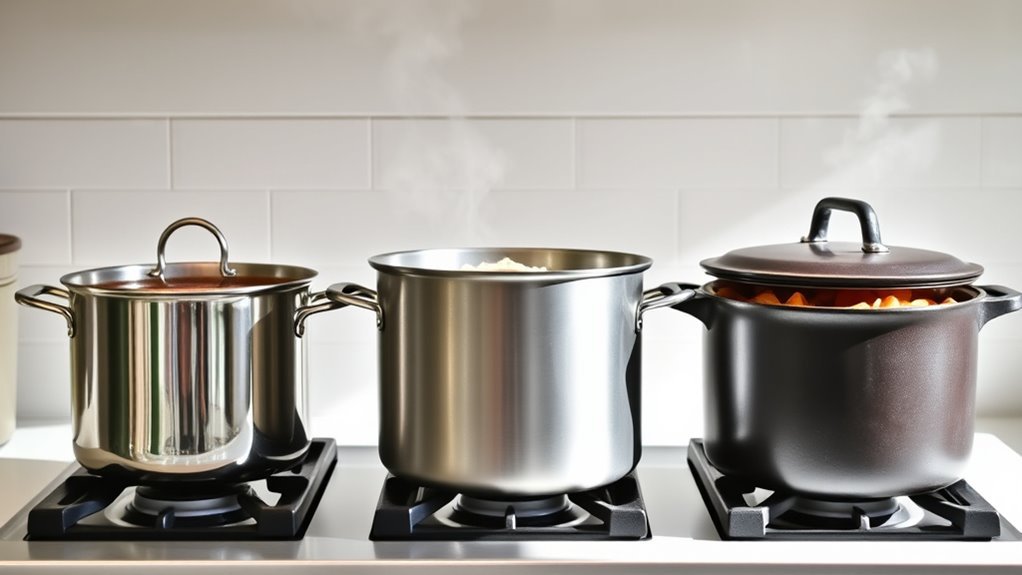
Start by matching the pot’s metal to your cooking needs: pick stainless steel or cast iron for durability and heat retention, choose aluminum- or copper-core construction for fast, even heating, and prefer non‑reactive stainless steel when you’ll cook acidic foods.
Next, ask practical questions: will your induction hob require a magnetic base for compatibility? Do you need a heavy pot for steady heat during slow braises, or something lighter for quick sautéing? Check manufacturer specs for core materials to assess heat distribution and avoid hot spots that disrupt the cooking process.
Favor stainless steel when you want a non-reactive surface that won’t alter flavors or leach metals. Consider weight and handle strength for safety and stability.
Finally, balance durability with routine care—cast iron needs seasoning but rewards you with resilience; multi‑layer stainless steel costs more but improves overall performance. Use this checklist to choose a pot that frees you to cook confidently.
Heat Properties That Matter for Metal Pots (Conductivity, Capacity, Retention)
Having picked a metal that matches your cooking needs, you’ll want to focus on three measurable heat properties—thermal conductivity, heat capacity, and heat retention—because they determine how a pot responds to heat and how it affects cooking results. You’ll choose aluminum for fast, even heating thanks to high conductivity when you need quick sautéing or frying. Cast iron’s high heat capacity and weight give steady temperatures for slow cooking and searing. Stainless steel, particularly with a thick base, offers good heat retention and corrosion resistance, and many stainless and cast iron pots provide reliable induction compatibility.
| Property | Practical effect |
|---|---|
| Conductivity | Rapid, uniform cooking across the surface (aluminum) |
| Heat capacity | Stores energy for steady simmering (cast iron) |
| Heat retention | Maintains consistent temps; efficient energy use (stainless steel) |
Match these traits to technique: choose conductivity for speed, heat capacity for stability, and retention for consistency and liberation in the kitchen.
Why Non‑Reactive Surfaces Matter for Acidic Foods
Because acidic ingredients can react with certain metals, choosing non‑reactive cookware like stainless steel or well‑coated pots keeps flavors and nutrients intact when you cook tomatoes, citrus, or wine‑based sauces.
You want cookware that won’t impart metallic tastes or leach substances into your food; non-reactive surfaces do that reliably. Stainless steel—including common grades like 18/10 stainless steel and 18/0—offers a stable barrier against acid, so your sauces stay bright and true.
If you’re health-conscious, note that reactive metals can affect nutritional quality and interfere with vitamin and mineral retention. Choosing the right pot also supports autonomy in the kitchen: you control flavor and safety without compromise.
For those with nickel sensitivity, 18/0 avoids nickel concerns while still giving you a non-reactive option for acidic foods.
When you cook with purpose, picking non-reactive materials preserves taste, protects nutritional value, and lets you prepare vibrant, freeing meals with confidence.
Surface Finishes Compared: Stainless, Seasoned Cast Iron, Enamel, Nonstick
Now that you know why non‑reactive surfaces matter for acidic dishes, you’ll want to compare the common finishes so you can pick the right pot for each job. You’ll find clear tradeoffs: Stainless Steel is durable, non‑reactive, great for browning and deglazing, and offers good heat retention with low maintenance. Seasoned cast iron gives superb heat retention and flavor depth but needs regular seasoning as maintenance. Enamel pairs cast iron’s heat retention with a non‑reactive, easy to clean surface—ideal for tomatoes and braises—though chips can happen. Nonstick makes low‑fat cooking effortless and is easy to clean, but demands gentle care to avoid scratching and reduced lifespan.
| Finish | Strength | Care/Use |
|---|---|---|
| Stainless Steel | Durable, non‑reactive, heat retention | Minimal maintenance |
| Seasoned cast iron | Excellent heat retention, flavors | Regular seasoning upkeep |
| Enamel / Nonstick | Enamel: easy to clean; Nonstick: release | Enamel: avoid chips; Nonstick: gentle cleaning |
Material Tradeoffs: Stainless vs Cast Iron vs Aluminum
When you choose between stainless steel, cast iron, and aluminum, balance heat conductivity and weight against durability and reactivity.
Aluminum heats fast and is light but can warp and react with acidic foods, while cast iron holds heat superbly yet is heavy and can leach iron.
Stainless steel sits between them with good durability and low reactivity.
Consider which tradeoffs matter most for your cooking style and the foods you prepare.
Heat Conductivity & Weight
If you want pots that heat quickly and evenly, aluminum is the clear choice—its high thermal conductivity lets it respond fast to changes in heat and spread temperature across the cooking surface, while stainless steel conducts heat poorly and often needs a layered or bonded aluminum/copper core to perform similarly; cast iron sits on the opposite end, heating more slowly but holding heat exceptionally well, which is useful for steady, even cooking and searing despite its greater weight.
| Property | What it means for you |
|---|---|
| Heat conductivity | Aluminum cookware heats fast; stainless needs cores; cast iron retains heat |
| Weight considerations | Aluminum is light; cast iron is heavy but stable |
| Durability | Stainless steel pots resist warping; aluminum can distort |
| Cost efficiency & health and safety | Aluminum is affordable; stainless is safer and longer-lasting |
Durability & Reactivity
Although all three metals can serve you well for years, they demand different care and bring different risks: you’ll choose differently if you want low fuss or full control.
Consider these practical tradeoffs:
- Stainless steel: high durability, non-reactive, resists rust spots and tolerates dishwasher maintenance; it needs a thicker base for good heat distribution but gives reliable, low-maintenance service.
- Cast iron: can last a lifetime and offers superb heat retention, but requires seasoning and vigilant maintenance to avoid rust spots; once seasoned it’s effectively non-reactive for most cooking.
- Aluminum: excellent heat distribution and lightweight freedom, but it’s reactive with acids, can alter flavor and leach metals, and scratches or dishwasher use reduce longevity.
Choose based on how much care and control you want.
Base Construction and Induction Compatibility (Sandwich Bottoms, Magnetic Bases)
Because heat control starts at the bottom, choosing a pot with a well-made base matters for real-world cooking performance. You want a sandwich bottom: stainless steel outer layers bonded to an aluminum or copper core.
That layered design gives even heat distribution, eliminates hot spots, and improves cooking efficiency so you use less energy and get consistent results. For induction compatibility, confirm the pot has a magnetic base — usually stainless steel engineered to respond to electromagnetic fields.
Layered bottoms deliver even heat, eliminating hot spots and improving efficiency—check for a magnetic stainless base for induction.
Thicker bases resist warping, retain heat longer, and add durability, so your cookware stays reliable as you practice liberated, intentional cooking. A quality base also makes the pot versatile across gas, electric, and induction ranges, reducing the need to buy multiple pieces.
When choosing, prioritize a well-constructed sandwich bottom with a proven magnetic base and substantial thickness; it’s a practical investment that lets you focus on technique and flavor, not chasing uneven heat.
Weight, Handling, and Lid/Handle Ergonomics
A solid base sets the stage for how a pot heats, but how that pot feels and performs in your hands matters just as much during real cooking. You want a balance between weight and handling: heavier pots (stainless steel, cast iron) boost stability and heat retention, while lighter aluminum options make lifting and pouring easier.
Choose ergonomic handles and clear lid design to support confident, liberated cooking.
- Weight vs control — heavier pots hold heat and resist tipping; lighter pots speed heating and reduce strain when you move them.
- Ergonomic handles — stay-cool, heat-resistant grips (silicone or well-designed metal) improve comfort and reduce burn risk during long cooks.
- Lid design & stability — a snug lid seals moisture and heat; tempered glass lids let you monitor without lifting, and a balanced pot minimizes spills when transferring.
Also consider induction compatibility: a suitably thick, ferromagnetic base maintains even heating on induction while preserving the handling traits you prefer.
Safety and Health: Leaching, Nickel Allergy, and Safe Coatings
When you’re choosing cookware, think about what can migrate from metal or coatings into your food and how that affects long-term health. You want a pot that supports your freedom to cook without worry:
Stainless Steel (especially 18/10) is largely non-reactive and resists leaching, offering reliable health safety for most dishes. Be mindful that prolonged cooking of very acidic foods can cause minor leaching even from stainless, so vary methods or shorten exposure when you can.
If you have a nickel allergy, pick 18/0 Stainless Steel or nickel-free alternatives to avoid skin and digestive reactions.
For non-stick needs, choose safe coatings—high-quality ceramic finishes avoid PTFE and PFOA and reduce toxic risk when used correctly. Clean and maintain cookware per manufacturer instructions to limit wear and potential migration.
Best Uses by Metal Type: Which Pot for Which Dish
Knowing what’s safe to cook in matters, but you also want pots that suit specific techniques and dishes.
Knowing what’s safe to cook in matters, and choosing pots that match techniques and dishes makes better meals.
Choose stainless steel for simmering and braising: it’s durable, won’t alter flavors, and its pros and cons include less-than-ideal heat distribution unless layered with aluminum or copper cores.
For slow-cooking and frying, use cast iron — it retains heat for even results and deep flavor development during the cooking process.
Aluminum works when you need lightweight pans for quick boiling and sautéing; its high conductivity speeds the cooking process but watch for warping on high heat.
- Stainless steel — best uses: sauces, soups, braises; works on induction if cladded.
- Cast iron — best uses: stews, casseroles, high-heat frying; superb heat retention.
- Aluminum/copper/non-stick — best uses: quick boils, delicate sauces, eggs/pancakes respectively.
Match metal to method, respect pros and cons, and free your kitchen with informed choices.
Final Buying Checklist: Budget, Cooking Style, and Maintenance
Before you buy, set a budget that balances upfront cost with expected lifespan—stainless steel and cast iron cost more but last longer than aluminum.
Match the pot to your cooking style so you’re not paying extra for features you won’t use, and consider maintenance: dishwasher-safe stainless steel saves time while cast iron needs seasoning.
Thinking regarding budget and care will help you get the best long-term value.
Budget And Value
If you’re balancing upfront cost with long-term performance, prioritize how you’ll cook and how much upkeep you’ll tolerate.
Use budget considerations to match initial cost against long-term durability: stainless steel pots cost more initially but often deliver better value over years.
Match cooking style compatibility to material—stainless steel for browning and deglazing, cast iron for searing and slow cooking—to avoid buying tools you won’t use.
- Assess maintenance requirements: choose tougher finishes if you want low fuss, or accept polishing and gentle cleaning for performance.
- Compare lifecycle cost: higher initial cost can mean fewer replacements and better heat behavior.
- Prioritize freedom: buy cookware that supports your cooking goals and liberates time, not chores, while maximizing value.
Care And Longevity
Because the right care routine can double a pot’s useful life, match your purchase to how much time and effort you’ll actually put into maintenance. You’ll want clear care instructions: use mild cleaning agents, avoid abrasives, and prefer hand washing when material demands it.
Consider longevity factors like multi-layered bases for even heat distribution and durability features such as higher-grade alloys; Stainless Steel Cookware (18/10) costs more but resists wear better than 18/0.
Align maintenance requirements with your lifestyle—dishwasher-safe pieces suit busy days, while cast iron or polished steel need more hands-on tending.
Choose pots that fit your budget, cooking style, and willingness to care for them; that freedom keeps cookware performing longer and frees you to cook with confidence.
Frequently Asked Questions
What Physical Property Makes Metal Pots Good for Cooking?
The key physical property is heat conductivity: it lets you control cooking by spreading heat evenly.
You’ll also value thermal stability for steady temperatures, durability factors like resistance to warping, and corrosion resistance to keep food safe.
Consider weight considerations for handling, watch reactivity levels with acidic foods, and follow maintenance needs to prolong life.
These traits free you to cook confidently and creatively without equipment holding you back.
What Are the Downsides of Using Stainless Steel Pots and Pans?
You’ll face durability concerns, cleaning challenges, and weight considerations with stainless steel pans.
They’ve mediocre heat retention and uneven conduction versus copper or aluminum, and can show scratches that hurt aesthetic appeal.
Some grades pose reactivity issues with acidic foods.
Price factors vary—good multilayered pieces cost more.
Still, you’ll gain durability and versatility, but expect upkeep, occasional sticking, and heavier lifting.
What Is the Healthiest Metal for Cookware?
Hit the ground running: you’ll find stainless steel is the healthiest overall — it resists corrosion and needs stainless steel maintenance, so it won’t leach.
Cast iron’s great if you follow iron seasoning tips and want extra dietary iron.
Copper cookware benefits heat control but needs lining; aluminum heat conductivity is excellent yet raises metal toxicity concerns.
Choose non stick coatings and eco friendly materials wisely, and you’ll cook free and safe.
Which Metal Pot Is Best for Cooking?
Cast iron is best for many cooks who want durability and freedom to cook boldly, but copper cookware wins for precision because of superior heat conductivity.
You’ll value aluminum benefits for fast, even heating and lightness; nonstick surfaces help low-fat cooking.
Consider durability factors and maintenance tips: season cast iron, polish copper, choose anodized aluminum, and avoid harsh scrubbing to keep your cookware performing and empowering your kitchen practice.
Conclusion
Choose the metal pot that matches how you cook: pick aluminum for quick sautés, stainless steel for reliable simmering, and cast iron for slow, high‑heat braises. Consider weight, maintenance, and whether you need a nonreactive surface for tomatoes or acid. For example, imagine searing short ribs in a heavy cast‑iron Dutch oven that holds steady heat for hours—juicy, fork‑tender results. Balance budget, care, and dish type to get consistent, safe, delicious outcomes.
