
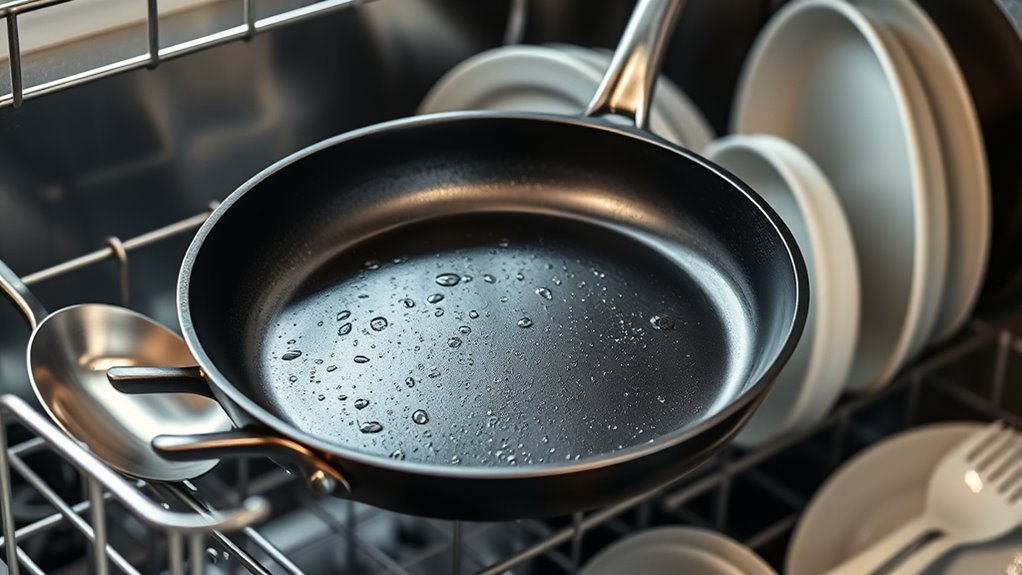
Is it wise to toss your carbon steel cookware into the dishwasher? While the convenience might tempt you, the risks involved could greatly undermine your investment. Harsh detergents and high heat can strip away essential seasoning, leading to rust and poor performance. Understanding the implications of improper care is vital for maintaining your cookware’s integrity. Explore the best practices to guarantee your carbon steel remains in peak condition for years to come.
Why You Should Never Put Carbon Steel Cookware in the Dishwasher
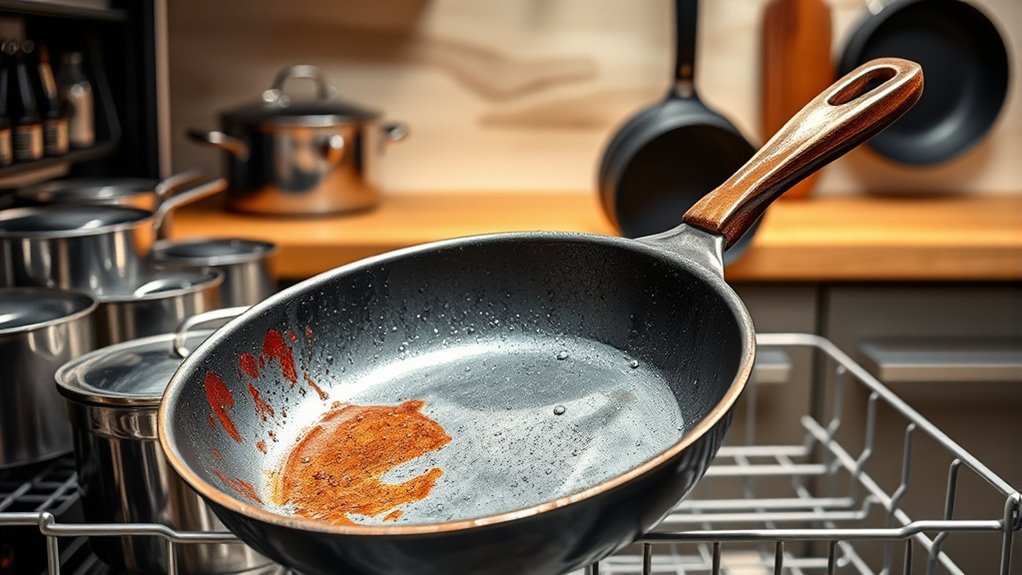
While it may seem convenient to toss your carbon steel cookware in the dishwasher, doing so can severely compromise its performance and longevity. The harsh detergents and prolonged moisture in dishwashers strip the essential seasoning, leaving your pan vulnerable.
Warping can occur due to high heat and intense water pressure, diminishing its effectiveness over time. Soaking in water increases the risk of rust, deteriorating the integrity of the steel.
To maintain the ideal cooking surface, you should hand wash your carbon steel pans. Use warm water and avoid abrasive materials that can scratch the surface and disrupt the seasoning. A few drops of mild dish soap can help, but it’s often unnecessary.
What Are the Risks of Dishwashing Carbon Steel Cookware?
When you put carbon steel cookware in the dishwasher, you greatly increase the risks of damaging its seasoning and overall functionality.
The high moisture environment and excessive heat can lead to rust, undermining the protective layer that gives carbon steel pans their non-stick properties. Soaking in water, as dishwashers do, accelerates rust formation and compromises the seasoning, which is essential for optimal cooking performance.
The high moisture and heat of dishwashers can cause rust and damage the essential seasoning of carbon steel pans.
Additionally, the abrasive action of dishwasher detergents strips away the seasoning, diminishing both usability and lifespan. High heat can warp carbon steel pans, affecting their structural integrity and cooking capabilities.
To maintain your cookware’s longevity, hand washing with warm water and a gentle sponge is vital. This method preserves the seasoning and prevents the risks associated with being dishwasher safe, ensuring your carbon steel remains a reliable kitchen ally for years to come.
How to Properly Clean Your Carbon Steel Cookware
To keep your carbon steel cookware in ideal condition, it’s important to adopt the right cleaning methods. Always hand wash your carbon steel pan using warm water and a gentle sponge. This helps maintain the seasoning and prevents damage.
Avoid soaking the pan, as prolonged exposure to water can lead to rust and degrade the seasoning. If you encounter stubborn residue, you can use a small amount of soap sparingly, but make sure to rinse thoroughly.
Immediately after washing, it’s vital to dry the pan completely to prevent rust formation. Once dry, apply a light layer of oil to protect against moisture and enhance longevity.
Remember to wipe away any excess oil, as too much can interfere with the seasoning. By following these steps, you guarantee your carbon steel cookware remains functional and well-maintained, allowing you to enjoy a superior cooking experience.
Key Maintenance Practices for Long-Lasting Carbon Steel Cookware
Maintaining carbon steel cookware is essential for ensuring its longevity and ideal performance. As a home cook, you should never place your pan in the dishwasher; moisture and harsh detergents will strip the seasoning and lead to rust.
Instead, hand wash with warm water and a gentle sponge, focusing on clean carbon without damaging the surface. After washing, dry your pan immediately and thoroughly—ideally, heat it on the stove to evaporate any remaining moisture. This step is vital to prevent rusting.
Additionally, applying a light coat of high-smoke-point cooking oil after cleaning helps maintain the seasoning and protects against rust during storage. Be particularly cautious with acidic foods, as they can compromise seasoning.
Regular maintenance and seasoning after cleaning enhance your pan’s non-stick properties and extend its lifespan, allowing you to enjoy cooking with this versatile tool.
Best Practices for Maintaining Carbon Steel Seasoning
Carbon steel seasoning requires consistent attention to guarantee peak performance and longevity. To maintain your cookware effectively, follow these best practices:
- Hand wash with warm water and a gentle sponge—avoid dish soap.
- Never soak your pan in water; prolonged exposure leads to rust.
- Dry your pan immediately after washing to prevent moisture buildup.
- Apply a light coat of high-smoke-point oil to protect against rust.
- Regularly season your pan to build and reinforce the non-stick surface.
These steps help you keep your pan in ideal condition, ensuring it can handle temperature changes without compromising its seasoning.
Maintaining your pan ensures it withstands temperature shifts while preserving its vital seasoning.
Remember, the right care will enhance the flavor of your food and extend the life of your cookware. Avoiding dishwashers is essential; they strip seasoning and invite rust.
Stay diligent, and your carbon steel will serve you well for years.
Alternatives to Dishwashing Your Carbon Steel Cookware
When it comes to cleaning your carbon steel cookware, hand washing is the ideal choice.
Use warm water and a gentle sponge to avoid damaging the seasoning, and for tough residue, consider a mixture of coarse salt and oil.
This method not only protects the integrity of your pan but also guarantees its longevity.
Hand Washing Techniques
To keep your carbon steel cookware in top condition, hand washing is the best approach. Using dish soap can strip the protective seasoning, so follow these techniques to maintain your pan:
- Use warm water and a gentle sponge to avoid scratching the surface.
- For stubborn bits of food, mix coarse salt with oil for a natural abrasive.
- Rinse thoroughly to eliminate any soap residue.
- Dry the pan immediately over medium heat to evaporate moisture.
- Apply a light coat of oil post-drying to prevent rust.
Alternative Cleaning Methods
While traditional hand washing is the safest option for maintaining carbon steel cookware, several alternative cleaning methods can be effective without risking damage to the seasoning.
Start by using warm water and a gentle sponge to clean the pan, ensuring you avoid soaking it, as prolonged exposure can deteriorate the protective layer.
For stubborn residue, consider the simmering water method: bring water to a simmer in the pan and use a spatula to scrape off food. This technique loosens stuck particles without harsh scrubbing.
After cleaning, dry the pan thoroughly and apply a light coat of oil before storage. This light oil application helps prevent rust formation, keeping your cookware in prime condition.
Frequently Asked Questions
What Metal Cannot Go in the Dishwasher?
You should avoid putting aluminum cookware, cast iron, and carbon steel in the dishwasher.
These materials can suffer damage from harsh detergents and high heat. Nonstick surfaces may degrade, while copper pots can tarnish and lose their shine.
Even stainless steel, though generally safe, requires caution if it has wooden handles or delicate finishes.
For best results, hand-wash these items to maintain their integrity and prolong their lifespan.
What Are the Downsides of Carbon Steel Pans?
Carbon steel pans offer excellent heat retention and cooking versatility, but they come with downsides.
Without proper maintenance, they’re prone to rust, especially if you neglect seasoning techniques. You’ll need to follow maintenance tips meticulously to guarantee longevity.
Acidic foods can strip the seasoning, diminishing their non-stick properties. If you’re not committed to regular care, consider alternatives that require less attention and will still serve your culinary needs effectively.
How Do I Clean My Made in Carbon Steel Pan?
Cleaning your made in carbon steel pan isn’t as simple as tossing it in the dishwasher—ironic, right?
Instead, embrace warm water and a gentle sponge for effective cleaning methods. For stubborn bits, try coarse salt and oil to scrub without harming the seasoning.
To maintain your pan, dry it on a hot burner for rust prevention and apply a light oil coat before storage.
This maintenance routine guarantees your cooking techniques shine through.
What Shouldn’t You Cook in a Carbon Steel Pan?
You shouldn’t cook acidic foods, like tomato sauce, in a carbon steel pan, as they disrupt seasoning techniques and lead to discoloration.
Avoid high-moisture items for extended cooking, which can promote rust and damage the pan’s surface.
Steer clear of sticky or sugary foods that create tough residues, and be cautious with strong-smelling ingredients, as they can impact future dishes.
Finally, don’t use it for deep frying, which risks overheating and affects durability factors.
Conclusion
In conclusion, putting carbon steel cookware in the dishwasher is like throwing a priceless painting into a rainstorm—it ruins what you cherish. The harsh detergents and steam can strip away seasoning, leading to rust and poor performance. By hand washing and applying a light coat of oil, you guarantee your cookware remains in prime condition. Prioritizing these maintenance practices not only preserves its longevity but also enhances your cooking experience, making every meal a masterpiece.
