
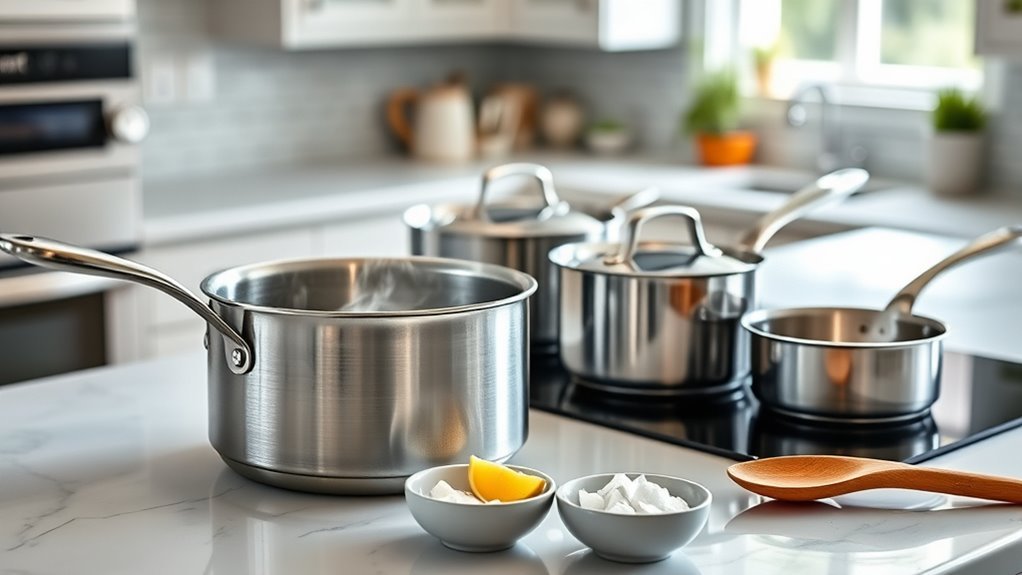
Most Cuisinart stainless steel cookware is 18/10 grade, which means it contains more nickel than you probably realized and that boosts corrosion resistance and shine. You can cook acidic foods without significant leaching under normal use, but nickel-sensitive people and heavily scratched pans deserve extra care. Keep going to learn when stainless steel can become a risk, how to spot real 18/10, and practical steps to protect your cookware and health.
What Cuisinart Stainless Steel Is Made Of (And Why It Matters)
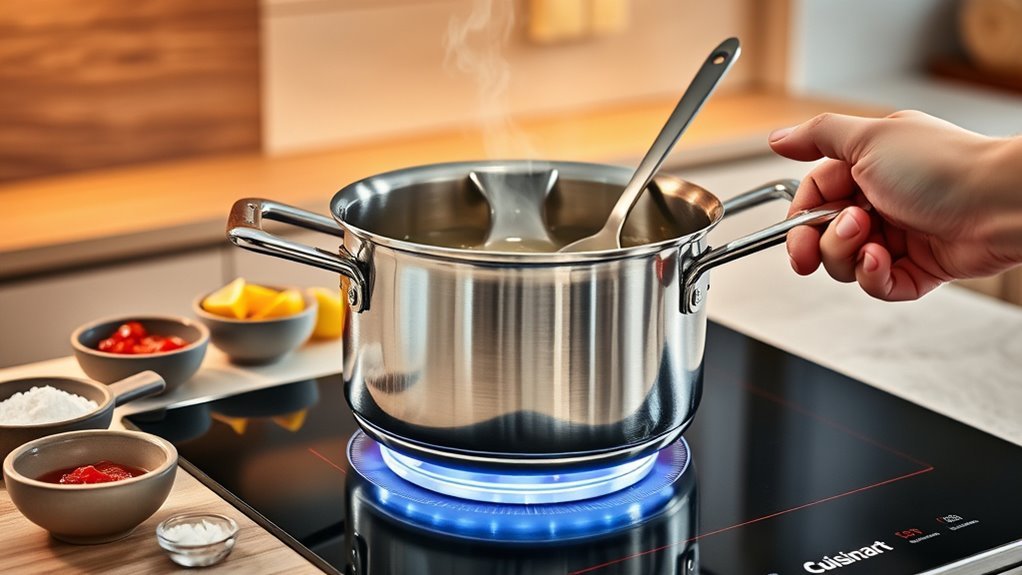
Composition matters: Cuisinart stainless steel cookware is made from 18/10 stainless steel—18% chromium and 10% nickel—which gives it strong resistance to rust and corrosion and makes the surface non-reactive with acidic foods like tomatoes or vinegar.
You’ll find that Cuisinart cookware’s stainless steel construction avoids the reactive behavior of some metals, so flavors stay true and acids don’t trigger metallic tastes. Evidence shows 18/10 alloys form a stable chromium oxide layer that protects the core and prevents degradation.
Unlike coated non-stick pans, this solid metal design doesn’t rely on surface chemicals, so there’s no concern about harmful coatings breaking down. With proper care—moderate heat, gentle cleaners—you preserve that protective layer and reduce wear.
Unlike coated non-stick pans, solid stainless steel needs no chemical surface—care with moderate heat and gentle cleaners preserves its protective layer.
That means you won’t have metals or surface residues leach into your food under normal cooking conditions. Choosing this material supports practical autonomy: you control cooking methods and safety without surrendering to hidden risks.
Quick Answer: Is Cuisinart Stainless Steel Safe to Cook With?
Having established what 18/10 stainless steel means and how it resists corrosion and acidity, you can expect Cuisinart stainless cookware to be safe for regular cooking. The 18/10 Stainless composition makes the surface non-reactive with acidic ingredients, so your sauces and marinades won’t pick up metallic tastes or harmful contaminants.
Evidence shows Cuisinart cookware doesn’t leach harmful substances under normal use, supporting its classification as a non-toxic option for everyday meals.
You should still care for the pans methodically: avoid abrasive cleaners and aggressive scrubbing that can mar the finish, and prefer hand-washing to extend lifespan even though the pieces are dishwasher-safe.
These practices maintain the integrity of the Steel surface and keep cooking safe. If you seek culinary independence, this cookware lets you prepare food confidently, relying on proven materials and straightforward care to protect flavor and health.
When Stainless Steel Can Pose Health Risks (Nickel, Scratches, Overheating)
When you use Cuisinart 18/10 stainless cookware, be aware that deep scratches can expose nickel-containing layers and increase the chance of nickel leaching. This matters for people with nickel allergy.
You should also avoid overheating pans, since sustained high heat can warp or damage the steel and compromise its safe performance.
Routinely inspect for cuts, discoloration, or warping and use gentle cleaning to minimize both nickel exposure and heat-related damage.
Nickel Allergy Risk
Although Cuisinart’s 18/10 stainless steel is durable and widely used, it contains about 10% nickel, so people with nickel allergy can be at risk of exposure if the surface is damaged or overheated.
You should recognize that nickel allergies vary in severity; even brief contact or ingestion of leached nickel can trigger reactions in sensitive individuals. Scratches compromise the passive oxide layer, increasing potential leaching from stainless steel cookware.
To reduce risk, use gentle utensils, avoid abrasive cleaners, and clean promptly after use to prevent corrosion. Control heat settings—prefer low to medium—to minimize metal release.
If you’ve confirmed nickel sensitivity, consider alternatives or barrier strategies (coatings, non-metal liners) so you can cook freely without compromising health or autonomy.
Damage From Overheating
If you’re managing nickel sensitivity by avoiding scratches and abrasive cleaners, you also need to control heat: overheating stainless steel can warp pans and damage their protective oxide layer, increasing the chance of metal release from scratched areas.
You should avoid prolonged high heat because warping creates uneven contact and poor heat transfer, undermining your ability to heat evenly and increasing localized stress on the surface. That stress, combined with existing scratches, raises the likelihood of nickel release — a concrete concern for people with nickel allergies.
Use low-to-medium settings, preheat gently, and favor even-contact techniques. Clean with mild agents, and treat surfaces with a light olive oil or diluted vinegar polish to minimize streaks and preserve the finish.
How To Tell If a Cuisinart Pan Is Real Stainless Steel
A quick magnet test will tell you a lot: stick a small magnet to the pan—if it doesn’t hold, the cookware is likely true stainless steel, since 18/10 stainless (Cuisinart’s standard) is largely non-magnetic due to its chromium and nickel content. You’ll also look for a bright, rust-resistant finish and the absence of non-stick coatings; genuine stainless cookware is smooth and polished, not covered with Teflon-like layers. Inspect for deep scratches or pitting—excessive wear can indicate inferior materials. Compare weight and thermal feel: authentic 18/10 steel has solid heft and responds predictably to heat, unlike hard anodized or thin plated alternatives.
| Check | What to expect |
|---|---|
| Magnet | No strong attraction |
| Finish | Shiny, smooth, no coating |
| Markings | 18/10 or stainless steel |
| Wear | Minor scratches acceptable; deep damage not ideal |
Choose non-toxic cookware sets with clear materials labels to assert control over your kitchen.
Care To Avoid Leaching and Surface Damage (Cleaning, Heat, Tools)
When you clean and cook with Cuisinart stainless steel properly, you reduce the risk of nickel leaching and extend the life of the finish.
You’ll protect the cookware by using low to medium heat—avoiding overheating preserves metal integrity and limits surface changes that can increase leaching risk. Clean promptly after use with warm water and mild soap to remove residues that could trap acids or salts against the metal.
Use soft sponges; abrasive pads and steel wool create scratches that compromise the surface and invite corrosion.
- Avoid harsh cleaners that scratch the finish.
- Rinse immediately to prevent baked-on residue.
- Use vinegar-water or a little olive oil for streak removal.
- Cook on low–medium heat; don’t preheat empty pans on high.
- Choose non-abrasive tools and utensils.
These practices are evidence-based, practical, and empower you to maintain safe, durable cookware without surrendering performance or freedom in the kitchen.
Cuisinart Lines and Alternatives for Nickel-Allergic Cooks
Although Cuisinart’s popular MultiClad Pro and Professional Series deliver proven performance and durability, they’re made from 18/10 stainless steel and contain nickel, so you’ll want to avoid them if you have a nickel allergy.
Cuisinart’s MultiClad Pro and Professional lines use 18/10 stainless—avoid if you have a nickel allergy.
If you’re sensitive, Cuisinart’s standard stainless offerings aren’t suitable; 18/10 alloys release trace nickel that can trigger reactions in some cooks. You should thus prioritize verified nickel-free alternatives.
One evidence-backed option is the HOMICHEF 14-piece cookware set, marketed as nickel-free and toxin-free and built from 18/8 stainless steel formulated to minimize nickel content.
For liberation in the kitchen, choose cookware set materials certified or tested for low or absent nickel release, and demand clear manufacturer disclosures.
Before buying, inspect specs, request test data, and favor vendors who state “nickel-free” explicitly. That methodical approach reduces exposure risk and preserves your ability to cook without compromising health or agency.
Buying and Using Cuisinart Stainless Steel: Cooktops, Oven Limits, Recycling, Lifespan
Anyone can rely on Cuisinart’s stainless steel cookware across gas, electric, and induction cooktops, and you can safely use most pieces in ovens up to 500°F (260°C) for searing or baking.
When you choose a stainless steel cookware set, you get 18/10 stainless steel that’s non-reactive with acidic foods and built for versatile heat sources.
Treat it methodically: avoid abrasive cleaners, wash with mild soap, and dry promptly to preserve finish and reduce potential nickel exposure if you’re sensitive.
- Confirm induction compatibility on the model label before buying.
- Use oven-safe handles and follow the 500°F limit for high-heat techniques.
- Clean gently to extend the cookware’s lifespan.
- Recycle responsibly: Cuisinart stainless steel is 100% recyclable.
- Inspect rivets and seals periodically to prevent wear-related failure.
This approach empowers you to cook confidently, extend product life, and return materials to the circular economy when the set reaches end of life.
Frequently Asked Questions
Is the Cuisinart Stainless Steel Cookware Non-Toxic?
Yes — you can trust Cuisinart materials as non-toxic. You’ll benefit from stainless steel benefits like non-reactivity and absence of Teflon coatings, so cookware safety is strong for everyday use.
If you have a nickel allergy, though, be cautious since scratches could release nickel.
Choose Cuisinart as a durable, non toxic alternative to coated pans, wash by hand to preserve integrity, and cook freely with confidence.
What Is the Safest Stainless Steel Cookware?
The safest stainless steel cookware is 18/10 tri-ply or clad sets you can trust.
Picture testing knives on armor to prove durability comparison: thicker cladding resists warping and offers even heat conductivity.
You’ll choose based on evidence, follow maintenance tips like gentle cleaning and avoiding metal scrubs, and consider alternative materials (cast iron, ceramic) for specific needs.
You’ll gain freedom by selecting proven, low-reactivity cookware.
Is Cuisinart a Good Brand for Stainless Steel Cookware?
Yes — you’ll find Cuisinart a strong choice for stainless steel cookware.
Cuisinart reviews praise cookware durability and stainless steel benefits like non-reactivity, even heat, dishwasher and 500°F oven safety.
Compared to pricier competitors in brand comparisons, you’ll get reliable performance and longevity for everyday liberation in the kitchen.
You’ll want to match specific lines to your needs, but evidence-based feedback shows solid value and consistent user satisfaction.
What Grade of Stainless Steel Is Cuisinart?
You get 18/10 stainless steel. Like a steadfast shield in a revolution, this grade balances stainless steel grades, cookware durability, and heat conductivity to free your cooking from worry.
You’ll enjoy corrosion resistance, even heat, and reliable performance.
For maintenance tips, avoid abrasive cleaners, dry promptly, and don’t use metal aggressively on scratched surfaces to protect nickel content and preserve longevity and safety.
Conclusion
Cuisinart stainless steel is broadly safe: it’s 18/10 stainless, corrosion-resistant and nonreactive with food, so you can cook confidently. Be mindful if you have a nickel allergy—deep scratches can expose allergenic layers—and avoid overheating or abrasive tools that damage the finish. Clean gently, inspect regularly, and follow oven and cooktop limits to extend lifespan. Like a well-tended instrument, routine care keeps performance reliable and risks minimal.
