
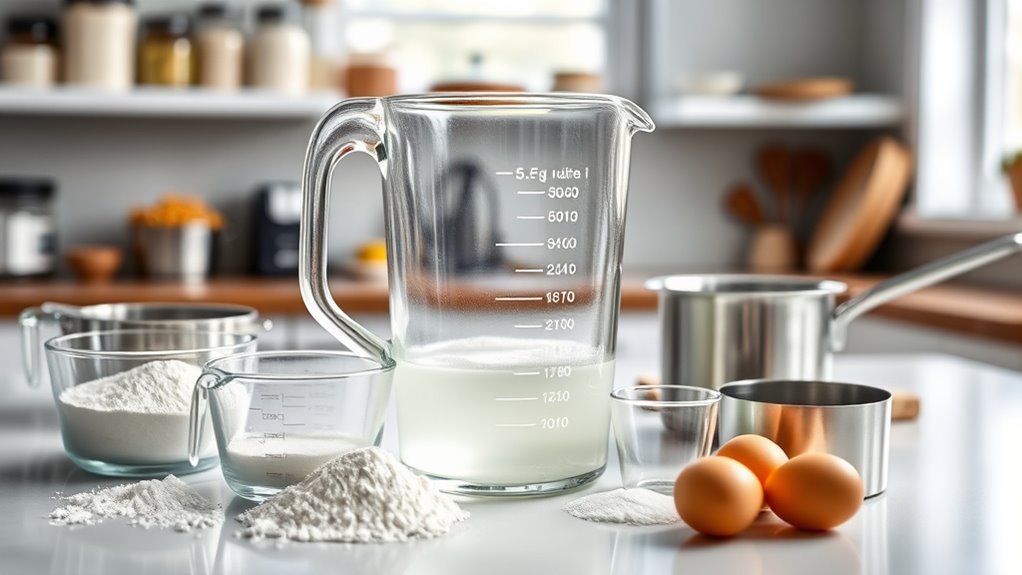
Need to convert 5.5 quarts to cups for a recipe or a 5.5-quart cooking pot? The calculation is simple, but different cup standards can cause confusion. Knowing which measurement system you’re using helps you get the right amount every time.
Quick Answer
5.5 US liquid quarts equal exactly 22 US customary cups. Since 1 US liquid quart contains 4 cups, multiply 5.5 by 4 to get 22 cups. The same volume equals 11 US pints, 176 US fluid ounces, or approximately 5.2 liters. This conversion uses standard US customary measurements.
Quick Calculation: Convert 5.5 Quarts to Cups
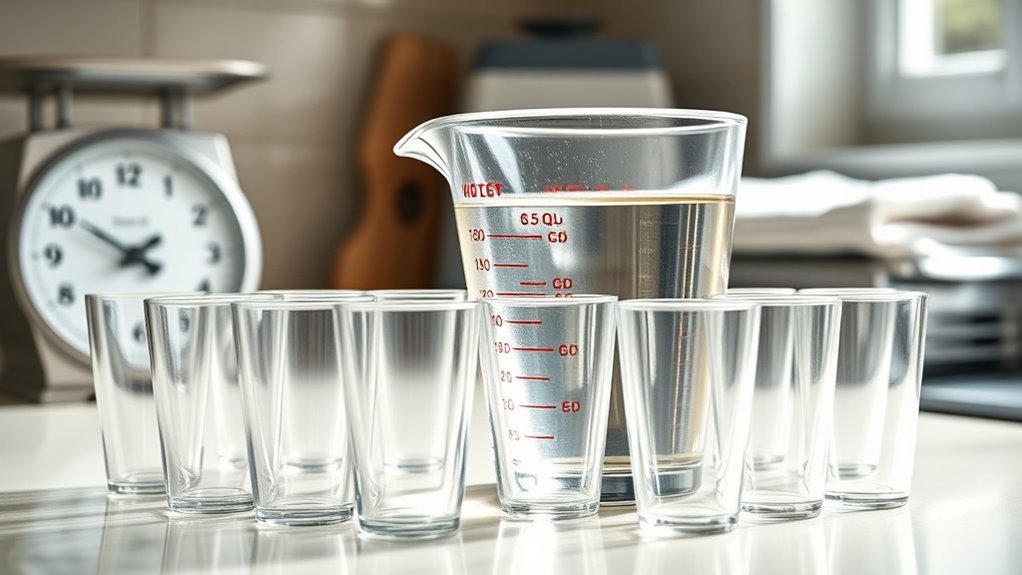
To convert quarts into cups, multiply the number of quarts by 4. This works for US liquid quarts and standard US customary cups.
Here’s the calculation:
5.5 quarts × 4 cups per quart = 22 cups
You can also split the measurement into two parts:
- 5 quarts = 20 cups
- 0.5 quart = 2 cups
- 20 cups + 2 cups = 22 cups
This method makes it easier to check your answer without a calculator. It’s especially useful when measuring broth, water, milk, or other liquids for large recipes.
For a quick mental conversion, remember that each half-quart adds another 2 cups.
Understanding the Quart-to-Cup Conversion
A quart and a cup both measure volume, but a quart holds more. In the US customary system, 1 liquid quart equals 4 cups.
Knowing how these units relate makes recipes easier to follow. It also helps when your measuring equipment uses different markings.
The standard relationships are:
- 1 cup = 8 US fluid ounces
- 1 pint = 2 cups
- 1 liquid quart = 2 pints
- 1 liquid quart = 4 cups
- 1 US gallon = 4 liquid quarts
These relationships agree with the USDA measurement conversion tables.
To convert cups back into quarts, divide the number of cups by 4.
For example, 12 cups divided by 4 equals 3 quarts. The same formula works for larger and smaller quantities.
Why Do Quart-to-Cup Conversions Matter in Cooking?
Quart-to-cup conversions help you measure ingredients accurately, adjust recipes, and choose suitable cookware. They are particularly useful when preparing large batches of soup, sauce, or other foods.
Understanding these measurements also reduces guesswork when moving between recipes that use different units.
Accurate Ingredient Measurement
Correct measurements help you keep the intended balance of ingredients. This matters most in recipes where the proportions affect texture, consistency, or flavor.
For example, if a soup recipe requires 5.5 quarts of broth, measuring only 20 cups leaves you 2 cups short.
That difference can affect the soup’s thickness and the amount of liquid available for cooking other ingredients.
Accurate measuring also helps you avoid unnecessary waste, especially when preparing food for larger groups.
Recipe Consistency
Consistent recipes depend on using the same ingredient proportions each time. Converting between quarts and cups lets you follow those proportions without changing the recipe.
For instance, if you make the same sauce in different batch sizes, correct volume conversions help maintain its intended concentration.
However, converting volume doesn’t automatically tell you an ingredient’s weight. A cup of flour and a cup of water occupy the same volume but weigh different amounts.
Keep this distinction in mind when switching between recipes that use cups and those that use grams.
Cooking Efficiency
Knowing common conversions saves time during meal preparation. Instead of stopping to calculate every measurement, you can quickly recognize familiar amounts.
This is helpful when:
- Preparing large batches of soup or stock.
- Adjusting a recipe for more or fewer servings.
- Choosing a pot large enough for your ingredients.
- Measuring liquids with cups instead of a quart-marked jug.
For larger quantities, a measuring jug with quart or liter markings can also reduce the number of separate measurements.
Avoid These Mistakes When Converting Quarts to Cups
The most common conversion mistake is using the wrong multiplier. To change US liquid quarts into US customary cups, always multiply by 4.
Another common problem is mixing measurement systems. US customary cups, metric cups, and dry quarts do not all represent the same volume.
Keep this reference chart nearby when cooking:
| Quarts | Cups |
|---|---|
| 1 | 4 |
| 2 | 8 |
| 3 | 12 |
| 4 | 16 |
| 5 | 20 |
For 5.5 US liquid quarts, add another 2 cups to the 5-quart measurement. That gives you 22 cups.
Other mistakes to avoid include:
- Confusing cups with fluid ounces: One US cup contains 8 US fluid ounces, not 1 fluid ounce.
- Dividing instead of multiplying: Multiply quarts by 4 to find cups. Divide cups by 4 to find quarts.
- Ignoring decimal values: Half a quart equals 2 cups, not half a cup.
- Using inconsistent measuring cups: Check whether your cups use US customary or metric measurements.
Note: A US dry quart is larger than a US liquid quart. One US dry quart is approximately 1.101 liters, while one US liquid quart is approximately 0.946 liter. The 4-cup conversion in this article applies to US liquid quarts and US customary cups.
The NIST conversion factors confirm these differences between liquid and dry volume measurements.
Tips for Accurately Measuring Cups in the Kitchen
Accurate kitchen measurements begin with the right measuring tools. Liquids and dry ingredients require slightly different techniques, even though both may be measured in cups.
Use the following methods to get more consistent results.
Use Proper Measuring Tools
Choose measuring equipment that matches the ingredient you’re measuring. Liquid measuring cups are designed for pouring, while dry measuring cups help you level ingredients accurately.
- Use a transparent liquid measuring cup with a pouring spout for water, milk, broth, and oil.
- Use standard dry measuring cups for flour, sugar, and similar ingredients.
- Choose measuring cups with clear, easy-to-read markings.
- Place liquid measuring cups on a level surface before reading them.
- Use measuring spoons for small quantities.
The University of Illinois Extension cooking guide explains why dry ingredients should be leveled and liquid measurements read at eye level.
For large volumes, use a measuring container with enough capacity to reduce repeated pouring.
Level Off Ingredients
Leveling dry ingredients removes excess material and helps produce a consistent measurement. For most flour measurements, avoid pressing the ingredient into the cup.
Follow these simple steps:
- Stir or fluff the flour to loosen it.
- Spoon the flour gently into a dry measuring cup.
- Fill the cup slightly above the rim.
- Use a straight edge to remove the excess.
- Keep the top flat without compressing the flour.
Some ingredients have different measuring instructions. For example, recipes commonly specify packed brown sugar.
For baking, using a kitchen scale can improve consistency. The King Arthur Baking measurement guide recommends weighing ingredients when possible and using proper cup-measuring techniques when a scale isn’t available.
For honey or molasses, lightly coating a suitable measuring cup with oil can make sticky ingredients easier to release.
Understand Volume Conversions
Volume conversions work best when you know which measurement standard your recipe uses. Most US recipes use US customary cups and liquid quarts.
For everyday cooking, these reference values are useful:
- 1 US customary cup = approximately 236.6 milliliters.
- 1 US liquid quart = approximately 946.4 milliliters.
- 5.5 US liquid quarts = approximately 5.205 liters.
The NIST kitchen measurement chart also provides rounded equivalents for everyday cooking.
Remember that its metric equivalents are approximate. The relationship of 4 US customary cups per US liquid quart is exact.
Some international recipes use a 250-milliliter metric cup instead. Health Canada’s ingredient measuring guide, for example, uses 250 milliliters per cup.
In that system, 5.5 US liquid quarts are approximately 20.8 metric cups, rather than 22 US customary cups.
Pro Tip: When a recipe uses milliliters or liters, measure with the metric markings on your jug instead of converting everything into cups. This avoids rounding differences and makes it easier to follow the original quantities.
How to Adjust Recipes Based on Cup and Quart Measurements
To adjust a recipe, first convert the required volume into a measurement you can use. Then increase or decrease all ingredients by the same proportion.
Changing units alone doesn’t change a recipe’s size. Scaling a recipe means changing the actual ingredient quantities.
When scaling recipes, use the same multiplier for every ingredient to maintain the intended proportions.
Suppose your original recipe calls for 5.5 quarts of broth.
- Original batch: 5.5 quarts = 22 cups.
- Half batch: 2.75 quarts = 11 cups.
- Double batch: 11 quarts = 44 cups.
If you’re cutting the original recipe in half, reduce the other ingredients by half as well.
The reverse is true when doubling a recipe. Multiply each ingredient quantity by 2, then adjust the cooking method if needed.
You can also convert smaller amounts without much calculation:
- 0.25 quart = 1 cup
- 0.5 quart = 2 cups
- 0.75 quart = 3 cups
Finally, check whether your cookware has enough usable space for the adjusted batch.
A 5.5-quart pot has a nominal capacity of 22 US cups, but that doesn’t mean you should fill it to the rim while cooking. Leave enough headroom for stirring, bubbling, and expansion.
Other Volume Conversions You Should Know
Besides cups, you may need to convert quarts into pints, gallons, fluid ounces, or liters. These measurements frequently appear on cookware, food packaging, and recipes.
Here are the equivalents for 5.5 US liquid quarts:
| Measurement Unit | Equivalent of 5.5 US Liquid Quarts |
|---|---|
| US customary cups | 22 cups |
| US pints | 11 pints |
| US fluid ounces | 176 fl oz |
| US gallons | 1.375 gallons |
| Liters | Approximately 5.205 L |
For other common quantities, remember these examples:
- 1.5 quarts = 6 cups
- 2 quarts = 8 cups
- 3 quarts = 12 cups
- 10 quarts = 40 cups
One useful distinction is that fluid ounces measure volume, while ordinary ounces measure weight.
For example, 8 US fluid ounces equal 1 cup of volume. However, an ingredient that fills a cup doesn’t necessarily weigh 8 ounces.
Resources for Further Learning on Cooking Measurements
If you regularly adjust recipes, a few reliable measurement resources can make the process easier. Conversion charts are useful for quick reference, while kitchen scales help with precise ingredient weights.
Choose a resource that matches the kind of measurement you’re working with.
| Resource Type | Description | Where to Find |
|---|---|---|
| Measurement Charts | Visual references for common cooking measurements | Cookbooks, kitchen guides |
| Conversion Tables | Reference values for cups, quarts, liters, and other units | Government and culinary reference websites |
| Online Calculators | Useful for converting unusual quantities and fractions | Measurement websites and smartphone apps |
| Video Tutorials | Demonstrations of measuring liquids and dry ingredients | Cooking education channels and YouTube |
| Kitchen Scales | Measure ingredient weight for more consistent baking | Kitchen supply stores |
For simple conversions, a printed chart beside your measuring tools may be all you need.
For baking, consider using recipes that provide both volume and weight measurements. This makes it easier to follow ingredient quantities accurately.
Frequently Asked Questions
How Many Cups Make 5 Quarts?
Five US liquid quarts equal 20 US customary cups. Each quart contains 4 cups, so multiply 5 by 4 to get 20. This conversion is useful for measuring broth, water, and other liquids when following large recipes.
Is 1 Quart the Same as 4 Cups?
Yes, 1 US liquid quart equals exactly 4 US customary cups. It also equals 2 US pints or 32 US fluid ounces. This relationship applies to US liquid measurements and should not be confused with the larger US dry quart.
How Many Cups Are in a 5-Quart Container?
A container rated for 5 US liquid quarts has a nominal capacity of 20 US customary cups. However, a cooking pot should not necessarily be filled to its maximum capacity. Leave room for stirring and bubbling, especially when preparing soup or other hot liquids.
Does 20 Cups Equal 5 Quarts?
Yes, 20 US customary cups equal exactly 5 US liquid quarts. Divide the number of cups by 4 to convert back into quarts. For example, 20 divided by 4 gives you 5 quarts, while 22 divided by 4 gives you 5.5 quarts.
How Many Liters Are in 5.5 Quarts?
There are approximately 5.205 liters in 5.5 US liquid quarts. One US liquid quart contains about 0.946 liter. Multiply that value by 5.5 to get the approximate metric volume. For everyday cooking, you can round the result to 5.2 liters.
Does Using a 250 mL Metric Cup Change the Answer?
Yes, using a 250 mL metric cup changes the numerical result. A volume of 5.5 US liquid quarts equals approximately 20.8 metric cups of that size, rather than 22 US customary cups. Check which cup standard your recipe follows before measuring.
Conclusion
Converting 5.5 quarts to cups is easy once you know the correct measurement system. For US liquid quarts and customary cups, multiply by 4 to get 22 cups.
Keep a conversion chart handy, use the right measuring tools, and check your recipe’s cup standard. These simple habits will help you measure ingredients accurately and adjust recipes with confidence.
Sources
- USDA Agricultural Research Service: Measurement Conversion Tables: Standard US cup, pint, quart, gallon, and fluid-ounce relationships.
- NIST: Metric Kitchen Cooking Measurement Equivalencies: Approximate metric equivalents for customary kitchen measurements.
- NIST: Guide to the SI, Appendix B.8: US customary cup and liquid and dry quart conversion factors.
- University of Illinois Extension: Cooking Basics: Measuring liquids and dry ingredients correctly.
- King Arthur Baking: Recipe Success Guide: Measuring ingredients by weight and volume for consistent results.
- Health Canada: Measure Ingredients Like a Pro: Metric cup equivalents and practical kitchen measurement techniques.
