
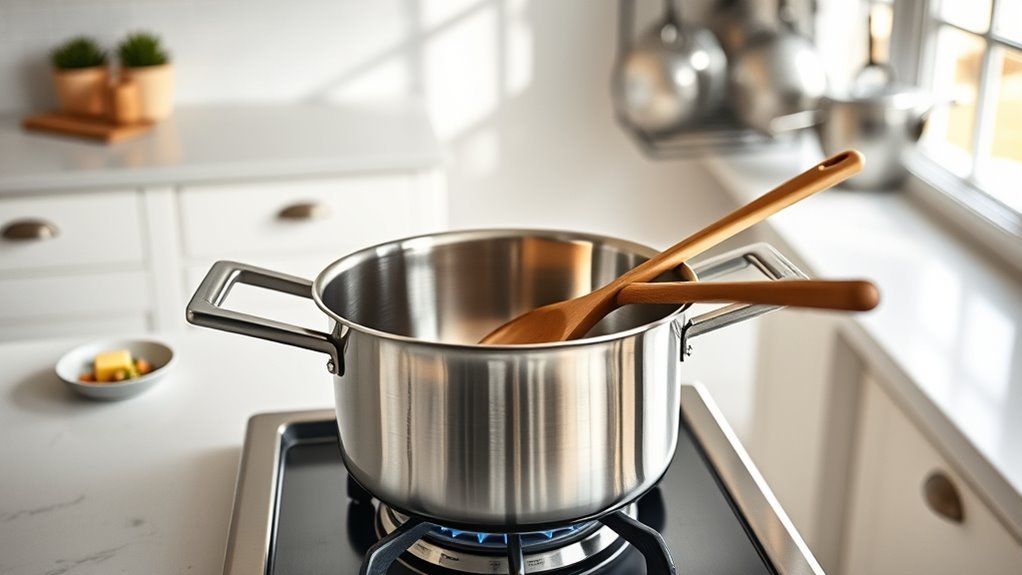
What is All-Clad cookware, and why do so many home cooks choose it? All-Clad is a premium cookware brand known for bonding different metals into durable pots and pans that heat evenly. Its stainless steel, copper-core, and nonstick collections offer different benefits, so understanding how they work helps you choose the right cookware without paying for features you don’t need.
Quick Answer
All-Clad is a cookware brand best known for fully bonded stainless steel pans that combine steel with heat-conducting aluminum or copper. Its D3, D5, and Copper Core collections suit different cooking needs, while HA1 offers easy-release nonstick cooking. Many bonded pans are made in Pennsylvania, but not every All-Clad product is made in the USA.
Last checked: November 14, 2026. Dates and figures were verified against official sources.
Key Takeaways
- D3 Stainless offers a practical balance of even heating, responsiveness, and durability for everyday cooking.
- D5 uses five bonded layers for controlled heating, while Copper Core responds especially well to temperature changes.
- HA1 Expert uses a PTFE nonstick coating and is manufactured in China, unlike the brand’s US-made fully bonded stainless steel lines.
- D3, D5, and Copper Core are induction-compatible, but some specialty HA1 pieces are not.
- Handwashing helps protect the cookware. All-Clad’s limited lifetime warranty excludes normal wear and certain types of damage.
What Is All-Clad Cookware, and Why Is It Special?
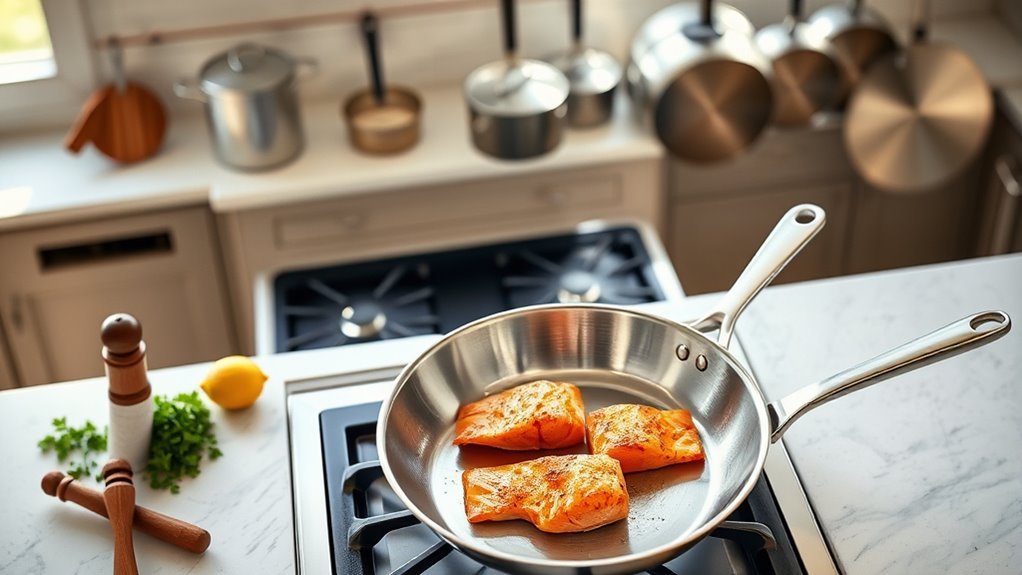
All-Clad is an American cookware brand known for its bonded metal construction, durable stainless steel surfaces, and professional-style performance. Instead of relying on a single metal, many All-Clad pans combine layers with different cooking properties.
Stainless steel provides a strong, non-reactive cooking surface. Aluminum and copper transfer heat more efficiently, helping the pan distribute warmth across its base and sides.
This combination makes All-Clad useful for searing meat, sautéing vegetables, simmering sauces, and cooking foods that need steady temperature control.
Bonded cookware combines the durability of stainless steel with the heat conductivity of aluminum or copper. It improves heat distribution without requiring a traditional nonstick coating.
One important difference is that All-Clad offers several construction types. Its fully bonded stainless steel pans are not built the same way as its hard-anodized nonstick products.
The manufacturer’s official cookware collection comparison identifies the materials, heating characteristics, induction compatibility, and manufacturing origins of its main lines.
For you, the main benefit is choice. You can select cookware based on the foods you prepare rather than assuming every premium pan performs the same way.
How All-Clad Cookware Is Made: Canonsburg Craftsmanship
All-Clad’s fully bonded cookware is manufactured in Canonsburg, Pennsylvania, using bonded metal sheets formed into cooking vessels. Skilled workers and production equipment help create pans with durable surfaces and consistent construction.
However, the brand also sells imported cookware and accessories. Understanding this distinction helps you make sense of its manufacturing claims.
Is All-Clad Made in Canonsburg, Pennsylvania?
Yes. All-Clad’s fully bonded stainless steel cookware is bonded, engineered, and assembled in the United States, with its manufacturing operations based in Canonsburg, Pennsylvania.
The company uses both US and imported materials in these products. Its manufacturing process includes bonding metals, forming cookware, polishing surfaces, and attaching handles.
The resulting cookware includes familiar collections such as D3 Stainless, D5 Stainless, and Copper Core.
However, not every All-Clad product is made in America. The HA1 Expert nonstick collection, for example, is designed in Pennsylvania and manufactured in China.
The same distinction applies to other imported hard-anodized cookware, tools, accessories, and certain kitchen appliances.
If US manufacturing matters to you, examine the country-of-origin information for the specific product. Do not rely on the brand name alone.
What Is Multi-Ply Construction?
Multi-ply construction means bonding several metal layers into one cooking vessel. Each layer contributes properties such as durability, heat transfer, or structural stability.
Unlike cookware with a separate conductive disc attached only to the base, fully bonded All-Clad pans extend their layered construction through the cooking surface and sidewalls.
This helps distribute heat more consistently throughout the pan.
The three best-known stainless steel constructions are:
- D3 Stainless: Three-ply construction with an aluminum core between stainless steel layers.
- D5 Stainless: Five-ply construction using alternating stainless steel and aluminum layers, including a stainless steel center.
- Copper Core: Five-ply construction combining stainless steel, aluminum, and a copper center.
| Collection | Layers | Benefit |
|---|---|---|
| D3 Stainless | 3-ply | Responsive, even heating |
| D5 Brushed | 5-ply | Controlled, steady heating |
| Copper Core | 5-ply with copper | Fast temperature response |
| HA1 Expert | Hard-anodized aluminum | Nonstick food release |
HA1 belongs in the comparison because it is a popular All-Clad collection, but it does not use the same fully bonded stainless steel construction.
Also, more layers do not automatically make cookware better. Metal thickness, material choice, pan weight, and your cooking method matter too.
How All-Clad Finishes Its Cookware
After the metals are bonded and shaped, All-Clad finishes its fully bonded cookware with polished or brushed surfaces, formed edges, and securely attached handles.
These details affect how the cookware feels and functions during everyday use.
For example, a smooth cooking surface is easier to clean, while a properly formed rim helps you pour liquids with better control.
All-Clad’s manufacturing process combines specialized equipment with skilled craftsmanship. That is more accurate than assuming every step is performed entirely by hand.
- Metal forming creates the pan’s shape and cooking surface.
- Polishing and finishing improve the appearance and surface quality.
- Handle attachment and production checks support durability and safe handling.
These manufacturing choices help explain the price difference between fully bonded cookware and basic single-material pans.
All-Clad Collections Explained: D3, D5, Copper Core, and HA1
All-Clad’s major cookware collections differ in their materials, heating behavior, cooking surfaces, and weight. D3 is a versatile everyday option, D5 emphasizes controlled heating, Copper Core responds quickly to temperature adjustments, and HA1 provides nonstick convenience.
Understanding those differences is more useful than choosing a collection based only on its price or number of layers.
D3 Stainless Benefits
All-Clad D3 Stainless is a strong all-around choice for home cooks who want durable cookware with responsive heating.
Its three bonded layers include a stainless steel cooking surface, an aluminum core, and a magnetic stainless steel exterior.
The aluminum core spreads heat efficiently, while the stainless steel interior handles browning, sautéing, and cooking acidic foods without reacting with them under normal use.
D3 is compatible with induction, gas, and electric stovetops. Standard stainless steel pieces are oven- and broiler-safe up to 600°F (316°C), subject to the specific product’s instructions.
The stainless steel interior also makes deglazing easy. After browning meat, you can add stock or another cooking liquid to loosen the flavorful browned bits.
Its main advantages include:
- Even heating across the cooking surface.
- Good responsiveness when you adjust burner temperature.
- A durable, non-reactive stainless steel interior.
- Induction compatibility without special accessories.
- No seasoning requirement or coating that must provide nonstick release.
The tradeoff is that stainless steel is not naturally nonstick. Eggs, fish, and other delicate foods may stick if you use poor heat control or insufficient cooking fat.
For most kitchens, D3 offers a useful balance of performance, weight, and versatility.
D5 Brushed Performance
All-Clad D5 Brushed Stainless uses five bonded layers to provide steady, controlled heating. It is suited to cooks who prefer a substantial pan and more gradual temperature changes.
Its construction combines stainless steel and aluminum layers. Compared with D3, it generally feels heavier and responds somewhat differently to changes in burner heat.
That can be helpful for tasks such as controlled searing, sautéing, and simmering.
D5 also offers a brushed exterior finish. This changes its appearance rather than making the cooking surface nonstick.
Like D3, the standard uncoated stainless steel collection works on induction and other common stovetops. It is oven- and broiler-safe up to 600°F (316°C).
Its main advantages are:
- Controlled temperature changes during cooking.
- Durable stainless steel cooking surfaces.
- A substantial construction suited to repeated use.
- Compatibility with induction and conventional stovetops.
However, D5 does not guarantee easier food release than D3. Both collections have stainless steel cooking surfaces that require suitable heat and cooking technique.
If you appreciate heavier cookware and controlled heating, D5 may justify its added cost. Otherwise, D3 can handle many of the same recipes.
Copper Core Advantages
All-Clad Copper Core is designed for cooks who want fast, precise heat response. Its five-ply construction uses a copper center along with aluminum and stainless steel.
Copper transfers heat efficiently, allowing the pan to respond quickly when you increase or reduce burner temperature.
This makes Copper Core useful for delicate sauces, controlled reductions, and dishes that require careful heat adjustments.
The cookware has a stainless steel cooking surface, so you do not cook directly on exposed copper. It also features the collection’s distinctive copper-colored exterior accent.
Standard Copper Core stainless steel cookware is induction-compatible and oven- and broiler-safe up to 600°F (316°C).
Its advantages include:
- Fast response to burner adjustments.
- Precise control during temperature-sensitive cooking.
- Durable stainless steel food-contact surfaces.
- Compatibility with induction cooktops.
The main disadvantages are higher cost and a more substantial build than lighter cookware.
Copper Core makes the most sense if you regularly prepare foods that benefit from quick temperature changes. It may be unnecessary for everyday boiling, simple frying, or basic meal preparation.
HA1 Expert Nonstick Benefits
All-Clad HA1 Expert is a different type of cookware. Instead of an uncoated fully bonded stainless steel body, it uses hard-anodized aluminum with a PTFE nonstick cooking surface.
Hard anodizing strengthens the aluminum’s outer surface. The nonstick coating helps eggs, fish, and other delicate foods release with less sticking.
HA1 Expert cookware also uses a stainless steel base on many pieces, supporting induction cooking and helping the pans maintain stable contact with the stovetop.
According to the manufacturer’s HA1 Expert product specifications, standard cookware is oven-safe up to 500°F (260°C), while its glass lids are rated up to 350°F (177°C).
However, some specialty HA1 items, including certain griddles, grills, and roasters, are not induction-compatible.
All-Clad’s nonstick chemical disclosures also confirm that HA1 PTFE coatings contain PFAS used for nonstick performance.
HA1 is especially useful for:
- Cooking eggs and delicate fish.
- Preparing foods that tend to stick.
- Reheating meals over low or medium heat.
- Reducing the effort needed for everyday cleanup.
However, nonstick coatings can wear with use, and HA1 is not the best choice for repeated high-heat searing.
For long-term versatility, you may prefer stainless steel cookware with a separate nonstick frying pan for delicate foods.
Which All-Clad Line Is Best for Your Cooking Style?
The best All-Clad collection depends on what you cook most often, how much weight you find comfortable, and whether you prefer stainless steel or nonstick surfaces.
For many home cooks, D3 Stainless is the most practical starting point. It handles a wide range of cooking tasks without requiring a more specialized construction.
- Choose D3 Stainless for everyday frying, sautéing, browning, simmering, and general cooking.
- Choose D5 Brushed if you prefer heavier cookware and controlled temperature changes.
- Choose Copper Core for delicate sauces, precise reductions, and techniques that require quick heat adjustments.
- Choose HA1 Expert when easy food release and simple cleanup matter most.
You also do not need to purchase every pan from the same collection.
A D3 frying pan can handle most browning tasks, a stainless steel saucepan can manage everyday sauces, and an HA1 nonstick skillet can prepare eggs or fish.
This combination may be more useful than buying a large matching set containing pieces you rarely use.
Pro Tip: If you’re building a cookware collection from scratch, start with the pan you use most often. Add specialty pieces only when your regular recipes show that you need them.
All-Clad Performance and Materials: Which Pans Suit Which Tasks?
Different cooking methods benefit from different heat responses and cooking surfaces. Matching the pan to the food helps you get better results without relying on one collection for every task.
Stainless steel is particularly useful for browning foods and developing flavorful pan drippings. Copper Core offers faster adjustments, while HA1 simplifies delicate cooking.
Use stainless steel for browning and deglazing, Copper Core for responsive temperature control, and HA1 nonstick for delicate foods that are prone to sticking.
Here are practical ways to use the collections:
- D3 Stainless: Sauté vegetables, brown chicken, cook steaks, simmer soups, and prepare everyday sauces.
- D5 Brushed Stainless: Handle controlled searing, sautéing, simmering, and recipes where gradual changes in temperature are useful.
- Copper Core: Prepare delicate reductions, butter-based sauces, and foods that require responsive heat adjustments.
- HA1 Expert: Cook eggs, pancakes, delicate fish, and other foods that benefit from a nonstick surface.
One important distinction is that stainless steel cookware can handle higher cooking temperatures than most nonstick cookware.
For example, a stainless steel frying pan is generally a better choice for a strong sear on steak. A nonstick pan is more appropriate for gently cooking an omelet.
All-Clad’s fully bonded stainless steel lines also offer broad stovetop compatibility. HA1 Expert works on induction in many standard shapes, but specialty exceptions mean you should confirm the individual product.
Remember that induction compatibility depends on having a suitable magnetic base. A magnet that sticks firmly to the base provides a useful initial check.
Also, oven limits differ between stainless steel, nonstick, and glass-lid components. The lowest-rated component determines the safe temperature for the assembled pan and lid.
All-Clad Care, Cleaning, and Warranty: How to Protect Your Cookware
Proper care helps All-Clad cookware maintain its appearance and cooking performance. Stainless steel and nonstick pans require different handling, particularly when heating and cleaning.
All-Clad’s official care and use instructions recommend moderate heat for most cooking, careful cleaning, and avoiding sudden temperature changes.
How to Cook With All-Clad Stainless Steel
Stainless steel cookware does not require seasoning, but preheating and cooking technique affect how food releases.
- Place the pan over low to moderate heat and allow it to warm gradually.
- Add enough cooking oil to coat the surface once the pan is heated.
- Add food when the oil is hot, avoiding overcrowding.
- Allow meat or other foods to brown before attempting to turn them.
- Reduce the heat when needed to prevent burning or excessive sticking.
Food often releases more easily from stainless steel once a browned crust develops.
For sauces, you can use the browned residue left in the pan by adding a suitable cooking liquid and gently scraping with a wooden utensil.
High heat is generally unnecessary for routine cooking. Excessive heat can cause discoloration and may damage cookware if an empty pan is left unattended.
How to Clean All-Clad Stainless Steel and Nonstick Pans
Handwashing is the safest routine for preserving the finish of All-Clad cookware. Let the pan cool before cleaning it to reduce the risk of warping.
For stainless steel:
- Wash with warm water, mild dish soap, and a soft sponge.
- Soak stubborn food residue before removing it.
- Use a suitable stainless steel cleaner when ordinary washing is insufficient.
- Remove rainbow discoloration with a small amount of white vinegar when appropriate.
- Rinse and dry promptly to reduce water spots.
For HA1 nonstick cookware, use soft sponges and mild soap. Avoid abrasive scrubbers, steel wool, and metal utensils that can damage the coating.
Although some HA1 products are labeled dishwasher-safe, handwashing helps preserve the nonstick finish.
Warning: Do not place a very hot All-Clad pan directly under cold running water. Sudden cooling can cause warping. Also, stop using cookware with dangerously sharp, damaged rims and contact the manufacturer for guidance.
The current All-Clad collection comparison lists D3, D5, and Copper Core stainless steel cookware as not dishwasher-safe. Follow the care instructions for your specific piece, even if older packaging says otherwise.
What Does the All-Clad Lifetime Warranty Cover?
All-Clad offers a limited lifetime warranty on its cookware against qualifying manufacturing defects in materials or workmanship.
However, a lifetime warranty does not mean the cookware is protected against every type of damage or that nonstick performance will remain unchanged forever.
According to the manufacturer’s official warranty information, coverage depends on the product and applicable warranty terms.
Normal wear, surface scratches, discoloration, misuse, and damage caused by improper heating or care generally fall outside the warranty.
Keep your proof of purchase, especially when buying from an authorized retailer. It may be required when requesting warranty service.
If you notice an apparent manufacturing defect, contact All-Clad’s customer service department and provide your product details.
With reasonable care, stainless steel cookware can remain useful for many years. Nonstick cookware may need replacement sooner as its coating wears.
Where to Buy All-Clad and How to Get the Best Value
You can buy All-Clad cookware from the brand’s official website and established kitchenware retailers. The best buying decision balances product authenticity, warranty coverage, included pieces, and the final purchase price.
All-Clad cookware is commonly available through:
- All-Clad’s official website: Useful for comparing current collections, checking technical specifications, and reviewing warranty terms.
- Williams Sonoma and Sur La Table: Established kitchenware retailers where you may be able to compare cookware styles and handle designs in person.
- Amazon and other retailers: Convenient for comparing available products, but seller identity and warranty eligibility deserve attention.
Sales and promotional prices change throughout the year. Rather than assuming a particular discount is active, compare the actual final prices of matching products.
Start by checking the model, pan size, construction, and included pieces.
For example, a cookware set may count lids as individual pieces. A larger advertised piece count does not necessarily mean you receive more cooking vessels.
Also consider whether you need every item in a set. Buying a frequently used frying pan and saucepan separately may offer better value than purchasing several pieces that sit unused.
Consider these factors before deciding:
- Cooking performance: Will the construction improve the dishes you regularly prepare?
- Durability: Are you choosing long-lasting stainless steel or a nonstick surface that may wear sooner?
- Weight: Can you comfortably lift, tilt, and clean the pan?
- Compatibility: Does the product work with your stove and intended oven temperatures?
- Warranty: Does the retailer and product qualify for the coverage you expect?
For frequent home cooking, the higher initial price of a well-made stainless steel pan may be reasonable if it replaces cheaper pans repeatedly over time.
However, premium construction is not necessary for every cooking task. Paying more for Copper Core or D5 may bring little benefit if you mainly boil pasta, reheat meals, or make simple breakfasts.
Choosing the right individual pieces often provides the best long-term value.
Frequently Asked Questions
What Is Special About All-Clad?
All-Clad is best known for its fully bonded stainless steel cookware, which combines durable steel with heat-conducting aluminum or copper. This construction supports even heating and precise cooking control. Its D3, D5, and Copper Core collections offer different heat responses, while the brand’s limited lifetime warranty adds protection against qualifying manufacturing defects.
What Is the Difference Between Stainless Steel and Clad?
Stainless steel is a metal alloy, while clad describes cookware made by bonding different metal layers together. A clad pan can have stainless steel cooking surfaces with aluminum or copper inside. This combination improves heat distribution compared with a similarly shaped pan made entirely from ordinary stainless steel.
What Is the All-Clad Lawsuit?
The major All-Clad cookware lawsuit concerned dishwasher-safety advertising, not primarily country-of-origin claims. Buyers alleged that dishwasher cleaning could damage aluminum layers in certain D3, D5, and LTD pans, leaving sharp edges. A federal court transfer order described the allegations. A settlement received final approval in February 2023; All-Clad denied wrongdoing.
Is All-Clad Really Worth the Money?
All-Clad can be worth the money if you cook frequently and value durable construction, even heating, and reliable performance. D3 Stainless is a practical choice for many home cooks. D5 and Copper Core cost more and may suit specialized preferences. If you cook occasionally, less expensive cookware may meet your needs just as well.
Is All-Clad Made in the USA?
All-Clad’s fully bonded cookware, including D3, D5, and Copper Core, is made in the United States with domestic and imported materials. However, the company also sells imported products. HA1 Expert nonstick cookware is designed in Pennsylvania and made in China. Check the specific product’s country-of-origin information before buying.
Is All-Clad Cookware Dishwasher-Safe?
Not every All-Clad pan is dishwasher-safe. The manufacturer currently lists D3, D5, and Copper Core stainless steel collections as unsuitable for dishwasher cleaning. Some HA1 Expert nonstick products are dishwasher-safe, but handwashing is recommended to preserve their coating. Always follow the care instructions for the individual product.
Does All-Clad Work on Induction Cooktops?
Yes, many All-Clad collections work on induction cooktops. D3 Stainless, D5 Stainless, and Copper Core are induction-compatible. Standard HA1 Expert pots and pans also use induction-ready bases, although some specialty griddles, grills, and roasters are exceptions. Check the individual model if you use an induction stove.
Conclusion
All-Clad cookware combines durable materials with thoughtful construction to provide reliable heating and control. For most everyday cooking, D3 Stainless is a sensible starting point. D5 offers steadier heat, Copper Core suits precise temperature control, and HA1 makes delicate cooking easier. Choose the pieces that match your recipes, confirm their care requirements, and maintain them properly for long-term value.
Sources
- All-Clad, Compare Cookware Collections: Construction, core materials, heat responsiveness, induction compatibility, oven limits, and country of origin.
- All-Clad, HA1 Expert Nonstick Cookware Set Specifications: Coating type, manufacturing origin, compatible cooktops, and oven limits.
- All-Clad, Nonstick Chemical Disclosures: PTFE and PFAS information for applicable cookware collections.
- All-Clad, Use and Care Guide: Cooking temperatures, stainless steel cleaning, nonstick care, and precautions against warping.
- All-Clad, Warranty Details: Limited lifetime warranty coverage and product-specific terms.
- United States Judicial Panel on Multidistrict Litigation, All-Clad Transfer Order, March 31, 2021: Allegations involving dishwasher use and sharp cookware edges.
- Bloomberg Law, February 21, 2023: Federal court approval of the All-Clad cookware class-action settlement.
