
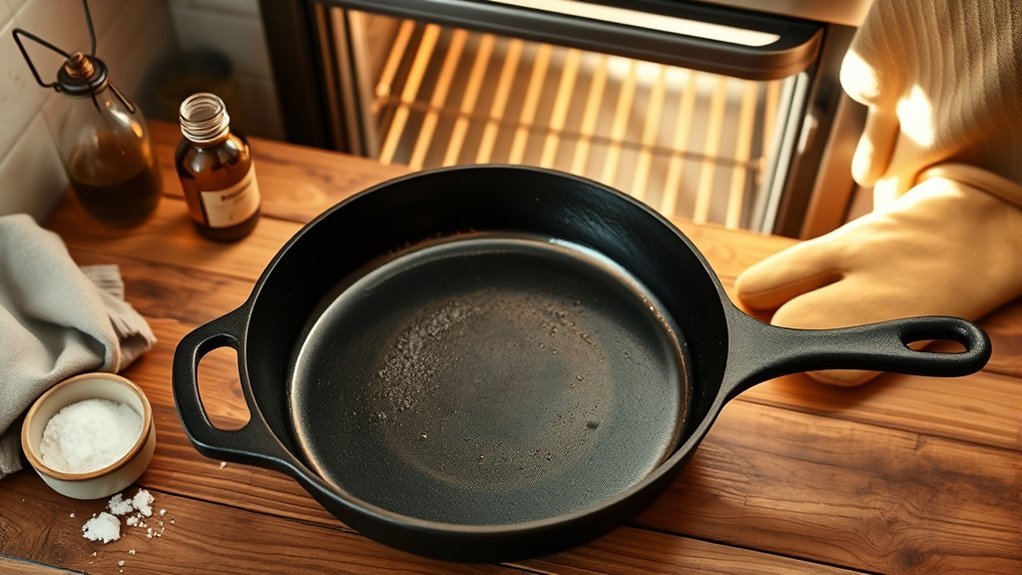
Seasoning cast iron is a ritual as old as the cookware itself. You’re not just cooking; you’re crafting a resilient surface that enhances flavor and prevents sticking. But how long should you actually spend on this process? Recognizing the signs that your skillet needs attention can be tricky, and understanding best practices is essential for longevity. Let’s explore the timing, indicators, and techniques to keep your cast iron in top shape.
What You Need to Know About Seasoning Your Cast Iron
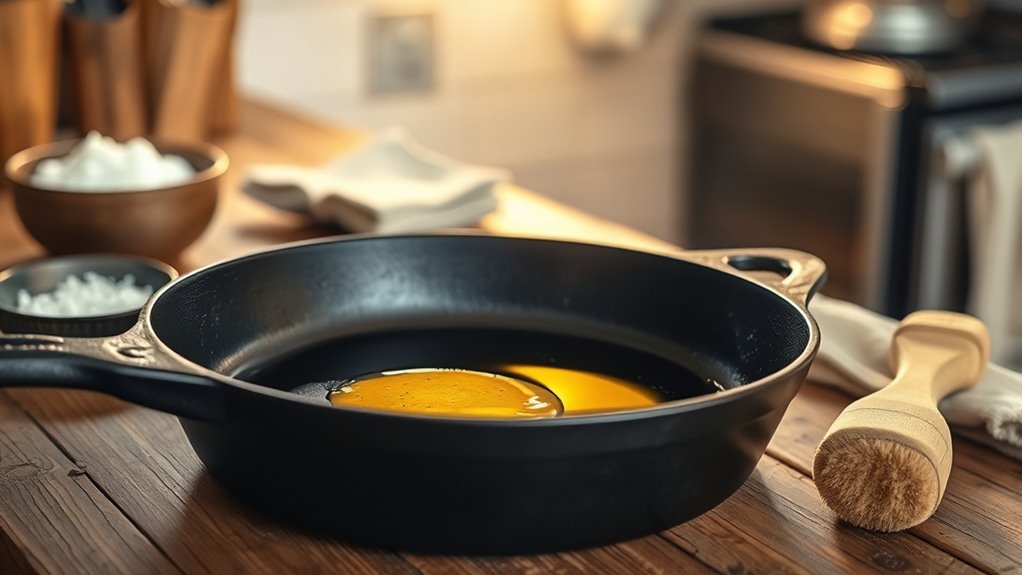
When you first get your cast iron pan, seasoning it properly is essential to guarantee it performs at its finest. Start by applying a thin layer of oil across the cooking surface, then heat your cast iron skillets to 450°F (230°C) for about 30 minutes. This process encourages polymerization, bonding the oil to the metal and itself, creating a durable nonstick cooking surface.
Season your cast iron pan by applying oil and heating it to 450°F for a durable, nonstick surface.
For ideal results, repeat this three to four times, building layers of seasoning that enhance its nonstick properties.
Maintenance is key; always dry your pan completely after washing and apply a light coat of oil to prevent rust. Over time, each layer of seasoning strengthens the pan, ensuring it remains an indispensable kitchen ally.
With proper care, your cast iron skillet will reward you with delicious meals and a lifetime of culinary freedom. Embrace the process, and let your cooking journey begin!
Signs Your Cast Iron Needs Re-Seasoning?
Have you noticed your cast iron skillet isn’t performing like it used to? Several signs indicate it’s time for re-seasoning.
If you see rust or discoloration, that protective layer has worn thin, and you need to restore it. A sticky or tacky surface after cooking means the seasoning is uneven, requiring a fresh coat.
When food starts sticking, it’s a clear sign that the nonstick surface has degraded, demanding your attention. Additionally, visible flaking or peeling of the seasoned layer shows that it hasn’t bonded properly, signaling the need for re-seasoning.
Be cautious with acidic ingredients like tomatoes and vinegar; frequent use can fade the seasoning, urging you to act.
How Long to Season Cast Iron?
How long should you season your cast iron? The process is essential to create a durable, nonstick layer on your cookware. Typically, you’ll heat your oven to 450°F (230°C) and allow the oil to bond to the metal through polymerization for about 30 minutes.
- Repeat the oiling and heating process 3 to 4 times for a robust initial layer.
- Each session should last around one hour to guarantee proper bonding.
- If you notice uneven or flaking seasoning, don’t hesitate to re-season.
Regular use also helps enhance the seasoning over time, reducing the need for frequent re-seasoning.
This liberation from constant maintenance allows you to enjoy cooking with your cast iron without worry. Embrace this process, and soon you’ll have a beautifully seasoned piece of cookware ready for all your culinary adventures!
Best Practices for Cast Iron Seasoning Maintenance
After establishing a solid seasoning on your cast iron, maintaining that nonstick layer is key to its longevity and performance.
Regularly apply a thin layer of cooking oil after you clean and dry your pan. Use hot water and a stiff brush, avoiding soap to protect the seasoning process.
Make sure to dry your cast iron immediately after washing; moisture can lead to rust formation. Cooking with fats or oils often helps build up that essential nonstick layer, reinforcing your seasoning over time.
When storing, keep your cast iron in a dry place; consider placing a paper towel inside to absorb any excess oil and moisture.
Be cautious with acidic foods, as they can strip your seasoning.
How to Fix Common Seasoning Problems
While using your cast iron, you might encounter some common seasoning problems that can impact its performance. Don’t worry—these issues can be easily fixed!
- Uneven seasoning: Reapply a thin coat of oil and heat it in the oven for 30 minutes to an hour at 450°F (230°C) to guarantee proper bonding.
- Flaking seasoning: If you see flakes, scrub down to bare metal, clean thoroughly, and start the seasoning process anew.
- Rust formation: Remove rust with a scrubber, dry the pan completely, then reseason by applying oil and heating at 450°F (230°C) for an hour.
You might also notice a sticky surface, often from too much oil. Buff the pan until it’s non-greasy before heating.
Dark residue on towels can indicate seasoning breakdown; a light reseasoning can restore that nonstick magic. Embrace these fixes and enjoy your liberated cooking experience!
Frequently Asked Questions
Should I Season Cast Iron at 350 or 450?
You should season cast iron at 450°F for the best results. This temperature reaches the oil’s smoke point, ensuring a strong initial coating and effective bonding.
Preheat your oven, and avoid common mistakes like pooling oil—place the skillet upside down. Layering your seasoning builds durability and rust prevention, enhancing cooking benefits.
Use a high-quality oil for superior results, and remember these maintenance tips to keep your skillet in top shape for years to come!
Can You Season a Cast Iron Too Long?
Yes, you can season cast iron too long, like overcooking a steak. Over-seasoning issues arise from excessive heat or oil, leading to a sticky finish.
For ideal seasoning frequency, aim for thin layers and monitor smoke point considerations closely. Use high-quality oils and practice maintenance techniques to enhance food release.
Watch for re-seasoning signs, like uneven surfaces, and apply deep cleaning methods if needed to prevent rust and improve your cooking surface.
How Do You Know if Cast Iron Is Seasoned Enough?
You’ll know your cast iron’s seasoned enough when it boasts a smooth, glossy surface texture, and food easily releases during cooking.
Look for signs like no rust and stable seasoning even with acidic dishes. Proper oil, like flaxseed or grapeseed, enhances heat stability and performance.
To maintain it, follow regular maintenance tips, and don’t hesitate to re-season when needed.
Embrace the liberation of a well-cared-for pan, and enjoy effortless cooking!
Can I Season Cast Iron at 400 Degrees?
Absolutely, you can season cast iron at 400 degrees! While some swear by higher seasoning temperatures, 400 still works wonders.
Use oils with higher smoke points like flaxseed or grapeseed for your initial coating. Flip that skillet upside down in the oven for an hour to avoid oil pooling.
Conclusion
In the world of cooking, seasoning your cast iron is like nurturing a garden; with care and attention, it flourishes. Keep an eye out for signs that it needs a refresh, and invest time into proper maintenance. By following best practices, you’ll guarantee your skillet remains a trusted companion in the kitchen, delivering delicious meals for years. Remember, a well-seasoned cast iron pan is not just a tool, but an heirloom that tells your culinary story.
