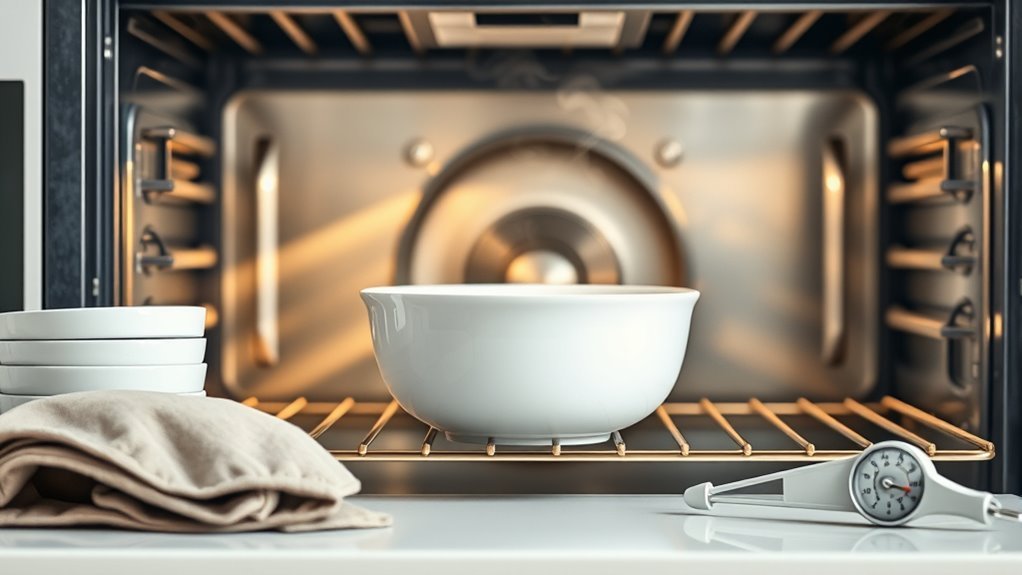
About 60% of commercially made dinnerware is rated for some oven use, but you still need to verify each piece before heating. You can usually trust high-fired porcelain labeled “oven-safe” up to about 500–572°F (260–300°C), yet metallic trims, cracks, or low-quality glazes change the rules. Follow simple checks and handling steps to avoid thermal shock and contamination — keep going to learn exactly what to look for and what to avoid.
Are Porcelain Bowls Oven-Safe? Quick Answer
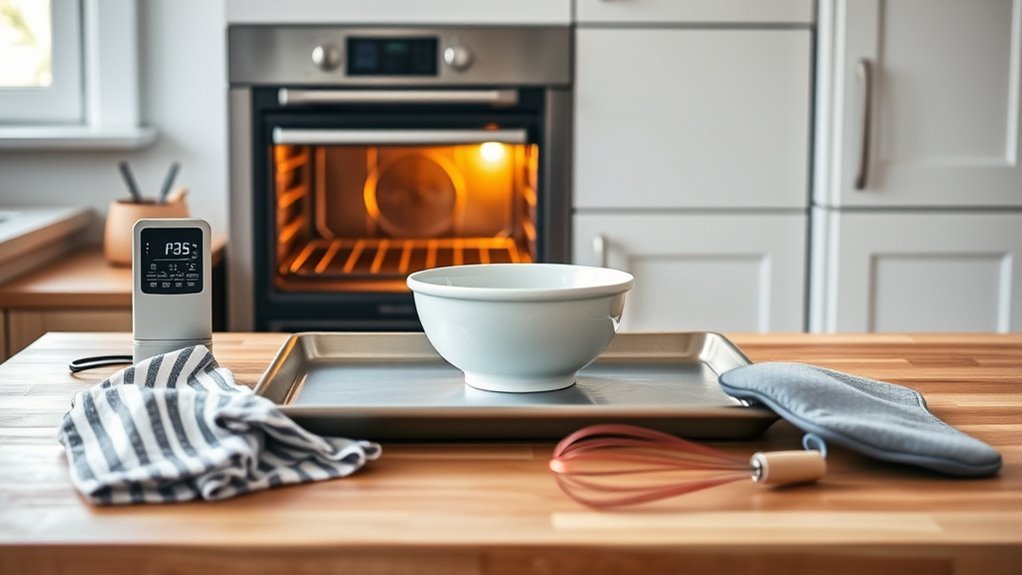
Wondering if you can put a porcelain bowl in the oven? You can, but only when the piece is explicitly marked oven-safe and designed for high temperatures.
High-quality porcelain labeled oven-safe typically tolerates 500°F–572°F (260°C–300°C); lesser or unmarked pieces might crack or leach if exposed to heat. Don’t assume all porcelain qualifies—metallic accents and uncertain glazes raise health and safety risks.
You’ll act more freely when you verify the maker’s guidelines and temperature ratings for your specific bowl. Even oven-safe porcelain needs careful handling: avoid thermal shock by bringing the bowl to room temperature and using gradual heating and cooling.
Quick Test: Is My Porcelain Bowl Oven-Safe?
How can you quickly tell if a porcelain bowl is oven-safe? First, check the base for a clear “oven-safe” or “ovenproof” mark — that’s the most reliable quick indicator. If you find it, confirm any temperature limits in the manufacturer’s specs before use.
If there’s no mark, inspect the bowl: avoid pieces with metallic accents, hand-painted decorations, or vintage glazes, since those often aren’t safe and can leach or spark.
Next, examine the surface for chips or hairline cracks; any damage compromises safety and increases risk during heating. Resist the urge to test by sudden heating. Porcelain is vulnerable to thermal shock, so only place a verified oven-safe bowl into a preheated oven and allow it to cool gradually afterward.
When in doubt, choose a clearly labeled vessel — that choice protects your freedom to cook without unnecessary risk.
Porcelain Bowl Temperature Limits (How Hot Can They Go)
Now that you know how to spot an oven-safe mark and what to avoid, the next question is how hot those marked porcelain bowls can actually get. If your porcelain bowl is labeled oven safe, most high-quality pieces tolerate 500°F to 572°F (260°C–300°C).
You shouldn’t assume unmarked ware will behave the same; unmarked bowls can crack or shatter under high heat.
Respect manufacturer temperature limits—those specs override general ranges. Thicker, well-glazed porcelain bowls handle heat more reliably than thin, poorly made pieces, so choose robust items when you want freedom to cook hot.
Always preheat the oven and avoid rapid temperature swings to prevent thermal shock; don’t transfer a cold bowl into a blazing oven.
You’re aiming for safe liberation in the kitchen: use labeled, sturdy porcelain, follow stated temperature limits, and control heating shifts. That way you expand what you can create without risking damage or danger.
Which Bowls Should Never Go in the Oven (Metal, Antiques, Thin Ware)
Because oven heat can expose hidden risks, don’t put certain bowls in the oven: any piece with metallic accents, antique or vintage porcelain, thin-walled ware, or items lacking an explicit oven-safe mark. You should avoid metal-trimmed or gilded pieces — they can spark and emit harmful fumes. Don’t gamble with antiques; vintage glazes may leach toxins under heat. Thin ware increases the chance of thermal shock, cracking, and sudden breakage. If a bowl lacks a clear oven-safe label, treat it as unsafe.
| Risk Factor | Reason to Avoid |
|---|---|
| Metal accents | Can spark, damage oven, release fumes |
| Antiques | Unknown glazes; potential toxic leaching |
| Thin ware | Prone to thermal shock and breakage |
| No oven-safe mark | No verified temperature tolerance |
Choose liberation through safe choices: favor labeled, thicker, well-glazed oven-safe bowls. That’s how you protect yourself, your food, and your freedom to cook without unnecessary risk.
How Glazes and Decorations Affect Oven and Food Safety
When glazes and decorations are poorly made, damaged, or contain metallic elements, they can compromise both oven performance and food safety. You should rely only on well-fired, intact, and clearly labeled oven-safe porcelain.
Inspect glazes for crazing, chips, or uneven application before heating; defects can allow contaminants to leach into food and weaken thermal resistance. Avoid pieces with metallic trims or lustre paints — they can spark, emit hazardous fumes, and are rarely rated oven-safe.
Hand-painted or heavily decorated bowls often use unpredictable pigments or processes; choose plain, uniformly glazed items with documented oven-safe markings instead. Manufacturers typically specify safe temperature ranges (commonly around 250–300°C/480–570°F); if a bowl lacks clear labeling, don’t assume it’s safe.
Prioritize bowls tested for food safety and thermal stability so you can cook boldly without risking contamination or breakage. Respect your safety while reclaiming agency over your kitchen choices.
How Firing, Clay, and Glaze Quality Determine Oven Safety
Check the firing temperature stamped or specified for your porcelain—true porcelain fired between about 2200°F and 2600°F gains the vitrification needed to resist oven stresses.
You’ll also want to confirm the glaze composition is food-safe and properly applied, since poorly formulated or cracked glazes can leach or fail at high heat.
Finally, avoid pieces with metallic decorations, and inspect for chips or craze lines that reduce the porcelain’s thermal tolerance.
Firing Temperature Limits
If a porcelain bowl was fired at the higher end of the porcelain range—roughly 2200°F to 2600°F—it’s much more likely to withstand oven temperatures because that firing vitrifies the clay, lowers porosity, and increases mechanical strength.
You should assess firing temperature limits: higher temperatures produce denser bodies that resist thermal shock and are more likely to withstand oven cycles.
Clay quality matters too—kaolin-rich porcelain bonds tightly during firing, so porcelain is oven-safe more often when both body and firing are high-quality.
Don’t assume all marked “porcelain” will tolerate sustained oven heat. Verify manufacturer specs or test incrementally.
That cautious, evidence-based approach protects your cookware, preserves autonomy in the kitchen, and reduces risk of cracking or contamination from inferior pieces.
Glaze Composition Safety
Having considered how firing temperature and clay quality affect a porcelain bowl’s structural strength, you should next examine glaze composition and application because these determine chemical safety and performance at oven temperatures.
You’ll want glaze composition safety: well-formulated, non-toxic glazes melted into a properly fired body resist leaching and tolerate thermal expansion differences. Metallic lusters or poorly matured glazes can off‑gas or spark at high heat, so choose items labeled oven-safe and non-toxic.
Inspect surfaces regularly; hairline cracks or chips break the protective barrier and raise risk.
- Verify oven-safe labeling and non-toxic certification.
- Favor high-fire porcelains (2200–2600°F) with matched thermal expansion.
- Avoid metallic-decorated glazes for oven use.
- Reject damaged or crazed pieces; they’re unsafe.
Safe Oven Use: Heating, Cooling, and Handling Steps
Because not all porcelain tolerates high heat, always confirm a clear “oven-safe” marking before you put a bowl in the oven; otherwise you risk cracking or glaze damage that can contaminate food.
You’ll preheat the oven gradually to reduce thermal shock—raise temperature in steps rather than plunging from cold to very hot. Don’t transfer a cold porcelain bowl straight into a preheated oven; let it reach room temperature first.
When you remove a bowl, use oven mitts and set it on a heat-safe surface to avoid sudden temperature changes that stress the material.
If the recipe ends with residual oven heat, consider turning the oven off and leaving the bowl inside to cool slowly.
Regularly inspect bowls for hairline cracks, chips, or crazing; damaged glaze can leach substances when heated and you should retire compromised pieces.
These steps protect your food, your tools, and your freedom to cook without unnecessary risk.
Better Alternatives When Your Porcelain Isn’t Oven-Safe
When your porcelain isn’t marked oven-safe, choose alternatives that give you predictable performance and documented heat limits: tempered glass or oven-rated ceramics handle high temperatures reliably. Heavy-duty metal pans provide superior heat conduction for even baking, and cast iron or enameled cast iron offer non-reactive, durable heat retention.
For steaming or double-boiling, stainless steel or high-temperature silicone work without risk of shattering. Choose alternatives that match the task and your desire for freedom from worry. Verify manufacturer temperature ratings—quality glass often tolerates up to 500°F (260°C).
Use heavy-gauge metal pans for uniform browning and cast iron when you need lasting heat retention. For wet methods, pick stainless steel or high-temp silicone to avoid shock. When portability matters, select bakeware with handles and lids rated for oven use. Keep documentation or markings handy so you can assert control in the kitchen and avoid guesswork.
Choose heavy-gauge metal for even browning, cast iron for heat retention, and stainless or high‑temp silicone for wet methods.
- Use oven-safe glass or ceramics with labeled limits.
- Prefer heavy-duty metal for baking.
- Use cast iron for non-reactive heat.
- Choose stainless steel or silicone for steaming.
Troubleshooting: Cracks, Stains, Leaching, and When to Stop Using a Bowl
Check your porcelain regularly for cracks, chips, or hairline fractures because structural damage can compromise integrity and increase the risk of leaching into food.
Try removing surface stains with hot water and baking soda or vinegar, but treat persistent discoloration as a warning sign that the glaze or body may be failing.
If you see visible damage, deep staining, or the piece is an older/uncertain-glaze item, stop using it in the oven and discard it to avoid potential contamination.
Cracks And Structural Damage
If you spot hairline cracks, chips, or bubbling in the glaze, stop using the bowl for food prep or oven cooking until you’ve assessed the damage, since those defects can weaken the structure and increase the risk of harmful leaching.
You should inspect porcelain regularly: cracks compromise structural integrity and can trap moisture, expanding with heat and causing sudden failure.
Choose well-glazed, high-quality pieces for liberation in the kitchen; poorly glazed or decorated bowls are higher risk. When in doubt, replace the piece.
- Visually inspect under bright light for hairline cracks or glaze bubbling.
- Tap lightly; a dull sound may indicate internal damage.
- Avoid oven use if any chip or crack exists.
- Replace compromised bowls to prevent leaching and safety hazards.
Stains, Leaching Risks
Beyond visible cracks and chips, surface stains and glaze damage pose their own hazards because they can indicate porous or degraded areas where contaminants and bacteria collect.
You can often remove stains by soaking in hot water or applying a baking soda and vinegar paste, but persistent discoloration suggests deeper glaze breakdown.
Porcelain is created with a vitreous glaze that normally resists absorption; when that glaze chips, leaching risks rise. Important factors include age, glaze condition, and manufacturing era—older or pre-1970s pieces pose higher chemical risks.
If you spot a chipped or cracked glaze, stop using the bowl for food. Inspect regularly; when cleaning can’t restore a smooth, intact surface, discard the bowl to protect your health and autonomy.
Frequently Asked Questions
How Do I Know if Porcelain Is Oven Safe?
Check the base for clear “Oven Safe” or “Ovenproof” markings; that tells you if porcelain is oven safe.
Inspect for metallic accents or vintage glazes that compromise porcelain durability and heat resistance.
Trust manufacturer specs for temperature limits and avoid antiques with unknown glazes.
When markings and guidance confirm oven safety, you can use it confidently; otherwise, don’t risk cracking, sparks, or toxic leaching—choose certified ovenproof pieces for liberation.
How Can You Tell if a Bowl Is Ceramic or Porcelain?
Polished, pleasing porcelain: you’ll notice a smooth, glass-like glaze, finer glaze types, and a denser, heavier feel than ceramic.
Hold it to light for translucence; check the underside for fewer imperfections and markings like “fine porcelain” or “bone china.”
Assess durability factors—uniform finish, tight firing, and stronger heat resistance—before relying on it.
Be cautious: if markings or tests aren’t clear, don’t assume oven safety; verify manufacturer guidance.
Which Is Better for Baking, Ceramic or Porcelain?
Porcelain’s generally better for baking. You’ll get superior baking performance thanks to higher heat tolerance, improved heat retention, and greater material durability; it handles broiling and higher oven temps more reliably.
You should still check manufacturer specs and avoid thermal shock, but choosing quality porcelain gives you more freedom to push temperatures and rely on consistent results, while ceramics can vary and may limit your baking options.
Is Porcelain Oven Safe at 350 Degrees?
Yes — if the maker labels it oven safe up to 350°F, you can.
Like a calm ship weathering warm seas, follow oven safe guidelines and trust porcelain durability charts. Use heat resistant materials only as specified, avoid metallic trims, and warm the bowl gradually to prevent thermal shock.
Inspect for chips or hairline cracks before use. When in doubt, consult the manufacturer so you stay free from needless risk.
Conclusion
You can use porcelain in the oven only when it’s explicitly labeled oven-safe and free of metallic trims, chips, or cracks; higher-quality porcelain typically tolerates 260–300°C (500–572°F). Don’t risk thermal shock—bring pieces to room temperature and preheat the oven slowly. When in doubt, choose tempered glass or metal. Remember, “better safe than sorry”: inspect glazes and firing quality, follow temperature limits, and retire any ware that shows damage or staining.