
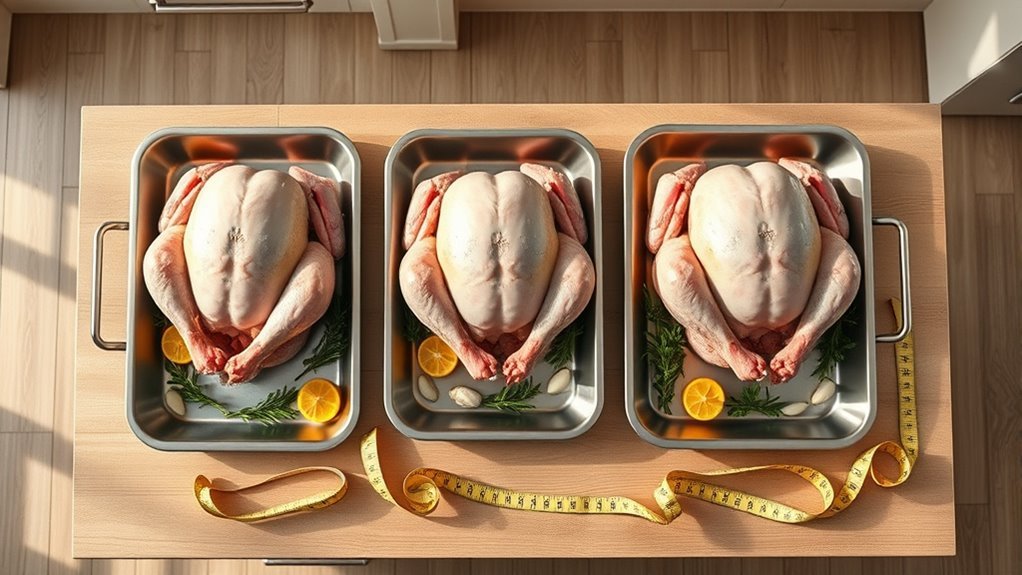
Choosing the right roasting pan for your turkey is essential for a successful meal. The size of your pan directly impacts cooking efficiency and flavor. You want your turkey to fit comfortably, allowing for even heat distribution and proper drippings collection. But how do you determine the perfect size? Understanding the dimensions for various turkey weights can help you make an informed choice. Let’s explore the specifics to guarantee your turkey turns out perfectly cooked.
Ideal Sizes for Different Turkey Weights
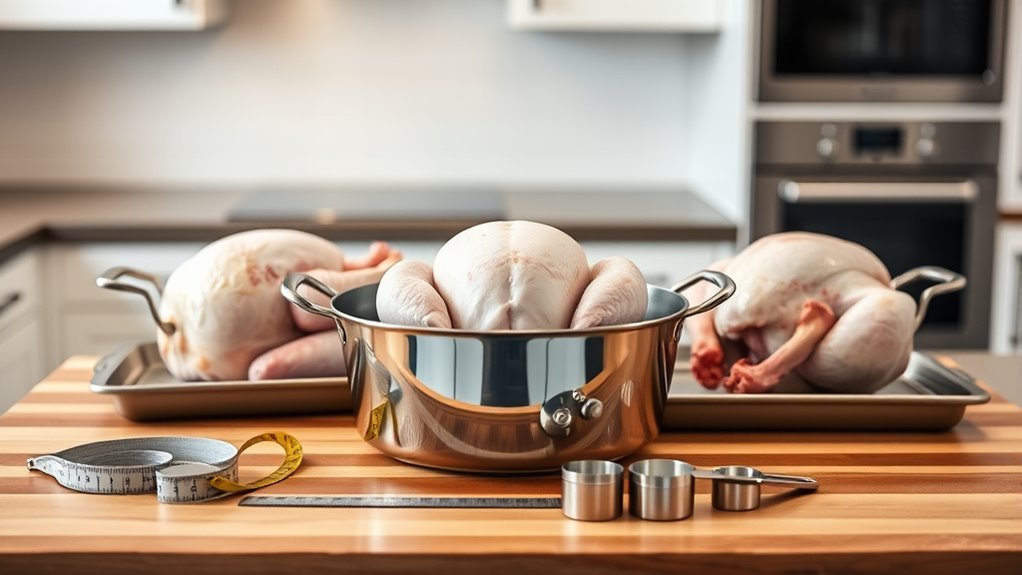
When it comes to roasting a turkey, choosing the right pan size can make all the difference in achieving that perfect golden-brown skin and juicy meat.
For turkey weight considerations, you’ll want to match your bird’s size with the appropriate roasting pan dimensions. If your turkey weighs up to 12 pounds, a pan measuring 16 to 18 inches is usually sufficient.
Match your turkey’s weight with the right pan size: a 16 to 18-inch pan works for birds up to 12 pounds.
For birds between 12 to 16 pounds, opt for an 18 to 20-inch pan to guarantee ideal airflow and space. If your turkey tips the scales at 16 to 20 pounds, go for a pan that’s at least 20 to 22 inches long.
And if you’re cooking a turkey over 20 pounds, choose a roasting pan that’s 22 inches or larger. High sides are essential, too, as they catch drippings and provide a secure fit for a rack, enhancing your cooking experience.
Essential Features for Choosing a Quality Roasting Pan
Selecting the right roasting pan goes beyond just size; it’s about features that enhance your cooking experience. First, consider durable materials like stainless steel or heavy-gauge aluminum. These provide excellent heat conduction and resist warping, ensuring your turkey cooks evenly.
Look for sturdy, riveted handles that make lifting the pan easy, especially when it’s heavy with a delicious bird. A non-stick surface can be a lifesaver for cleanup, but double-check that it’s safe for high temperatures—turkeys often roast at 325°F or higher.
Additionally, think about a roasting pan with a fitted lid or a rack. Racks elevate your turkey for better airflow and even cooking, while lids help retain moisture, keeping your turkey juicy.
These pan features not only make cooking easier but also elevate your culinary game. Keep these cooking tips in mind as you select the perfect roasting pan!
Which Material Should You Choose: Metal, Ceramic, or Non-Stick?
Which material will best suit your roasting needs: metal, ceramic, or non-stick?
When considering material comparisons, metal roasting pans, often made from stainless steel or aluminum, stand out for their excellent heat conduction. They’re lightweight and perfect for achieving that crispy turkey skin you crave.
Ceramic pans, on the other hand, offer even heat distribution and retain warmth but can be heavy and prone to chipping if mishandled.
Non-stick options are convenient for easy cleanup, yet their coatings might wear off over time, making them less durable than metal or ceramic, especially under high temperatures.
If durability factors weigh heavily in your decision, metal pans are a wise investment for frequent turkey roasting, as they generally outlast both ceramic and non-stick varieties.
Choose wisely, and elevate your roasting game!
Measuring Your Roasting Pan: A Step-by-Step Guide
Measuring your roasting pan accurately is essential for guaranteeing your turkey fits perfectly and cooks evenly. Start by grabbing your measuring tools—a ruler or measuring tape works best. Measure the interior length and width of the pan dimensions.
Ideally, your pan should be 2 to 3 inches longer and wider than the turkey, allowing for proper airflow and even cooking.
Standard roasting pans typically range from 15 to 20 inches in length and 12 to 16 inches in width, accommodating turkeys weighing 12 to 20 pounds.
Don’t forget to check the depth; aim for 3 to 4 inches to catch drippings and prevent overflow.
Finally, confirm your pan is made from sturdy materials with reinforced handles for safe lifting.
Must-Have Accessories for Roasting
Once you’ve confirmed your roasting pan is the perfect size, it’s time to contemplate the accessories that can elevate your turkey roasting experience.
A sturdy roasting rack is essential; it lifts the turkey for even cooking and better air circulation while collecting those precious drippings for gravy.
A sturdy roasting rack ensures even cooking and better air circulation, while capturing delicious drippings for gravy.
Don’t forget aluminum foil! Tenting the turkey helps prevent over-browning and locks in moisture, ensuring a juicy outcome.
For flavor, a basting brush is your best friend. Use it to apply melted butter or marinade, enhancing both flavor and moisture through effective basting techniques.
A reliable meat thermometer is vital, too—aim for that safe internal temperature of 165°F (74°C) to guarantee deliciousness.
Finally, invest in heat-resistant gloves to protect your hands while maneuvering hot cookware.
With these must-have accessories, you’ll master the art of turkey roasting like a pro!
Tips for Using Your Roasting Pan to Roast a Turkey Evenly
To achieve a perfectly roasted turkey, choosing the right roasting pan and utilizing it effectively is crucial. Here are some tips to guarantee your turkey cooks evenly and stays juicy:
- Select a spacious pan: Make certain your pan is at least 2 inches larger than your turkey’s width to allow for even cooking and easy handling.
- Elevate with a rack: Using a rack lifts the turkey, promoting air circulation and preventing a soggy bottom.
- Master the turkey baste: Baste every 30 minutes to keep moisture locked in, but resist the urge to frequently open the oven door, as this can disrupt the temperature.
For best results, preheat your oven to 325°F and use a meat thermometer to verify your turkey hits that perfect internal temperature of 165°F.
With these roasting techniques, you’ll enjoy a beautifully cooked turkey that’s sure to impress!
Common Mistakes When Choosing a Roasting Pan
When choosing a roasting pan, it’s easy to make common mistakes that can spoil your turkey cooking experience.
You might overlook important factors like sizing, material quality, and pan depth, which can all affect the outcome.
Common Sizing Errors
How can you guarantee your turkey turns out perfectly roasted? Avoid common sizing errors that lead to disappointment. Many people fall victim to turkey size misconceptions, choosing pans that are too small.
Remember to account for airflow; your pan should be at least 2 inches larger than the turkey on each side.
- Consider the turkey’s weight—aim for 1.5 to 2 pounds per person.
- Opt for a wide, shallow pan for even cooking and crisp skin.
- Don’t forget about extra space for stuffing or vegetables.
Ignoring Material Quality
Though it might seem like a minor detail, the quality of your roasting pan’s material can greatly impact your turkey’s outcome. Choosing the right material offers significant benefits, influencing heat distribution and cooking performance.
Lightweight aluminum pans conduct heat well but might warp at high temperatures. On the other hand, stainless steel is durable yet can struggle with even heat distribution. Non-stick coatings simplify cleanup but often can’t handle high heat, risking peeling.
Overlooking Pan Depth
Ignoring material quality can set you up for disappointment, but overlooking pan depth is another common pitfall. A roasting pan needs the right pan height to maximize cooking efficiency.
Here are some key points to reflect on:
- A depth of 2 to 3 inches prevents messy drippings and spills.
- Deeper pans improve heat circulation, ensuring your turkey cooks evenly.
- Shallow pans can lead to burnt edges and uneven cooking.
When you’re choosing your pan, remember that it should match your turkey’s weight. For instance, a 16-inch by 13-inch pan fits a turkey up to 16 pounds comfortably.
The right depth allows for easy handling of your bird and any veggies, giving you the freedom to create a delicious feast without hassle.
Where to Find the Best Roasting Pans for Your Needs
When you’re on the hunt for the perfect roasting pan, consider exploring thrift shops for durable vintage options that can withstand years of holiday feasts.
Estate sales often hide high-quality pans that might outshine anything new on the market.
Don’t forget online marketplaces, where you can easily compare sizes and materials to find what suits your needs best.
Thrift Shop Treasures
You never know what treasures you’ll find at a thrift shop, especially when hunting for the perfect roasting pan. These shops often feature high-quality, durable roasting pans at prices that won’t break the bank.
Here are some tips to enhance your thrift shop finds:
- Look for heavy-duty materials like stainless steel or cast iron.
- Check for warping, scratches, or rust; a well-maintained older pan can outperform many new options.
- Visit frequently, as inventory rotates and you might stumble upon vintage cookware gems.
Estate Sale Gems
Estate sales are a treasure trove for anyone seeking high-quality roasting pans that combine durability with character. You’ll often discover vintage cookware that’s been well-maintained, allowing you to snag incredible deals on items that might outlast their modern counterparts. Look for heavy-duty materials like stainless steel or cast iron, as these estate sale treasures are built to last. Plus, you might find specialty pans not readily available in stores today.
| Type of Pan | Material | Condition |
|---|---|---|
| Classic Roasting Pan | Stainless Steel | Excellent |
| Dutch Oven | Cast Iron | Very Good |
| Specialty Pan | Enamel Coated | Like New |
Arrive early to score the best options before they’re gone!
Online Marketplace Options
Finding the perfect roasting pan online can feel overwhelming, but with the right approach, it becomes a straightforward task.
Start by checking out:
- User reviews on platforms like Amazon or Walmart for insights on durability and performance.
- Detailed specifications from retailers, helping you choose the right dimensions and materials.
- Specialty kitchenware websites for a broader selection of high-quality options.
Don’t forget to keep an eye out for seasonal sales, where you can snag discounts on cookware.
Investing in a durable roasting pan not only enhances your cooking experience but also guarantees you’ll be ready for that perfect turkey feast.
With these tips, you’ll find the ideal pan that meets your needs and elevates your culinary adventures!
Caring for Your Roasting Pan: Maintenance Tips
Caring for your roasting pan is essential for guaranteeing it lasts through countless holiday feasts and family gatherings.
Start with effective cleaning techniques: use warm, soapy water and a soft sponge to keep your pan looking pristine. Avoid metal utensils that could scratch its surface, especially if it’s non-stick.
Effective cleaning is key: use warm, soapy water and a soft sponge, avoiding metal utensils to protect non-stick surfaces.
For stuck-on food, soak the pan in warm, soapy water before gently scrubbing with a non-abrasive pad. If you have a cast iron pan, season it regularly by applying a thin layer of oil and heating it to maintain its non-stick properties and prevent rust.
When it comes to storage solutions, always keep your roasting pan in a dry place. If you stack it with others, place a paper towel between them to shield the surface from scratches.
With these tips, you’ll guarantee your roasting pan remains a cherished kitchen companion for years to come.
Expert Recommendations for Quality Roasting Pans
A well-maintained roasting pan is just the beginning of your culinary journey; choosing the right one elevates your cooking experience. For perfect turkey cooking, consider these essential roasting pan features:
- Material Matters: Opt for heavy-gauge stainless steel or cast iron for durability and even heat distribution.
- Ease of Use: Look for reinforced edges and non-stick surfaces that simplify cleanup and maintenance.
- Optimal Cooking Conditions: A pan with a lid or rack retains moisture and promotes air circulation, ensuring your turkey is juicy and perfectly cooked.
When you select a roasting pan, make sure it comfortably fits in your oven, allowing space for heat circulation, especially if you’re adding veggies or stuffing.
Your choice in a quality roasting pan can transform your holiday feasts, making every bite a celebration of flavor and texture. Embrace these turkey cooking tips, and watch your culinary creations shine!
Frequently Asked Questions
Do You Cook a 20 Pound Turkey at 325 or 350?
You should cook a 20-pound turkey at 325°F for the best results.
This roasting temperature guarantees even cooking without drying out the meat. Expect turkey cooking times of about 4 to 4.5 hours if unstuffed, or 4.5 to 5 hours if stuffed.
To keep it juicy, cover the turkey with foil for the first few hours, then remove it to let the skin crisp up.
Trust your thermometer to reach that safe 165°F!
Do You Put Anything in the Bottom of a Roasting Pan for Turkey?
You’ve got a culinary canvas waiting for your masterpiece! Yes, putting something in the bottom of your roasting pan is essential.
For turkey pan preparation, consider adding broth or water as roasting liquid options to keep your bird moist and flavorful. Toss in aromatic veggies like onions or carrots to elevate the taste.
Just remember, if you crave crispy skin, don’t drown your turkey—balance is key for that golden perfection!
What Size Pan Do I Need for a 12 Lb Turkey?
For a 12 lb turkey, you’ll need a roasting pan that’s 16 to 18 inches long and holds around 12 to 16 quarts.
This size guarantees your turkey fits comfortably while allowing for proper heat circulation.
Opt for high sides to catch drippings and prevent spills, and choose a sturdy material like stainless steel or enameled cast iron for even cooking.
With these roasting tips, you’re set for a delicious feast!
Is It Better to Roast a Turkey on a Rack or Directly in the Pan?
It’s better to roast a turkey on a rack. The rack benefits include promoting even cooking and allowing hot air to circulate, which helps achieve that coveted crispy skin.
Elevating the turkey prevents sogginess and lets fat drip away. While pan alternatives can yield a moister result, they may sacrifice crispness.
If you want that perfect roast, a sturdy rack is your best bet for flavor and texture that’ll impress everyone at the table!
Conclusion
Choosing the right roasting pan for your turkey is as essential as picking the perfect seasoning. With the correct size and features, your bird will roast evenly and capture all those delicious drippings. Remember, a well-chosen pan can elevate your holiday feast, ensuring that each bite is tender and flavorful. So, don’t rush this decision—invest in a quality roasting pan that’ll serve you well for years, making every Thanksgiving a memorable culinary experience.

