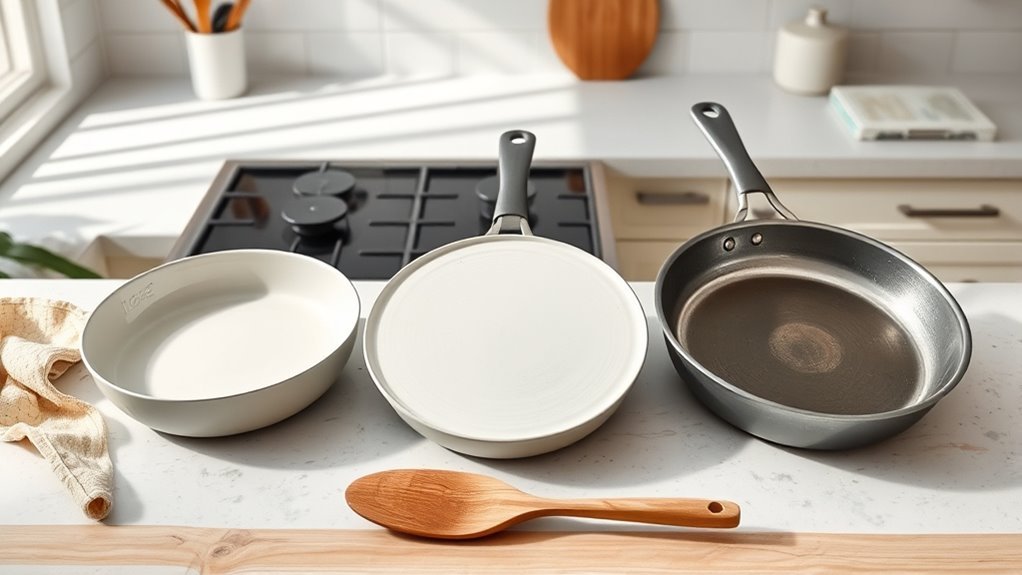
When it comes to Caraway pans, their lifespan generally ranges from 2 to 3 years, while pots and baking pans can last over 5 years with proper care. To maximize durability, you’ll want to hand wash them with soft sponges and opt for wooden or silicone utensils. However, knowing when to replace your cookware is essential. Identifying signs like scratches or discoloration can guarantee your kitchen remains safe and efficient. What indicators should you watch for next?
How Long Will Your Caraway Pans Last?
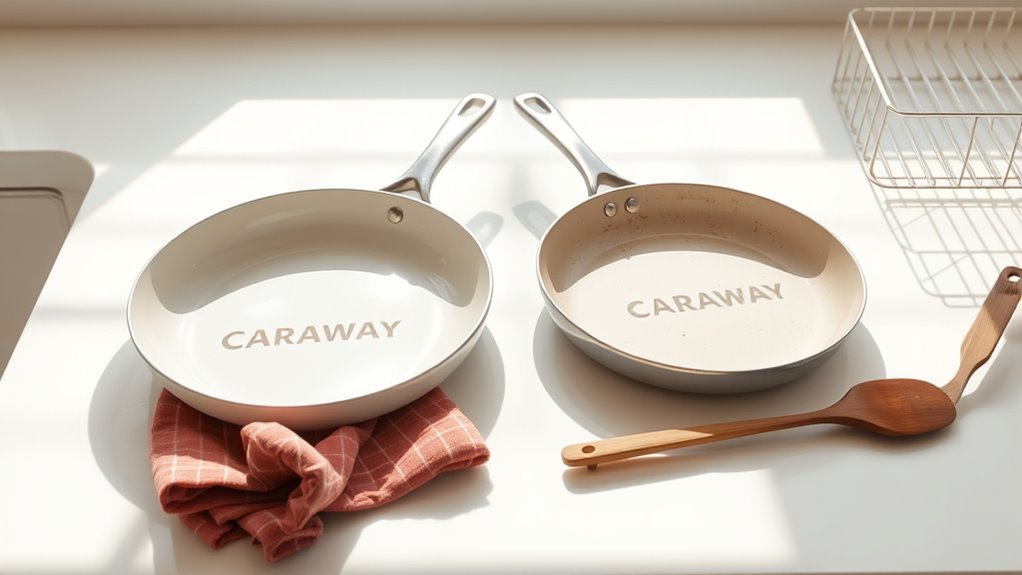
How long can you expect your Caraway pans to last? Typically, Caraway frying pans have a lifespan of 2 to 3 years, while pots and baking pans can last 5 years or more with proper care.
The longevity of your cookware hinges on several factors, including heat levels, the utensils you use, and your cleaning methods. To guarantee your pans remain effective, maintain them by using wooden or silicone utensils and opting for hand washing over the dishwasher.
Watch for replacement signs like a loss of non-stick ability, scratches, or discoloration on the surface. High-quality ceramic cookware like Caraway is designed to outlast cheaper alternatives, which may degrade in under a year.
Care Tips for Your Caraway Cookware
To maximize the lifespan of your Caraway cookware, following proper care techniques is essential.
Hand wash your pans in warm, soapy water using a soft sponge to protect the ceramic coating and avoid damage.
Steer clear of metal utensils; instead, opt for wooden, silicone, or nylon tools to prevent scratching the naturally slick surface.
When cooking, use low to medium heat, as high temperatures can accelerate wear and lead to micro-cracks in the ceramic.
Always allow your cookware to cool naturally before washing to prevent thermal shock, which can jeopardize its integrity.
Additionally, store your pans with soft liners or avoid stacking altogether to maintain their pristine appearance.
Implementing these care tips will enhance the durability of your Caraway cookware, ensuring you enjoy its benefits for years to come.
Signs It’s Time to Replace Your Caraway Pan?
When should you consider replacing your Caraway pan? It’s essential to monitor specific signs that indicate your cookware is nearing the end of its lifespan. Here are three key indicators:
- Scratched or Chipped Coating: Any visible damage to the ceramic surface can pose health risks, so it’s time to replace it.
- Food Sticking: If food starts sticking despite using oil, the non-stick surface is compromised, affecting performance and cooking quality.
- Discoloration: Dark spots or discoloration indicate overheating or thinning of the coating, which suggests it’s time for a new pan.
Additionally, if the handles are getting hot during use, it indicates wear and tear that could compromise safety.
Generally, Caraway frying pans last 2-3 years, while pots and baking pans can last over 5 years. Stay vigilant to guarantee your cooking remains safe and enjoyable!
Comparative Analysis of Caraway and Other Non-Stick Cookware
In the domain of non-stick cookware, Caraway stands out for its commitment to safety and durability, setting a benchmark against other brands. Unlike traditional non-stick options that often contain harmful PTFE and PFAS, Caraway pans feature a non-toxic ceramic coating that enhances safety without sacrificing performance.
With a lifespan of 2-3 years for frying pans and over 5 years for pots, their durability surpasses cheaper alternatives that may degrade within a year. Proper cooking practices, such as using non-metal utensils and avoiding high heat, further extend the life of your Caraway cookware.
While brands like Greenpan offer their own non-stick solutions, user feedback on durability varies considerably. Caraway pans guarantee even heat distribution, promoting better cooking results and minimizing wear. For those seeking a reliable, safe, and long-lasting non-stick experience, Caraway pans are a formidable choice in today’s market.
What Makes Caraway Cookware Worth the Investment?
Caraway cookware stands out not only for its safety and durability but also for the value it brings to your kitchen. Investing in Caraway means you’re choosing non-toxic cookware that enhances your cooking experience. Here’s why it’s worth it:
- Durability: The ceramic coating is robust and long-lasting, free from PTFE, PFOA, and PFAS, ensuring you cook safely.
- Versatility: Oven-safe up to 550°F, Caraway pans adapt to various cooking methods without compromising performance.
- Easy Maintenance: The non-stick surface allows for easy food release and cleaning, making your kitchen routine simpler.
With a reliable warranty and a 30-day money-back guarantee, you can confidently invest in Caraway cookware.
Its ability to distribute heat evenly and its aesthetic design further enhance your kitchen’s appeal while delivering exceptional results.
Choose Caraway for a blend of function and style that truly elevates your culinary adventures.
Frequently Asked Questions
What Are the Negatives of Caraway Cookware?
Caraway cookware has some negatives, including durability concerns with its nonstick coating, which can scratch and affect cooking performance.
Users often mention heat distribution issues, leading to uneven cooking.
Maintenance tips emphasize hand washing to avoid damage, which can be inconvenient.
Price comparison shows it’s higher than many alternatives.
User reviews highlight stains from certain foods, while the brand’s environmental impact and warranty coverage may also raise questions about long-term value and sustainability.
When to Throw Away a Caraway Pan?
You should throw away a Caraway pan when you notice significant signs of wear, such as food sticking problems or non-stick coating issues.
Check for surface damage indicators like scratches, chips, or rust formation signs, and be mindful of discoloration concerns.
If the handle shows integrity issues or the cooking performance declines, it’s time for a replacement.
Generally, consider replacing your pan every 2 to 3 years for ideal cooking results.
Why Is Caraway Cookware Being Sued?
Caraway cookware’s being sued due to significant consumer safety concerns and allegations of misleading advertising.
A staggering 80% of customer reviews indicate dissatisfaction with the product quality, especially regarding its durability. Claims of manufacturing defects and warranty disputes have emerged, leading to a class action lawsuit.
Users argue that the cookware doesn’t meet advertised standards, raising doubts about its longevity compared to alternative brands.
Cookware durability tests further highlight these product quality issues.
Which Is Better, Greenpan or Caraway?
When comparing GreenPan and Caraway, it’s clear Caraway edges out in durability and non-stick performance. Users rave about its heat distribution and longevity, while GreenPan’s advantages lie in its price and functional design.
However, Caraway’s eco-friendly materials and design aesthetics make it a popular choice for those valuing both style and substance.
Ultimately, consider your cooking versatility needs and user reviews to determine which brand aligns with your culinary aspirations.
Conclusion
So, it turns out that while your Caraway pans might not last a lifetime, they’re still a solid investment in your kitchen. With the right care, you can stretch their lifespan longer than that mysterious leftover in your fridge. Just remember to replace them before they start resembling a science experiment! Monitoring for those telltale signs guarantees your cooking remains safe and efficient—because nobody wants a hot handle when you’re just trying to flip an omelet.