
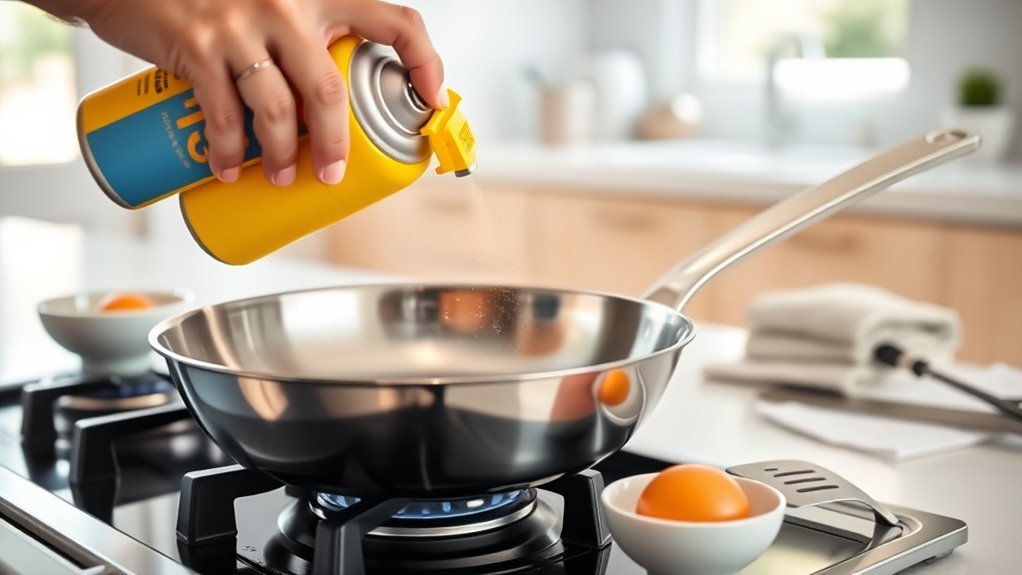
Imagine you’re whipping up a delicious stir-fry in your stainless steel pan, only to find your food sticking stubbornly to the surface. You might be tempted to reach for that can of cooking spray, but is it really the best choice? Understanding the implications of using cooking spray on stainless steel can transform your cooking experience. Let’s explore some effective alternatives and best practices to guarantee your meals slide right out of the pan.
The Risks of Using Cooking Spray on Stainless Steel Cookware
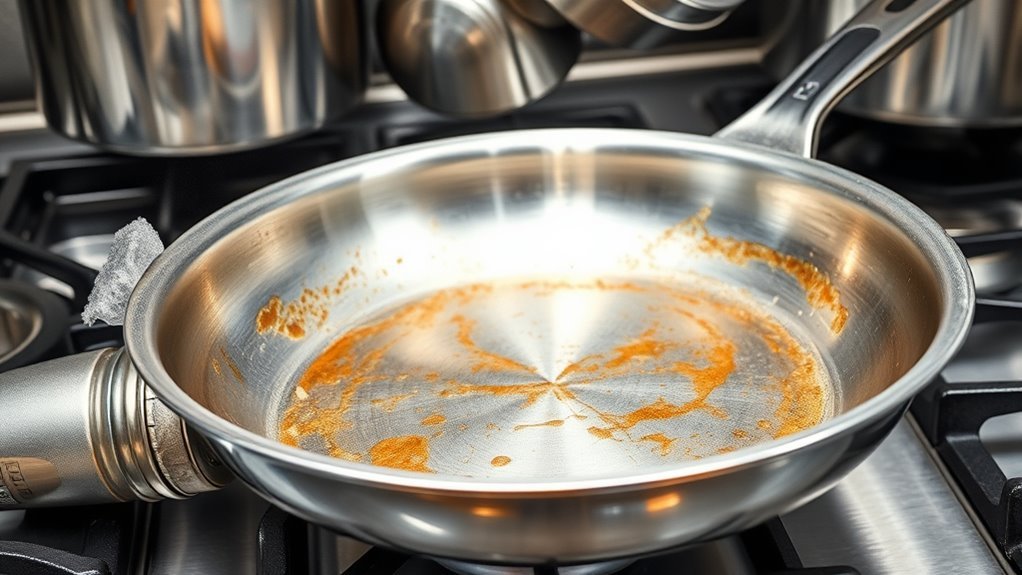
When you reach for that can of cooking spray, you mightn’t realize the potential risks it poses to your stainless steel cookware. While it seems like a quick fix for preventing sticking, cooking sprays often contain emulsifiers and propellants that create sticky residues.
Over time, these residues build up, leading to gummy layers that can actually cause food to stick, undermining the nonstick properties you expect from quality stainless steel.
Over time, cooking spray residues can create gummy layers, leading to unwanted sticking and diminishing your cookware’s performance.
Moreover, this buildup complicates your cleaning routines, often requiring harsher methods that might damage the pan’s surface. Quality cookware manufacturers, like All-Clad, explicitly advise against using cooking spray to maintain the integrity of their products.
By avoiding cooking sprays, you’ll preserve your stainless steel cookware’s performance and longevity, ensuring a more enjoyable cooking experience without the hassle of cleaning up stubborn residues.
Embrace your cookware’s natural capabilities for a liberating culinary journey!
Best Practices for Using Oils to Prevent Sticking in Stainless Steel Pans
Cooking sprays may lead to sticky residues and cleaning headaches, but there are effective ways to prevent sticking with oils that keep your stainless steel pans in top shape.
Start by coating your pan with a thin layer of high smoke point cooking oil, like avocado or canola oil. Pre-heating the pan over medium heat for 2-3 minutes until water droplets sizzle guarantees an even cooking surface and enhances the oil’s nonstick properties.
Remember to avoid using cooking sprays, as their additives can create those pesky residues that make food stick instead of preventing it. Additionally, maintain proper cooking temperatures and prevent overcrowding to allow ingredients to sear and brown evenly.
Regularly monitor your oil to avoid exceeding its smoke point, which can lead to sticky residues on your pan. With these practices, you’ll enjoy delicious meals without the hassle of sticking.
Top Tips to Keep Your Stainless Steel Cookware in Great Shape
To keep your stainless steel cookware in great shape, it’s essential to adopt a few key practices. Always preheat your pan over medium heat for 2-3 minutes to create a non-stick surface, which helps prevent food from sticking.
When cooking, skip the cooking spray; it can leave sticky residues and damage your pan over time. Instead, use a little oil to enhance cooking temperature control.
Be gentle with your cookware—opt for wooden, silicone, or nylon utensils to avoid scratching the surface.
When it comes to cleaning, stick with mild dish soap and avoid abrasive scrubbers to maintain that shiny finish.
Finally, never place a hot pan in cold water; let it cool down gradually to prevent warping.
Choosing the Right Oils for Your Stainless Steel Cooking
Choosing the right oils for your stainless steel cooking can make a significant difference in both flavor and performance.
For high-heat cooking, opt for oils with a high smoke point, like avocado or peanut oil. These oils not only withstand heat but also enhance your dishes without burning.
Extra virgin olive oil is fantastic for flavor but has a lower smoke point, so save it for finishing touches rather than frying.
Extra virgin olive oil adds wonderful flavor, but reserve it for finishing dishes rather than using it for frying.
Canola oil is another versatile option; its neutral taste makes it ideal for everyday sautéing and frying in your stainless steel pans.
Avoid low smoke point oils, such as flaxseed and walnut oil, as they can create sticky residues and unwanted flavors.
Healthier Alternatives to Cooking Spray for Greasing Pans
While many rely on cooking spray for greasing pans, healthier alternatives can elevate both flavor and nutrition in your meals. Consider these options for your stainless steel cookware:
- Olive Oil: Rich in unsaturated fats, it’s perfect for sautéing and baking.
- Avocado Oil: With a high smoke point and neutral taste, it’s versatile for all cooking methods.
- Coconut Oil: Known for its distinct flavor, use it sparingly due to its saturated fat content.
You can also use butter for added richness, but be cautious of its low smoke point.
Bacon grease offers a unique flavor, yet it’s higher in saturated fat, so moderation is key.
By choosing these healthier alternatives, you not only enhance your dishes but also contribute positively to your well-being.
Ditch the cooking spray and experiment with these flavorful options to make your meals shine!
Frequently Asked Questions
Can You Use Pam Cooking Spray on Stainless Steel?
No, you shouldn’t use Pam cooking spray on stainless steel. Its effectiveness diminishes as it builds sticky residues, making food stick instead of releasing easily.
For better non-stick options, try oils or natural fats. They promote better stainless steel care and enhance your frying techniques, grilling tips, and baking essentials.
Embrace these alternatives for a smoother cooking experience and maintain your cookware’s performance, ensuring every meal is a joy to prepare and enjoy.
What Should You Not Put in Stainless Steel?
Think of stainless steel as a loyal friend—it needs care to stay strong.
Don’t put non-stick cookware or metal utensils in it; they can scratch the surface. Avoid acidic foods that could tarnish the finish, and steer clear of high heat that might warp the pan.
Ditch abrasive cleaners and never toss it in the dishwasher.
Finally, skip food storage directly in the pan to keep it looking great and performing well.
How Do You Keep Food From Sticking to Stainless Steel?
To keep food from sticking to stainless steel, use effective non-stick techniques like proper pan preheating. Heat your pan for 2-3 minutes until water sizzles.
Choose high smoke point cooking oil types, like avocado or canola, to create a protective layer. Avoid overcrowding the pan for even heat distribution, and use wooden or silicone utensils to maintain the surface.
Season your stainless steel regularly for peak performance and enjoyment in your cooking adventures.
What Should I Never Use to Clean Stainless Steel?
When it comes to stainless steel maintenance, think of a pristine mirror. You wouldn’t use a hammer to clean it, right?
Avoid abrasive cleaners, acidic substances, and harsh chemicals that can dull its shine. Steer clear of abrasive scrubbers and metal utensils that scratch.
Never expose your cookware to high heat without care, and don’t risk food storage in acidic environments.
Treat your stainless steel with respect, and it’ll reward you with lasting beauty.
Conclusion
In the world of stainless steel cooking, think of oils as your trusty shield, protecting against sticking and ensuring a smooth culinary journey. Ditch the cooking spray to avoid pesky residues that can turn your meals into a sticky mess. Instead, embrace high smoke point oils and follow best practices for maintenance. By treating your cookware right, you’ll keep it shining like a well-polished gem, making every cooking experience delightful and hassle-free. Happy cooking!
