
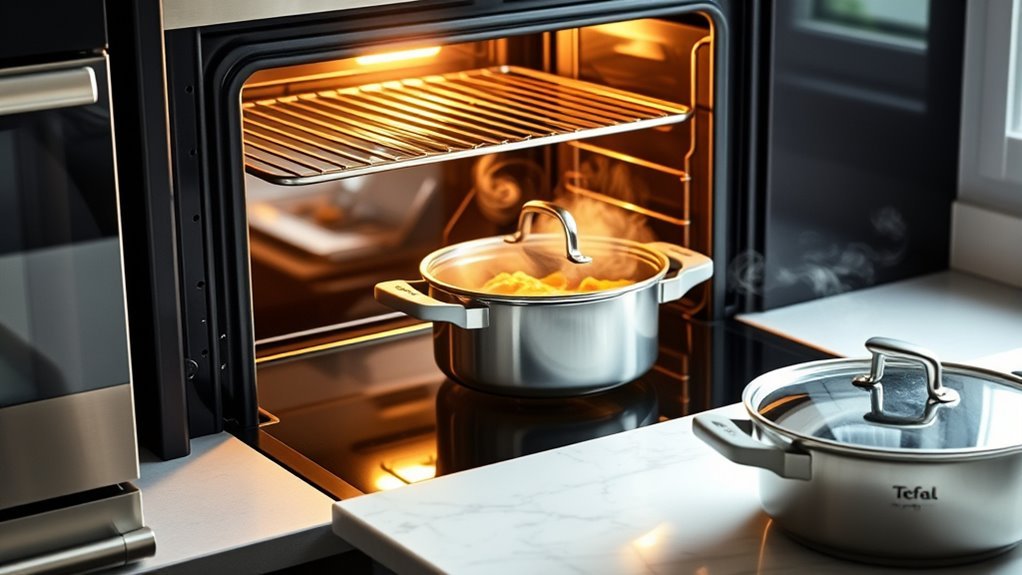
Tefal pots offer convenience in the kitchen, yet their oven safety can be a source of confusion. Knowing whether your cookware can handle the heat is essential for both successful meals and kitchen safety. Temperature ratings vary, and handle materials can complicate matters. So, how do you verify your Tefal pots are ready for the oven? Understanding these factors will help you maximize their use without risking damage.
How to Determine If Your Tefal Pot Is Oven-Safe
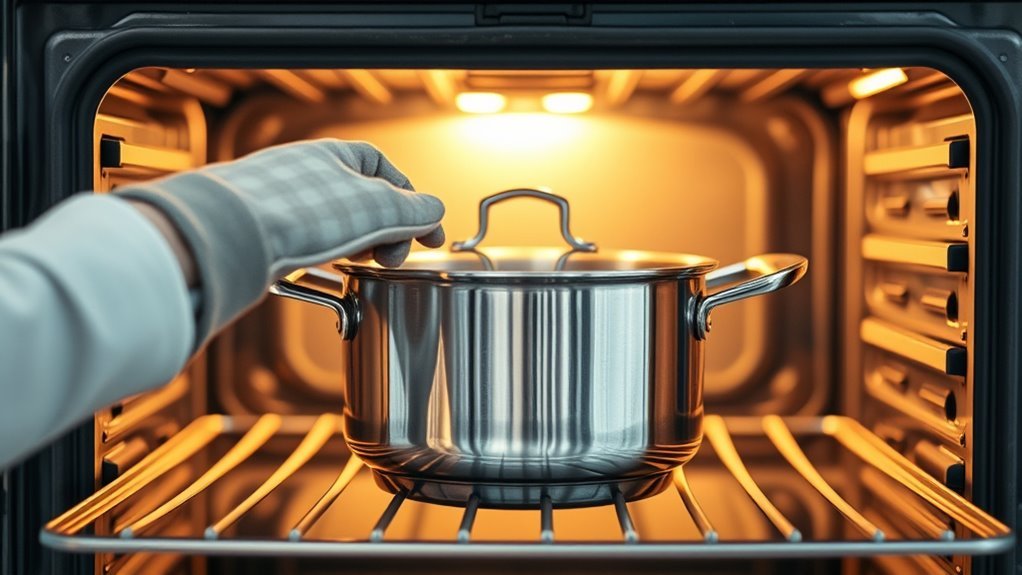
How can you tell if your Tefal pot is oven-safe? Start by checking the bottom of your pot for a temperature rating; most nonstick models handle up to 350-400°F, while stainless steel can go as high as 500°F.
Look for specific labeling or symbols indicating oven-safe cookware—remember, not all Tefal pots are designed for oven use.
Next, inspect the handle material; plastic or silicone handles typically aren’t oven-safe and can melt, while metal handles are a safer bet.
Also, examine the pot’s coating for any signs of damage. Scratched or peeling surfaces may deteriorate under high heat.
Finally, always consult the manufacturer’s guidelines or website for the most accurate information regarding your specific pot’s safety.
Identifying Oven-Safe Materials in Tefal Cookware
When exploring the oven safety of Tefal cookware, it’s important to focus on the materials that make up your pots and pans. Tefal offers a variety of options, but the key materials to look for are stainless steel and aluminum, both of which are generally oven-safe.
Standard nonstick pans are typically rated for temperatures between 350°F and 400°F, while stainless steel can handle up to a sizzling 500°F. However, be cautious—if your pots have plastic components or silicone handles, they may not withstand high heat and could melt.
Always check the bottom of your Tefal pot or consult the manufacturer’s website for specific oven-safe temperature ratings. Remember, Tefal’s nonstick coatings are sensitive; exceeding recommended temperatures can degrade them, leading to flaking and a shorter lifespan.
Max Oven Temperatures for Tefal Models
When you’re cooking with Tefal, knowing the max oven temperatures for different models is essential.
Most nonstick pans can handle up to 350-400°F, while stainless steel options withstand up to 500°F.
Don’t forget to check the handle materials, as plastic or silicone may not be oven-safe!
Max Temperature Ratings
Understanding the maximum temperature ratings for Tefal pots is essential for ensuring their longevity and performance in the oven.
Generally, Tefal non-stick pans are rated for oven-safe temperatures between 350°F and 400°F, while their stainless steel models can handle up to 500°F.
Always check the bottom of your pot or the manufacturer’s website for specific max temperature ratings.
If your cookware has plastic or silicone handles, steer clear of the oven, as they can melt or warp.
Metal handles, on the other hand, are usually safe for higher heat.
Remember, using Tefal pans under a broiler is a no-go; the intense heat can damage those precious non-stick coatings.
Stay informed to cook confidently!
Nonstick Coating Limits
Tefal nonstick pans come with specific oven temperature limits that you should definitely keep in mind to guarantee their durability and performance.
Typically, these pans are rated for oven temperatures between 350°F and 400°F, depending on the model. Exceeding this range can degrade the nonstick coating, leading to flaking and potential health risks. Always check the bottom of your pan or the manufacturer’s website for precise temperature ratings.
Avoid using your Tefal nonstick pans under the broiler, as those temperatures often surpass safe limits. To maintain the integrity of the nonstick surface, never place cold pans in a preheated oven to prevent thermal shock.
Taking these precautions will help you enjoy your cookware for years to come.
Handle Material Considerations
Choosing the right handle material for your Tefal pots can considerably impact your cooking experience, especially when using them in the oven.
Understanding the maximum temperature limits is essential for safe cooking.
Here’s a quick guide to handle material considerations:
- Stainless Steel Handles: Oven safe up to 500°F (260°C) for versatile baking and roasting.
- Plastic Handles: Generally rated for 350°F to 400°F (175°C to 200°C); check specific models.
- Silicone Handles: Risk of melting in high heat; avoid using above recommended temperatures.
- Manufacturer Guidelines: Always verify temperature limits and handle materials for safety.
How to Assess Your Tefal Pots for Oven Safety
Before you pop your Tefal pots into the oven, it’s vital to assess their oven safety to guarantee a successful cooking experience. Start by checking for a label indicating the maximum temperature rating, usually between 350°F and 500°F. Inspect the handles; only metal or oven-safe silicone should go in the oven, as plastic can melt. Evaluate the type of coating; non-stick options may have lower temperature limits and require caution. Finally, look for signs of wear like scratches or peeling, which can impact safety and performance.
| Assessment Criteria | What to Check | Importance |
|---|---|---|
| Temperature Rating | Max temperature label | Prevent overheating |
| Handle Material | Metal or silicone | Avoid melting handles |
| Coating Type | Non-stick versus regular | Guarantee heat tolerance |
| Signs of Wear | Scratches or peeling | Maintain cooking efficiency |
Always consult the manufacturer’s guidelines for specific oven use recommendations.
Why You Should Care About Handle Materials
When you’re cooking with Tefal pots, the handle material is key to your safety and success.
Plastic or silicone handles can melt in high oven temperatures, putting you at risk, while metal handles offer the durability you need.
Always check the heat resistance of your pot’s handles to guarantee a safe and enjoyable cooking experience.
Heat Resistance Levels
Understanding heat resistance levels is essential for anyone who wants to maximize their cooking efficiency and safety in the kitchen.
The materials used in Tefal pots notably affect their oven capabilities. Here’s what you need to know:
- Plastic Handles: Typically unsuitable for oven use; they can melt or warp at high temperatures.
- Stainless Steel Models: Can withstand temperatures up to 500°F, perfect for various baking and roasting tasks.
- Silicone Handles: Caution is advised, as their heat tolerance is often lower than metal.
- Mixed Materials: Avoid these entirely; components like plastic or rubber can compromise safety in the oven.
Always check the manufacturer’s guidelines to verify your cookware meets the necessary heat requirements.
Safety During Cooking
Choosing the right handle material for your Tefal pots is essential for ensuring a safe cooking experience.
When you’re using your pots in the oven, pay close attention to handle materials. Plastic or silicone handles can melt at high temperatures, jeopardizing both your meal and your safety. Instead, opt for metal handles that can withstand the heat without warping or degrading.
Always verify the handle material before placing your pots in the oven to prevent hazards. Additionally, tempered glass and metal lids are recommended for oven use, designed to endure high heat.
Best Practices for Using Tefal Pots in the Oven
Using Tefal pots in the oven can elevate your cooking experience, but it’s essential to follow some best practices to guarantee safety and performance. Here are four key tips to keep in mind:
- Check Temperature Ratings: Always verify your specific Tefal pot’s oven-safe temperatures, typically up to 500°F (260°C) for stainless steel models.
- Avoid Plastic Handles: Don’t use pots with plastic or silicone handles in the oven, as they can melt or warp.
- Prevent Thermal Shock: Let your Tefal pot come to room temperature before placing it in a preheated oven to avoid cracking.
- Inspect Non-Stick Coating: Regularly check the non-stick surface for any damage, as high heat can degrade it and impact cooking performance.
Common Mistakes When Using Tefal Cookware
Even with best practices in mind, many cooks still stumble into common pitfalls when using Tefal cookware. One major mistake is assuming all Tefal pots are oven-safe without checking their specific temperature ratings; they can range from 350°F to 500°F. Additionally, placing pans with plastic handles in the oven can lead to melting and safety hazards. Another error is neglecting to let your Tefal pans reach room temperature before inserting them into a preheated oven, which can cause thermal shock.
Here’s a quick reference to help you avoid these pitfalls:
| Mistake | Impact |
|---|---|
| Ignoring temperature ratings | Potential damage to cookware |
| Using pans with plastic handles | Safety hazards from melting handles |
| Overlooking non-stick surface wear | Food sticking and release of harmful chemicals |
Is It Safe to Use Tefal Pots Under a Broiler?
When it comes to using Tefal pots under a broiler, you’ll need to tread carefully.
Broiler temperatures can soar past 500°F, which can damage your pot’s nonstick coating and even warp plastic handles.
To keep your cookware in top shape, always check the manufacturer’s guidelines and consider the materials before broiling.
Broiler Temperature Limits
While Tefal pots are known for their versatility and ease of use, broiling with them requires caution. Understanding the limits of broiler temperatures is essential to avoid damage and guarantee safety.
Here are some key points to reflect on:
- Temperature Ratings: Tefal pots are typically rated oven-safe up to 350-400°F, while broiler temperatures can exceed this.
- Handle Material: Always opt for pots with metal handles, as plastic handles may melt or warp under intense heat.
- Nonstick Coatings: Direct heat from the broiler can deteriorate nonstick surfaces, affecting performance.
- Check Ratings: Always look for the specific temperature rating on the bottom of your pot before using it under a broiler.
Stay safe and enjoy cooking!
Material Compatibility Considerations
Understanding material compatibility is essential before using Tefal pots under a broiler, as not all pots can withstand the intense heat.
While standard Tefal nonstick pans are rated for oven heat up to 400°F, their coatings can degrade at broiler temperatures, leading to unpleasant flaking.
Furthermore, if your pot has plastic handles, it’s a definite no-go for the oven or broiler; they can melt under high conditions.
Always check the manufacturer’s labeling to verify your cookware is oven-safe.
For the best results, avoid placing cold Tefal pots directly into a preheated oven to sidestep thermal shock.
Stay informed, and you’ll enjoy the freedom of cooking without worry!
Recommended Cooking Techniques
Using Tefal pots under a broiler can be tricky, but with the right techniques, you can achieve delicious results.
To guarantee safety and effectiveness, keep these tips in mind:
- Choose Metal Handles: Opt for Tefal pots with stainless steel handles to withstand high temperatures.
- Avoid Non-Stick: Standard non-stick pans aren’t suitable for broiling due to their temperature limits.
- Check Specifications: Always verify your specific Tefal model’s guidelines for broiler safety.
- Use High-Heat Cookware: For best results, consider cast iron or stainless steel options designed for intense heat.
How to Maintain Your Tefal Cookware
Maintaining your Tefal cookware is essential for ensuring its longevity and performance. To keep your nonstick pan in top shape, always use non-abrasive sponges and warm, soapy water for cleaning. This gentle approach preserves the non-stick coating, allowing your culinary creations to slide right out.
Avoid placing metal utensils in your pans; they can scratch and damage that precious surface. Instead, choose silicone or wooden tools to protect your investment. Regularly check for any wear or peeling on the coating and replace pans that show significant deterioration for safe cooking.
To prevent thermal shock, let your Tefal pans cool to room temperature before putting them in a preheated oven.
Finally, store your cookware carefully by stacking them with protective layers, like cloth or paper, to avoid scratches and maintain Tefal cookware’s integrity. Enjoy your cooking freedom!
FAQs About Tefal Pots and Oven Safety
Wondering if your Tefal pots are safe for oven use? You’re not alone! Here’s what you need to know about oven safety and temperature ratings for your Tefal cookware:
- Metal Handles: Tefal pots with metal handles can withstand temperatures up to 500°F—ideal for oven use.
- Plastic Handles: If your pot has plastic handles, skip the oven; they can melt at high temperatures.
- Nonstick Coating: Standard nonstick Tefal pots are rated for 350°F to 400°F; exceeding this may damage the coating.
- Avoid the Broiler: Don’t use your Tefal pots under the broiler; the intense heat can harm both the coating and plastic parts.
Always check the temperature rating on the bottom of your Tefal pot or consult the manufacturer’s website for specific oven safety guidance.
Always verify the temperature rating on your Tefal pot’s base or visit the manufacturer’s website for detailed oven safety information.
Keep these tips in mind for delicious, safe cooking adventures!
Frequently Asked Questions
Which T-Fal Pans Are Oven Safe?
When choosing Tefal pans that are oven-safe, look for stainless steel and enameled cast iron options. They can handle high temperatures, making them ideal for various recipes.
Check Tefal product reviews to see which models fit your cooking style. Remember, if your pan has plastic or silicone handles, it mightn’t be oven-safe.
Always follow Tefal maintenance tips to keep your cookware in top shape for both stovetop and oven use.
Can You Put Procook Pans in the Oven?
Yes, you can put Procook pans in the oven, but check the specific model first.
Most are rated for high temperatures, thanks to their metal handles that guarantee great heat distribution. Use them for various cooking techniques, like baking or roasting, but be cautious with non-stick coatings; excessive heat can damage them.
Always steer clear of pans with plastic parts in the oven, as they won’t stand up to the heat.
Enjoy your cooking!
Can I Use a Non-Stick Pan in the Oven?
Absolutely, you can use a non-stick pan in the oven, but there’s a catch!
Many non-stick cookware pieces are safe up to 400°F, but always check the specifics. Cooking safety is key; overheating can damage the coating and release harmful chemicals.
Remember, avoid broilers where temperatures soar.
With a little mindfulness, you can enjoy the ease of non-stick pans while whipping up delicious oven-baked dishes that liberate your culinary creativity!
How Can I Tell if My Pan Is Oven Safe?
To tell if your pan’s oven-safe, check the bottom for any temperature ratings and look for manufacturer guidelines.
Examine the pan materials; metal handles usually indicate heat resistance, while plastic or silicone mightn’t withstand high heat.
Inspect the coating too—if it’s damaged, avoid using it in the oven.
Following these steps will guarantee you cook safely and make the most of your versatile cookware. Enjoy your culinary adventures!
Conclusion
In summary, using Tefal pots in the oven can be a breeze if you know what to look for. Always check the temperature ratings and handle materials to keep your cooking safe and sound. By taking these precautions, you can avoid any mishaps and make the most of your Tefal cookware. So, don’t let the heat get to you—stay informed, and your culinary creations will shine like a diamond in the rough!
