
Tiger rice cookers continue to draw attention in 2027 for different reasons. The JKT-D10U stands out for precision, while the JAX-T10U-K adds cooking flexibility with its Tacook tray. The JNP-1000-FL keeps things simple, and the JBV-A10U balances Micom control with useful extras. Each model serves a distinct need, but one may prove to be the smarter choice when the details are compared more closely.
TIGER JKT-D10U 5.5-Cup Induction Heating Rice Cooker, 12 Auto-Cook Settings
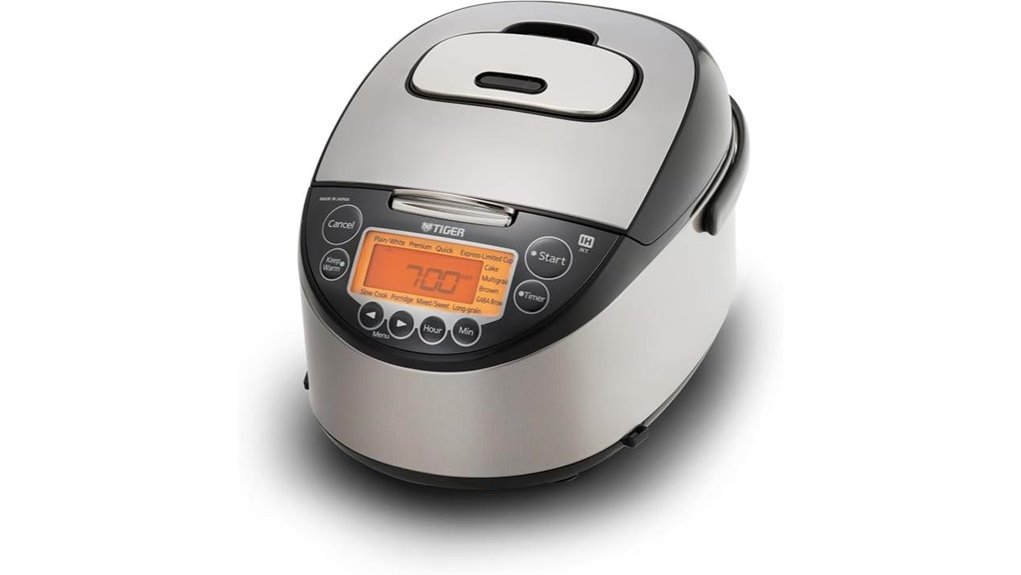
The Tiger JKT-D10U stands out for cooks who want precise, versatile rice-making in a compact countertop design. Its induction heating system surrounds the 1.5mm ceramic-coated inner pot for fast, even temperature control, while 12 auto-cook modes handle white rice, brown rice, porridge, cake, and more. It cooks up to 5.5 cups of dried rice and includes an express setting for limited white rice in as fast as 17 minutes. The cooker also offers 24-hour keep-warm performance, a detachable steam cap, and an LCD interface. UL certification adds confidence to its build.
Best For: Home cooks who want a compact, easy-to-use rice cooker with precise induction heating, versatile cooking modes, and reliable keep-warm performance.
Pros:
- Induction heating and the ceramic-coated inner pot help deliver even, consistent cooking results.
- 12 auto-cook settings provide strong versatility for rice, porridge, slow cooking, and baking.
- 24-hour keep-warm function and detachable parts make it convenient for daily use and cleanup.
Cons:
- The 5.5-cup capacity may be too small for larger families or meal prep.
- At 700 watts, it may not be as fast for all cooking tasks as some higher-powered models.
- Premium features like induction heating can make it more expensive than basic rice cookers.
Tiger JAX-T10U-K Micom Rice Cooker with Tacook Tray
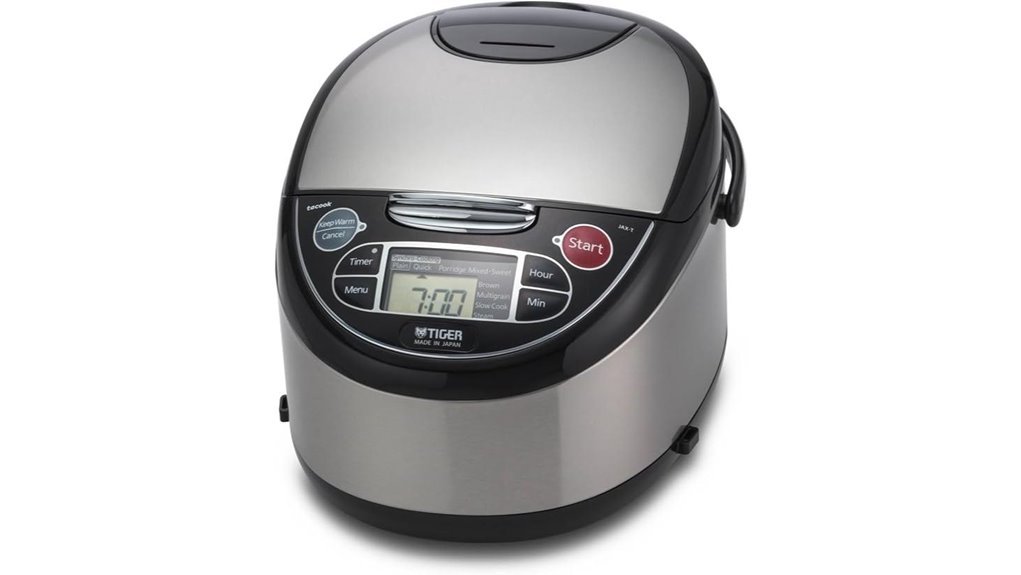
For cooks seeking easy one-pot meals, the Tiger JAX-T10U-K stands out. This 5.5-cup Micom rice cooker and warmer uses intelligent control to adjust cooking time, temperature, soaking, and steaming automatically. Its Tacook tray enables rice and a main dish to cook together without mingling flavors, supporting efficient meal prep. Ten auto-cook settings cover white rice, quick cook, steam, mixed grains, brown rice, porridge, sweet rice, and more. It also offers slow cooking, keep-warm for 12 hours, and easy-clean removable parts. UL certification and Japanese manufacturing add confidence.
Best For: Busy home cooks, small families, and anyone who wants an easy one-pot rice cooker with synchronized meal prep and multiple cooking options.
Pros:
- Tacook tray lets you cook rice and a main dish at the same time without flavor transfer.
- 10 auto-cook settings provide versatility for white rice, brown rice, porridge, steaming, slow cooking, and more.
- Micom control and keep-warm functionality make cooking more consistent and convenient.
Cons:
- 5.5-cup capacity may be too small for larger households or batch cooking.
- Tacook accessories and removable parts may require extra care during cleaning and maintenance.
- At 641 watts, it may not be the most powerful option for users wanting faster overall cooking.
Tiger JNP-1000-FL 5.5-Cup (Uncooked) Rice Cooker and Warmer, Floral White
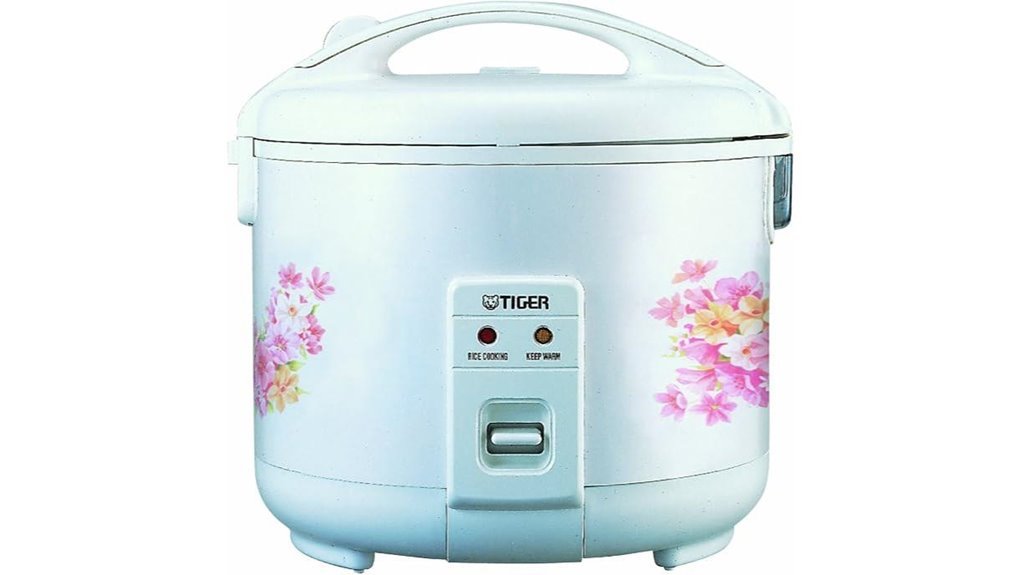
Compact and dependable, the Tiger JNP-1000-FL suits small households needing simple rice cooking. This 5.5-cup uncooked model in Floral White is made in Japan and runs on 340 watts through a corded electric setup. Its non-stick inner pan supports easy serving, while the removable steam vent simplifies cleanup. A retractable power cord helps with storage, and the included spatula and measuring cup add convenience. The keep-warm function maintains rice for up to 12 hours. At 7.9 pounds, it remains manageable, though hand washing is recommended and the warranty lasts 30 days.
Best For: Small households or individuals who want a compact, easy-to-use rice cooker with basic keep-warm convenience and minimal cleanup.
Pros:
- Non-stick inner pan makes serving and cleaning easier
- Keep-warm function holds rice for up to 12 hours
- Retractable power cord and included accessories add convenience
Cons:
- 5.5-cup uncooked capacity may be too small for larger families
- Hand washing is recommended, which is less convenient than dishwasher-safe care
- 30-day warranty is relatively short
TIGER JBV-A10U 5.5-Cup Micom Rice Cooker, with Tacook Food Steamer Tray
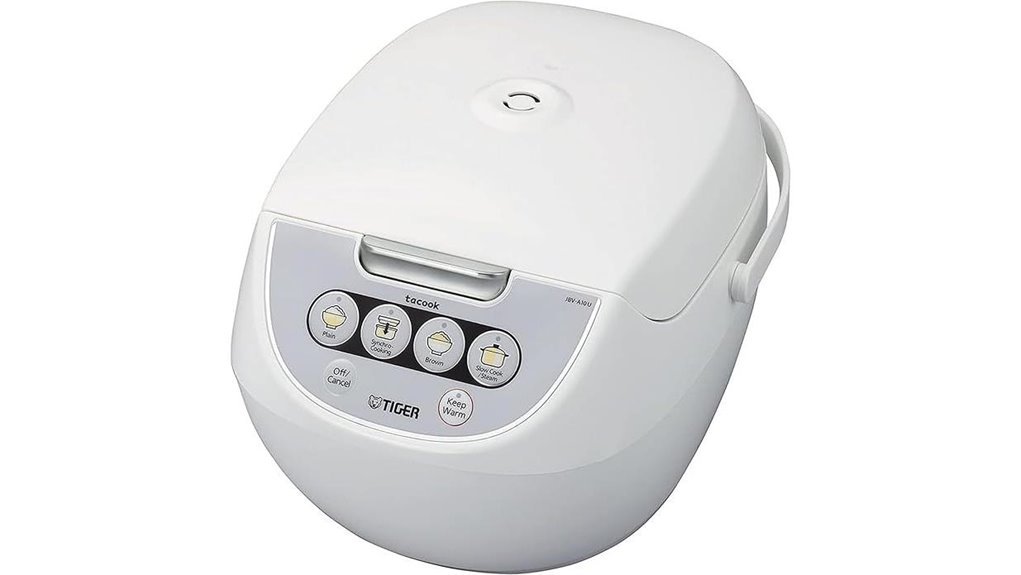
With Tacook technology, this 5.5-cup Tiger suits busy households wanting rice and a main dish cooked together. The JBV-A10U uses MICOM control for precise cooking and offers four settings: plain rice, brown rice, slow cook, and steam. Its BPA-free tacook tray lets vegetables or proteins steam above the rice without flavor transfer. The cooker yields about 11 cups of cooked rice, keeps it warm for up to 12 hours, and features a scratch-resistant fluorine-coated inner pot. It also includes a spatula, measuring cup, recipe book, and hand-wash care guidance.
Best For: Busy households or small families who want a compact rice cooker that can prepare rice and a main dish at the same time with minimal effort.
Pros:
- Tacook technology lets you cook rice and a separate dish together without flavor transfer.
- MICOM control and four cooking modes offer precise, versatile performance.
- Keep-warm function and included accessories add convenience for everyday use.
Cons:
- 5.5-cup uncooked capacity may be too small for larger households.
- Only four basic settings, so it lacks more advanced cooking options.
- Hand-wash care and a fluorine-coated inner pot may require extra upkeep.
Factors to Consider When Choosing Tiger Rice Cookers in 2026
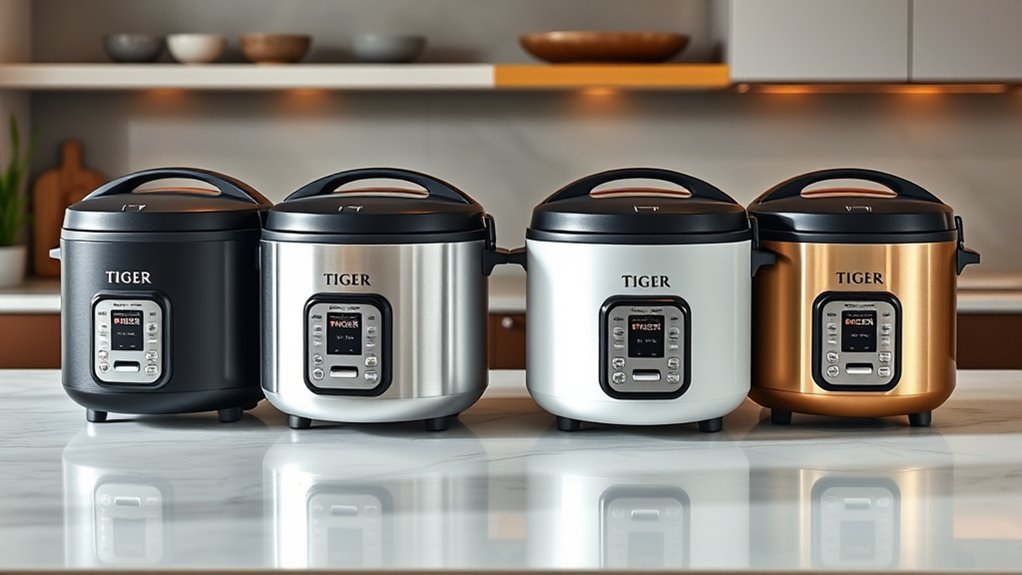
When choosing Tiger rice cookers in 2026, attention often turns to cooking technology, capacity needs, and the range of auto cook settings. Warm keep duration also matters for households that serve rice at different times. Ease of cleaning can further influence which model proves most practical over time.
Cooking Technology
Cooking technology is one of the most important factors to compare in Tiger rice cookers, since it directly affects texture, consistency, and convenience. Induction heating stands out for its precise temperature control and quick adjustments, helping rice cook evenly and finish fluffier. Micom control systems add another layer of reliability by automatically modifying time and heat according to the rice type. For households that want more flexibility, Tacook technology supports simultaneous preparation of rice and a main dish without flavor transfer, using a BPA-free tray. Advanced functions such as GABA brown rice and express cooking broaden usefulness for different diets and schedules. Multiple auto-cook settings also simplify operation, letting users choose suitable programs for varied rice types and dishes without guesswork.
Capacity Needs
Capacity should be matched to household size, cooking habits, and meal-prep needs when choosing a Tiger rice cooker in 2026. Capacity is usually measured in uncooked rice, and Tiger models commonly begin at 5.5 cups, with larger versions available for bigger households and batch cooking. A 5.5-cup cooker typically produces about 11 cups of cooked rice, which suits four to six people and works well for small families or casual gatherings. For households that serve rice across several meals, a larger unit can reduce repeat cooking and save effort. Those who entertain often or prepare meals in advance may benefit from extra volume. It is also useful to evaluate whether the cooker must handle other dishes at the same time, since that can improve kitchen efficiency.
Auto Cook Settings
Auto-cook settings can greatly improve the versatility and convenience of a Tiger rice cooker. Buyers often find that a model with 12 preset programs better supports varied meals, since it can handle white rice, brown rice, multigrain, and porridge with little guesswork. For faster preparation, express cook modes can produce white rice in as little as 17 minutes, which suits busy schedules. Some units also include Tacook Technology, enabling rice and a main dish to be cooked at the same time while preserving flavor. Specialized options, such as cake or slow-cook programs, further broaden usefulness beyond standard rice preparation. A wider set of settings generally signals a more adaptable appliance, especially for households that want one cooker to cover everyday staples and occasional specialty dishes.
Warm Keep Duration
Warm keep duration varies widely across Tiger rice cooker models, with some units maintaining rice quality for up to 24 hours while others are suited to roughly 12 hours. That range matters because a longer hold time gives more flexibility for staggered meals and late arrivals without sacrificing texture. Performance depends on insulation and heating technology, which help retain moisture and reduce drying. Buyers should also note that extended warming can increase electricity use over time, especially when the cooker remains active for many hours. Since specifications differ by model, it is important to confirm the exact keep-warm window before purchase. Matching that duration to daily routines guarantees the cooker supports serving schedules, preserves rice quality, and avoids unnecessary energy costs.
Ease Of Cleaning
Ease of cleaning is a practical factor in choosing a Tiger rice cooker, and many models are designed to reduce after-meal maintenance. Detachable steam caps and inner lids let users rinse key parts separately, while removable steam vents support deeper cleaning when residue builds up. Non-stick inner pots help rice release cleanly, reducing scraping and speeding up washup. Measurement markings inside the pot can limit overfilling, which helps prevent spills during cooking and keeps cleanup simpler. Some designs also include retractable power cords, making storage neater and minimizing clutter around the appliance after use. Together, these features make Tiger rice cookers easier to maintain, especially for households that value efficiency. A cleaner cooker also tends to stay presentable and ready for frequent use.
Frequently Asked Questions
How Long Do Tiger Rice Cookers Typically Last?
Tiger rice cookers typically last about 5 to 10 years, depending on how often they are used and how well they are maintained. With regular cleaning, careful handling, and timely replacement of worn parts, some units can last even longer. Heavy daily use, mineral buildup, and damaged nonstick coatings may shorten lifespan. Warranty coverage and model quality also influence durability, so longevity varies across households and usage patterns.
Are Replacement Parts Easy to Find for Tiger Models?
Yes, replacement parts for Tiger models are generally easy to find, though availability varies by model and age. Newer units usually have better access to lids, inner pots, seals, and power cords, while older or discontinued models can be harder to service. Authorized dealers and online parts sellers often help, but stock can be uneven. Reliability meets inconvenience: common parts appear quickly, rare ones may require patience and comparison shopping.
Can Tiger Rice Cookers Cook Quinoa and Oats?
Yes, Tiger rice cookers can cook quinoa and oats in many models. A detached observer would note that these appliances often include settings for mixed grains or porridge, which suit both foods well. Quinoa usually cooks with a simple water ratio, while oats may require closer attention to prevent overflow. For best results, the model’s manual should be checked, since features and presets vary across Tiger cookers.
Do Tiger Rice Cookers Have Removable Inner Lids?
Yes, many Tiger rice cookers do have removable inner lids, though not every model includes one. This design helps with easier cleaning and better hygiene, since the inner lid can usually be taken out and washed separately. However, some basic models may use a fixed lid instead. It is best to check the specific product’s specifications or manual before purchase to confirm whether the inner lid is removable.
Are Tiger Rice Cookers Energy Efficient?
Tiger rice cookers are generally energy efficient, because they use insulated heating systems and precise temperature control to cook rice with limited wasted power. Induction and micom models often improve efficiency by adjusting heat more accurately than basic appliances. Their sealed design also helps retain heat. Actual energy use still depends on capacity, cooking mode, and how often the cooker is opened or kept on warm afterward.
Conclusion
Overall, Tiger’s 2027 lineup shows how a single brand can serve distinct cooking needs without sacrificing reliability. The JKT-D10U leads with induction heating and 12 presets, while the JAX-T10U-K and JBV-A10U add practical Tacook versatility for efficient meal prep. The JNP-1000-FL remains a strong pick for users who value simplicity. Significantly, multi-function rice cookers can reduce separate appliance use, a small but meaningful efficiency gain for compact households.
