
Large-capacity water filter dispensers are becoming a practical choice for households that want cleaner water without constant refills. In 2027, several models stand out for filtration strength, storage size, and everyday convenience, from glass designs to gravity-fed systems. Some promise better contaminant reduction, while others focus on capacity and ease of maintenance. The differences are not always obvious, and the best option depends on more than just size.
Culligan 40-Cup Glass Water Filter Dispenser

The Culligan 40-Cup Glass Water Filter Dispenser is best suited for households or hosts who want high-capacity filtered water with a refined presentation, as its elegant glass design pairs with a 5-stage filtration system that removes 99.9% of dissolved solids and targets contaminants such as lead, PFAS, chlorine, and mercury. Certified by IAPMO, it uses Culligan with ZeroWater Technology to reduce more contaminants than leading filters. A built-in TDS meter signals when replacement is needed, with zero indicating effective filtration. The drop-in filter, spigot, and reusable design support convenience, sustainability, and reduced plastic waste.
Best For: Households, hosts, or event organizers who want a high-capacity countertop water dispenser with advanced filtration and an elegant glass presentation.
Pros:
- 5-stage filtration removes 99.9% of dissolved solids and targets lead, PFAS, chlorine, and mercury.
- Built-in TDS meter makes it easy to monitor water quality and know when to replace the filter.
- 40-cup glass design is stylish, reusable, and helps reduce plastic bottle waste.
Cons:
- Only compatible with new Culligan with ZeroWater Technology filters, not legacy ZeroWater filters.
- Glass construction may be heavier and more fragile than plastic dispensers.
- Requires regular filter replacement to maintain performance.
ZeroWater 32-Cup Water Filter Dispenser Removes PFOA/PFAS

ZeroWater’s 32-cup dispenser suits households wanting a countertop filter that targets PFOA and PFAS. Its five-stage system uses ion exchange technology and is IAPMO certified to reduce PFOA/PFOS, lead, chromium, and mercury. An integrated TDS meter helps track water quality, and the filter is changed when the reading reaches 006. Compact enough for fridge or counter use, the BPA-free unit weighs 5.5 pounds and holds 32 cups. Each filter can replace up to 110 plastic bottles, supporting a lower-waste routine. Included components are the dispenser, filter, and meter, backed by a standard warranty.
Best For: Households that want a countertop or fridge-friendly water dispenser with strong filtration for PFOA/PFAS, lead, and other contaminants.
Pros:
- 5-stage filtration with ion exchange technology and IAPMO certification for reducing PFOA/PFOS, lead, chromium, and mercury
- Integrated TDS meter makes it easy to monitor water quality and know when to replace the filter
- BPA-free 32-cup design helps cut down on plastic waste by replacing up to 110 bottles per filter
Cons:
- Requires regular filter monitoring and replacement when the TDS meter reaches 006
- 32-cup size may still be bulky for very small kitchens or limited fridge space
- Best performance depends on maintaining proper water pressure within the 20–80 psi range
PUR Water Filter Dispenser XL 44-Cup with 2 Genuine PUR Water Filters
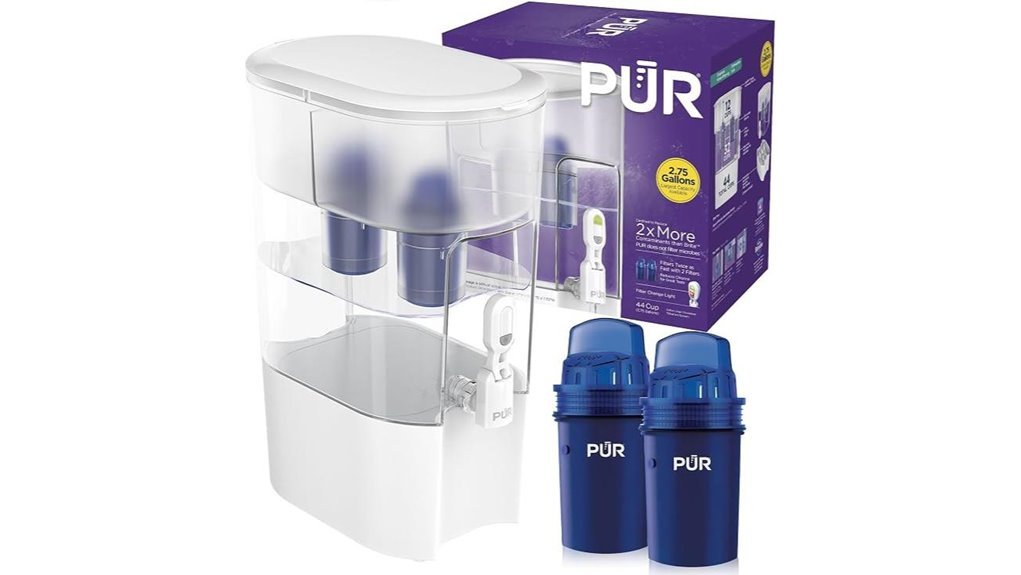
With a 44-cup capacity, PUR’s XL dispenser suits households needing frequent, high-volume filtered water. Its slim countertop profile, 12.5 x 7.7 x 17-inch footprint, and 8.8-pound plastic build make it practical for limited spaces. IAPMO certification and ion-exchange filtration reduce chlorine, mercury, copper, zinc, and more than 15 additional contaminants. Each Genuine PUR filter lasts up to 40 gallons or two months, while the indicator signals replacement. A pull-down spout, carrying handle, dishwasher-safe parts, LockFit security, and removable filter storage add convenience. It also cuts bottled-water costs and single-use plastic waste.
Best For: Households that need a high-capacity, space-saving countertop water dispenser with effective contaminant reduction and easy everyday use.
Pros:
- 44-cup capacity is great for families or frequent water drinkers.
- IAPMO-certified filtration reduces chlorine, mercury, copper, zinc, and other contaminants.
- Convenient features like the pull-down spout, filter indicator, and dishwasher-safe parts make it easy to use and maintain.
Cons:
- At 8.8 pounds and 17 inches tall, it may still feel bulky on some countertops.
- Filters need replacing about every 2 months or 40 gallons, which adds ongoing cost.
- Best suited for water with TDS up to 500 PPM, so it may not be ideal for all water conditions.
Waterdrop WFD-22L Large Water Filter Dispenser, 40-Cup Capacity, Black
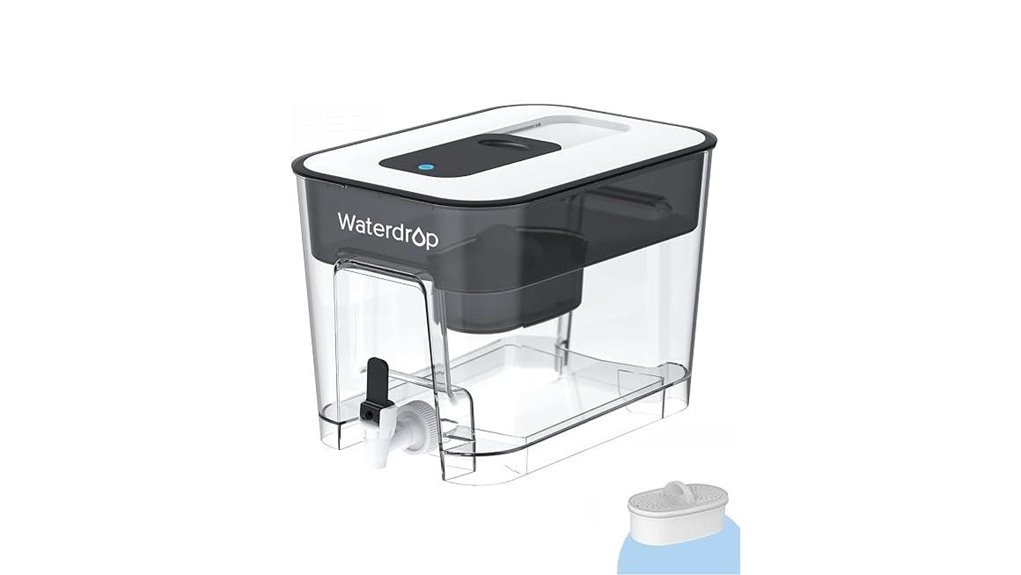
Waterdrop’s WFD-22L suits households needing a compact, high-capacity dispenser with faster filtration. This 40-cup dispenser, with 21 cups in the body, uses lead-free, BPA-free, food-grade materials and measures 8.5 by 12.4 by 8.7 inches. NSF42 and 372 certification supports its activated carbon filter, which reduces chlorine, PFOA, PFOS, metal ions, taste, and odor. Waterdrop claims a flow rate four times faster than competing products and a 200-gallon, two-month lifespan. A handle, sliding cover, and filter reminder improve convenience, while the streamlined black design fits kitchens or offices.
Best For: Households, small offices, or apartment dwellers who want a compact 40-cup water dispenser with fast filtration and easy maintenance.
Pros:
- NSF42 and 372 certified activated carbon filter reduces chlorine, PFOA, PFOS, metal ions, taste, and odor.
- Fast filtration with a claimed flow rate 4x faster than competing products.
- Convenient features like a handle, sliding cover, and filter replacement reminder.
Cons:
- Requires regular filter replacements, which adds ongoing cost.
- Large 40-cup capacity may still take up noticeable counter space in smaller kitchens.
- Only one replacement filter is included, so extras must be purchased separately.
Waterdrop WFD-40L Water Filter Dispenser, 35-Cup Capacity, Black
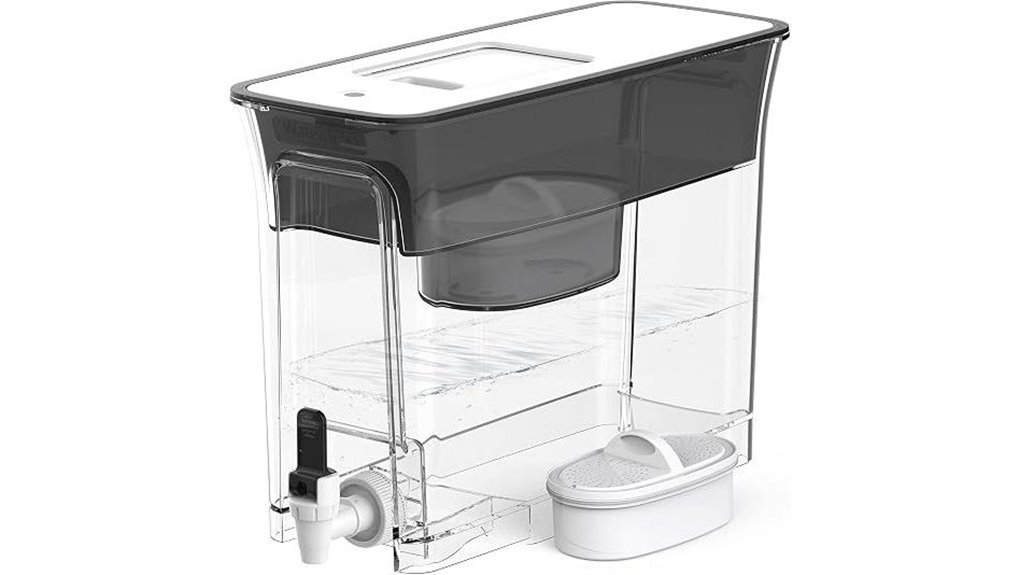
For busy households needing compact high-volume filtration, the Waterdrop WFD-40L offers a practical fit. Its 35-cup capacity, with 19 cups in the body, suits refrigerator storage while preserving a slim 14.37 x 5.55 x 9.95-inch footprint. Activated carbon filtration reduces chlorine by up to 97.4% and helps limit odor, iron, metals, and minerals, with a 600 PPM TDS ceiling. NSF42 and 372 certification, BPA-free materials, and gravity-fed operation add confidence. The filter lasts 200 gallons or two months, and the replacement indicator supports timely maintenance.
Best For: Busy households or apartment kitchens that want a slim, refrigerator-friendly water dispenser with reliable gravity-fed filtration and simple maintenance.
Pros:
- Slim 35-cup design fits easily in the fridge while still offering high-volume storage.
- NSF42/372 certified activated carbon filtration reduces chlorine, odor, and several common contaminants.
- Handy features like the filter indicator, sliding cover, and carry handle make it convenient to use.
Cons:
- Best suited for moderate water quality since it supports TDS levels only up to 600 PPM.
- Filter replacement is needed relatively often at about 2 months or 200 gallons.
- Gravity filtration is slower than powered filtration systems and may not suit users wanting instant output.
Brita XL 27 Cup Water Pitcher Dispenser, Includes 1 Elite Filter, Black

Brita’s XL 27-cup dispenser suits busy households that want high-volume filtered water on hand. The UltraMax countertop pitcher includes one Elite filter and uses a BPA-free, freestanding design with a handy spigot. Advanced Carbon Core Technology reduces 99% of lead and more than 30 contaminants, including microplastics, chlorine, pharmaceuticals, and pesticides. WQA NSF/ANSI certification supports its claims. The filter lasts about 120 gallons, or six months, and can replace up to 900 plastic bottles. At 5.19 x 13.94 x 9.67 inches, it balances capacity, convenience, and sustainability.
Best For: Busy households that want a high-capacity, countertop water dispenser with strong contaminant reduction and long filter life.
Pros:
- Large 27-cup capacity is convenient for families and frequent water use
- Elite filter reduces 99% of lead and 30+ contaminants, including microplastics and chlorine
- Long-lasting filter can treat about 120 gallons or six months, helping cut plastic bottle waste
Cons:
- Takes up countertop space due to its large dispenser size
- Requires periodic filter replacement, which adds ongoing cost
- Plastic construction may be less durable or premium-feeling than metal or glass alternatives
PUR 30-Cup Countertop Water Filter Dispenser for Fridge, White/Blue

The PUR 30-cup dispenser suits families and dorm residents needing chilled, filtered water on demand. Its 7.09-liter capacity fits neatly in a refrigerator, while the pull-down spout and carrying handle simplify use and refilling. The genuine PUR filter is IAPMO certified and lasts up to 40 gallons or two months, reducing chlorine, mercury, copper, zinc, and other contaminants. A LockFit mechanism keeps the filter secure. The dishwasher-safe plastic design supports easy cleaning, and the white-blue finish offers a practical look. It also helps cut bottled water use and improves tap water taste.
Best For: Families, households, and dorm residents who want a space-saving refrigerator water dispenser with convenient chilled, filtered water.
Pros:
- Large 30-cup capacity is great for frequent use.
- Genuine PUR filter reduces chlorine, mercury, copper, zinc, and other contaminants.
- Dishwasher-safe design with a pull-down spout and carrying handle makes it easy to use and clean.
Cons:
- Filter needs replacement after about 40 gallons or 2 months.
- Plastic construction may feel less premium than glass or stainless steel.
- Requires refrigerator space, so it may not suit very small fridges.
British Berkefeld Countertop Gravity-Fed Water Filtration System
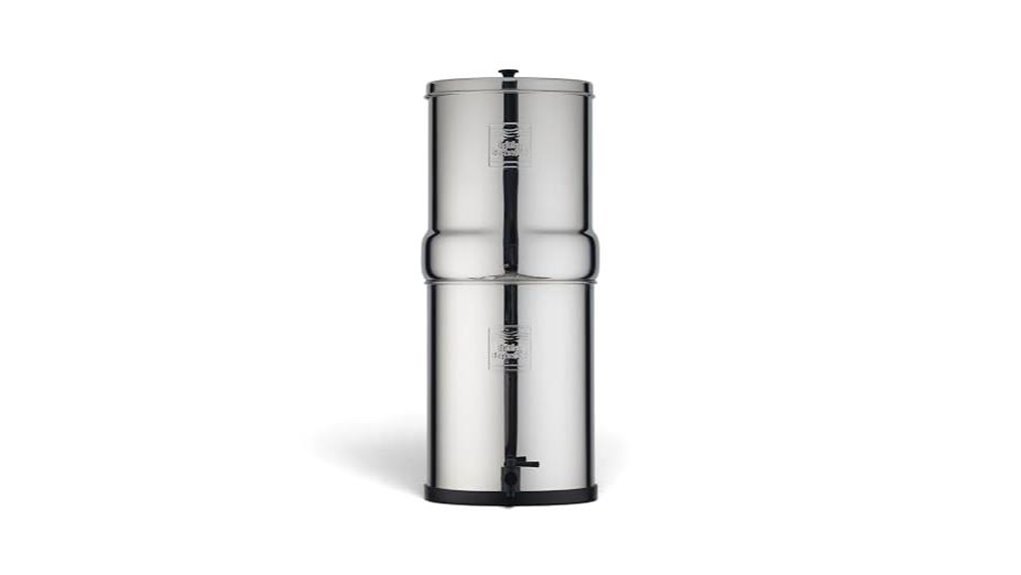
With dual ceramic candles and a stainless steel body, it suits households needing reliable high-capacity filtration. The British Berkefeld Countertop Gravity-Fed Water Filtration System, from Doulton’s nearly 200-year legacy, brings strong brand credibility. Its W9361137 model uses two Ultra Sterasyl ceramic candles to remove up to 99.99% of harmful bacteria, cysts, and other waterborne pathogens. The compact unit also fits camping trips and RV travel. Stainless steel construction supports durability and easy cleaning, while replacement candles install easily and last long. It offers dependable access to safe drinking water.
Best For: Households, campers, and RV travelers who want a durable, portable gravity-fed water filtration system with strong contaminant removal.
Pros:
- Dual Ultra Sterasyl ceramic candles remove up to 99.99% of harmful bacteria, cysts, and other waterborne pathogens.
- Stainless steel construction is durable, easy to clean, and built for long-term use.
- Compact and portable design makes it suitable for home use, camping, and RV travel.
Cons:
- Gravity-fed filtration is slower than powered filtration systems.
- Replacement candles will eventually need to be purchased and installed.
- The countertop design may take up space in smaller kitchens or travel setups.
Factors to Consider When Choosing Large-Capacity Water Filter Dispensers in 2026

When selecting large-capacity water filter dispensers in 2026, attention typically centers on filtration technology, the amount of water needed each day, and how long each filter lasts. Contaminant reduction performance also matters, since different systems target different impurities with varying effectiveness. TDS monitoring can further help indicate water quality trends and support timely filter replacement.
Filtration Technology
Filtration technology is a defining factor in large-capacity water filter dispensers, as advanced multi-stage systems can remove up to 99.9% of dissolved solids and contaminants, including lead and PFAS. Five-stage designs often outperform basic carbon filters by combining sediment, carbon, and ion exchange media to target a broader range of pollutants. Certifications from groups such as IAPMO add confidence that reduction claims are independently verified. Some models include integrated TDS meters, letting users track water quality and identify when performance declines. Filter longevity also matters, since some cartridges treat up to 200 gallons or last several months before replacement. Evaluating maintenance intervals and replacement costs helps guarantee consistent purification without unexpected upkeep.
Capacity Needs
Capacity needs depend first on how many people will regularly drink from the dispenser, since large-capacity models typically hold 27 to 44 cups, or about 6.35 to 10.5 liters, to serve families and groups. A household with several adults may benefit from at least 30 cups, which can cover roughly a day or more of drinking needs, given that an average adult consumes about 2 liters daily. Frequency of use also matters: higher-capacity dispensers reduce refill interruptions during meals, workdays, or gatherings. The best choice matches routine demand without unnecessary excess. Available space should be checked as well, because larger units can occupy significant countertop or refrigerator room. Selecting a size that fits both lifestyle and layout helps keep water accessible and practical.
Filter Lifespan
Filter lifespan is another key factor after capacity, because a dispenser must keep up with regular use without constant upkeep. In most models, replacement is needed every 2 to 6 months, though actual duration depends on usage and the filtration design. Some high-capacity filters can process up to 200 gallons before replacement, which can lower ongoing costs for households or offices that draw water frequently. Many dispensers include a replacement indicator, helping users maintain a consistent schedule. Lifespan also reflects how much dissolved material a filter can manage before performance declines. Regular upkeep matters, since delayed replacement can reduce efficiency and compromise water quality. For buyers, a longer-lasting filter often means less disruption and better value over time.
Contaminant Reduction
When comparing large-capacity water filter dispensers in 2026, contaminant reduction should be a top priority, with buyers looking for systems that can remove a broad range of threats, including heavy metals, bacteria, chlorine, and chemical pollutants. Advanced multi-stage filtration, especially 5-stage designs, can greatly improve performance by targeting lead, PFAS, and other persistent contaminants. Independent certifications from NSF or IAPMO provide added assurance that a dispenser has been tested for meaningful reduction claims. Models built to address a broad spectrum of impurities offer stronger overall water safety than basic carbon-only systems. Effective contaminant removal also supports less dependence on single-use plastic bottles, since one well-designed dispenser can replace hundreds each year. Consumers should prioritize verified filtration results over marketing claims alone for dependable protection.
TDS Monitoring
TDS monitoring is a practical way to gauge water quality because total dissolved solids reflect the amount of dissolved minerals and contaminants in the water. A TDS meter provides a numeric reading that helps determine whether filtration remains effective and when a replacement is due. In many systems, a reading near 0 suggests strong filtration performance. Large-capacity dispensers with integrated TDS meters make it easier to track water quality in real time, supporting safer drinking water without guesswork. Regular checks also reveal gradual declines in filter performance before contamination becomes a concern. By watching TDS levels over time, users can make informed decisions about consumption and maintenance, which may help reduce exposure to unwanted substances and keep filtration standards consistent.
Design And Fit
Beyond water quality readings, the physical design of a large-capacity water filter dispenser strongly affects daily use. A space-saving profile matters because the unit must sit neatly on a countertop or inside a refrigerator without crowding other items. Dimensions should match the available area, while the overall weight should remain manageable for lifting, refilling, and moving between locations. Practical details also improve convenience, including easy-pour spouts that reduce spills and sturdy handles that make carrying simpler. A sleek, modern appearance can help the dispenser blend with kitchen decor and encourage regular use. Even with generous capacity, the form should remain balanced and easy to handle, so the dispenser supports everyday hydration without feeling bulky or awkward.
Material Safety
Material safety should remain a top priority, since the dispenser and its filter come into direct contact with drinking water. Buyers should confirm that all drinking surfaces are BPA-free to reduce the risk of chemical leaching. Food-grade construction is equally important, especially for parts that store, guide, or release water. Certifications such as NSF/ANSI provide added confidence that the materials and filter components meet recognized safety and performance standards. Durable options like stainless steel or high-grade plastic can better resist cracking, staining, and general wear over time. A secure lid, tightly fitted reservoir, and protected spigot also help block dust, handling, and other external contaminants. These features support safer daily use while preserving water quality and dispenser reliability.
Replacement Filter Cost
Replacement filter cost can shape the true value of a large-capacity water filter dispenser, since prices often vary with filtration technology and contaminant-reduction performance. Advanced multi-stage filters often cost more, but they may remove a wider range of contaminants and last longer, improving value over time. Buyers should examine filter lifespan carefully, because a lower-priced cartridge that needs frequent replacement can become expensive quickly. Volume-based replacement schedules, such as those tied to gallons treated, usually make ongoing expenses easier to estimate than time-only indicators. Comparing replacement frequency is equally important, as more frequent changes raise long-term costs. The most practical choice balances upfront price, filter durability, and total cost of ownership across the dispenser’s expected lifespan.
Frequently Asked Questions
How Often Should Dispenser Reservoirs Be Cleaned?
Dispenser reservoirs should be cleaned every one to two weeks, with more frequent cleaning if water tastes off, residue appears, or the dispenser is used heavily. Regular washing helps prevent biofilm, mold, and mineral buildup. A thorough rinse and scrub with mild soap and warm water is usually sufficient, followed by complete drying. Any manufacturer-specific instructions should also be followed to protect filters, seals, and internal components.
Can These Dispensers Filter Well Water Safely?
A storm cellar can keep rain out, but it cannot make floodwater drinkable. These dispensers can improve well water, yet they are not universally safe for all wells. Their filters may reduce sediment, chlorine, and some odors, but many cannot remove bacteria, viruses, arsenic, or heavy metals. A water test is essential first. If contamination is present, a certified treatment system or well-specific purification is safer than relying on dispenser filtration alone.
Which Dispensers Fit Standard Refrigerator Shelves?
Standard refrigerator shelves usually fit only low-profile dispensers, typically under about 10 to 11 inches tall and designed with a narrow footprint. Slim, rectangular models with front-facing spouts or pour lids are the safest choice. Taller, pitcher-style units often require door storage or a lower shelf with extra clearance. Shelf dimensions should be checked first, because internal ridges and closing space can reduce usable height markedly.
Do Filter Dispensers Affect Water Taste Noticeably?
About 70% of users report a noticeable improvement in water taste after filtration. Filter dispensers can affect water taste noticeably, especially by reducing chlorine, sediment, and some metallic notes. The change is usually described as cleaner and softer rather than dramatic. Taste depends on the water source and filter quality, so results vary. In some cases, older filters may worsen flavor if not replaced on time.
Are Replacement Filters Universally Compatible?
No, replacement filters are not universally compatible. Compatibility depends on the dispenser brand, model, filter shape, threading, locking system, and filtration technology. Even filters that look similar may not seal correctly or may reduce performance if they are not designed for the same unit. The safest approach is to verify the exact model number and manufacturer specifications before purchasing any replacement filter. Using the wrong cartridge can also void warranties.
Conclusion
In a market overflowing with promises of purity, the best large-capacity dispensers quietly do the simple, noble work of making tap water feel luxurious. The Culligan and PUR models stand tall like kitchen sentinels, while ZeroWater and Waterdrop whisper precision beneath their sleek shells. Ironically, the most unremarkable feature is the most valuable: reliable clean water, day after day, without drama. In 2027, convenience has become the new kind of craftsmanship.
