
In 2027, two Philips water dispensers are drawing attention for very different reasons. One focuses on fast hot and cold water with advanced reverse osmosis filtration, while the other leans on smart monitoring and installation-free convenience. Each model targets a distinct kind of household, and the real difference goes beyond design. What matters most may come down to filtration, capacity, and daily ease in ways that are not obvious at first.
PHILIPS Countertop RO Water Filter, Instant Hot and Cold Dispenser
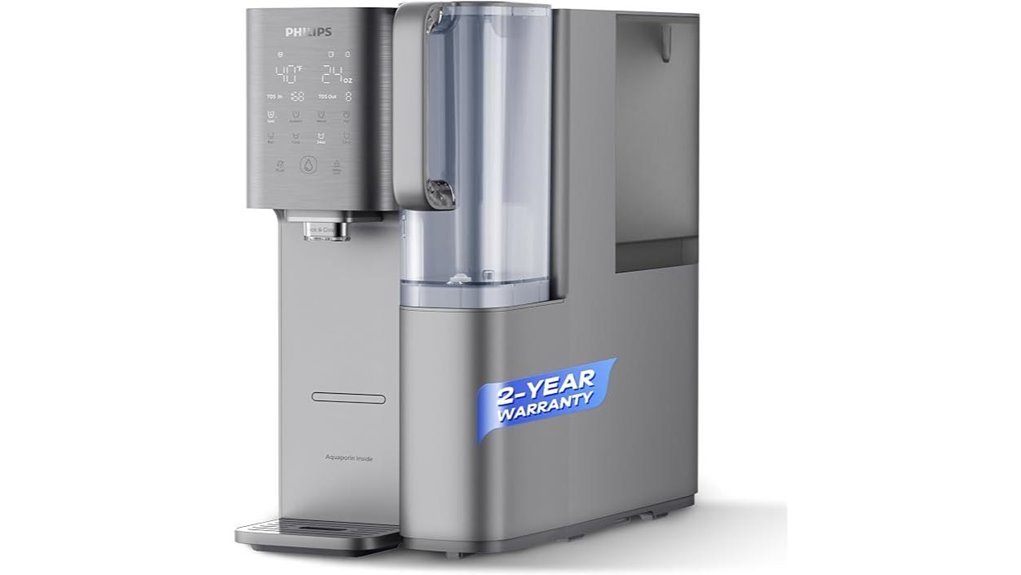
The PHILIPS Countertop RO Water Filter, Instant Hot and Cold Dispenser is best suited for small to medium households of 2 to 5 people that want compact countertop convenience without giving up advanced purification. Its 9.1 x 16.9 x 17.5 inch frame fits limited spaces, while the 6-stage Aquaporin Inside reverse osmosis system removes chlorine, lead, calcium, and other contaminants down to 0.0001 microns. A mineralizing final stage improves taste. It dispenses 40°F cold water and 203°F hot water, shows real-time TDS, and includes a 12-month filter, self-cleaning mode, and 2-year warranty.
Best For: Small to medium households of 2 to 5 people looking for a compact countertop RO water dispenser with instant hot and cold water, strong purification, and easy monitoring.
Pros:
- 6-stage Aquaporin Inside reverse osmosis filtration removes chlorine, lead, calcium, and other impurities down to 0.0001 microns.
- Instant temperature options include 40°F cold water and 203°F hot water, with preset dispensing volumes for convenience.
- Compact size, real-time TDS display, self-cleaning mode, and a 12-month filter make it practical for everyday use.
Cons:
- Best suited for smaller households, so larger families may need a higher-capacity system.
- Requires regular maintenance, including daily source tank water replacement and monthly self-cleaning.
- Countertop footprint may still be too large for very tight kitchens or limited counter space.
PHILIPS Countertop Reverse Osmosis Water Filter, Installation-Free
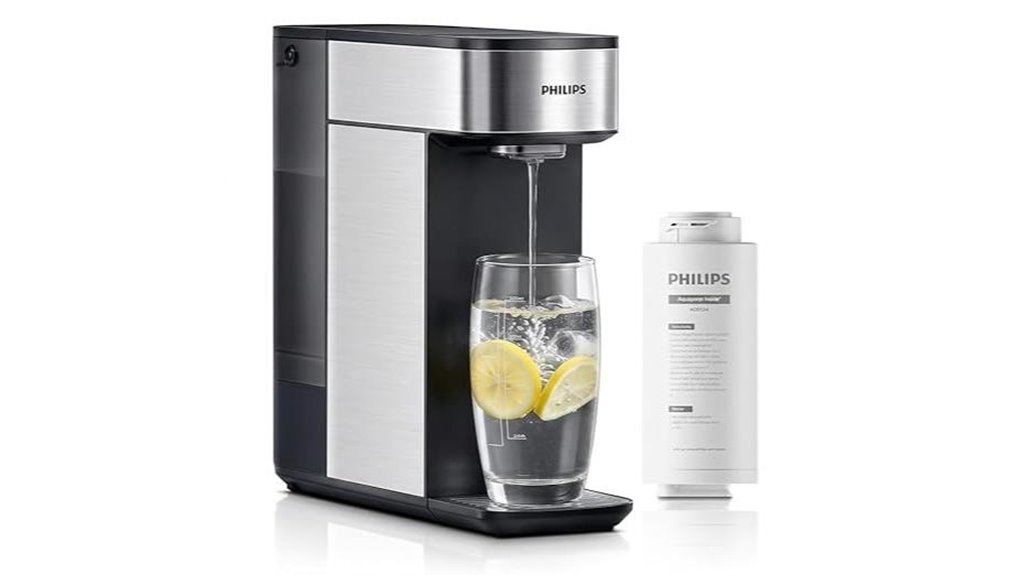
Philips’ installation-free countertop RO dispenser suits small spaces and renters who want cleaner water fast. Its five-stage reverse osmosis system with Aquaporin Inside filters chlorine, lead, calcium, and other impurities down to 0.0001 microns, while reducing TDS for noticeably cleaner taste. NSF/ANSI/CAN 372 and NSF/ANSI 58 certification, plus SGS-certified filter materials, reinforce safety. The slim 5 x 13 x 14-inch design fits kitchens, dorms, RVs, and offices. It dispenses 9 oz per minute, needs only tap water, and supports simple upkeep through daily refills, monthly self-cleaning, and refrigerated storage.
Best For: renters, small households, dorms, RVs, and office users who want an installation-free countertop RO system for fast access to cleaner drinking water.
Pros:
- Five-stage reverse osmosis with Aquaporin Inside removes chlorine, lead, calcium, and reduces TDS for cleaner-tasting water.
- Compact, plug-and-play design fits small spaces and requires no installation.
- NSF-certified and SGS-certified materials add reassurance about safety and quality.
Cons:
- Best suited for tap water; not ideal for visibly cloudy or heavily contaminated source water.
- Requires ongoing upkeep, including daily refills, monthly self-cleaning, and refrigerated storage when not in use.
- Filter replacements are not covered by the machine warranty.
Factors to Consider When Choosing Philips Water Dispensers in 2026
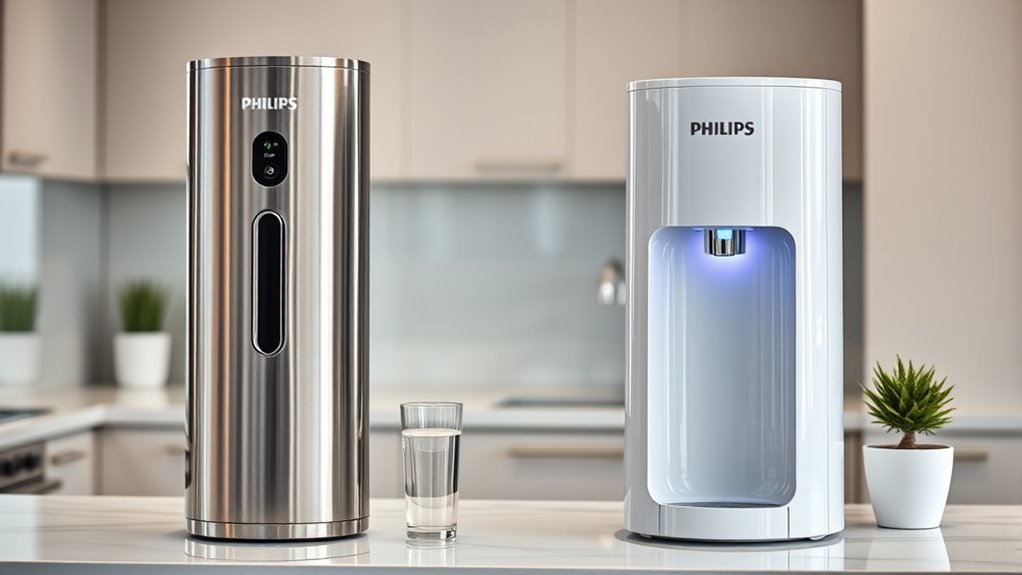
When comparing Philips water dispensers in 2026, attention should first go to filtration stages and TDS monitoring, since both affect water quality and consistency. Temperature range and flow speed also matter because they determine how well the unit fits daily use. Tank capacity rounds out the evaluation by influencing refill frequency and overall convenience.
Filtration Stages
Filtration stage count is a key difference to review in Philips water dispensers, especially for buyers comparing performance and water quality in 2026. The PHILIPS Countertop RO Water Filter uses a six-stage reverse osmosis system with Aquaporin Inside technology, designed to remove impurities down to 0.0001 microns. It targets chlorine, lead, calcium, and other contaminants while also reducing total dissolved solids. Its final stage restores beneficial minerals, which can improve taste and perceived quality. A five-stage Philips alternative also uses reverse osmosis and Aquaporin technology, with similar contaminant reduction and TDS lowering, but it omits one filtration step. That difference may matter to buyers who want the broadest purification and added remineralization.
TDS Monitoring
TDS monitoring gives a clear, real-time view of water purity by measuring dissolved impurities and helping confirm that a Philips dispenser’s filtration system is performing as expected. By tracking total dissolved solids, it can reveal whether contaminants such as chlorine and lead are being reduced effectively. Models with TDS displays let users observe shifts in water quality and recognize when maintenance or filter replacement is due. Regular readings also support better decision-making by showing whether a source water supply is suitable for drinking. This helps maintain balanced water quality, preserving helpful minerals while limiting unwanted substances. For buyers comparing Philips dispensers, TDS monitoring adds a practical layer of assurance, linking filtration performance to safer, more consistent water every day.
Temperature Range
Temperature range is a practical feature that can make a Philips water dispenser more useful throughout the day, with many models offering chilled water at about 40°F (4°C) and hot water up to 203°F (95°C). Cold water suits warm weather and routine hydration, while hot water supports quick tea or instant coffee preparation without a separate kettle. A wide range also helps in kitchens and offices where needs vary from drinking to light cooking. Dispensers with clear temperature controls improve convenience by letting users choose settings quickly and with little effort. This flexibility adds value when different people prefer different water temperatures. In practice, a broader range can make the dispenser feel more adaptable, efficient, and suitable for everyday use.
Flow Speed
Flow speed is a practical factor that can shape how convenient a Philips water dispenser feels in daily use. A unit with an approximate 6.8 oz/min flow rate, or 200 ml/min, can suit families of two to five people, offering steady access without excessive delay. A faster model at 9 oz/min, or 266 ml/min, reduces waiting time and better supports busy households or other high-demand settings. Higher flow rates matter when filling glasses, bottles, or containers, because they improve efficiency and keep hydration routines smooth. When choosing between Philips dispensers, the preferred flow speed should match household size and typical water use. Consistent output also helps preserve convenience, making flow speed a key consideration in everyday performance.
Tank Capacity
Tank capacity is one of the most practical factors to weigh when choosing a Philips water dispenser, since it directly affects how much water is available before refilling is needed. Larger tanks, such as 6L models, suit families of two to five people by providing enough water for daily drinking and cooking. They also reduce refill frequency, which matters in busy homes. Smaller units around 1.8L may be better for individuals or compact households, where lighter handling and simpler storage are advantages. Usage patterns for hot and cold water should also guide the choice, because larger reservoirs can support steadier access to temperature-controlled water. Capacity can influence the unit’s footprint as well, so available counter space should be checked before deciding on a model.
Size And Fit
After tank capacity, size and fit become the next practical check when choosing a Philips water dispenser. The dispenser’s overall dimensions should match the intended space without crowding it. A model like the Philips Countertop RO Water Filter, measuring 9.1 × 16.9 × 17.5 inches, suits counters that can accommodate a taller unit. In tighter settings, a compact footprint such as 5 x 13 x 14 inches is more appropriate for kitchens, offices, or dorms with limited room. Height also matters because cups and bottles need to fit comfortably under the spout. A 6L tank may serve larger households, while smaller units fit individuals or couples better. Mobility should also be checked if the dispenser may be moved between home, an RV, or an office.
Maintenance Needs
Maintenance should be considered early when comparing Philips water dispensers, because routine care directly affects water quality and long-term performance. Daily replacement of the source tank water helps keep each serving fresh and reduces contamination risk. A monthly self-cleaning cycle is also important, since it limits mineral scale that can hinder taste and operation. Filters generally last up to 12 months, but timely replacement remains necessary to preserve filtration efficiency and flavor. For longer storage, the dispenser should be emptied, and the filter kept in a refrigerator at 36-41°F (2-5°C) to extend useful life. Replacement filters and bottles are usually easy to source through keyword searches, making upkeep straightforward and practical for regular users.
Frequently Asked Questions
How Often Should Philips Water Dispenser Filters Be Replaced?
Philips water dispenser filters should generally be replaced every six months, though the exact schedule depends on usage, water quality, and the specific model. Heavier daily use or harder water may require earlier replacement, while lighter use may allow slightly longer intervals. The filter indicator, if available, should be followed closely. Regular replacement helps maintain water taste, flow rate, and filtration performance, while reducing the risk of contamination buildup over time.
Are Philips Water Dispensers Compatible With Well Water?
Philips water dispensers may work with well water, but compatibility depends on water quality and the specific model. If the well water contains sediment, iron, sulfur, bacteria, or high mineral content, additional pre-filtration or treatment may be needed. A detached assessment would note that users should test the water first and confirm the dispenser’s filter specifications. Manufacturer guidance should always be checked before relying on untreated well water.
Do Philips Dispensers Work During a Power Outage?
During a power outage, Philips dispensers are generally limited, like a stage with the lights cut. Most electrically powered models stop cooling, heating, or pumping water unless they have a battery backup or manual dispensing feature. Gravity-fed or non-electric designs may still provide water. To know the exact behavior, the model’s specifications should be checked, since functionality varies by dispenser type and included backup features.
What Is the Average Lifespan of a Philips Water Dispenser?
A Philips water dispenser typically lasts about 5 to 10 years, depending on usage, maintenance, and water quality. Regular cleaning, filter changes, and prompt repairs can extend its life, while heavy daily use or neglected upkeep may shorten it. Mechanical components such as pumps, taps, and cooling systems usually wear out before the main body does. With proper care, some units remain functional beyond a decade, though performance may gradually decline.
How Noisy Are Philips Water Dispensers During Operation?
Like a whisper in a library, Philips water dispensers are generally quiet during operation. Most models produce only a soft hum when cooling or heating, with brief sounds from the pump or water flow. Noise levels are usually low enough for kitchens, offices, or bedrooms without causing much disruption. In larger-capacity or hot-water cycles, the sound can become more noticeable, but it remains modest and far from intrusive overall.
Conclusion
In the end, the two Philips water dispensers each bring something valuable to the table: the Countertop RO Water Filter offers versatile hot-and-cold performance, while the Smart Water Dispenser adds real-time TDS monitoring and modern convenience. When choosing between them, buyers should weigh filtration stages, tank capacity, flow speed, size, and maintenance. For households seeking cleaner water and greater ease, these models stand as practical solutions—proof that smart design and pure water can go hand in hand.