
In 2027, iSpring’s top water dispensers reflect a shift toward cleaner filtration, faster access, and easier daily use. The DS4S stands out for compact versatility, while the countertop reverse osmosis model focuses on strong contaminant removal and temperature control. The RCD100 adds instant hot water and multi-stage filtration to the mix. Each one serves a different household need, but the real question is which design offers the best balance overall.
iSpring DS4S Bottleless Water Dispenser – 4-Stage Filtration, Hot/Cold/Room
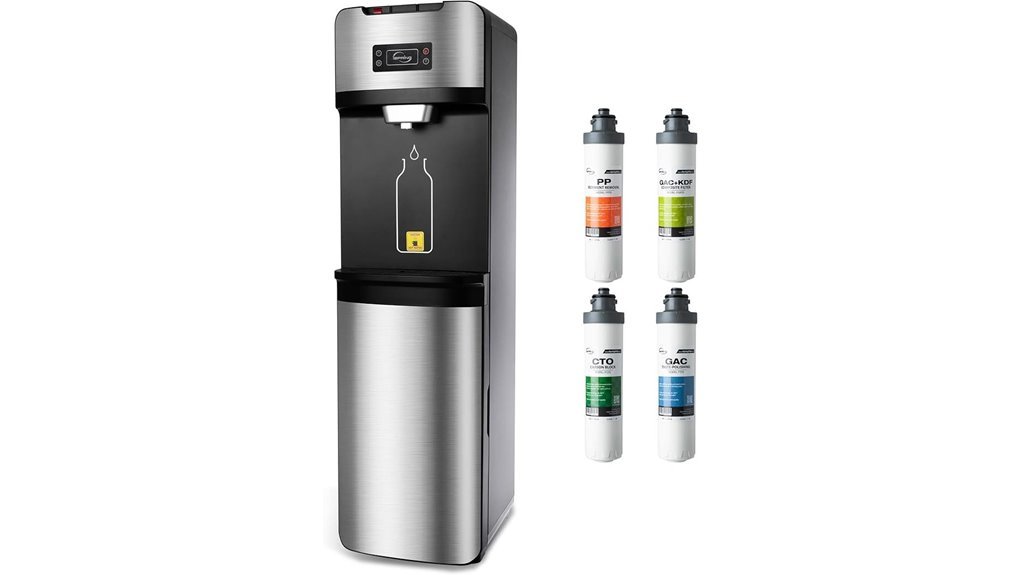
The iSpring DS4S Bottleless Water Dispenser is a strong choice for homes or offices that want convenient access to hot, cold, and room-temperature water without the hassle of bottled refills. Its 4-stage filtration targets sediments, chlorine, lead, mercury, PFAS, chloramine, and other heavy metals, helping improve taste and water quality. The compact stainless steel cabinet fits tight spaces and includes a child safety lock for added protection. DIY installation is supported by tubing and adapters, while self-cleaning operation reduces upkeep. A 1-year warranty, lifetime support, and 30-day guarantee add practical reassurance.
Best For: Homes or offices that want a compact, bottleless water dispenser with hot, cold, and room-temperature water plus strong 4-stage filtration and easy DIY setup.
Pros:
- 4-stage filtration helps reduce sediments, chlorine, lead, mercury, PFAS, chloramine, and other heavy metals.
- Compact stainless steel design fits well in homes or offices and includes a child safety lock.
- DIY installation, self-cleaning operation, and warranty/support make ownership more convenient.
Cons:
- Requires installation and a water line, so it is less plug-and-play than a standard bottled dispenser.
- 1-year warranty is solid, but shorter than some premium alternatives.
- Limited product details on capacity and long-term filter replacement costs may make comparison shopping harder.
iSpring Countertop Reverse Osmosis Water Dispenser
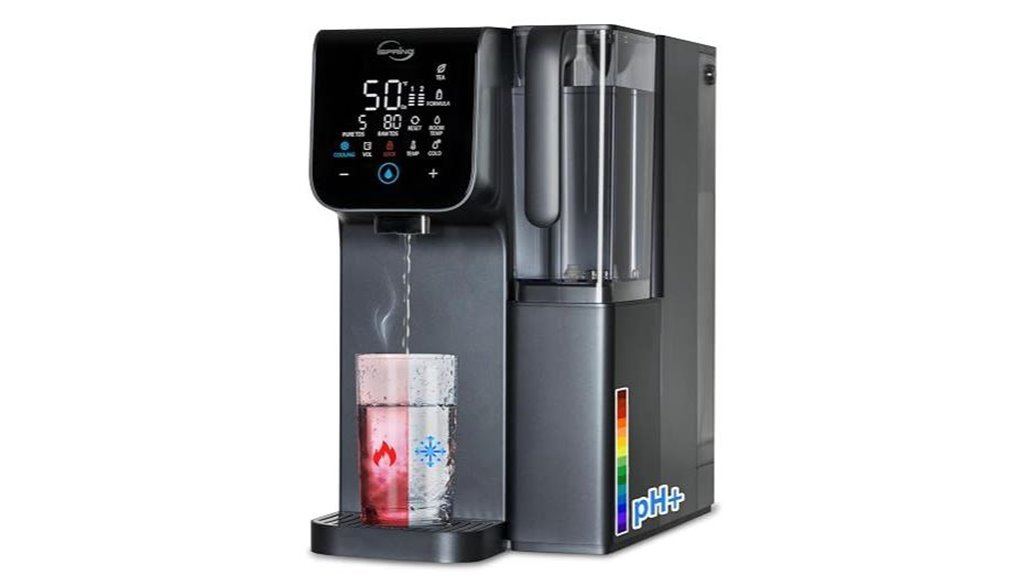
Ideal for households wanting premium filtration without plumbing, the iSpring RCD100HCG delivers countertop convenience. This hot-and-cold reverse osmosis dispenser fits kitchens, offices, or RVs with a nearby outlet, offering 9 temperature settings and 6 dispensing volumes for flexible use. Its thermoelectric cooling runs quietly and efficiently, while dual pitchers maintain continuous access to filtered water. The system removes over 99% of 1,000+ contaminants, including PFAS, fluoride, lead, and chlorine, and produces pH-balanced alkaline water. A smart panel tracks TDS, temperature, and filter status, with child lock, auto flush, and easy twist-and-lock replacement.
Best For: Households, offices, or RV users who want a countertop reverse osmosis system with premium filtration, hot-and-cold dispensing, and no plumbing required.
Pros:
- Removes over 99% of 1,000+ contaminants, including PFAS, lead, fluoride, and chlorine
- Offers 9 temperature settings and 6 dispensing volume options for flexible use
- Dual pitchers, smart monitoring, and child lock add convenience and safety
Cons:
- Takes up notable counter space and weighs 22 pounds
- Requires a power outlet, so it’s not fully portable
- Higher complexity and maintenance than a basic water filter pitcher
iSpring RCD100 Countertop Reverse Osmosis Water Dispenser
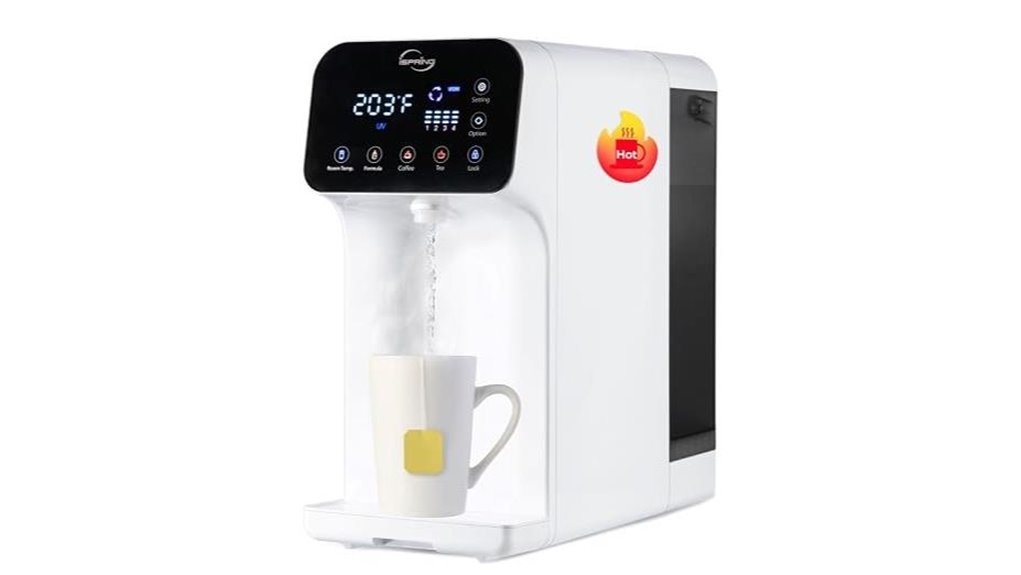
iSpring’s RCD100 suits users needing compact, plug-and-play reverse osmosis with instant hot water. The 5-stage countertop system delivers up to 100 GPD at 0.16 GPM, making it practical for offices, kitchens, and RVs. Its UV protection and filtration target more than 1,000 contaminants, including chlorine, lead, arsenic, PFAS, and fluoride, while remaining intended for city water. Four temperature settings, from room temperature to 205°F, support beverages and baby formula. A child safety lock, smart status panel, self-cleaning function, and twist-and-lock filters add convenience.
Best For: Users who want a compact, plug-and-play countertop reverse osmosis dispenser with instant hot water, strong contaminant reduction, and easy operation for kitchens, offices, or RVs.
Pros:
- 5-stage RO filtration with UV protection reduces up to 99% of over 1,000 contaminants.
- Four temperature settings, including instant hot water up to 205°F, are convenient for drinks and baby formula.
- Smart panel, self-cleaning mode, and twist-and-lock filters make it easy to monitor and maintain.
Cons:
- Intended for city water only, so it is not a fit for well water users.
- At 0.16 GPM, dispensing can be slower than some non-RO water systems.
- Countertop design takes up visible space and may not suit very small kitchens.
Factors to Consider When Choosing iSpring Water Dispensers in 2026
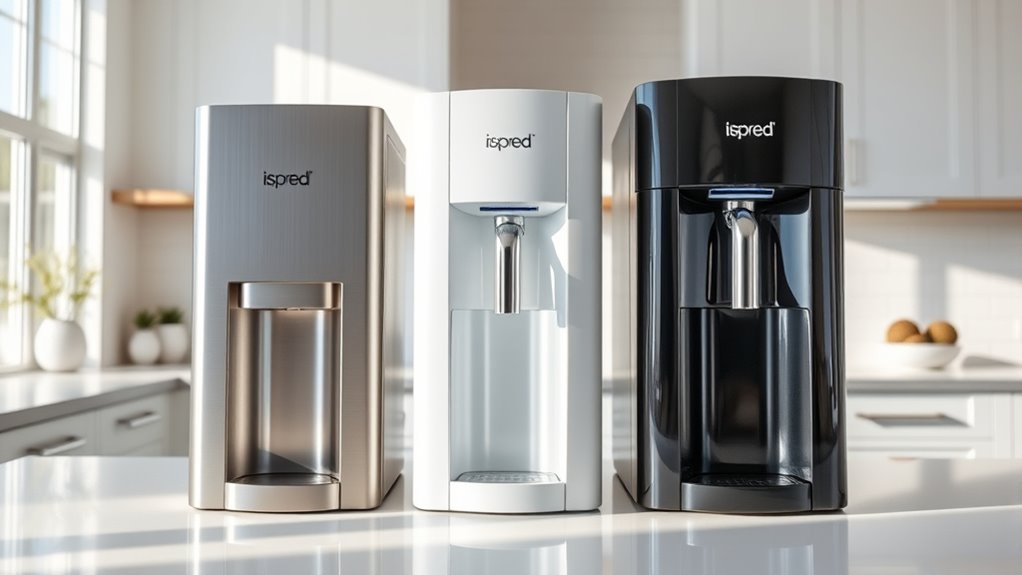
When choosing an iSpring water dispenser in 2026, attention should first go to filtration performance, since water quality remains the core measure of value. Temperature options, installation requirements, and available space also matter, especially for households that need either flexible placement or easy portability. Safety features should not be overlooked, as they help support reliable everyday use.
Filtration Performance
Filtration performance should be a top priority, since the best iSpring water dispensers use multi-stage systems to target a broad mix of contaminants, including heavy metals, chlorine, and PFAS. Systems with strong contaminant reduction rates, especially those removing more than 99% of harmful substances, tend to deliver cleaner water and better taste. Additional technologies such as UV light can add protection by reducing microorganisms and improving overall safety. Some models also help balance pH, which can make water more palatable and potentially healthier for regular consumption. Real-time TDS monitoring is another useful feature, allowing users to track filtration effectiveness and recognize when maintenance may be needed. Together, these elements indicate whether a dispenser offers dependable, long-term water purification.
Temperature Options
Beyond purification quality, temperature control is another feature that can shape how well an iSpring water dispenser fits daily use. iSpring dispensers often provide multiple temperature settings, making them suitable for tea, coffee, baby formula, and simple room-temperature drinking. Countertop reverse osmosis models can offer up to nine distinct options, giving users fine control over each serving. Instant access to specific temperatures, including 120°F, 185°F, and 205°F, reduces waiting and supports faster drink preparation. This flexibility can improve convenience in busy households, where different people may prefer different water temperatures. Child safety locks add reassurance on hot-water units, helping prevent accidental dispensing. In practice, these options make the dispenser more adaptable, efficient, and comfortable for everyday hydration needs.
Installation Requirements
Installation requirements are generally straightforward with iSpring water dispensers, as most models are designed for DIY setup with included tubing and versatile feed adapters. Most units avoid extensive plumbing work, which makes them practical for homes and offices alike. Clear step-by-step instructions help users complete installation without professional assistance, reducing setup time and uncertainty. Certain models add plug-and-play convenience, allowing quick deployment wherever a power outlet is available, including kitchens and RVs. Maintenance also stays simple, since twist-and-lock filter designs support fast replacements without specialized tools. Overall, the installation process favors convenience, flexibility, and low technical demand. Buyers seeking minimal setup complexity will find these dispensers especially appealing, provided the location can supply water and electricity as needed.
Space And Portability
Space and portability are important considerations when choosing an iSpring water dispenser in 2026, especially after setup has been planned. Dimensions can determine whether a unit fits neatly in a kitchen corner, office break room, or RV cabinet, with compact models offering far more placement flexibility than bulkier ones. Some dispensers remain easy to relocate because of lighter builds, making them suitable for households or workplaces that may need to move equipment occasionally. A compact footprint is especially valuable when high output is still needed, since certain models can deliver substantial daily water capacity without consuming much floor space. Sleek finishes also matter, because they help the dispenser blend into modern interiors rather than dominate them visually.
Safety Features
Safety features play a central role in choosing an iSpring water dispenser in 2026, especially for homes and shared spaces where hot-water access, water quality, and hygiene all matter. Many models include a child safety lock that helps prevent accidental hot-water dispensing, which is especially valuable in households with children. Advanced filtration systems remove harmful contaminants, supporting safer drinking water from the start. Some dispensers add real-time monitoring, showing water quality and filter lifespan so users can track safety conditions at a glance. Built-in self-cleaning modes and auto-flush functions further support hygiene by limiting bacterial buildup. Compact, leak-free construction also improves safety during installation, helping these dispensers fit securely in kitchens, offices, and other everyday settings.
Maintenance Needs
Maintenance needs are often minimal with iSpring water dispensers, thanks to low-maintenance designs that make routine care straightforward. Many models use twist-and-lock filter systems, allowing fast replacements without specialized tools. Depending on water quality and usage, filters generally last six to twelve months, which helps keep upkeep predictable. Some dispensers also include self-cleaning modes that reduce manual sanitation after each use and support consistent hygiene. In select units, real-time monitoring tracks water levels and filter life, alerting users before supplies run low. Installation is often DIY-friendly as well, limiting maintenance-related hassle from the start. Altogether, these features make iSpring dispensers practical for households seeking dependable filtration with limited effort and manageable ongoing care.
Warranty Coverage
Beyond routine upkeep, warranty coverage is another important factor when choosing an iSpring water dispenser in 2026. Most iSpring models include a standard 1-year manufacturer’s warranty that covers defects in materials and workmanship. This protection can reduce risk during the first year of use, especially for buyers comparing multiple units. Many models also provide lifetime customer support, which adds long-term value by offering assistance after the warranty period ends. Some dispensers include a 30-day money-back guarantee, giving buyers a brief trial window. Warranty terms often require product registration soon after purchase, so retaining receipts and documents is important. Regular maintenance and timely filter replacements may also be necessary to keep coverage valid and preserve performance.
Frequently Asked Questions
How Often Should I Sanitize an iSpring Water Dispenser?
An iSpring water dispenser should be sanitized every one to three months, depending on use, water quality, and environment. If it is used heavily, exposed to warm conditions, or shows any odor, cloudiness, or buildup, cleaning should happen sooner. Regular sanitizing helps prevent bacteria and mineral accumulation. The manufacturer’s maintenance schedule should also be followed closely to preserve water taste, dispenser performance, and overall hygiene over time.
Can iSpring Dispensers Work Without a Nearby Drain?
Yes, some iSpring dispensers can work without a nearby drain, but it depends on the model. Point-of-use units with reverse osmosis or filtration often need a drain for wastewater, while basic bottle-fed or simpler filtration dispensers do not. A third-party installer should verify the specific model’s requirements, since drain access affects placement and installation options. In many cases, a nearby drain is convenient but not always necessary.
What Maintenance Tools Are Included With iSpring Dispensers?
Maintenance tools included with iSpring dispensers typically depend on the model, but they often come with basic installation and upkeep items such as tubing, fittings, a filter wrench, and a user manual. Some units may also include a cartridge replacement tool or simple connectors for routine servicing. A detached review would note that owners should confirm the exact accessory list before purchase, since included maintenance tools vary by dispenser and package.
Are iSpring Water Dispensers Compatible With Well Water?
Yes, iSpring water dispensers can handle well water, provided the well water is properly tested and treated first—because nature’s “free” water often arrives with a souvenir collection of sediment, iron, hardness, and microbes. Compatibility depends on the dispenser’s filtration setup and the water’s quality. A whole-house prefilter or dedicated treatment system is often needed to protect performance and avoid turning convenience into an elaborate plumbing apology.
How Loud Are iSpring Dispensers During Cooling Cycles?
iSpring dispensers are generally quiet during cooling cycles, usually producing only a low hum or brief compressor noise. In most homes or offices, the sound is comparable to a small refrigerator and is unlikely to be disruptive. Noise levels can vary by model, placement, and ambient room conditions. Units set on hard surfaces may seem louder, while proper leveling and spacing can help reduce vibration and keep operation unobtrusive overall.
Conclusion
Ultimately, the iSpring DS4S, Countertop Reverse Osmosis dispenser, and RCD100 rise far above ordinary hydration appliances, delivering a near-breathtaking blend of purity, convenience, and modern elegance. Each model seems engineered to turn every sip into a minor triumph, whether through compact bottleless design, extreme contaminant reduction, or instant hot-water brilliance. For households seeking safer water with almost theatrical efficiency, these dispensers stand out as a remarkably commanding choice in 2027.