
Alkaline water dispensers continue to attract attention in 2027, with models like Waterdrop, Bluevua, SimPure, and iSpring offering different balances of filtration, capacity, and convenience. Some are built for compact kitchens, while others suit households needing larger volumes or added features like mineral enhancement and temperature control. The real question is which design delivers the most practical value—and the answer depends on a few details that matter more than expected.
Waterdrop WFD-40L-A Water Filter Dispenser, Alkaline Filtration, Black
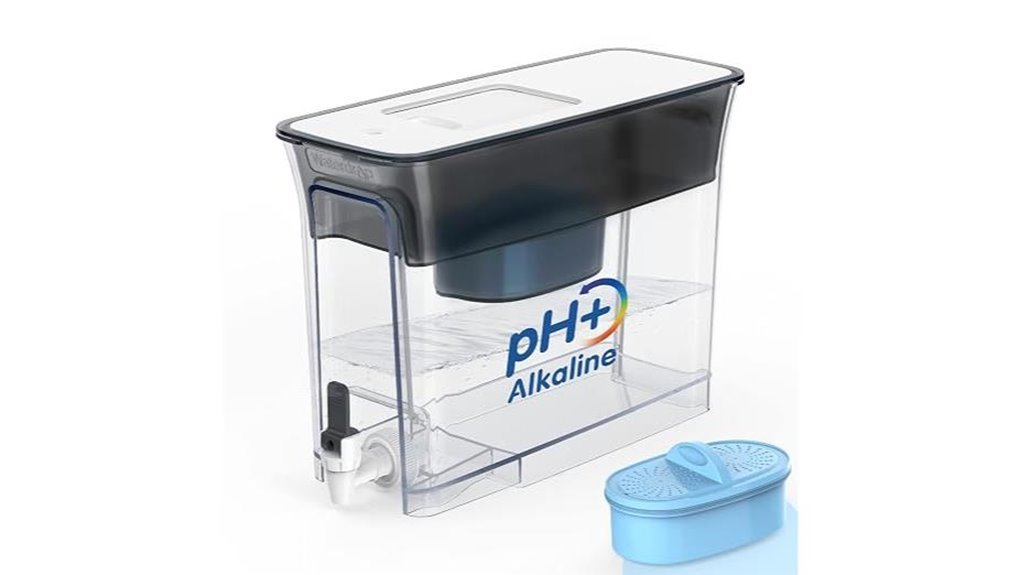
The Waterdrop WFD-40L-A stands out as a smart choice for anyone looking for a space-saving alkaline water dispenser with everyday convenience built in. Its slim black body holds 35 cups, fits neatly in a refrigerator, and weighs just 4.3 pounds. A 6-layer filtration system reduces chlorine, fluoride, metals, taste, and odor while raising water alkalinity to a pH of up to 9.5. The sliding cover, carry handle, and leak-resistant seal improve usability. A smart indicator signals filter changes, and the 100-gallon filter life supports regular maintenance.
Best For: People who want a slim, refrigerator-friendly alkaline water dispenser with easy everyday use and basic contaminant reduction.
Pros:
- Space-saving 35-cup design fits well in the refrigerator.
- 6-layer filtration reduces chlorine, fluoride, metals, taste, and odor while increasing alkalinity.
- Convenient features like the sliding cover, carry handle, leak-resistant seal, and smart filter indicator.
Cons:
- Does not lower TDS, so it may not suit users looking for TDS reduction.
- Filter replacements are needed about every two months, which adds maintenance.
- Capacity may be limited for larger households or high water-use situations.
Waterdrop WFD-22L-A Alkaline Water Filter Dispenser, Large 40-Cup, Black
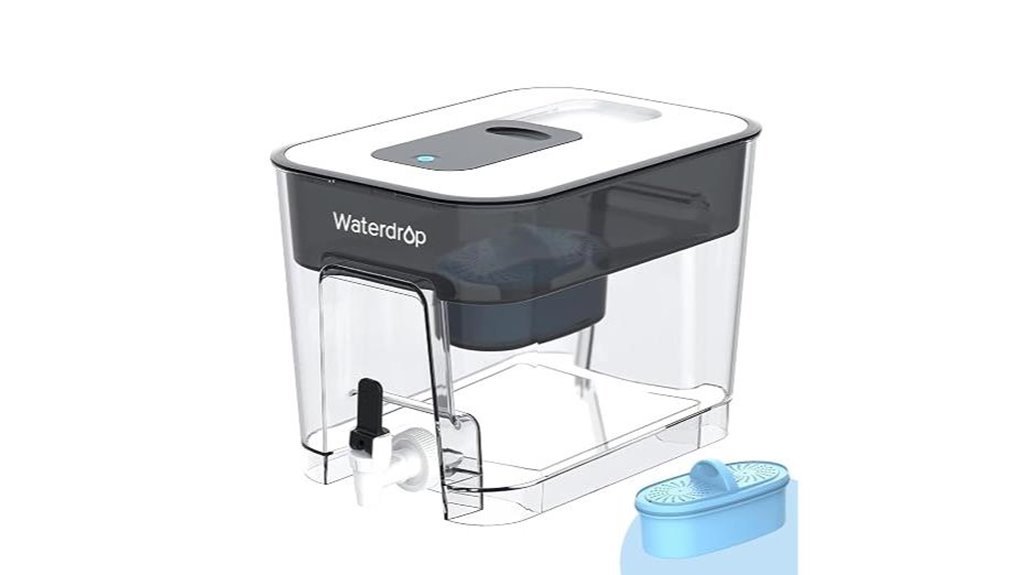
Waterdrop’s WFD-22L-A suits households wanting a compact, high-capacity alkaline dispenser. It holds 40 cups, with 21 cups in the body, and fits neatly in a refrigerator. Its 6-layer fine filtration reduces chlorine, fluoride, taste and odor, aluminum, iron, copper, and mercury while supporting water up to 600 PPM TDS. The dispenser uses gravity, needs no electricity, and includes an LED reminder for filter changes. Made from food-grade, lead-free, BPA-free plastic, it weighs 3.8 pounds. A filter lasts 100 gallons or two months.
Best For: Households that want a compact, refrigerator-friendly alkaline water dispenser with high capacity and simple gravity-based filtration.
Pros:
- Large 40-cup capacity with a space-saving design that fits neatly in the fridge
- 6-layer filtration reduces chlorine, fluoride, taste and odor, and several heavy metals
- LED filter reminder plus no-electricity operation makes it easy to use and maintain
Cons:
- Filter needs replacement relatively often at 100 gallons or about 2 months
- Only supports source water up to 600 PPM TDS
- Bulkier than a personal pitcher, so it may still take noticeable fridge space
Waterdrop ED11L Alkaline Rechargeable Water Filter Dispenser, 15-Cup, White
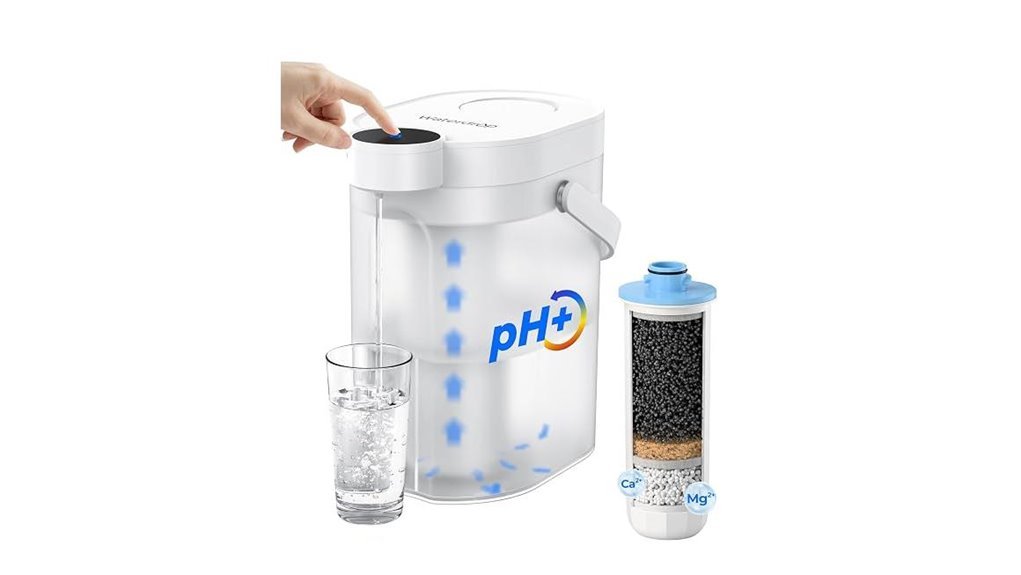
Ideal for small households, the Waterdrop ED11L dispenses 15 cups of alkaline water with minimal counter space. Its 6-stage filtration system reduces chlorine, odors, and sediment while adding minerals and supporting a better-tasting result. Third-party testing verifies the reduction claims. A rechargeable battery supports up to 20 days of standby use, and USB-C charging simplifies upkeep. One-key operation makes it easy to use, while the red power indicator and filter-life alert improve maintenance. The countertop design, white finish, and compact build suit practical kitchen setups.
Best For: Small households or individuals who want a compact countertop water dispenser with alkaline filtration, simple one-key operation, and rechargeable convenience.
Pros:
- 6-stage filtration reduces chlorine, odors, and sediment while improving taste.
- Rechargeable battery lasts up to 20 days on a full charge with USB-C charging.
- Compact 15-cup design with smart indicators for power and filter replacement.
Cons:
- Does not reduce TDS, so it may not suit users wanting lower total dissolved solids.
- Requires periodic filter replacements for continued performance.
- Adapter is not included with the USB-C charging setup.
Bluevua RO100ROPOT Countertop Reverse Osmosis Water Filter System
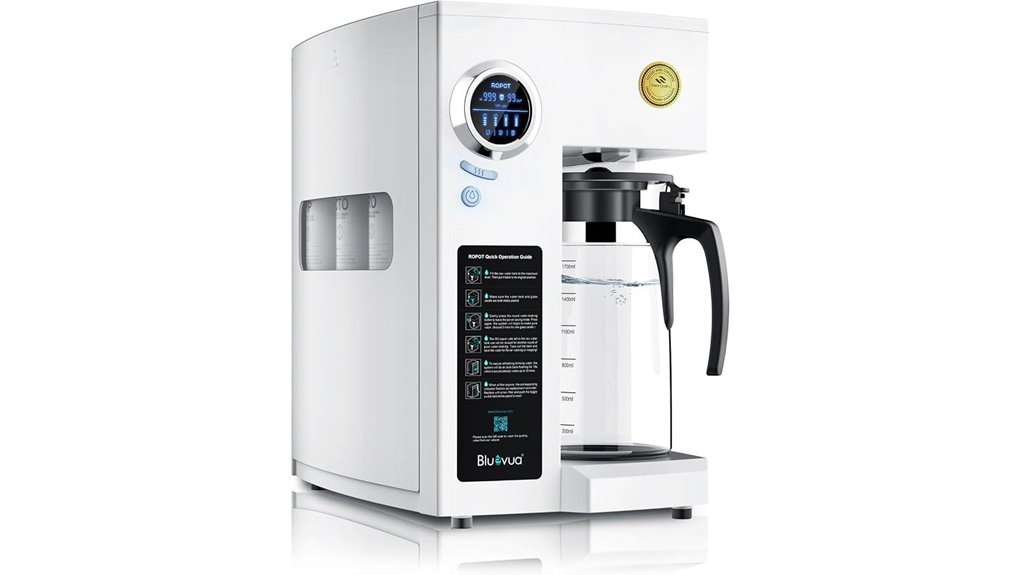
Bluevua’s RO100ROPOT suits renters and small households wanting countertop reverse osmosis without plumbing. The ROPOT-UV model uses a 6-stage process with UV light, a 0.0001μm RO membrane, and remineralization to reduce TDS, chlorine, fluoride, arsenic, lead, PFOA, and PFOS. WQA certification against NSF/ANSI/CAN 372 supports lead-free claims, while SGS testing adds credibility. Its borosilicate glass carafe helps limit secondary pollution. At 10.9 x 15.4 x 14.3 inches and 17.8 pounds, it fits compact spaces. A standby mode, 2:1 pure-to-drain ratio, and 12-24 month filter life improve efficiency.
Best For: Renters and small households looking for a no-plumbing countertop reverse osmosis system with UV purification, remineralization, and a glass carafe for cleaner-tasting water.
Pros:
- 6-stage filtration with UV light and a 0.0001μm RO membrane targets a wide range of contaminants, including TDS, chlorine, fluoride, arsenic, lead, PFOA, and PFOS.
- No plumbing is required, making it easy to set up in compact spaces.
- Borosilicate glass carafe, standby mode, and 2:1 pure-to-drain ratio support cleaner storage and better efficiency.
Cons:
- At 17.8 pounds, it may be a bit heavy to move around frequently.
- Countertop-only design may not suit users who want an under-sink or built-in system.
- Filter replacements are needed every 12–24 months, which adds ongoing maintenance.
Bluevua RO100ROPOT Countertop Reverse Osmosis Water Filter System
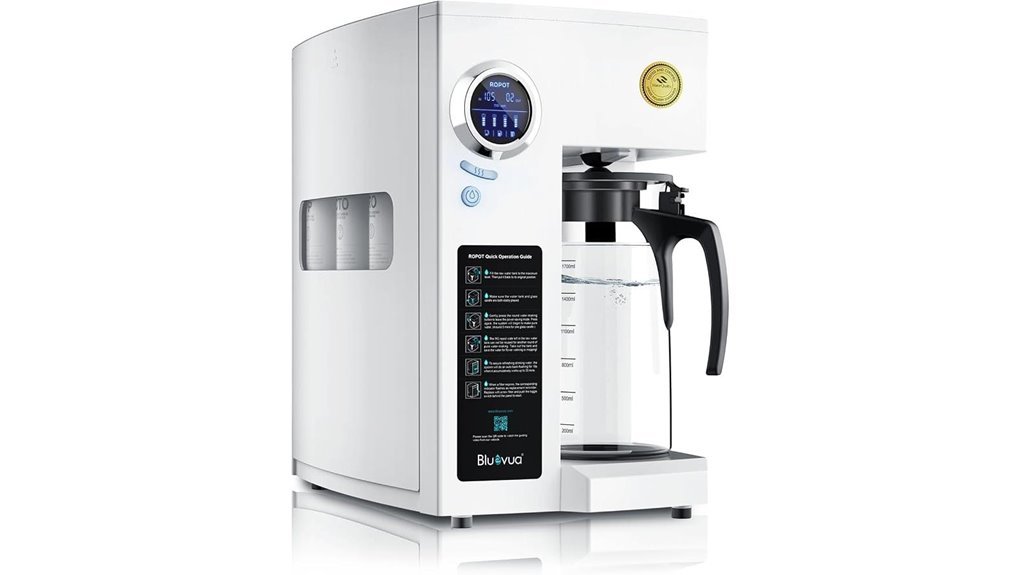
The Bluevua RO100ROPOT suits buyers wanting countertop reverse osmosis without plumbing. This portable system plugs into power and uses a five-stage RO process with remineralization to remove up to 99.9% of contaminants. Its high borosilicate glass carafe helps reduce secondary pollution, while premium components support durability. Efficiency features include automatic standby mode and a 2:1 pure-to-drain ratio, with leftover water reusable for household tasks. Filters typically last 12 to 24 months, and the display tracks service life and water quality. A one-year limited warranty applies after registration.
Best For: Buyers who want a portable countertop reverse osmosis system with no plumbing, strong contaminant removal, and a glass carafe for cleaner-tasting water.
Pros:
- 5-stage RO filtration with remineralization removes up to 99.9% of contaminants.
- No plumbing required, and it plugs into a power source for easy setup.
- Glass carafe, standby mode, and reusable drain water support durability and efficiency.
Cons:
- Requires access to electricity since it is not fully manual.
- Filters need periodic replacement, typically every 12 to 24 months.
- Countertop design may take up more space than an under-sink system.
Bluevua RO100ROPOT-Lite Countertop Reverse Osmosis Water Filter
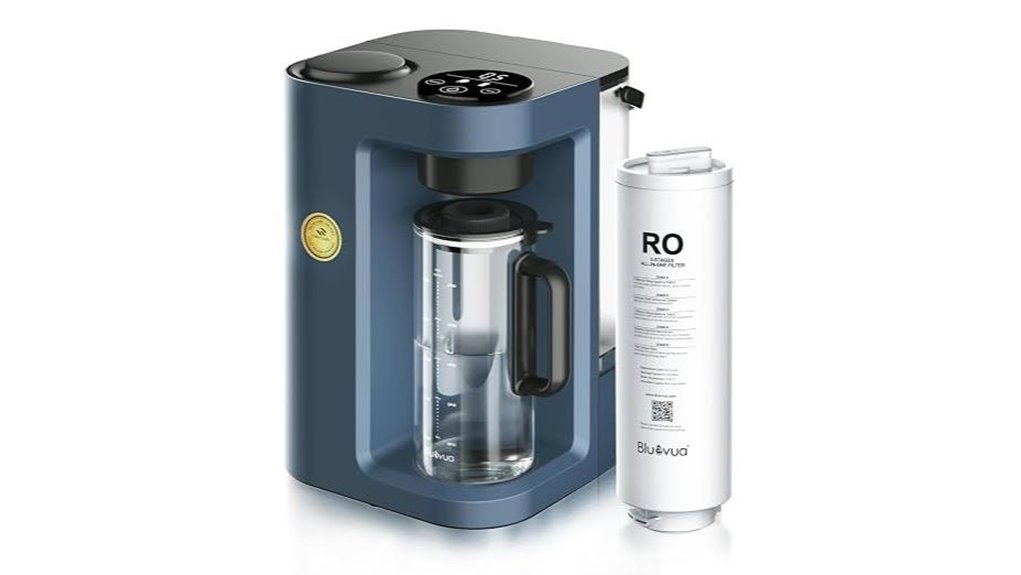
Compact and plug-and-play, the Bluevua RO100ROPOT-Lite suits small households wanting cleaner water without installation hassles. This countertop reverse osmosis unit uses a 5-stage system and a 0.0001μm membrane to reduce TDS, chlorine, fluoride, arsenic, lead, PFAS, and PFOA. It holds 12 liters, weighs 5 kg, and needs only a power outlet. A glass carafe supports safe storage, while the LED display tracks filter life and water quality. Automatic dispensing, under-three-minute delivery, and a 3:1 filtered-to-waste ratio add efficiency. WQA certification and SGS testing further strengthen its credibility.
Best For: Small households, renters, or anyone who wants plug-and-play countertop reverse osmosis water filtration without plumbing installation.
Pros:
- 5-stage RO filtration with a 0.0001μm membrane reduces a wide range of contaminants, including TDS, chlorine, fluoride, arsenic, lead, PFAS, and PFOA.
- No installation required, with a compact 12-liter design, glass carafe, and smart LED display for filter and water-quality monitoring.
- Efficient and convenient, delivering filtered water in under three minutes with a 3:1 filtered-to-waste ratio and automatic dispensing.
Cons:
- Best suited for 1–2 people, so the 12-liter capacity may be limiting for larger households.
- Requires access to a power outlet, so it’s not fully portable or usable off-grid.
- Annual filter replacement adds ongoing maintenance and cost.
SimPure Y7T-A Countertop Reverse Osmosis Water Filter, 5 Stage Mineral RO
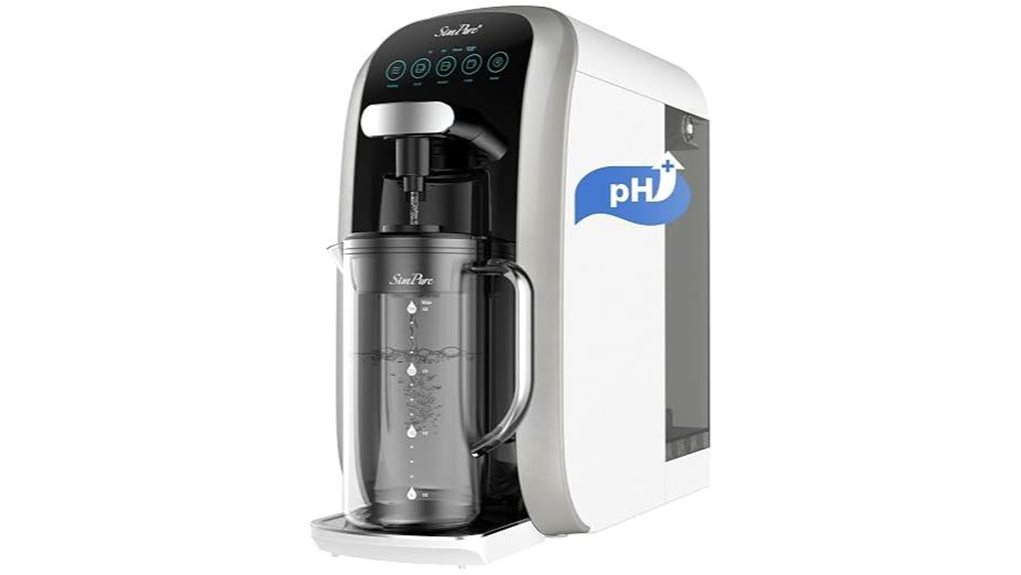
With no installation required, the SimPure Y7T-A suits renters and small kitchens needing purified water fast. This countertop 5 stage mineral RO system uses a portable borosilicate glass pitcher and alkaline filter, while its corded design plugs in and runs. Tested by SGS to NSF/ANSI 58, it removes 99.99% of more than 1,000 contaminants, including PFAS, lead, arsenic, fluoride, and chlorine. The system delivers a 4:1 pure-to-drain ratio, quick-change cartridges, 528 gallons of output, and a 1-year warranty.
Best For: Renters, small kitchens, and anyone who wants an easy plug-in countertop RO system with mineralized water and no installation.
Pros:
- No installation required; just plug it in and start using it
- Removes 99.99% of over 1,000 contaminants, including PFAS, lead, arsenic, fluoride, and chlorine
- Fast water production with a 4:1 pure-to-drain ratio and 528 gallons of output
Cons:
- Needs corded electric power, so it is not fully portable
- Requires 22 inches of vertical clearance for cabinet placement
- Higher upfront cost and ongoing filter replacements compared with basic water pitchers
iSpring Hot & Cold Countertop Reverse Osmosis System
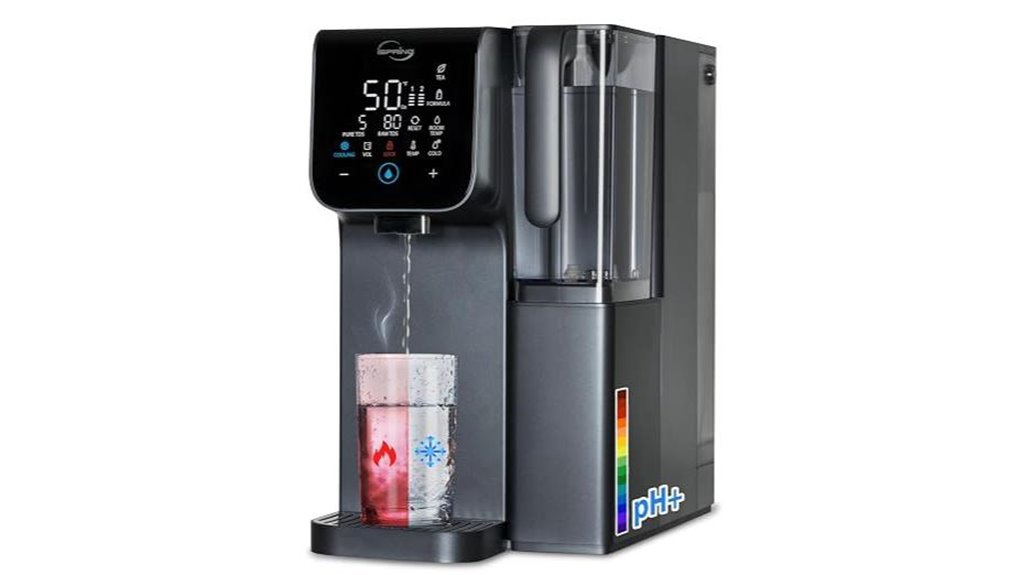
For households wanting customizable hot and cold alkaline water, the iSpring RCD100HCG stands out. This countertop reverse osmosis dispenser offers 9 temperature settings and 6 volume options, letting users tailor each pour. Thermoelectric cooling keeps operation quiet and efficient, while dual pitchers support continuous access. Its RO filtration removes over 99% of 1,000+ contaminants, including PFAS, fluoride, lead, and arsenic, while delivering pH-balanced water. A smart panel tracks TDS, temperature, and water levels. With child lock, auto flush, and no plumbing required, it fits homes, offices, and RVs.
Best For: Households, offices, and RV users who want customizable hot and cold alkaline reverse osmosis water with advanced monitoring and easy countertop installation.
Pros:
- Offers 9 temperature settings and 6 volume options for highly customizable dispensing.
- Removes over 99% of 1,000+ contaminants, including PFAS, fluoride, lead, and arsenic.
- No plumbing required, with smart TDS/temperature monitoring and child safety lock.
Cons:
- Takes up noticeable countertop space due to its larger size.
- Requires filter replacements and routine monitoring for best performance.
- Heavier than many countertop dispensers at 22 pounds.
Factors to Consider When Choosing Alkaline Water Dispensers in 2026
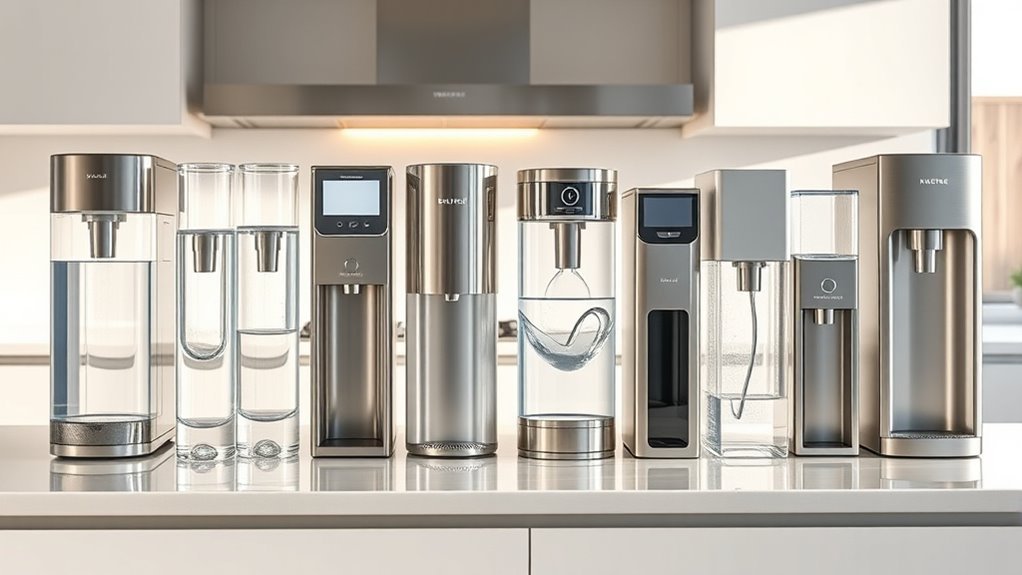
When choosing an alkaline water dispenser in 2026, filtration performance and alkaline boost remain central to water quality and taste. Capacity needs and space efficiency also matter, especially for households balancing daily demand with limited room. Filter lifespan should be reviewed carefully, as it affects long-term maintenance and overall value.
Filtration Performance
Filtration performance should be one of the first priorities, since a strong alkaline water dispenser does more than raise pH—it also removes unwanted contaminants. A unit with a multi-layer system, such as six stages, can better reduce chlorine, fluoride, heavy metals, and sediment. It is also worth checking which pollutants are specifically targeted, because some filters are built to address more than 1,000 contaminants. TDS handling matters as well; models that manage up to 600 PPM may offer broader source-water compatibility while keeping mineral balance in check. Filter lifespan affects upkeep, with some cartridges lasting about 100 gallons or two months. Third-party testing should confirm claimed reductions and water quality, giving buyers clearer evidence of real-world performance and reliability.
Alkaline Boost
A quality alkaline water dispenser should do more than filter water; it should also provide a noticeable alkaline boost, often raising pH levels to around 9.5. That increase is a key factor because alkaline water is valued for supporting hydration and overall wellness. A reliable system should maintain that higher pH while preserving beneficial minerals, since these minerals can improve taste and make the water more appealing than ordinary tap water. It is also important that the alkaline effect works alongside multi-stage filtration, which helps remove chlorine, fluoride, and heavy metals. Some models include smart indicators that signal when filters need replacement, helping keep the water fresh and the alkaline performance consistent.
Capacity Needs
Daily water use should guide the choice of an alkaline water dispenser, since capacities typically range from 15 to 40 cups and need to match household demand. Smaller units often suit individuals or couples, while 40-cup models better serve families or homes that host guests often. Lifestyle also matters; active people and athletes may prefer larger capacities to keep water readily available throughout the day. Capacity should be considered alongside filter performance, because some dispensers can process up to 100 gallons before replacement, affecting maintenance intervals and long-term convenience. A capacity that is too small may require frequent refills, while one that is too large may be unnecessary. The best option balances drinking habits, household size, and practical upkeep without overcommitting to excess volume.
Space Efficiency
Alongside capacity, space efficiency should guide the choice of an alkaline water dispenser in 2026. A model that fits neatly on a countertop or inside a refrigerator can prevent clutter and improve daily usability. Compact dispensers often measure about 10 to 15 inches in height and width, making them suitable for smaller kitchens. Slim profiles and arc shapes further reduce the footprint while allowing easier placement in tight areas. Lightweight designs, usually around 3 to 5 pounds, also support simple lifting and repositioning. For families, a dispenser holding 35 cups or more can balance ample supply with a manageable size. Sliding covers and easy-carry handles add convenience without increasing bulk or sacrificing storage flexibility in everyday use.
Filter Lifespan
Filter lifespan is a key factor when choosing an alkaline water dispenser in 2026, since most filters last between 100 and 528 gallons and usually need replacement about every two months. That range varies by model and filtration technology, so buyers should compare rated capacity carefully before purchase. In homes with harder or more contaminated water, filters may wear out sooner and require closer attention. Regular replacement helps preserve water quality, prevents buildup of contaminants, and maintains the intended alkaline benefits. A dispenser with a longer-lasting filter can reduce maintenance frequency, but only if its performance remains stable throughout the cycle. Monitoring usage and replacing filters on schedule remains essential for reliable operation and safe drinking water.
Smart Indicators
Smart indicators have become a practical feature in alkaline water dispensers because they provide real-time alerts when a filter needs replacement, helping maintain water quality and taste. These systems often use LED lights, with distinct colors signaling when maintenance is due or urgent, making status checks effortless. Many units also include lifespan tracking that estimates the volume of water filtered, giving users a clearer sense of when service is approaching. Some models go further by sending reminders to mobile apps, which keeps notifications visible on smartphones. By prompting timely filter changes, smart indicators help extend filtration system life and reduce the chance of contaminants slipping through. For buyers comparing dispensers, this feature adds convenience, accuracy, and dependable protection for everyday use.
Power Requirements
Power requirements are an important consideration when choosing an alkaline water dispenser in 2026, since models differ widely in how they operate and how much convenience they provide. Some dispensers use gravity filtration and work manually, making them suitable for users who want portability and no dependence on electricity. Others are electric, offering faster filtration and often requiring a nearby outlet or USB charging. Many electric units include rechargeable batteries that can provide standby operation for weeks, which is useful where power access is inconsistent. Buyers should also compare energy consumption, because operating costs can vary noticeably between models. Smart indicators on some dispensers help track battery status and maintenance needs, supporting more informed use. Matching power needs to the intended setting remains essential.
Water Efficiency
Water efficiency is an important factor when comparing alkaline water dispensers in 2026, especially when evaluating the pure-to-drain ratio and how much wastewater a system produces. A 2:1 ratio is generally more efficient than traditional 1:4 systems because it yields more filtered water with less waste. Gravity-fed models can further improve efficiency by avoiding electricity use and reducing the losses often associated with electric filtration. Multi-stage systems also add value by purifying and remineralizing water, which can lessen reliance on bottled water and support longer-term sustainability. Regular maintenance remains essential, since worn filters increase waste and reduce performance. Smart dispensers that track water quality and filter lifespan help users replace components on time, preserving efficiency and minimizing unnecessary water loss.
Frequently Asked Questions
How Often Should I Replace Alkaline Dispenser Filters?
Alkaline dispenser filters should typically be replaced every 6 to 12 months, though usage, water quality, and the manufacturer’s guidance can shorten or extend that interval. He or she should monitor flow rate, taste, odor, and any filter-change indicator, since those signs often suggest earlier replacement. In households with heavy use or hard water, replacements may be needed more often. Regular changes help maintain filtration efficiency and water quality.
Do Alkaline Water Dispensers Increase Water pH Significantly?
Alkaline water dispensers usually raise pH only modestly, not dramatically. They often shift ordinary tap water from neutral or slightly acidic levels to mildly alkaline values, depending on source water and filter design. The increase may be enough to register on a meter, but it is rarely extreme or stable over time. Mineral content, filtration stage, and maintenance all influence the final pH.
Can Alkaline Dispensers Remove Fluoride From Tap Water?
Alkaline dispensers generally do not remove fluoride from tap water. Their main function is to raise pH and sometimes add minerals, not to filter specific contaminants like fluoride. Some models may include additional filtration stages, such as activated alumina or reverse osmosis, that can reduce fluoride levels. Without those specialized components, fluoride typically passes through. A buyer should check the unit’s filtration specifications before assuming fluoride removal is provided.
Are Countertop Alkaline Dispensers Noisy During Operation?
About 60% of countertop alkaline dispensers operate with only a soft hum, though some pump-driven models can sound noticeably louder. They are generally not very noisy during operation, especially gravity-fed units and those with simple filtration stages. Noise tends to rise during rapid dispensing, filter cycling, or heating functions. In quiet kitchens, even modest mechanical sounds may be apparent, but most users would consider them unobtrusive rather than disruptive overall.
Do These Dispensers Work With Well Water?
Yes, many dispensers can work with well water, but only if the water is first tested and properly filtered. Well water may contain sediment, iron, sulfur, bacteria, or excess minerals that can clog cartridges or affect performance. A unit with strong prefiltration and compatible inlet requirements is usually safer. The manufacturer’s specifications should be checked carefully, since untreated well water can shorten lifespan and reduce water quality.
Conclusion
In the end, the best alkaline water dispensers in 2027 stand like quiet sentinels of purity, turning ordinary tap water into a smoother, brighter sip. Whether compact or family-sized, each model reflects a balance of convenience, filtration, and modern design. As tastes and needs differ, the right dispenser becomes less a machine than a dependable companion, steadily elevating daily hydration with every clear, mineral-rich pour.
