
The best worm composting bins in 2027 include the VermiHut Plus 5-Tray, VIVOSUN 5-Layer, VIVOSUN 3-Layer, Worm Factory 360, Underground Worm Farm, Vego Garden In-Ground Worm Composter, and Blütezeit 3-Tray Worm Composter. These bins balance odor control, compact sizing, and easy harvesting for indoor or outdoor use. Smaller homes may prefer 30-liter systems, while larger households may need 50-liter capacity. Each design offers distinct strengths that become clearer with a closer look.
VermiHut Plus 5-Tray Worm Composter
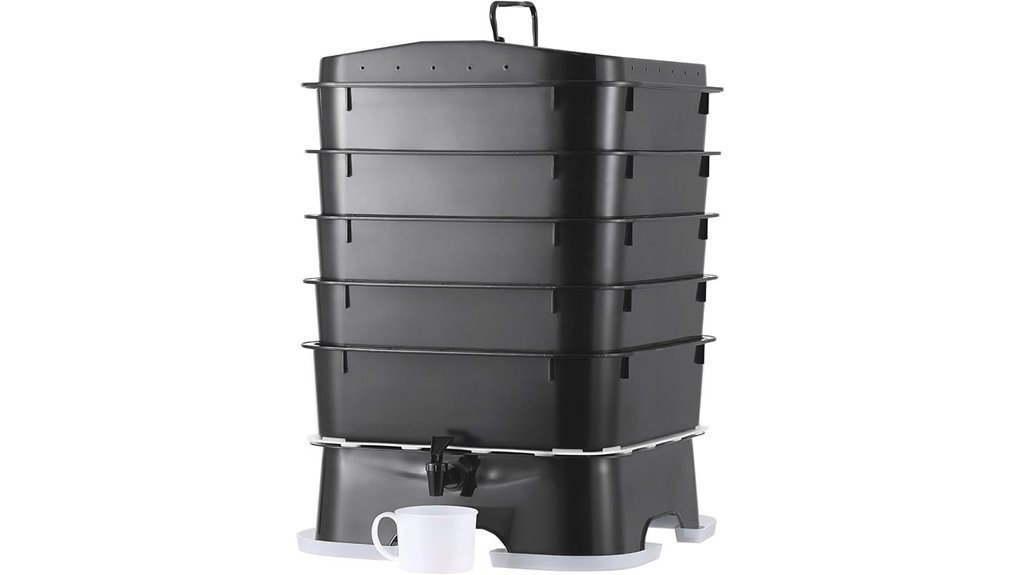
The Original VermiHut® Plus 5-Tray Worm Composter is a strong choice for households that want an efficient, low-odor indoor or outdoor bin with a compact footprint. Its stacked tray system lets worms move upward as material breaks down, supporting continuous composting with minimal handling. The bin can hold up to 10 pounds of worms and process roughly 5 pounds of food waste each day. An improved lid, V-Board, and coconut mat help manage airflow and moisture. The worm saver tray and ant-deterring feet add practical protection. HDPE construction and 17-inch dimensions keep it durable and space-saving.
Best For: Households wanting a compact, low-odor indoor or outdoor worm composter that can handle regular kitchen scraps with minimal maintenance.
Pros:
- Efficient stacked tray system supports continuous composting as worms move upward.
- Good odor and moisture control with the improved lid, V-Board, and coconut mat.
- Durable HDPE build with space-saving 17-inch footprint and practical ant-deterring feet.
Cons:
- Requires maintaining a worm population, which may not suit users wanting a fully hands-off system.
- Best performance depends on proper moisture and feeding balance.
- 5-tray capacity may still be limiting for larger households with heavy composting needs.
VermiHut Plus 5-Tray Worm Compost Bin
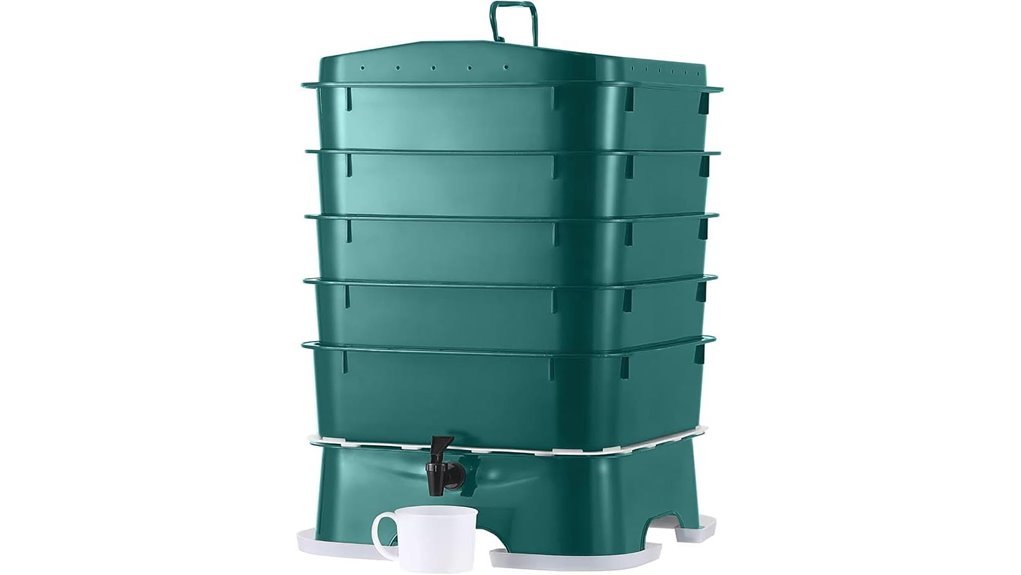
Compact and odor-reducing, the VermiHut Plus suits apartment dwellers and gardeners with limited space. This dark green, 50-liter indoor and outdoor vermicomposting system uses five trays to support continuous food waste recycling into compost. Its compact 17-by-17-inch footprint conserves floor space, while worms process scraps quickly to limit smells. A built-in V-Board and coconut mat improve airflow and moisture balance. The worm saver tray keeps material out of the liquid base, and the one-piece collection area simplifies draining. Protective feet help deter ants. Made from HDPE, it weighs 2 pounds.
Best For: Apartment dwellers and gardeners with limited space who want a compact, low-odor indoor or outdoor worm composting system.
Pros:
- Compact 17 x 17-inch footprint saves floor space while still offering five trays.
- Odor-reducing design and quick worm processing help keep smells down.
- V-Board, coconut mat, worm saver tray, and one-piece liquid base improve airflow, moisture balance, and drainage.
Cons:
- 50-liter capacity may be too small for households with lots of food scraps.
- At 2 pounds, the lightweight build may feel less sturdy than heavier bins.
- Requires ongoing worm care and moisture management to work effectively.
VIVOSUN 5-Layer Worm Compost Bin, 50L Worm Composter
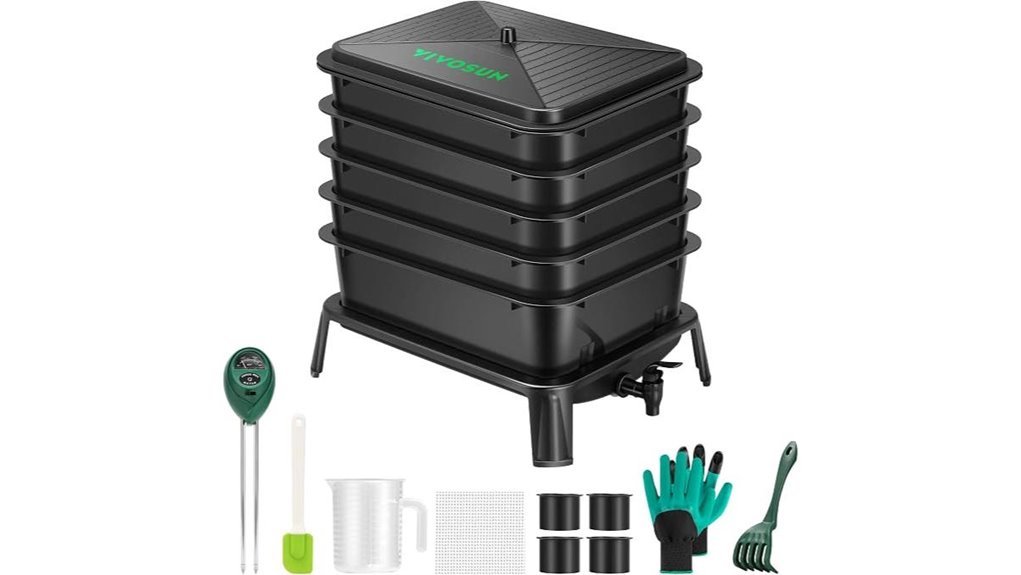
With 50L capacity, the VIVOSUN 5-Layer Worm Compost Bin suits households producing steady kitchen scraps. Its multilayered 50L, 13-gallon PP plastic body supports efficient vermicomposting in compact kitchens, balconies, and gardens. Strategically placed slits improve aeration, while the enclosed structure helps reduce odors and promote vigorous worm activity. Assembly takes about five minutes with the included instructions. The stacked trays simplify feeding and harvest, and the base tray spigot collects worm tea. Accessories include foot pads, measuring cup, soil meter, rack, scraper, non-woven fabric, and gloves for practical start-up.
Best For: Households, apartment dwellers, and gardeners who want a compact, easy-to-use worm compost bin for turning steady kitchen scraps into nutrient-rich compost and worm tea.
Pros:
- 50L capacity with a compact, multilayer design that works well in kitchens, balconies, and gardens.
- Good aeration and odor control help support healthy worm activity and efficient composting.
- Includes helpful accessories and assembles quickly, making it easy to get started.
Cons:
- 50L size may be too small for households with very large amounts of food waste.
- Requires ongoing worm maintenance and proper feeding to work effectively.
- Plastic construction may be less durable than heavier-duty composting systems over the long term.
VIVOSUN 3-Layer Worm Compost Bin, 30L Worm Composter
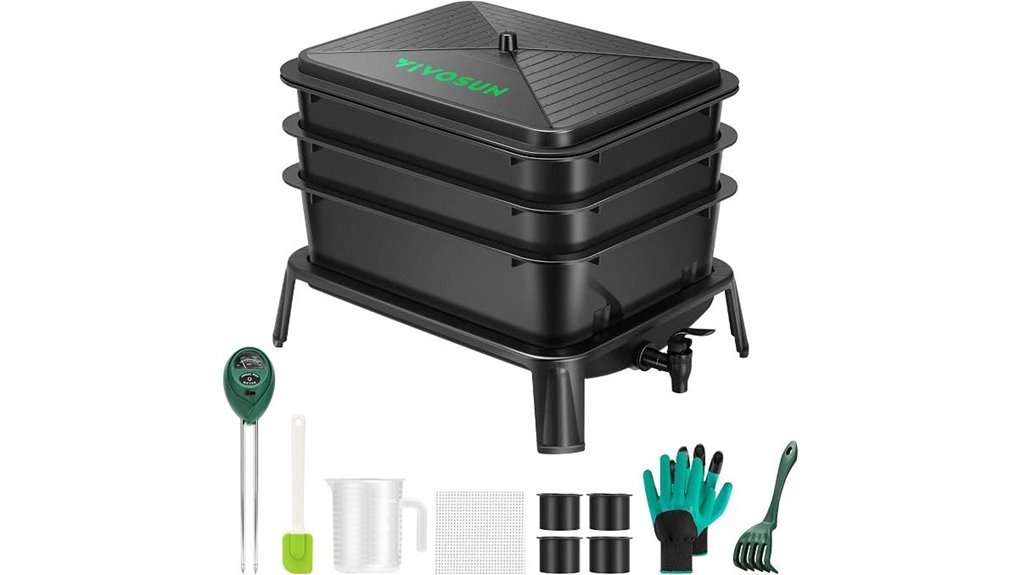
VIVOSUN’s 3-layer, 30-liter design suits beginners and small-space composters. Its sturdy PP plastic body is compact, rectangular, and light enough for kitchens, balconies, or gardens. Worms accelerate decomposition, turning scraps into nutrient-rich compost while supporting sustainability goals. Integrated ventilation slits help limit odor, improve aeration, and aid moisture and temperature control. The stacked layout separates materials for easier feeding and harvesting. Setup takes about five minutes, and the package includes useful accessories such as a measuring cup, soil meter, rack, scraper, non-woven fabric, gloves, and anti-slip foot pads.
Best For: Beginners and small-space gardeners who want an easy-to-use worm composter for kitchens, balconies, or gardens.
Pros:
- 3-layer, 30L design makes feeding and harvesting compost simple and organized.
- Ventilation slits help reduce odor while improving aeration, moisture, and temperature control.
- Includes helpful accessories and sets up quickly in about five minutes.
Cons:
- 30L capacity may be too small for households with lots of kitchen scraps.
- Requires live worms and regular maintenance to work effectively.
- Plastic construction may not appeal to users looking for a more premium or natural material.
Worm Factory 360 Composting System, 4 Trays
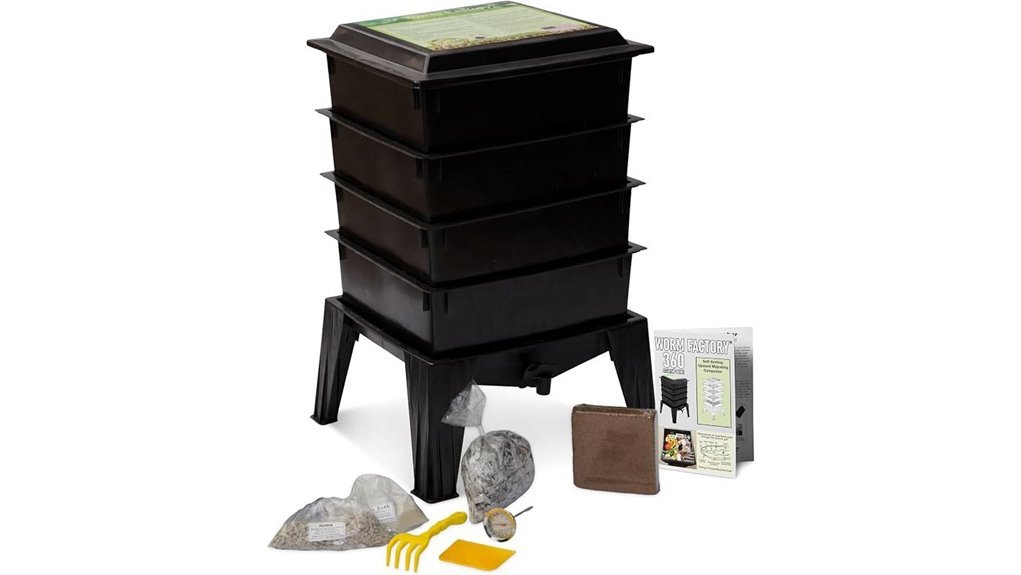
The Worm Factory 360 suits households that want an easy, durable, space-saving vermicomposting bin. This black, four-tray system is built from sturdy plastic and designed for home food-waste recycling. Its compact footprint helps it fit neatly in smaller spaces, while the nested trays support efficient vermicomposting. As worms move upward to fresh scraps, finished compost stays below for simple harvesting. Assembly is straightforward, with clear setup steps for bedding, scraps, and worms. Made in the USA, it offers reliable construction and adaptable capacity for different household needs.
Best For: Households looking for an easy-to-use, durable, space-saving vermicomposting system for recycling food waste at home.
Pros:
- Compact, space-efficient design fits well in smaller homes or kitchens.
- Nested tray system makes vermicomposting and compost harvesting simple.
- Made in the USA with sturdy plastic construction for reliable use.
Cons:
- Four-tray capacity may be limiting for larger households with lots of food scraps.
- Requires regular maintenance and monitoring to keep worms healthy.
- Plastic build may be less appealing to those seeking more eco-friendly materials.
Underground Worm Farm Vermicomposting Bin for Garden Waste
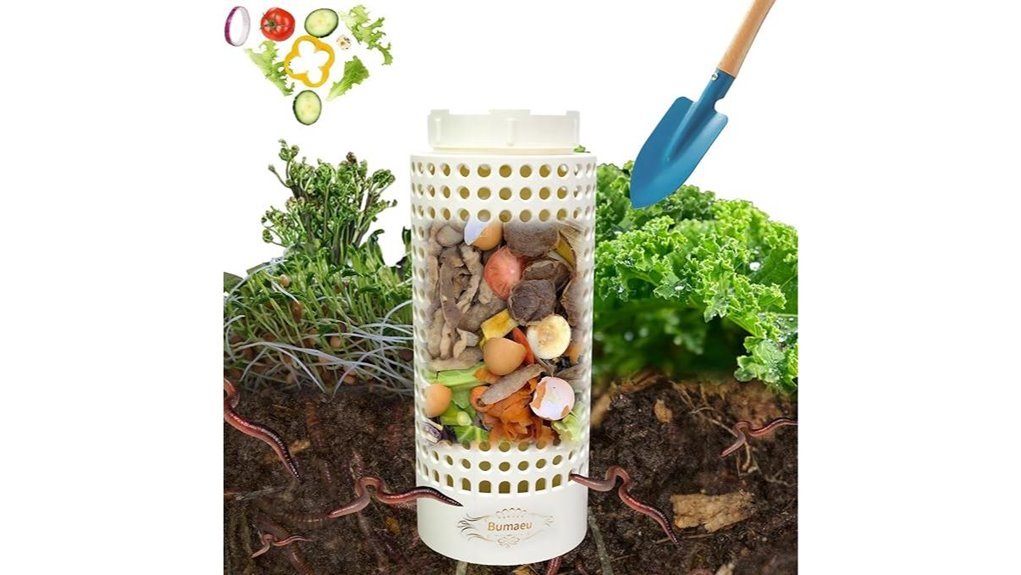
Compact and discreet, the Underground Worm Farm suits gardeners wanting year-round outdoor composting in limited space. This Garden Mini vermicomposting bin measures 10.2 x 4.3 x 4.3 inches and is designed to turn kitchen food scraps into nutrient-rich compost outdoors. Its buried setup supports simple installation: dig a hole, place the bin, and add organic waste. A breathable valve and multiple 360-degree inlets improve airflow and heat dissipation. The safety lock cover helps release gas and block rainwater, while the compact footprint can enhance soil quality within about a 3-foot radius for long-term use.
Best For: Gardeners with limited space who want a simple, year-round outdoor vermicomposting solution for kitchen scraps.
Pros:
- Compact and discreet design fits easily into small garden areas.
- Breathable valve and 360-degree inlets support airflow and heat dissipation.
- Safety lock cover helps release gas and keep rainwater out for outdoor durability.
Cons:
- Small size may limit how much waste it can process at once.
- Requires digging and burial for installation, which may not suit all users.
- Best performance depends on suitable outdoor conditions and regular maintenance.
Vego Garden In-Ground Worm Composter Twin Pack
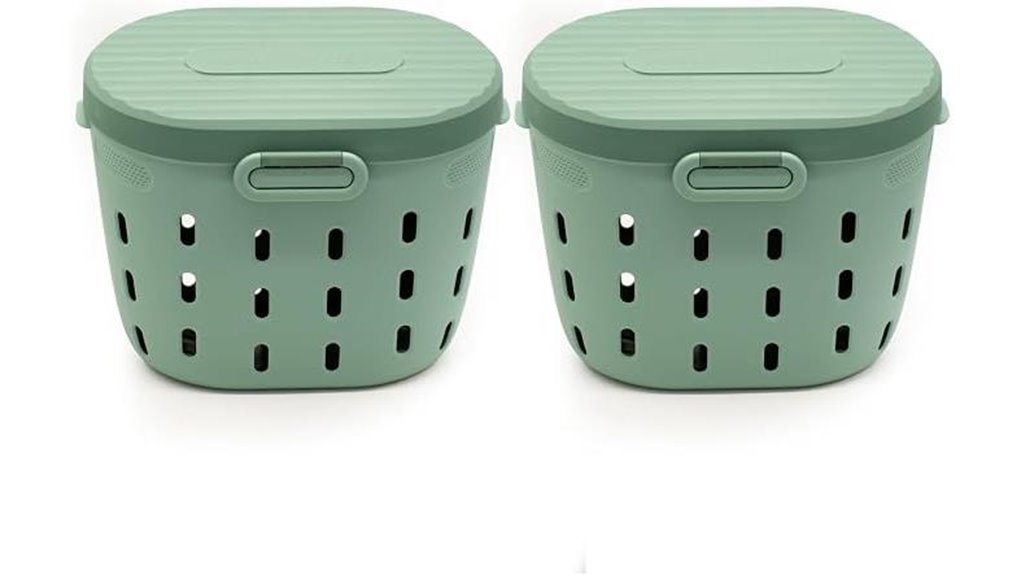
Vego Garden’s in-ground twin pack suits gardeners who want easy, low-effort vermicomposting. Each 7-gallon, sage green, rectangular bin is made from BPA-free polypropylene and designed to sit directly in a garden bed. After digging a hole, users bury the bin, add kitchen scraps, paper, and worms, then let them convert waste into nitrogen-rich compost in about two to three months. The compact 19.4-by-12.8-by-15.5-inch form weighs 3.6 pounds, and the in-bed setup keeps composting accessible. Amazon offers a 30-day return guarantee, with warranty details listed separately.
Best For: Gardeners who want an easy, low-effort in-ground vermicomposting setup for turning kitchen scraps into nutrient-rich compost.
Pros:
- Compact 7-gallon twin-pack design is easy to place directly in a garden bed.
- BPA-free polypropylene construction is lightweight and durable.
- Worm composting can produce usable compost in about 2–3 months.
Cons:
- Requires digging and burial in a garden bed, so it’s not as portable as a countertop bin.
- Small capacity may not suit households with a lot of food waste.
- Warranty details are not clearly specified in the overview.
Blütezeit 3-Tray Worm Composter with Starter Kit
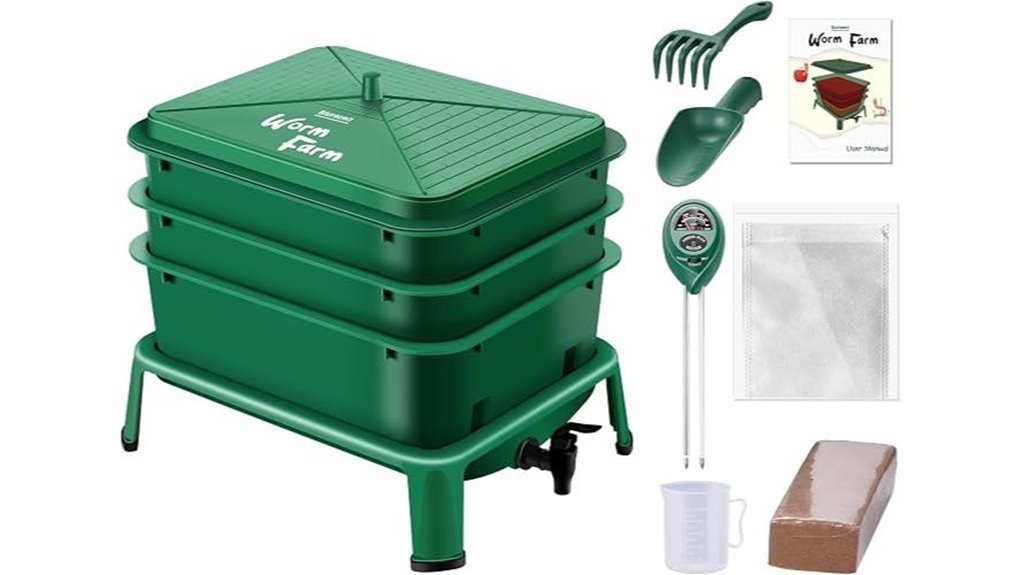
Blütezeit’s 3-tray worm composter suits beginners and small-space gardeners who want an all-in-one setup. This 32-quart worm farm works indoors or outdoors and processes food scraps into nutrient-rich compost faster than traditional methods. Its 8-gallon capacity fits apartments, balconies, kitchens, and gardens, while the modular tray system allows expansion over time. Durable polypropylene construction supports regular use, and stacked trays simplify feeding, monitoring, and harvesting. Air holes in each tray promote airflow and odor control. The starter kit includes tools, bedding, fabric, feet, a soil meter, a collection cup, and a spigot for worm tea.
Best For: Beginners and small-space gardeners who want an all-in-one indoor or outdoor worm composting setup.
Pros:
- 3-tray modular design makes it easy to scale and harvest compost.
- Starter kit includes useful tools, bedding, a soil meter, and worm tea collection parts.
- Air holes and durable polypropylene help with odor control and regular use.
Cons:
- 32-quart capacity may be too small for households with lots of food scraps.
- Vermicomposting requires ongoing care and attention to moisture and feeding balance.
- Best results depend on maintaining proper conditions, which can take some learning.
Factors to Consider When Choosing Worm Composting Bins in 2026
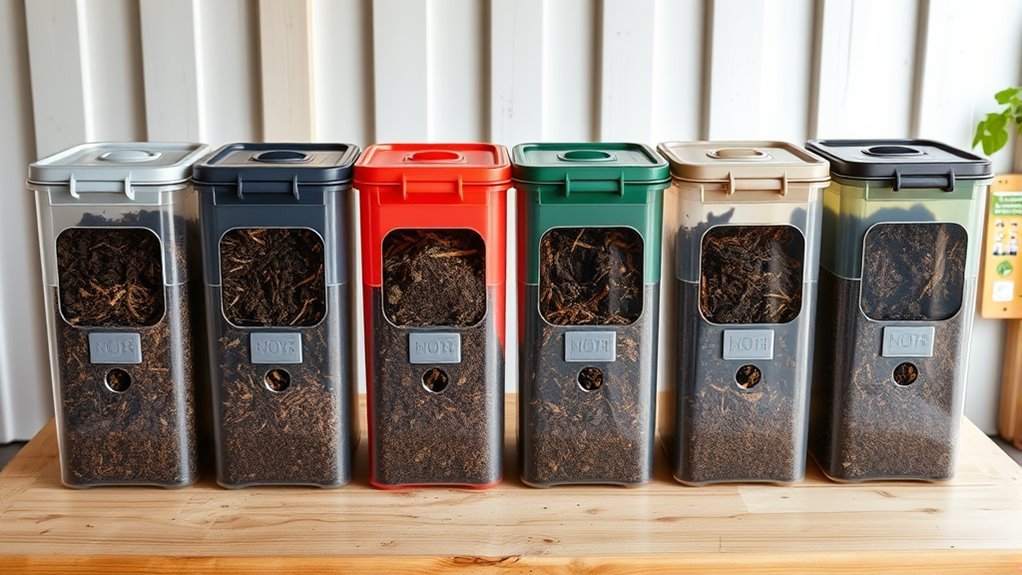
Choosing a worm composting bin in 2026 depends on capacity needs, tray system design, odor control features, and material durability. A suitable model should also match the intended setting, whether it will be used indoors or outdoors. These factors help narrow the options to bins that fit both household waste volume and daily maintenance requirements.
Bin Capacity Needs
Bin capacity is the starting point for any worm composting setup, since the right size should match both household food waste and available space. A household’s waste output should guide the choice, with roughly 1 lb of food scraps per day needing about 2 lbs of worms. Smaller homes often do well with 30-liter bins, while larger families or frequent composters may need 50 liters or more. Capacity should also align with worm load, as some systems can support up to 10 lbs of worms for stronger processing. Space constraints matter too; compact units suit tight areas, but larger models generally handle more waste. Matching bin size to both demand and room helps maintain steady composting performance and avoids overcrowding or underuse.
Tray System Design
Tray systems offer a practical vertical composting layout that lets worms move upward as they work through food scraps, making better use of limited space. This arrangement suits users who want steady processing without expanding the footprint of the bin. Stacking trays also simplifies harvesting, since lower levels can be removed for finished compost while upper trays keep breaking down fresh waste. Many designs improve airflow through perforations or open spacing, helping worms remain active and conditions stay balanced. A worm saver tray can keep worms from dropping into liquid collection areas, supporting healthier movement through the system. Moisture-control additions such as mats or boards may help hold humidity where it is needed while limiting excess wetness, which keeps the tray environment consistent and productive.
Odor Control Features
Odor control is a key factor in worm composting bins, since effective systems limit the time food scraps sit by helping worms consume them quickly. Better bins also use ventilation slits or built-in airflow channels to move fresh air through the compost mass, which helps prevent stagnant conditions and odor buildup. Moisture management matters as well; mats, trays, and similar features can hold humidity at a balanced level so the bin does not become overly wet. Some systems add coconut coir or specialized liners to absorb excess moisture and suppress smells. Routine care remains important, including layering food waste correctly and checking worm activity. When worms stay healthy and conditions remain stable, the bin is less likely to develop unpleasant odors and more likely to compost efficiently throughout the season.
Material Durability
Material durability is a practical concern because a worm composting bin must hold up to daily use, moisture, and changing weather without cracking or warping. High-density polyethylene and sturdy polypropylene are often preferred because they resist cracking and UV degradation better than many lighter plastics. Material thickness also matters: thicker walls generally tolerate wear, impact, and repeated handling more effectively. For outdoor use, a robust bin should remain stable through rain, heat, and cold so composting can continue without frequent replacement. Integrated structural designs can further improve strength and reduce failure points. Regular cleaning and limiting excess moisture help preserve the bin’s condition over time, extending service life and maintaining reliable performance.
Indoor Outdoor Fit
When choosing a worm composting bin in 2026, the intended placement indoors or outdoors is a major factor because it shapes the design, capacity, and maintenance needs of the system. Many bins are built for both settings, giving users flexibility when space or climate changes. Indoor models usually stay compact and include odor control, which suits apartments, kitchens, and other small living areas. Outdoor systems often use sturdier materials and larger chambers to handle more waste and weather exposure. In either case, good airflow and moisture control remain essential for worm health. Placement also affects performance: outdoor bins may compost faster because temperature swings can accelerate decomposition, while indoor units offer steadier conditions and easier access.
Frequently Asked Questions
How Often Should Worm Bins Be Harvested?
Worm bins should typically be harvested every three to six months, depending on population size, feeding rate, and bedding conditions. A mature bin often signals readiness when most scraps become dark, crumbly castings.
Can Worms Survive Freezing Temperatures?
No, not for long. As the saying goes, “A stitch in time saves nine.” Worms can survive brief cold if insulated, but freezing temperatures usually kill them unless they are deeply protected.
What Bedding Works Best for Composting Worms?
The best bedding for composting worms is a moist mix of shredded newspaper, cardboard, coconut coir, and a little aged compost. It stays airy, holds moisture, and supports healthy worm activity.
How Do I Stop Fruit Flies in a Worm Bin?
Fruit flies are gatecrashers; the bin can be kept covered, feed buried, and moist bedding balanced. Adding dry shredded paper, removing overripe scraps, and freezing fruit waste before use usually reduces them quickly.
Can I Feed Worms Citrus Peels Occasionally?
Yes, worms can receive citrus peels occasionally, but only in small amounts. Excess citrus may acidify bedding and irritate worms. Better results come from mixing peels well and balancing them with neutral, carbon-rich scraps.
Conclusion
Choosing the best worm composting bin can feel almost world-changing, as if the fate of your kitchen scraps and garden soil hangs in the balance. From compact indoor towers to mighty in-ground systems, these eight options offer something for nearly every composter. The right bin can turn waste into black gold with shocking efficiency, making ordinary leftovers look embarrassingly valuable. In the end, the ideal choice depends on space, goals, and how much worm-powered magic is desired.
