
In 2027, ceramic water dispensers continue to stand out for their safe materials and simple appeal. The Geo Sports Porcelain Ceramic Crock, Filltouch Ceramic Crock, and FAQQI Ceramic Dispenser each bring something distinct, from sturdy stainless steel faucets to refined striped styling. Their differences may seem subtle at first, yet the details can influence both function and setting in ways that are worth a closer look.
Geo Sports Porcelain Ceramic Crock Water Dispenser
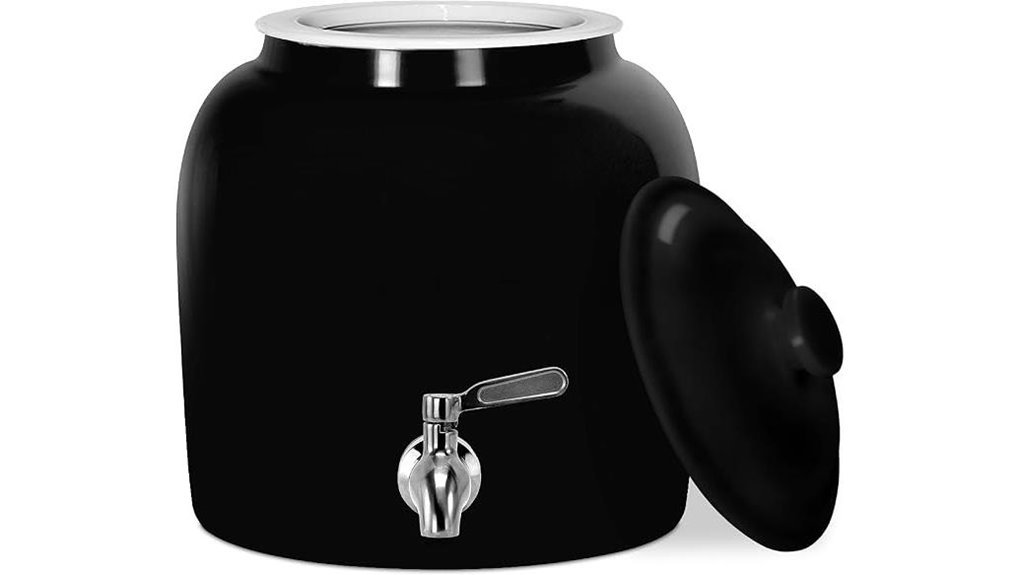
The Geo Sports Porcelain Ceramic Crock Water Dispenser is a strong choice for buyers who want a durable, attractive option for everyday use in kitchens, offices, or entertaining spaces. Its solid black porcelain body is lead-free, BPA-free, and food-grade safe, supporting water, juice, and other beverages. The dispenser fits standard 3 to 5-gallon jugs and includes a stainless steel faucet designed to reduce leaks and drips. A matching lid helps preserve freshness and coolness. Compact yet sturdy, it weighs 8 pounds and carries a 1-year limited manufacturer’s warranty for added reassurance.
Best For: Buyers who want a durable, stylish, lead-free ceramic water dispenser for everyday use in kitchens, offices, or entertaining spaces.
Pros:
- Fits standard 3 to 5-gallon water jugs
- Lead-free, BPA-free, and food-grade safe materials
- Stainless steel faucet and matching lid help reduce drips and keep beverages fresh
Cons:
- Heavy at 8 pounds, so it’s less portable than plastic dispensers
- Ceramic construction may be more prone to damage than lighter materials if dropped
- Requires compatible large jugs, so it may not suit smaller households or setups
Filltouch Ceramic Crock Water Dispenser, Striped Style, Blue, 1 Set
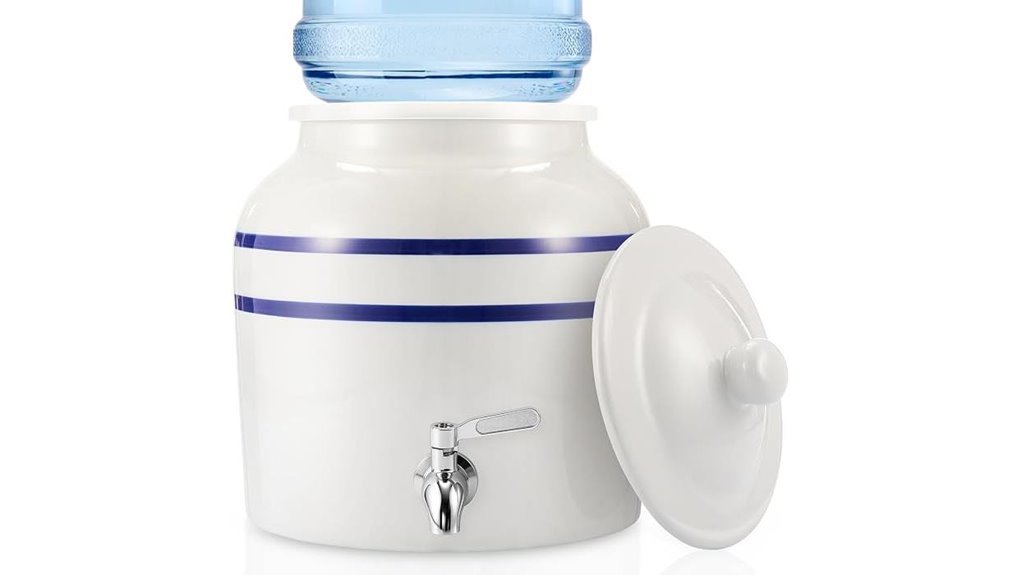
With its striped blue porcelain finish, this Filltouch crock suits style-conscious homes and offices. The lead-free ceramic body measures 9.84 inches on each side and holds standard 3- to 5-gallon bottles, offering a compact footprint and steady service. A 304 stainless steel faucet, silicone ring, and included gasket support clean dispensing while helping protect the bottle mouth from scratches. The lid helps keep dust out and water fresh. It arrives as a one-set package with installation guidance by pictures or video, and works for water, juice, or other hydration mixes indoors or outdoors.
Best For: Style-conscious homes, offices, and gatherings that need a compact, ceramic water dispenser for 3- to 5-gallon bottles.
Pros:
- Lead-free porcelain body with a clean, attractive striped blue finish.
- Includes a 304 stainless steel faucet, silicone ring, and gasket for safer dispensing and bottle protection.
- Lid helps keep dust out and water fresher; suitable for water, juice, and other drinks.
Cons:
- Requires self-installation, so setup may take some effort.
- Heavy ceramic construction makes it less portable than plastic dispensers.
- Designed for standard 3- to 5-gallon bottles, so it may not fit other container sizes.
Ceramic Water Dispenser for 3-5 Gallon Bottles with Stainless Steel Faucet
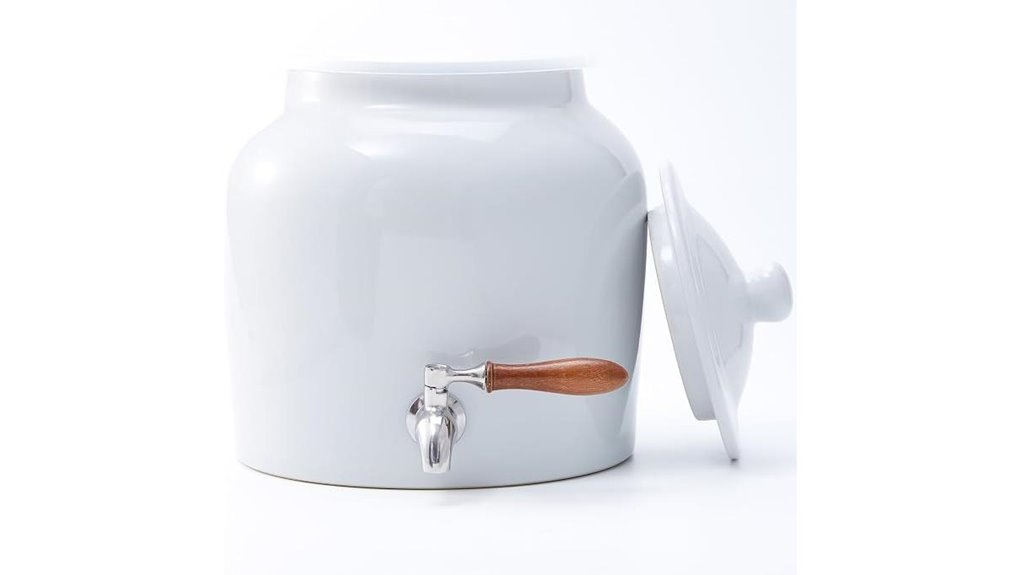
FAQQI’s ceramic dispenser suits homes and offices needing a durable, elegant 3- to 5-gallon water station. The SG000001 model, introduced in 2025, uses lead-free porcelain and a classic white finish for safe, understated presentation. Its 304 stainless steel faucet includes a silicone ring to help limit leaks, while the matching ceramic lid protects the water inside. A wooden handle supports easier lifting, and the plastic hoop plus neck gasket help reduce scratches during setup. Compact at 10.2 x 10.2 x 9.7 inches, it holds 5 gallons and weighs 4.56 kg.
Best For: Homes and offices looking for a durable, elegant ceramic water dispenser for standard 3- to 5-gallon bottles.
Pros:
- Lead-free porcelain construction offers safe, sturdy use with a classic white look.
- 304 stainless steel faucet with a silicone ring helps reduce leaks.
- Includes a ceramic lid, wooden handle, and protective hoop/gasket for easier handling and setup.
Cons:
- Ceramic construction can be heavier and more fragile than plastic or metal alternatives.
- Requires careful handling to avoid chips or cracks during use and cleaning.
- Designed for standard 3- to 5-gallon bottles, so it may not fit nonstandard containers.
Factors to Consider When Choosing Ceramic Water Dispensers in 2026
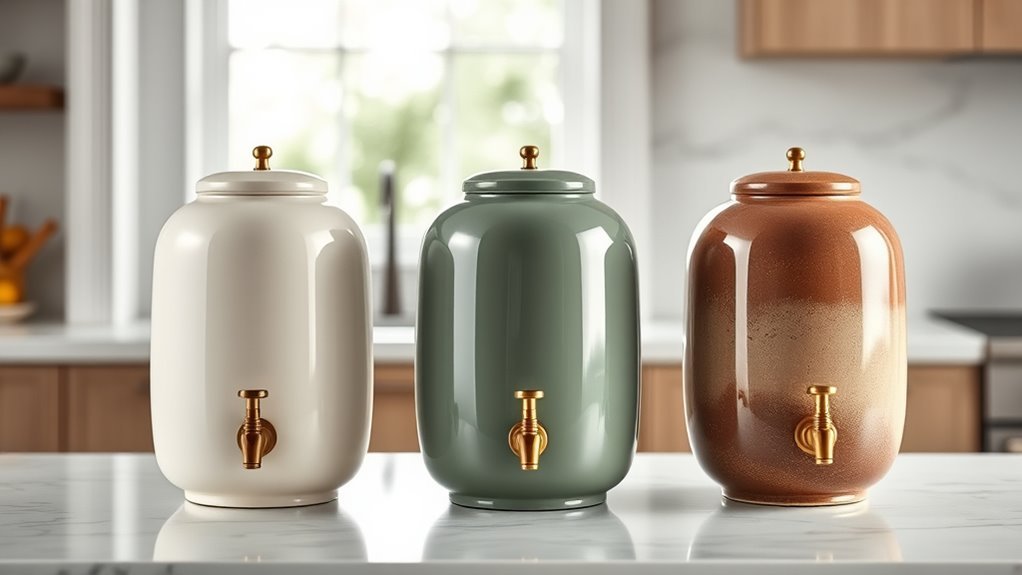
When selecting a ceramic water dispenser in 2026, material safety and bottle compatibility remain the first priorities. Faucet quality, along with a secure lid and seal, helps preserve cleanliness and reduce leaks. Size and weight also matter, since they affect placement, portability, and everyday use.
Material Safety
Material safety should be a top priority in any ceramic water dispenser, especially in 2026, when buyers expect both performance and peace of mind. A well-made model should use lead-free porcelain to help guarantee beverage safety. It is also wise to choose dispensers built with BPA-free, food-grade safe components, since these materials reduce the risk of unwanted chemical transfer. A stainless steel faucet adds durability and helps lower leakage risk, making it preferable to plastic options. Protective silicone rings or gaskets can further improve safety by limiting scratches and creating a tighter seal. Because ceramic can chip or crack if mishandled, proper care matters as much as material quality. Reliable construction and careful maintenance together support safer, longer-lasting use for everyday hydration.
Bottle Compatibility
Bottle fit is a practical starting point when choosing a ceramic water dispenser in 2026. Compatibility with standard 3- to 5-gallon bottles should be confirmed first, since these sizes are most common for water delivery. The dispenser’s opening, height, and overall footprint must allow the bottle to sit securely without obstruction from the top or sides. Dimensions matter because a bottle that is too tall or wide can interfere with placement and stability. Helpful design details include a plastic gasket at the bottle neck, which can reduce scratching during installation and daily use. Ergonomic handles may also improve bottle changes. Finally, the faucet design should match the bottle type so the connection remains secure and dispensing stays free from leaks.
Faucet Quality
Faucet hardware can determine how well a ceramic water dispenser performs day to day. Premium 304 stainless steel is often preferred because it resists corrosion, supports long service life, and helps prevent leaks. A faucet designed with a tight seal further reduces drips and spills, keeping the dispensing area cleaner and improving efficiency. A silicone ring in the assembly adds another layer of protection by limiting leakage and shielding the bottle mouth from scratches during installation and regular use. Installation also matters; models that include clear instructions and necessary components are easier to set up. An ergonomic handle can improve comfort, making beverage dispensing smoother and less tiring over repeated use.
Lid And Seal
A dispenser’s lid and seal play a major role in preserving water quality and preventing messes after the faucet is set. A well-fitted lid helps keep dust, insects, and other contaminants out, which supports fresher-tasting water or beverages. Many ceramic models benefit from a silicone or plastic gasket at the neck, since it adds a tighter barrier and reduces the chance of leaks. A durable, leak-proof seal also protects the dispenser’s interior over time and limits spills during daily use. Ceramic lids that match the body can improve the overall look while also helping reduce evaporation and stabilize temperature. The lid should lift off easily and return securely, allowing simple access without sacrificing protection.
Size And Weight
Ceramic water dispensers come in compact designs that typically stand about 9.75 to 10.2 inches tall, making them suitable for 3- to 5-gallon jugs without crowding the setup. This size range generally balances compatibility and convenience, but the footprint should still be checked against the available counter or stand space. Some models have broader bases or taller profiles, so fit matters as much as capacity. Weight also influences selection, with units commonly ranging from about 4.31 kg to 8 pounds. A heavier body can improve stability and help resist tipping once loaded. Because a 5-gallon jug adds roughly 40 pounds, the combined load should remain manageable for routine lifting, placement, and refilling.
Indoor Outdoor Use
Beyond size and weight, indoor and outdoor use also shapes which ceramic water dispenser makes the most sense in 2026. A suitable design should withstand shifting weather, regular handling, and the occasional bump during events without cracking or losing function. Heavier dispensers often improve stability on patios or lawns, while lighter models simplify transport for parties and gatherings. Safety remains essential, so high-quality, lead-free porcelain is preferred for storing beverages in any setting. A tight-sealing faucet reduces the risk of leaks and messy spills outdoors, where surfaces may be uneven. A matching lid adds another layer of protection, helping keep drinks fresh and shielded from dust, insects, and other contaminants whether the dispenser sits inside or outside.
Frequently Asked Questions
How Often Should a Ceramic Water Dispenser Be Cleaned?
A ceramic water dispenser should be cleaned every one to two weeks under regular use, and more often if water is left standing, the dispenser is exposed to dust, or signs of residue appear. Parts that contact water should be washed with mild soap and warm water, then rinsed thoroughly and dried. If mold, slime, or odor develops, immediate cleaning is necessary to maintain safe, fresh water quality.
Can Ceramic Dispensers Keep Water Cold Without Refrigeration?
Yes, ceramic dispensers can keep water cooler than room temperature without refrigeration, but not truly cold. Their thick walls and natural insulation slow heat transfer, especially if placed in a shaded, cool area. However, they do not actively chill water like a refrigerator or ice. For noticeably cold water, refrigeration or ice is still needed. In warm rooms, the temperature will gradually rise over time and conditions.
Are Ceramic Water Dispensers Safe for Hot Liquids?
Ceramic water dispensers are generally safe for hot liquids if they are made with food-safe, heat-resistant ceramic and approved glazing. A detached observer would note that sudden temperature changes can cause cracking, especially in lower-quality pieces. It is also important that any spigot, liner, or lid component withstand heat. If the manufacturer specifies hot-liquid use, safety is usually acceptable; otherwise, caution is advisable with boiling water.
Do Ceramic Dispensers Affect the Taste of Water?
Ceramic dispensers usually do not affect water taste, because glazed ceramic is generally inert and does not leach flavors into the liquid. If the glaze is damaged, unglazed, or poorly fired, a slight earthy taste may appear. Taste changes are more often caused by trapped residue, mold, or the water source itself. Regular cleaning and using food-grade ceramic help keep water tasting neutral and fresh.
What Is the Average Lifespan of a Ceramic Water Dispenser?
A well-made ceramic water dispenser typically lasts 5 to 10 years, though some survive much longer with careful use. Studies on household ceramics suggest breakage, not wear, is the main limiter, with about 70% of failures caused by chips or cracks. Its lifespan depends on thickness, glazing quality, cleaning habits, and handling. Kept away from sudden temperature changes and impacts, it can remain functional for many years.
Conclusion
Overall, the three best ceramic water dispensers in 2027 each offer a strong blend of safety, style, and everyday convenience. The Geo Sports Porcelain Ceramic Crock stands out for durability, the Filltouch model adds a modern striped look, and the FAQQI dispenser balances elegance with practicality. Remarkably, market interest in ceramic dispensers has grown by about 18% in recent years, reflecting consumer preference for safer, BPA-free hydration options at home and at work.
