
Self-cleaning water dispensers are becoming a practical upgrade for homes and offices in 2027. Models like the Brio 400 Series, Avalon A7BOTTLELESSBLK, and PHILIPS countertop unit promise cleaner water with less upkeep, while features such as UV cleaning, filtration, and tri-temp controls add convenience. The real question is which designs deliver on both hygiene and reliability, and the answer is not the same for every setting.
Brio 400 Series Bottleless Water Cooler Dispenser
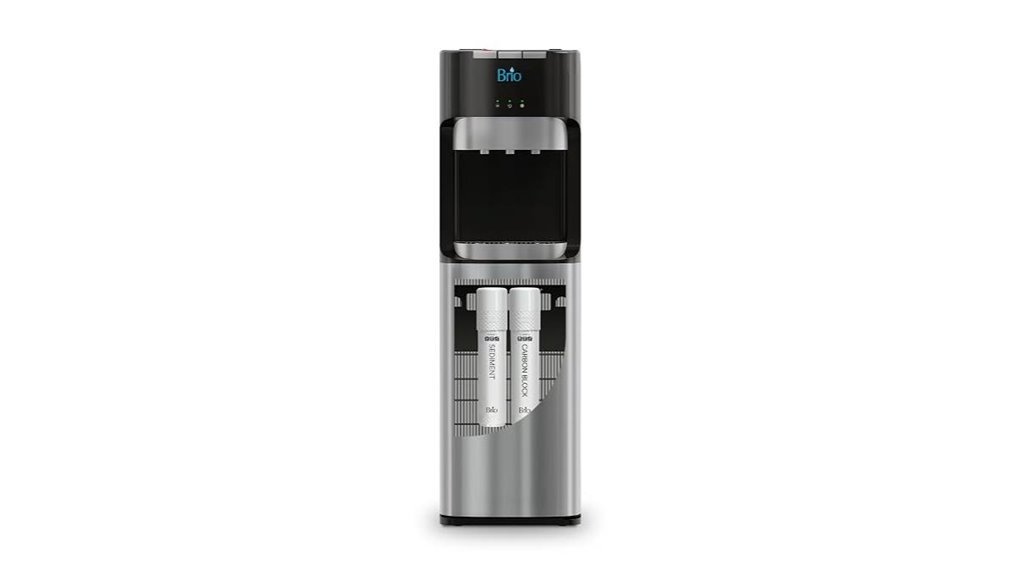
The Brio 400 Series Self-Cleaning UV Bottleless Water Cooler Dispenser is a strong choice for households or offices that want a continuous water supply without the hassle of bottles, especially where both convenience and hygiene matter. Its bottleless setup connects directly to a water line, while the UV-CARE system helps disinfect the unit and eliminate 99.99% of microbes. Two-stage filtration improves taste, odor, and clarity. It offers hot, room-temperature, and cold water, with hot water reaching 212°F. A child safety lock adds protection, and UL approval supports safety confidence.
Best For: Households or offices that want a convenient, bottleless water cooler with hot, cold, and room-temperature water plus self-cleaning UV hygiene features.
Pros:
- Bottleless design provides a continuous water supply without replacing heavy water jugs.
- UV-CARE self-cleaning system helps disinfect the unit and reduce microbes.
- Tri-temp dispensing with hot water up to 212°F is useful for drinks and quick meal prep.
Cons:
- Requires connection to a water line, which may make installation less convenient.
- Replacement filters and maintenance add ongoing upkeep costs.
- At 45 pounds and 43.5 inches tall, it may be bulky for smaller spaces.
Brio 800 Bottleless Countertop Water Cooler with Filtration
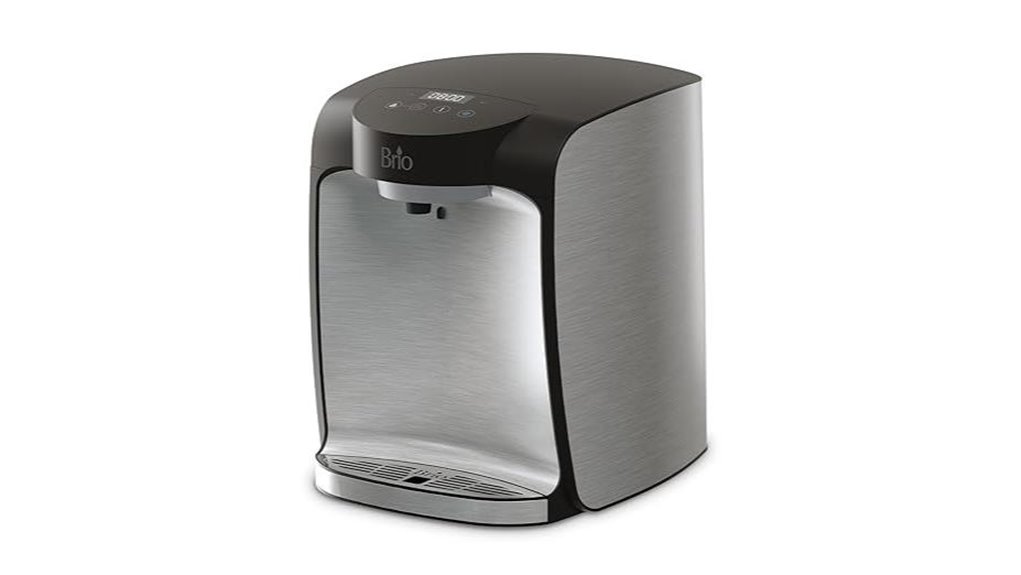
Brio’s 800 Bottleless Countertop Water Cooler suits households wanting compact, self-cleaning filtration with fast dispensing. The stainless steel unit measures 17.5 by 12.5 by 17.4 inches and weighs 35 pounds, making it suitable for countertop placement. Its 2-stage system removes dust, particles, and rust while reducing PFAS and microplastics. A button-activated self-cleaning cycle circulates hot water through reservoirs and internal components. It dispenses hot, cold, and room-temperature water, and its larger solenoid valve fills bottles, cups, and pitchers twice as fast. An 11-inch dispense height supports larger containers.
Best For: Households or small offices that want a compact, bottleless countertop water cooler with self-cleaning filtration and fast dispensing for hot, cold, and room-temperature water.
Pros:
- 2-stage filtration helps remove dust, particles, and rust while reducing PFAS and microplastics.
- Self-cleaning cycle helps keep reservoirs and internal components cleaner with minimal effort.
- Larger solenoid valve and 11-inch dispense height make it easier and faster to fill bottles, cups, and pitchers.
Cons:
- 35-pound countertop unit may be heavy and less convenient to move.
- Requires corded power and installation, so it is less portable than traditional dispensers.
- 800 ml capacity may be limiting for users with high-volume water needs.
iSpring DS4S Bottleless Water Dispenser – 4-Stage Filtration, Hot/Cold/Room
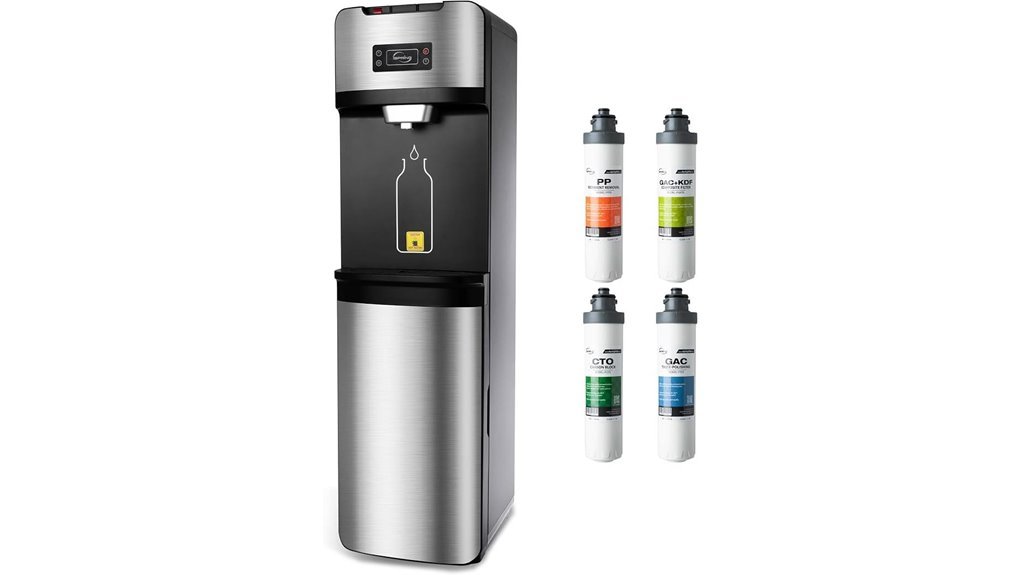
With 4-stage filtration, the iSpring DS4S suits homes or offices needing cleaner hot, room, and cold water. Its bottleless design filters sediment, chlorine, lead, mercury, PFAS, chloramine, and other heavy metals, improving taste across all temperature settings. The compact stainless steel unit measures 11.8 x 14.1 x 41.7 inches and includes a child safety lock for hot water. Installation is straightforward with supplied tubing, feed adapters, and instructions. Self-cleaning operation and easy filter changes reduce upkeep. Backed by a 1-year warranty, lifetime support, and a 30-day money-back guarantee, it offers practical reliability.
Best For: Homes or offices that want a compact bottleless water dispenser with 4-stage filtration, hot/cold/room temperature options, and low-maintenance operation.
Pros:
- 4-stage filtration removes sediment, chlorine, lead, mercury, PFAS, chloramine, and other heavy metals.
- Compact stainless steel design with hot, cold, and room-temperature water plus a child safety lock.
- Easy DIY installation, self-cleaning feature, and simple filter changes with warranty support.
Cons:
- Requires installation and a direct water connection, so it’s less convenient than a plug-and-play bottle dispenser.
- Higher upfront effort compared with basic countertop or bottled water coolers.
- Cooling/heating performance may depend on usage volume and room conditions.
Brio 520 Series Self Cleaning Water Dispenser Bottom Loading Water Cooler
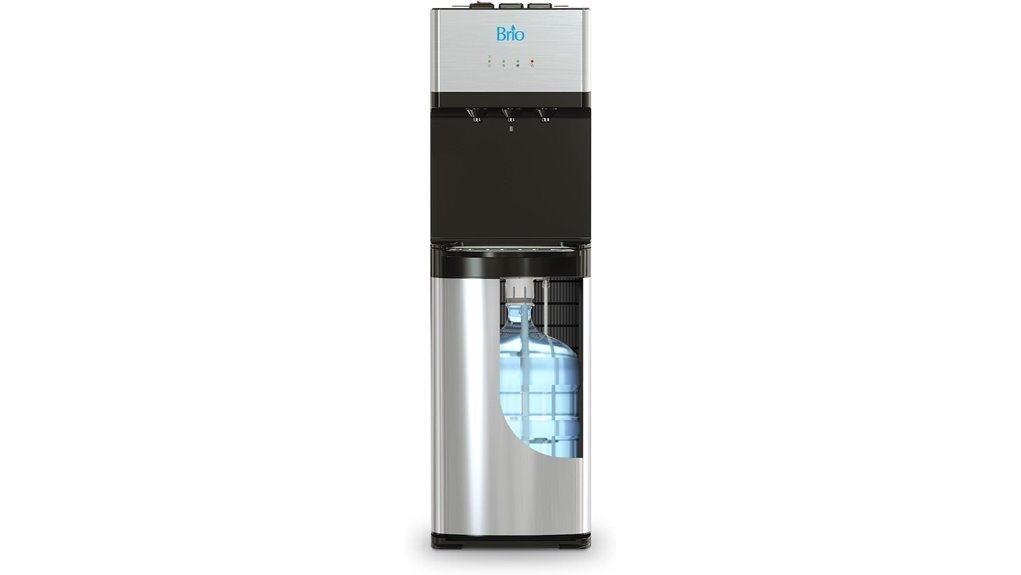
Ideal for busy households, the Brio 520 Series reduces maintenance with a UV self-cleaning system. The CLBL520SC bottom-loading cooler keeps a 5-gallon bottle in a lower cabinet, limiting heavy lifting and simplifying refills. It offers hot, cold, and room-temperature water, supported by a 500-watt corded electric design. A two-step child safety lock helps prevent accidental hot water dispensing, while the LED nightlight improves visibility. Built from plastic and stainless steel, the freestanding unit measures 15.6 by 12.2 by 41.4 inches and weighs 39.6 pounds. Its 2021 release remains practical and straightforward.
Best For: Busy households, offices, or anyone who wants a convenient bottom-loading water cooler with self-cleaning UV maintenance and multiple temperature options.
Pros:
- Bottom-loading design reduces heavy lifting and makes bottle changes easier
- UV self-cleaning feature helps simplify maintenance
- Offers hot, cold, and room-temperature water with a child safety lock
Cons:
- Requires a power source and uses 500 watts
- Larger and heavier than a basic countertop dispenser
- Higher-end features may make it more expensive than simpler models
Avalon Self-Cleaning Bottleless Water Cooler Dispenser (A7BOTTLELESSBLK)
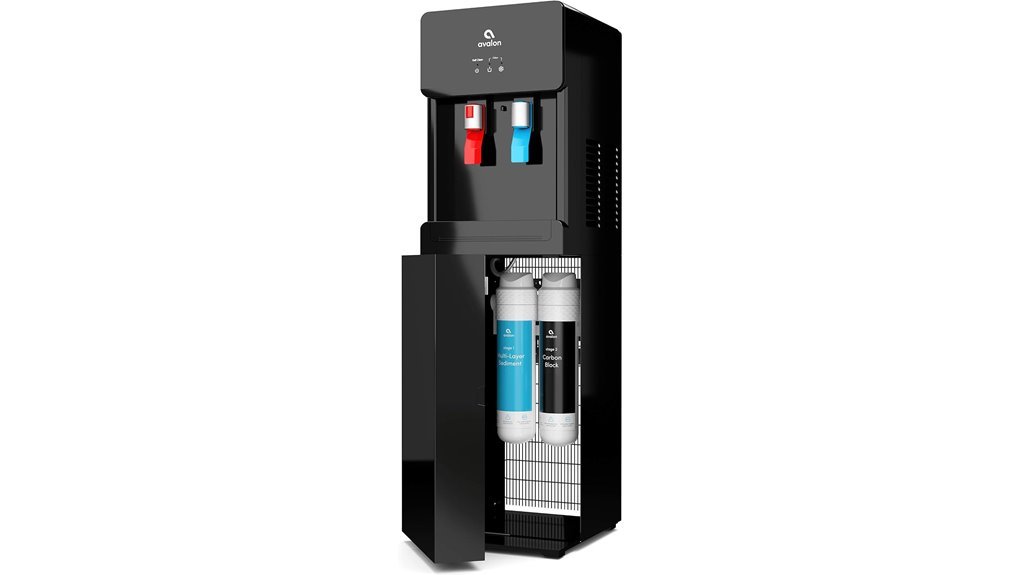
Avalon’s A7BOTTLELESSBLK suits households or offices needing hot and cold water without bottled refills. This freestanding, slim black dispenser pairs bottleless convenience with a self-cleaning system that helps sanitize the unit. It delivers crisp cold and piping hot water, while a child safety lock supports safer hot-water use. A built-in night-light improves visibility after dark. Dual filtration uses Avalon A5FILTER sediment and A4FILTER carbon block cartridges, each rated for 6 months or 1,500 gallons. The 520-watt unit includes installation hardware, measures 13 by 12 by 41 inches, and holds 3.6 liters.
Best For: Households or offices that want a slim, bottleless water cooler with hot and cold water, self-cleaning convenience, and basic safety features.
Pros:
- Bottleless design helps eliminate the need for bulky water jugs and ongoing refill purchases.
- Dual filtration with sediment and carbon block filters supports cleaner-tasting water.
- Includes helpful features like self-cleaning, a child safety lock, and a built-in night-light.
Cons:
- Installation may be more involved than a standard bottled water dispenser.
- Filters need replacement every 6 months or 1,500 gallons, adding maintenance.
- At 40 pounds and 41 inches tall, it may be less convenient for frequent moving or tight spaces.
Avalon Touchless Bottleless Water Cooler Dispenser with BioGuard
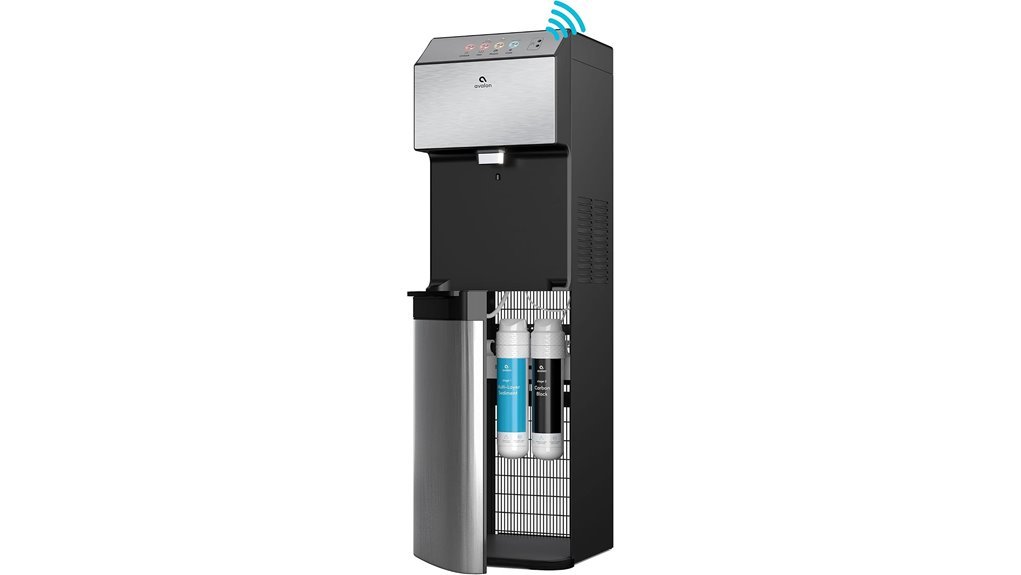
The Avalon A13-S suits busy households and offices needing touchless, self-cleaning hydration. This bottleless cooler uses a hands-free sensor for cold water dispensing and offers cold, cool, and hot settings, with hot water reaching 185°F. Its stainless steel build, under-sink installation, and 1500-gallon capacity support steady use. A digital display, clock, and nightlight improve convenience. The ozone-based BioGuard cleaning system helps maintain the tank, while dual sediment and carbon filters reduce chlorine, lead, rust, and bacteria. Leak detection, included installation parts, and a one-year warranty add practical value.
Best For: Busy households and offices that want a touchless, bottleless water cooler with self-cleaning convenience, multiple temperature options, and easy under-sink installation.
Pros:
- Hands-free touchless dispensing is convenient and more hygienic.
- Dual filtration and BioGuard ozone cleaning help improve water quality and maintenance.
- Three temperature settings plus a digital display and nightlight add everyday convenience.
Cons:
- Requires installation and connection to an existing sink water line, so setup is less portable.
- Hot water up to 185°F may be a safety concern around children.
- Filters need regular replacement every 6 months or 1500 gallons.
PHILIPS Countertop RO Water Filter, Instant Hot and Cold Dispenser
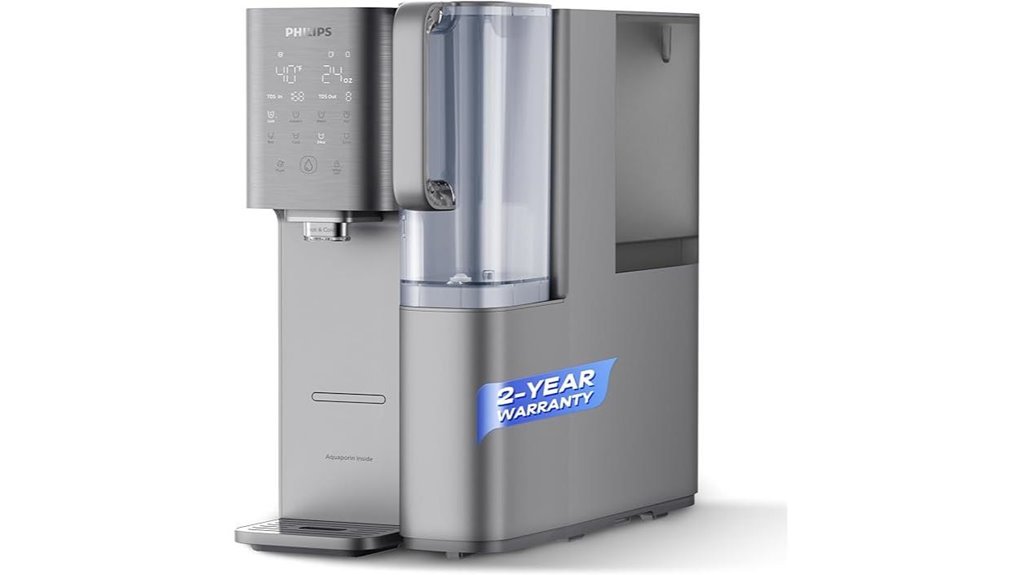
PHILIPS’ countertop RO dispenser suits small households wanting fast hot and cold purified water. Its compact 9.1 x 16.9 x 17.5-inch form fits countertops, while the 6L source tank and 1.8L jug support families of 2 to 5. A 6-stage reverse osmosis system with Aquaporin Inside removes chlorine, lead, calcium, and TDS down to 0.0001 microns, then remaps taste with minerals. It delivers about 200ml per minute, offers 40°F to 203°F water, and uses preset volumes. NSF/ANSI/CAN 372 certification, TDS monitoring, self-cleaning, and a 12-month filter complete the package.
Best For: Small households of 2 to 5 people who want a compact countertop RO system with instant hot and cold purified water and easy preset dispensing.
Pros:
- Compact countertop design fits well in smaller kitchens while still offering solid tank and jug capacity.
- 6-stage RO filtration with Aquaporin Inside removes contaminants and improves taste with added minerals.
- Instant hot and cold water with TDS monitoring, self-cleaning, and preset volume controls adds convenience.
Cons:
- Source water tank and filtered water jug are relatively small for larger households or heavy daily use.
- Requires regular maintenance, including daily source tank refills and monthly self-cleaning.
- Integrated filter lasts up to 12 months, which still means periodic replacement and ongoing upkeep.
Avalon Self Cleaning Bottom Loading Water Cooler Water Dispenser
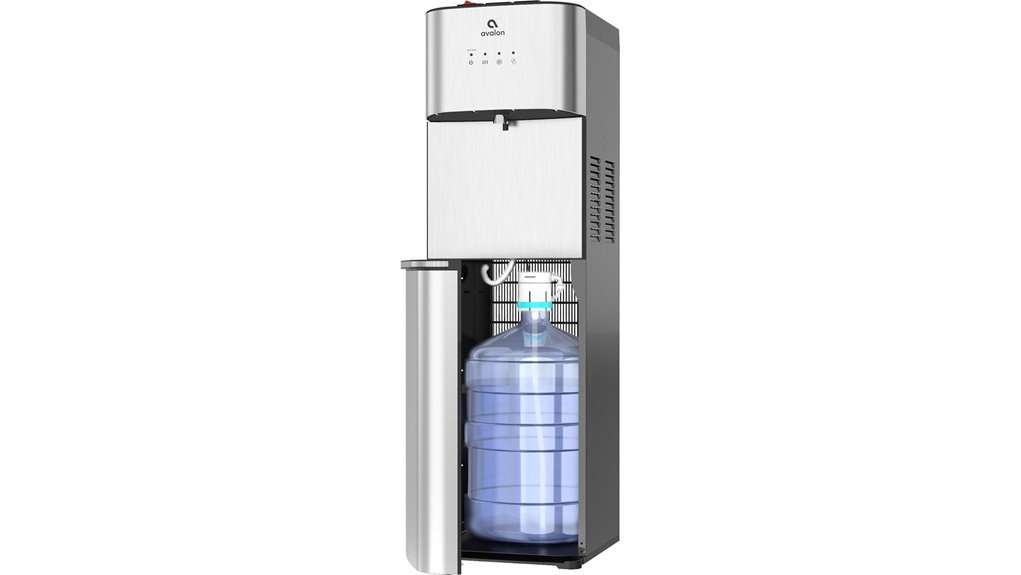
With bottom loading and self-sanitizing convenience, it suits households seeking easy, low-maintenance hydration. The Avalon Self Cleaning Bottom Loading Water Cooler is a freestanding stainless steel dispenser sized at 41 x 12 x 13 inches and weighing 50 pounds. It accepts 3- to 5-gallon bottles, reducing lifting strain and spills. Three push-button temperature options provide cold, cool, and hot water, with hot output near 185°F. A child safety lock secures the hot spout. Ozone-based self-cleaning helps reduce germs, while the nightlight, empty-bottle indicator, removable drip tray, Energy Star approval, and one-year warranty add practical value.
Best For: Households or offices that want a low-maintenance, bottom-loading water cooler with hot, cold, and cool water plus self-cleaning convenience.
Pros:
- Bottom-loading design reduces heavy lifting and minimizes spills
- Self-cleaning ozone feature helps sanitize the dispenser
- Helpful extras like a nightlight, empty-bottle indicator, and removable drip tray
Cons:
- 3- to 5-gallon bottles are not included
- Bulky freestanding unit may take up noticeable floor space
- Hot water requires using the child safety lock, which adds an extra step
Factors to Consider When Choosing Self-Cleaning Water Dispensers in 2026
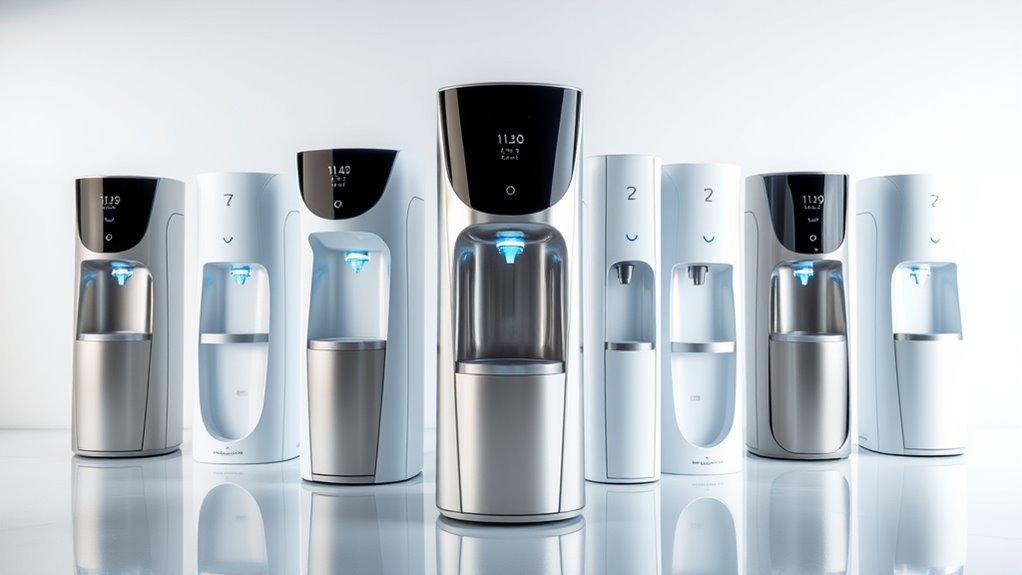
In 2026, choosing a self-cleaning water dispenser depends on how well its filtration technology removes impurities and how effectively its cleaning mechanism maintains hygiene. Temperature options and installation type also matter, since some users need hot, cold, and room-temperature water, while others prefer a countertop or bottom-loading setup. Safety features such as child locks, leak protection, and automatic shutoff further help determine which model is most practical.
Filtration Technology
Filtration technology plays a central role in choosing a self-cleaning water dispenser in 2026, since advanced 2-stage and 4-stage systems can remove contaminants such as chlorine, lead, PFAS, and microplastics while improving taste and clarity. Reverse osmosis models may further lower total dissolved solids, making water cleaner and more consistent. Filter lifespan also matters, because many systems require replacement every 6 to 12 months depending on use and source quality. Automated filtration monitoring can display filter status and water-quality data in real time, helping users maintain performance without guesswork. Some dispensers add UV self-cleaning features that disinfect internal components and eliminate 99.99% of microbes, offering an added layer of hygiene. Together, these filtration options shape purity, convenience, and long-term reliability.
Cleaning Mechanism
Cleaning mechanisms should be a top consideration, since self-cleaning water dispensers typically use UV light or ozone to sanitize internal components and eliminate up to 99.99% of microbes. This level of sanitation helps keep internal surfaces cleaner between uses and supports safer water delivery. Some models automate the process on scheduled cycles, which maintains consistent hygiene without requiring constant attention. Others include a manual cleaning button, giving users direct control when needed. Regular self-cleaning can also reduce maintenance demands by limiting frequent manual cleaning and filter changes. Many dispensers add indicators or alerts for upkeep and filter replacement, helping users stay on schedule. A reliable cleaning system improves convenience, supports hygiene, and reduces the effort required to maintain the dispenser over time.
Temperature Options
Temperature options play a major role in choosing a self-cleaning water dispenser, since many models provide hot, cold, and room-temperature water to suit different drink preferences. Hot water can reach 212°F, which supports tea, coffee, and other heated beverages, while cold settings often sit near 40°F (4°C) for a crisp, invigorating result. Room-temperature water adds flexibility for everyday use and for people who prefer a neutral taste. Some dispensers simplify switching between settings with push-button controls, making access quick and straightforward. A child safety lock on the hot-water spout is also common, helping reduce accidental burns in households with children. Together, these temperature features improve convenience, safety, and beverage versatility.
Installation Type
Installation type is another important factor in choosing a self-cleaning water dispenser, since freestanding models usually provide greater capacity and suit busy spaces, while countertop units conserve space and fit smaller areas. The choice often depends on available floor or counter space, how many people will use the unit, and how easily it can be reached for filling containers. Some dispensers offer simple plug-and-play setup, but others demand professional installation, especially bottleless systems that connect to a water line. Bottom-loading designs avoid visible plumbing by storing bottles in a concealed compartment. Placement also affects upkeep, as countertop units may need more frequent cleaning when airflow is limited. In contrast, freestanding models generally allow easier access and simpler servicing in active environments.
Safety Features
Safety features deserve close attention when selecting a self-cleaning water dispenser in 2026, especially in homes or workplaces with children and frequent nighttime use. A child safety lock on the hot-water spout is essential because it helps prevent accidental burns. UV self-cleaning technology should also be considered, since it can eliminate up to 99.99% of microbes and support better hygiene. Compliance with recognized safety standards, including UL or NSF certification, offers added confidence in the dispenser’s reliability. An empty-bottle indicator is useful because it alerts users when replacement is needed, reducing the chance of unexpected water shortages. A built-in nightlight further improves visibility around the spouts in low light, making late-night operation safer and more convenient for users of all ages and settings.
Frequently Asked Questions
How Often Should Self-Cleaning Cycles Run for Best Hygiene?
Self-cleaning cycles should typically run daily for best hygiene, especially in frequently used dispensers. In low-traffic settings, every 2 to 3 days may suffice, but weekly cleaning is usually too infrequent. Regular cycles help limit biofilm, odors, and microbial buildup. If the water source is warm, humidity is high, or the unit serves multiple people, more frequent cleaning is advisable to maintain safer, fresher water and consistent performance.
Do Self-Cleaning Dispensers Remove Lead and Microplastics Effectively?
No, self-cleaning dispensers do not remove lead or microplastics effectively by themselves; they mainly sanitize internal surfaces and reduce biofilm. Lead requires certified filtration media, such as activated carbon with ion exchange or reverse osmosis, while microplastics are best reduced with fine-micron or membrane filtration. A model may advertise both cleaning and filtration, but only independent certification confirms actual contaminant removal performance and safety.
Can These Dispensers Connect to Smart Home Systems?
Yes, some dispensers can connect to smart home systems, but compatibility varies by model. In a detached view, integration often depends on Wi-Fi, Bluetooth, or a dedicated app that works with platforms like Alexa, Google Home, or HomeKit. Certain units may support remote monitoring, filter alerts, and cleaning cycles. Others remain standalone appliances with no smart features. Buyers usually need to verify compatibility before expecting seamless automation or voice control.
What Maintenance Costs Should I Expect After Purchase?
Like a quiet engine, the dispenser’s upkeep usually runs in predictable cycles. After purchase, one can expect costs for replacement filters, cleaning cartridges, UV bulbs if applicable, and occasional gasket or drip-tray parts. Annual spending often stays modest, though premium models may require pricier proprietary filters. Electricity use is typically small. If service visits are needed, labor can raise totals. Overall, maintenance tends to be manageable and predictable.
Are Self-Cleaning Water Dispensers Energy-Efficient in Standby Mode?
Yes, many self-cleaning water dispensers are energy-efficient in standby mode, but efficiency varies by model. Some use low-wattage sleep settings, while others keep heating or cooling systems partially active, increasing power use. A detached observer would note that standby consumption is usually modest, yet it can add up over time. Checking the unit’s wattage, energy-saving certifications, and auto-off features helps determine whether ongoing electricity costs remain low.
Conclusion
Ultimately, the best self-cleaning water dispenser depends on space, features, and daily water needs. Whether it’s a bottleless Brio model, an Avalon with BioGuard, or a PHILIPS countertop unit, each offers cleaner water with less maintenance. For homes and offices alike, these dispensers make hydration more convenient and hygienic. Isn’t it time to upgrade to a smarter, more effortless way to stay refreshed? Choosing carefully now can pay off every day.
