
In 2027, rice cookers with adjustable texture settings have become more refined and practical. Models from Zojirushi, CUCKOO, and Cosori now blend fuzzy logic, induction heating, and pressure control to tailor each batch with unusual precision. Some favor softer results, while others aim for firmer grains and faster cleanup. The real difference, however, lies in how each model handles that balance, and a few standouts separate themselves quickly.
Zojirushi Ns ZCC10 Neuro Fuzzy Rice Cooker and Warmer (White)

The Zojirushi NS-ZCC10 Neuro Fuzzy Rice Cooker and Warmer is an ideal pick for home cooks who want consistent, adjustable rice texture without guesswork. This 5.5-cup computerized model uses fuzzy logic to fine-tune temperature and cooking time for white, sushi, mixed, porridge, sweet, semi-brown, brown, rinse-free, and quick rice. Its black thick spherical inner pan promotes even heating, while the LCD panel, melody or beep alert, and delay timer simplify use. Automatic keep-warm, extended keep-warm, and reheating add convenience. It includes useful accessories and a washable inner lid.
Best For: Home cooks who want a reliable, easy-to-use rice cooker with customizable settings for consistently good rice and low-effort meal prep.
Pros:
- Fuzzy logic adjusts temperature and cooking time for better rice texture.
- Offers multiple cooking modes, including white, brown, porridge, sushi, and quick cook.
- Includes helpful convenience features like keep-warm, reheating, a delay timer, and a washable inner lid.
Cons:
- 5.5-cup capacity may be too small for larger families or batch cooking.
- Takes up counter space compared with simpler rice cookers.
- Higher-end features may make it more expensive than basic models.
CUCKOO Twin Pressure Induction Rice Cooker, 20-Cup Cooked, CRP-LHTR1009FW

With 16 cooking modes and adjustable pressure, it suits cooks who want precise rice texture control. The CUCKOO Twin Pressure Induction Rice Cooker, model CRP-LHTR1009FW, handles up to 20 cups cooked and uses induction heating to distribute heat efficiently around the inner pot. High-pressure and non-pressure settings help produce firmer or softer results, while Turbo White Rice shortens cook time to 12 to 21 minutes. Its 304 stainless steel inner pot has a nonstick black coating, and Auto Clean simplifies upkeep. It includes a steam plate, spatula, measuring cup, manual, and a 1-year warranty.
Best For: Home cooks and families who want a versatile rice cooker with precise texture control, fast cooking options, and easy cleanup.
Pros:
- 16 cooking modes offer wide versatility, including white rice, brown/GABA rice, veggie rice, and baby food.
- Dual pressure settings and induction heating help achieve more customized rice textures and efficient cooking.
- Auto Clean, stainless steel construction, and included accessories make it convenient to use and maintain.
Cons:
- Large size and 19.4-pound weight may take up significant counter space and be less portable.
- Premium features and build likely place it at a higher price point than basic rice cookers.
- Best results may require some learning to understand the different pressure and mode settings.
Cosori Rice Cooker 10 Cup, Fuzzy Logic, Ceramic Coating Inner Pot,18-in-1

Cosori’s 18-in-1 cooker suits cooks who want precise control over rice texture. The 10-cup CRC-R501-KUS uses fuzzy logic to adjust heat and timing for consistent results, while soft, regular, and hard settings help tailor white or brown rice. Its ceramic-coated inner pot supports easier cleanup, and dishwasher-safe parts add convenience. Beyond rice, it handles grains, oats, quinoa, barley, farro, soups, stews, and sautéing. A quick rice mode, 24-hour keep warm, and delay timer expand flexibility. The black, 1000W unit includes a steamer basket, measuring cup, and paddle, backed by a two-year warranty.
Best For: Home cooks who want a versatile 10-cup rice cooker with precise texture control, easy cleanup, and multiple cooking modes beyond rice.
Pros:
- Fuzzy logic delivers consistent rice cooking results with soft, regular, and hard texture options.
- Ceramic-coated inner pot and dishwasher-safe parts make cleanup easier.
- 18-in-1 functionality supports rice, grains, oats, soups, stews, sautéing, and steaming.
Cons:
- At 1000W and 10-cup capacity, it may take up more counter space than smaller cookers.
- The many functions may feel more complex than a basic rice cooker for simple users.
- Black finish and multiple parts may require frequent wiping to keep looking clean.
Zojirushi Np NWC10XB Pressure Ih Rice Cooker 5.5 Cup (Black)

Zojirushi’s NP-NWC10XB suits cooks who want precise texture control and consistent premium rice. Its 5.5-cup capacity, Japanese build, and stainless black finish give it a compact, polished presence. Induction heating and AI-driven cycle adjustments help optimize each batch, while auto pressure selection shifts among three levels to match the menu. The cooker offers white rice in softer or harder styles, plus umami, sushi, jasmine, porridge, brown, GABA brown, and steel cut oatmeal. Pressurized cooking and steaming improve stickiness and plumpness. A nonstick pot, washable lid, and easy-clean exterior simplify maintenance.
Best For: Home cooks who want highly precise, premium rice texture control in a compact Japanese-made pressure IH cooker.
Pros:
- Induction heating, AI adjustments, and automatic pressure levels help deliver consistent rice results.
- Wide menu variety covers white rice, jasmine, sushi, porridge, brown, GABA brown, and steel cut oatmeal.
- Nonstick inner pot, washable stainless lid, and easy-clean exterior make maintenance straightforward.
Cons:
- The 5.5-cup capacity may be too small for larger households or frequent meal prep.
- Higher-end pressure IH models can be more expensive than basic rice cookers.
- Hand-wash and wipe-clean care may be less convenient than fully dishwasher-safe designs.
Zojirushi NP-HCC10XH Induction Rice Cooker and Warmer
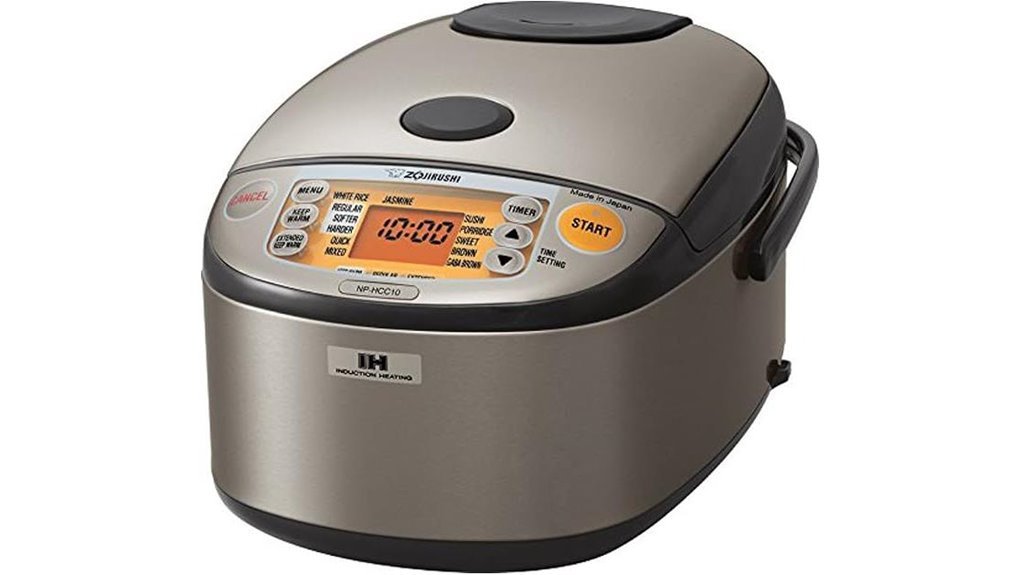
The Zojirushi NP-HCC10XH suits cooks who want precise control over rice texture. This 5.5-cup induction heating model uses high heat and a triple heater to cook rice evenly from the bottom, sides, and lid. Its menu covers white rice with regular, softer, or harder settings, plus jasmine, mixed, sushi, porridge, sweet, brown, GABA brown, and quick cooking. An LCD panel, delay timer, and automatic keep warm add convenience. The stainless dark gray cooker includes a BPA-free non-stick pan, measuring cup, spatula, and holder, and carries a one-year limited warranty.
Best For: Home cooks who want precise, customizable rice texture and reliable convenience in a compact 5.5-cup induction rice cooker.
Pros:
- Induction heating and triple heaters help cook rice evenly and thoroughly.
- Wide menu options cover white rice, jasmine, sushi, porridge, brown, GABA brown, and more.
- Handy features like automatic keep warm, delay timer, and LCD controls make it easy to use.
Cons:
- The 5.5-cup capacity may be too small for larger families or batch cooking.
- Hand washing is recommended, which adds cleanup effort.
- At 1230 watts, it may use more power than simpler rice cookers.
CUCKOO Twin Pressure Rice Cooker, 12-Cup Cooked, Black, CRP-RT0609FB
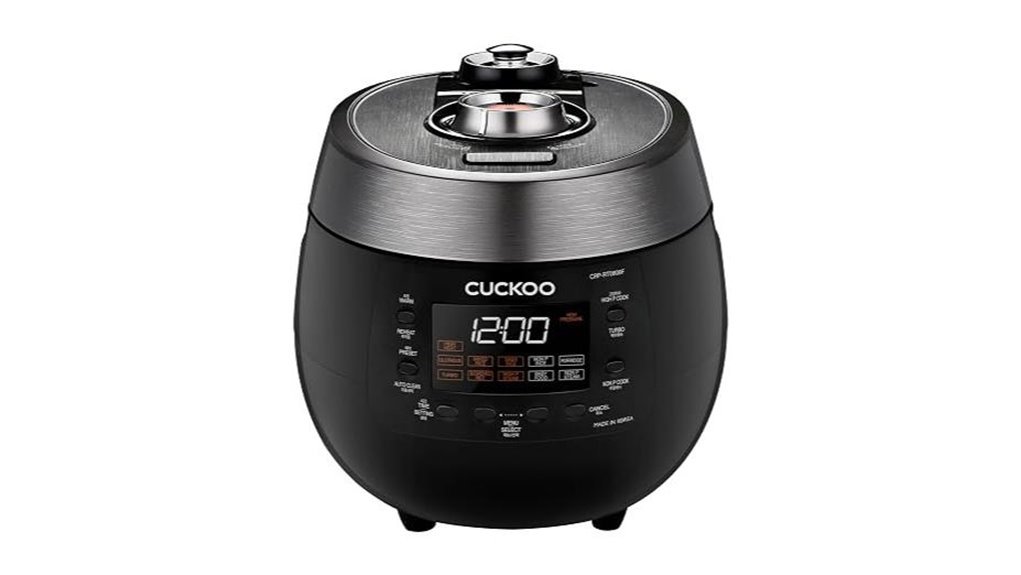
CUCKOO’s Twin Pressure Rice Cooker suits cooks who want precise texture control across many rice types. The CRP-RT0609FB offers 15 cooking modes, including GABA, glutinous, mixed rice, scorched rice, porridge, and baby food, plus Turbo Rice for faster results. Its fuzzy logic and intelligent algorithm adjust heat and time automatically for grain type and moisture. The 6-cup uncooked capacity yields 12 cups cooked, while the diamond-coated X-wall inner pot supports even heating and durability. Safety features include steam release, lid locking, and auto temperature control. Adjustable keep-warm settings and reheating add flexibility.
Best For: Home cooks who want precise texture control, multiple rice and porridge options, and fast, reliable cooking in a compact pressure rice cooker.
Pros:
- 15 cooking modes provide versatile options for different rice types, porridge, baby food, and scorched rice.
- Fuzzy Logic and the intelligent cooking algorithm help automatically optimize heat and time for better results.
- Diamond-coated X-wall inner pot and safety features support even heating, durability, and secure operation.
Cons:
- 6-cup uncooked capacity may be too small for larger families or batch cooking.
- The many settings can feel complex for users who prefer a simpler appliance.
- 13-pound weight and larger footprint may make it less convenient to move or store.
Factors to Consider When Choosing Rice Cookers With Adjustable Texture Settings in 2026
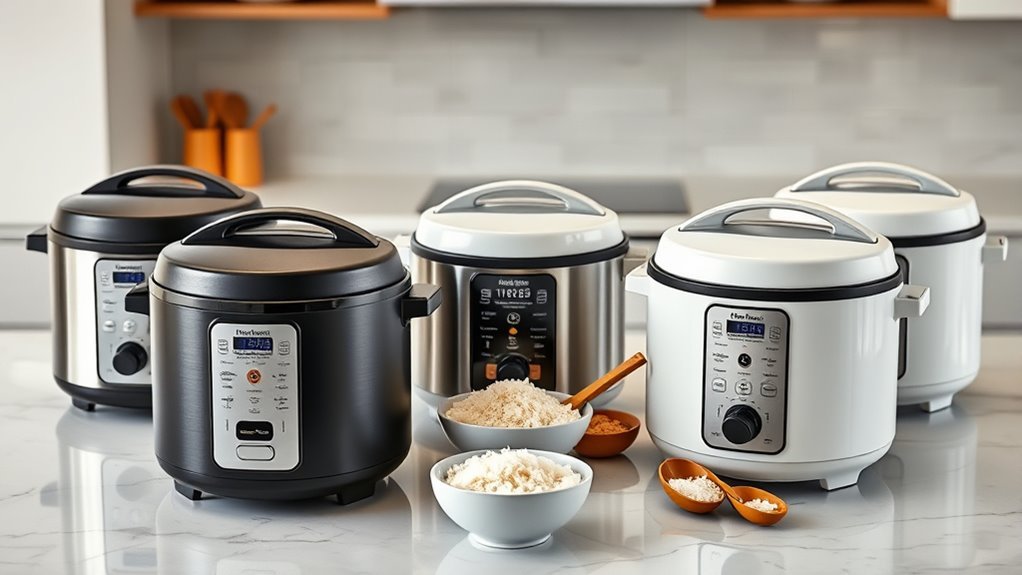
In 2026, selecting a rice cooker with adjustable texture settings depends first on the range of texture control it offers and the cooking technology behind those results. Capacity and size also matter, since they should match household needs without adding unnecessary bulk. Cleanup and maintenance, along with power and useful features, further shape how practical the cooker will be for everyday use.
Texture Control Range
Texture control range is a key factor when choosing a rice cooker with adjustable settings, since it determines how much control users have over rice softness, firmness, and overall consistency. A wider range lets users tailor rice for different meals, from fluffy side dishes to stickier grains for sushi. Advanced models may provide soft, regular, and hard options, giving more precise results for white rice, brown rice, or risotto. Some units also include grain-specific modes, which help adapt cooking for quinoa and other varieties. In many cases, broader texture control improves the dining experience by matching rice to the dish it accompanies. Features such as fuzzy logic can further support consistent outcomes by adjusting cooking parameters according to the selected texture.
Cooking Technology
Cooking technology plays a major role in how well a rice cooker delivers on its adjustable texture settings. Fuzzy Logic and Induction Heating help the appliance adjust heat and timing automatically, supporting consistent results for soft, regular, or hard rice. Intelligent algorithms add another layer of precision by monitoring temperature and cooking duration, which is especially useful for white, brown, and sushi rice. Pressure cooking can further refine texture by changing how starches gelatinize, producing a firmer or more tender finish depending on the setting selected. When comparing models, the quality of the control system matters as much as the number of texture options. Better technology typically means more reliable texture shifts and fewer inconsistencies across grain types and cooking modes.
Capacity And Size
Capacity is a practical starting point when selecting a rice cooker with adjustable texture settings, since models can range from compact 5.5-cup units to large 20-cup-capacity cookers. Smaller units suit individuals or small families, while larger ones better support meal prep or bigger gatherings. Beyond volume, overall dimensions should be checked against available counter space and cabinet storage, especially in compact kitchens. A smaller footprint can make placement easier, while a larger body may offer added cooking room. Weight also matters: lighter cookers are easier to carry and store, whereas heavier designs may feel more stable during use. The best choice matches regular cooking habits, whether that means occasional batches or frequent large portions.
Cleanup And Maintenance
Cleanup and maintenance should be a key consideration when choosing a rice cooker with adjustable texture settings in 2026, especially for buyers who want convenience without extra upkeep. Models with detachable inner lids and nonstick surfaces are easier to wash and help prevent rice from clinging to hard-to-reach areas. Dishwasher-safe parts can further cut cleaning time, making routine care less demanding. Auto-clean functions add another layer of convenience by reducing residue buildup and supporting better hygiene. The inner pot also matters; stainless steel and ceramic-coated pots are generally easier to clean and less likely to retain stains or odors. Regular upkeep remains important, including wiping the exterior and washing the inner pot after use. Consistent maintenance helps preserve performance and extend the appliance’s lifespan.
Power And Features
Power and feature sets deserve close attention after cleanup considerations, since both shape day-to-day convenience and cooking results. Models with adjustable power, often between 680 and 1240 watts, can better match small or large batches while supporting efficient energy use. Advanced systems such as Fuzzy Logic or Induction Heating improve temperature control and help deliver steadier texture. Multiple cooking modes, including white, brown, and porridge, add flexibility, especially when paired with customizable texture settings. A reliable keep-warm function preserves serving quality after cooking, while a delay timer supports planning around busy schedules. Easy-to-clean nonstick inner pots and detachable lids remain practical benefits, reducing upkeep and helping the appliance last longer. Together, these features distinguish versatile rice cookers from basic models.
Frequently Asked Questions
How Do Adjustable Texture Settings Affect Non-Rice Grains?
Adjustable texture settings can change how non-rice grains absorb water, soften, and hold shape. A firmer setting may suit quinoa, barley, or farro when a chewier result is preferred, while a softer setting can produce creamier oats or millet. Since grains differ in size, starch, and husk, the same setting may not work equally well. Fine tuning often improves consistency, but occasional testing remains necessary for best results.
Can These Rice Cookers Keep Rice Warm Without Drying It Out?
Yes, they can, but performance varies. These cookers often use low, steady heat and moisture control to keep rice warm without turning it brittle. Like a careful guardian, a good model preserves tenderness while holding food safely. However, if rice sits too long, even advanced warming can cause drying or thinning at the edges. Regular stirring, timely serving, and a small splash of water can help maintain better texture.
Are Adjustable Texture Settings Useful for Sushi Rice?
Yes, adjustable texture settings are useful for sushi rice because they help produce the slightly firm, glossy grains that sushi requires. A cooker can be set for a shorter, tighter finish, reducing excess softness that would make the rice clump poorly or lose shape. They are not essential, though careful rinsing, water ratio, and resting time still matter most. For consistent results, they offer a helpful degree of control.
Do Pressure and Induction Models Cook Rice Faster Than Standard Ones?
Yes—generally, pressure and induction models cook rice faster than standard ones, though the race is not always dramatic. Like a clockmaker’s furnace refining metal more efficiently, pressure raises the boiling point and speeds absorption, while induction distributes heat with precise, rapid control. Standard cookers remain simpler and slower. Actual time savings depend on rice type, quantity, and the cooker’s programming, but advanced models usually finish sooner and more evenly.
How Easy Is It to Clean Rice Cookers With Texture Controls?
They are usually easy to clean if the inner pot has a nonstick coating and the lid detaches. Texture controls do not add much cleaning difficulty, though extra vents, sensors, or steam caps may need careful wiping. The outer body should only be cleaned with a damp cloth. Rice residue can cling around the gasket and lid edges, so regular rinsing after use keeps maintenance simple and prevents buildup.
Conclusion
Overall, rice cookers with adjustable texture settings have become a practical upgrade for kitchens in 2027, blending precision, convenience, and consistency. From premium Zojirushi models to versatile CUCKOO and Cosori options, each cooker offers a tailored approach to soft, firm, or fluffy rice. One striking statistic is that some models provide up to 18 cooking functions, giving households the feeling of owning a compact, multi-purpose kitchen assistant rather than a single appliance.
