
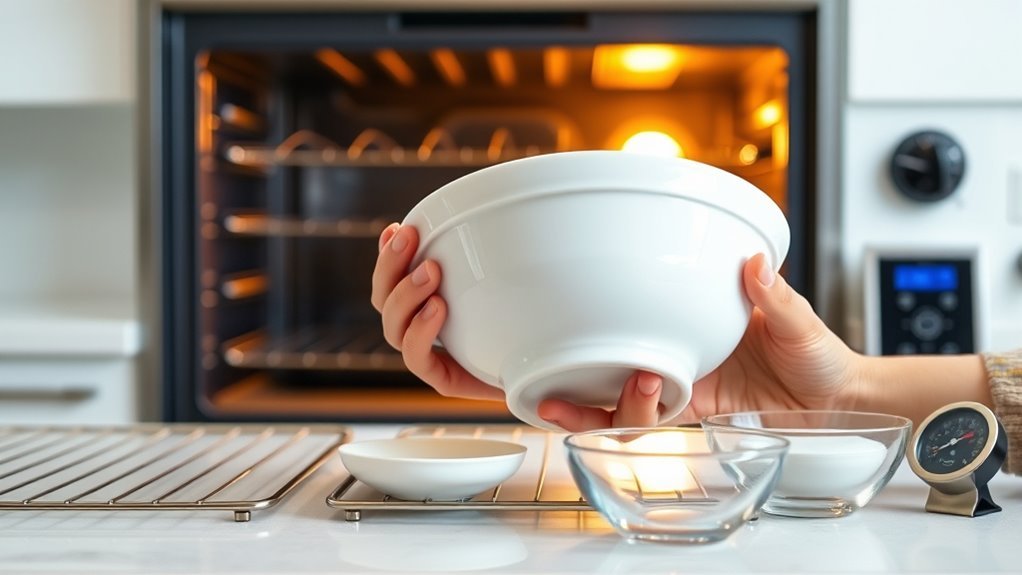
When cooking, it’s essential to know whether your bowl can handle the heat. Many people assume all bowls are oven-safe, but that’s not always the case. Identifying the right materials and labels can save you from a kitchen disaster. Are you aware of the specific temperature limits for different types of bowls? Understanding these details can keep your cooking safe and effective, so let’s explore how to determine if your bowl is truly oven-safe.
What Materials Are Oven-Safe?
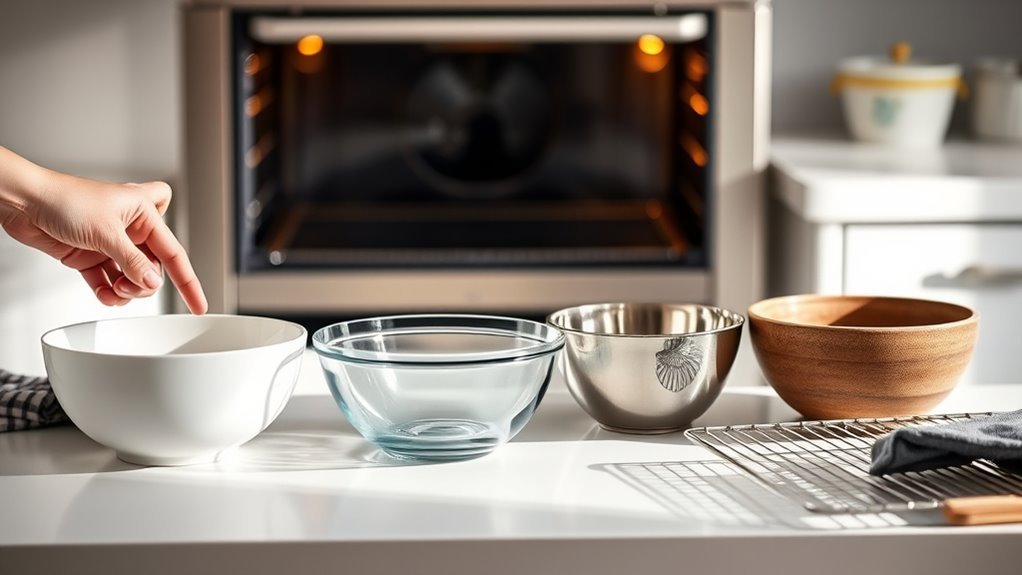
When choosing a bowl for oven use, it’s essential to know which materials can withstand high temperatures without compromising safety. Most tempered glass and ceramic bowls are oven-safe, typically enduring up to 450°F, but always check specific manufacturer guidelines.
Stainless steel and cast iron bowls are generally reliable, provided they don’t have plastic handles or coatings that could melt. Silicone bakeware stands out as an excellent option, often safe up to 500°F, making it versatile for various baking tasks.
While stoneware bowls are usually oven-safe and can handle high temperatures well, you should preheat them gradually to avoid cracking.
However, standard plastic bowls are rarely oven-safe; only specific high-heat-resistant plastics are suitable, so check the labeling carefully.
If you’re opening a new account for kitchen essentials, knowing these materials will help you make informed choices.
How to Identify Heat Resistance Labels on Bowls?
Identifying heat resistance labels on bowls is essential for ensuring safe cooking practices. To determine if your bowl is oven-safe, look for specific indications on the packaging and bowl itself. Here are some tips to guide you:
- Label types: Check for phrases like “oven-safe” or “heat-resistant” that confirm suitability.
- Symbol meanings: An oven icon typically indicates the bowl can withstand high temperatures.
- Material review: Ceramic and certain glass bowls are generally safe; avoid plastic unless specified.
- Packaging tips: Always cross-reference the packaging with the bowl’s labeling for consistency.
What Are Common Misconceptions About Bowl Safety?
How can you be sure your bowl is truly safe for oven use? Many oven myths lead to material misconceptions that can put your cooking endeavors at risk.
For instance, not all ceramic bowls are created equal; only those explicitly labeled as oven-safe can withstand high temperatures without cracking. You might think that if a bowl is microwave-safe, it’s also oven-safe, but these safety standards differ markedly.
Additionally, while glass bowls seem durable, some can only handle temperatures up to 350°F, so always check the manufacturer’s guidelines.
Another common misunderstanding is that all metal bowls are oven-safe; however, certain coatings may not withstand high heat.
Finally, be cautious of sudden temperature changes, as they can cause thermal shock, even in supposedly oven-safe bowls. Knowing these facts can empower you to choose the right bowl for your culinary creations.
Safe Temperature Limits for Oven-Safe Bowls by Material
Understanding the safe temperature limits for oven-safe bowls by material is essential to prevent mishaps in the kitchen. Each material has its unique bowl durability factors, impacting how well it withstands heat.
- Glass Bowls: Oven-safe up to 425°F; always check manufacturer guidelines to avoid breakage.
- Ceramic Bowls: Generally withstand temperatures up to 450°F, but beware of thermal shock risks from sudden temperature changes.
- Metal Bowls: Many stainless steel options handle temperatures above 500°F, but confirm any coatings or finishes.
- Silicone Bowls: Heat-resistant up to 400°F, but verify they’re labeled as oven-safe.
When choosing versatile materials, always prioritize safety by validating the specific temperature limits for your bowls.
This diligence not only enhances your cooking experience but also safeguards your kitchen from accidents.
How to Test Bowl Safety at Home?
To guarantee your bowl is oven safe, start with a thorough visual inspection for any chips or cracks that could affect its performance.
Next, check the manufacturer’s specifications for any oven safety symbols or guidelines.
Finally, you can perform a simple heat test by placing the bowl in a low-temperature oven to observe how it holds up.
Visual Inspection Techniques
When evaluating whether a bowl is oven-safe, start by closely examining its surface and base for any labels or symbols indicating its suitability for high temperatures.
Use these visual inspection methods to guide your bowl durability assessment:
- Check for Labels: Look for oven-safe symbols on the bottom or packaging.
- Material Identification: Avoid plastic or low-fired ceramics that can’t handle high heat.
- Cracks and Chips: Inspect for any visible damage that could compromise safety.
- Heat Resistance: Confirm it’s designed to withstand temperature fluctuations, ideally fired at around 2200°F.
Manufacturer Specifications Check
Before using a bowl in the oven, it’s crucial to check the manufacturer’s specifications to guarantee safety.
Look for indications on the packaging or the bowl’s bottom regarding the maximum temperature it can withstand. If the bowl is only labeled microwave safe, it likely isn’t suitable for oven use, so steer clear of high temperatures.
Focus on bowl material types like glass or ceramics, which are often marked as oven-safe and can handle higher heat better than plastic.
If you’re unsure, consult the manufacturer guidelines on their website or contact customer service for clarification on safety label meanings.
This guarantees you’re making informed choices before putting your bowl in the oven.
Heat Test Method
Testing whether a bowl is oven safe can be done effectively at home using a simple heat test method. Start by preheating your oven to about 200°F and place the bowl inside for 10-15 minutes.
After this time, check for any signs of cracking or warping. Here are some essential tips to keep in mind during your heat resistance testing:
- Use a thermometer to guarantee accurate oven temperature.
- Gradually increase the temperature in subsequent tests.
- Observe any changes in color or texture after heating.
- Always refer to the manufacturer’s oven safety guidelines.
How to Transition Bowls From Fridge to Oven Safely?
When shifting bowls from the fridge to the oven, it’s essential to check their safe temperature limits and guarantee they’re made from suitable materials.
Gradually acclimating the bowl to room temperature for 15-30 minutes can help prevent thermal shock.
Always preheat the oven before placing the bowl inside to avoid sudden temperature changes that could lead to damage.
Safe Temperature Limits
Understanding safe temperature limits is essential for shifting bowls from the fridge to the oven without risking damage.
Always check the manufacturer’s labeling for specific oven-safe temperatures, as bowl material properties vary. Here are some key points to remember:
- Ceramic and glass bowls are typically safe up to 450°F, but verify for your specific bowl.
- Allow bowls to reach room temperature before using them to prevent thermal shock.
- Avoid using bowls not labeled for oven use; opt for an oven-safe dish instead.
- Implementing safe handling practices, like preheating the oven, helps guarantee your bowls remain intact.
Gradual Temperature Changes
Shifting a bowl from the fridge to the oven requires careful handling to prevent damage.
Start by checking the manufacturer’s specifications to confirm if your bowl is oven-safe and its maximum temperature limit. To minimize thermal shock, let the bowl sit at room temperature for at least 30 minutes. This gradual heating helps balance temperature gradients, reducing the risk of cracking.
Instead of placing a cold bowl directly into a hot oven, preheat your oven to the desired temperature first. This step guarantees an even change, protecting the bowl’s integrity.
Always inspect for visible cracks or chips, as these imperfections can weaken the structure under heat.
With these precautions, you can safely enjoy your culinary creations.
Suitable Cookware Materials
To guarantee safe shifts from the fridge to the oven, it’s essential to select bowls made from suitable materials. Consider these options to ascertain your bowls can handle the heat:
- Ceramic: Excellent heat retention and durability but check for oven-safe labels.
- Glass: Non-reactive and sturdy; look for tempered glass to resist thermal shock.
- Heat-resistant plastics: Only use those explicitly marked as oven-safe to avoid melting.
- Avoid metals: Bowls with metallic decorations can spark and aren’t safe for oven use.
Always check the manufacturer’s specifications for maximum temperature limits.
Understanding ceramic vs glass and bowl durability factors will help you make informed choices for safe cooking.
Essential Care for Your Oven-Safe Bowls
While caring for your oven-safe bowls might seem straightforward, following specific guidelines guarantees their longevity and safety. Always check the manufacturer’s labeling to confirm if a bowl is oven-safe; this verifies it can handle high temperatures. Here are some essential bowl maintenance tips:
| Care Aspect | Recommendations |
|---|---|
| Cleaning Techniques | Use mild soap and a soft sponge; avoid abrasive materials. |
| Temperature Adjustments | Gradually increase heat to prevent thermal shock. |
| Storage Solutions | Store bowls in a cushioned area to avoid chipping. |
Regularly inspect your bowls for wear and tear, like chips or cracks, which can compromise safety. Never use bowls labeled only as microwave-safe in the oven; they may not withstand high temperatures. By following these care practices, you verify that your oven-safe bowls remain a reliable part of your cooking arsenal.
Frequently Asked Questions About Oven-Safe Cookware
When considering whether your cookware is oven safe, it’s natural to have questions about specific materials and their heat resistance. Understanding bowl durability and material compatibility is essential for safe cooking.
- Labels Matter: Always look for “oven safe” or “heatproof” labels to confirm heat resistance, often up to 450°F or more.
- Material Types: Glass and ceramic bowls usually hold up well in the oven, while plastic may warp or melt.
- Manufacturer Guidelines: Different brands have varying temperature limits; always refer to their recommendations.
- Avoid Metal Accents: Bowls with metal decorations can spark or catch fire, so steer clear of them in the oven.
Frequently Asked Questions
Can I Put a Pyrex Bowl in the Oven at 400 Degrees?
Yes, you can put a Pyrex bowl in the oven at 400 degrees. Pyrex’s durability makes it suitable for most baking tasks within this oven temperature.
Just verify you check for any specific labeling on your glass cookware, as some variations might’ve different heat resistance.
To avoid thermal shock, always place your bowl in a preheated oven instead of a cold one. This guarantees even heating and helps prevent breakage.
Can Ceramic Go in the Oven at 400 Degrees?
Yes, many ceramic bowl types can go in the oven at 400 degrees, but you need to check the manufacturer’s specifications.
To prevent thermal shock, always preheat gradually and avoid sudden temperature changes, like moving a cold bowl directly into a hot oven.
Confirm your bowl is labeled oven-safe, and follow proper usage guidelines to maintain its durability.
If in doubt, use a thermometer to keep a consistent oven temperature.
Is Porcelain Oven Safe at 350 Degrees?
Think of porcelain as a sturdy ship sailing through the heat of an oven at 350 degrees. It’s generally oven-safe, but you should always check the baking dish guidelines.
While porcelain heat resistance is impressive, avoid sudden temperature changes to prevent cracks.
Some decorative pieces mightn’t be made from oven-safe materials, so inspect for labels or markings.
Your culinary creations deserve a vessel that can withstand the heat without faltering!
What Does an Oven Safe Symbol Look Like?
An oven-safe symbol usually looks like a small oven or a dish with wavy lines.
Sometimes, you’ll see a triangle with a line beneath it or a flame icon, indicating the bowl’s heat resistance.
When checking for oven-safe materials, look for explicit markings on the product packaging.
If you’re unsure, consult the manufacturer’s website for detailed information on identifying symbols related to cookware safety and heat tolerance.
Conclusion
So, you thought all bowls could handle the heat? Ironically, many can’t! By knowing how to identify oven-safe materials and proper labels, you can avoid the disaster of a shattered dish. Remember to check for cracks and gradually introduce your bowl to high temperatures. With these tips, you’ll confidently cook with your favorite bowls—unless, of course, you enjoy cleaning up a mess. Stay informed, and your cooking adventures will be a safer, more enjoyable experience!
