

Like a well-crafted symphony, Caraway cookware harmonizes functionality and sustainability. You might wonder if its ceramic coating truly stands apart from traditional options. The materials and construction play an essential role in both performance and safety. By examining the layers involved, you can uncover how Caraway positions itself within the cookware landscape. Understanding these elements could greatly influence your cooking experience and health choices. What specifics set Caraway apart?
Is Caraway Cookware Right for You?
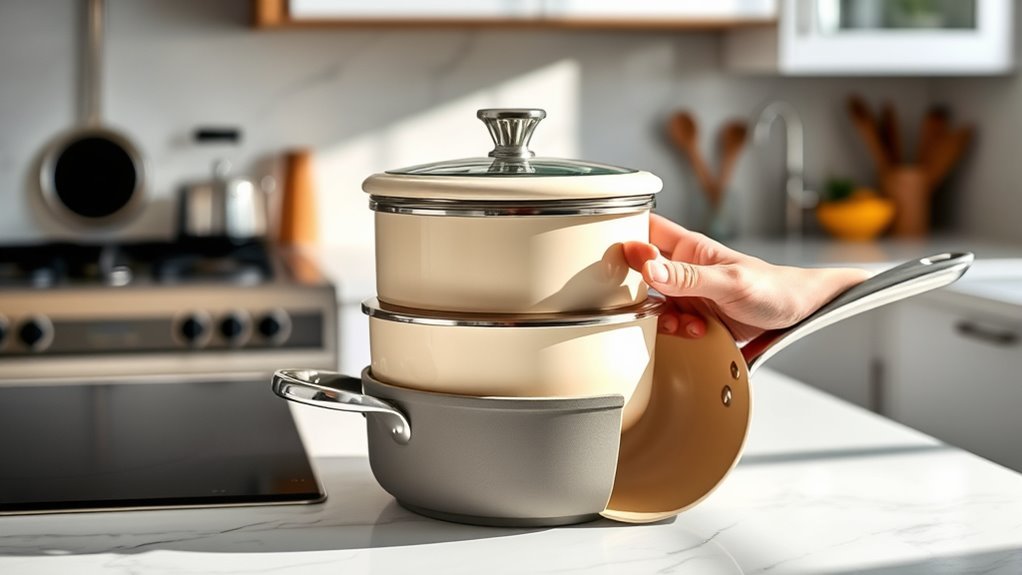
When considering whether Caraway cookware is right for you, it’s essential to evaluate its unique features and safety standards. Caraway’s ceramic cookware offers a non-toxic, PTFE-free coating, eliminating harmful chemicals like PFOA and PFAS—ideal for health-conscious consumers.
The lightweight design, with pieces like the 10.5” fry pan weighing just 2.7 lbs, guarantees easy handling during cooking, reducing strain.
Furthermore, the cookware is oven-safe up to 550°F and compatible with all stovetops, providing versatile cooking options.
Independent safety testing confirms that Caraway complies with CA AB1200 regulations, passing rigorous evaluation for heavy metals and leaching.
To make a well-informed decision, take advantage of the 30-day trial period, which allows you to assess performance and suitability without financial risk.
Ultimately, Caraway’s commitment to safety and functionality positions it as a compelling choice for those seeking quality ceramic cookware.
What You Should Know About Ceramic Coatings
When considering ceramic coatings, it’s essential to understand their composition and benefits.
These silicone-based materials are non-toxic, offering a safer cooking experience without harmful chemicals.
Additionally, their durability guarantees long-lasting performance with minimal maintenance, making them an attractive option for health-conscious cooks.
Composition of Ceramic Coatings
Ceramic coatings, like those used in Caraway cookware, are primarily composed of a silicone-based material that offers a non-toxic alternative to traditional non-stick surfaces. This PTFE-free coating guarantees safety, free from harmful chemicals like PFOA and PFAS. Its heat resistance and durability surpass conventional options, providing reliable performance.
| Feature | Benefits |
|---|---|
| Food Release | Effortless cooking experience |
| Easy Cleanup | Minimal maintenance required |
| Even Heating | Consistent cooking results |
Caraway’s ceramic cookware undergoes rigorous third-party testing, confirming adherence to safety standards. With a chemical-free composition, you can enjoy cooking without concerns, making it an excellent choice for health-conscious consumers.
Benefits of Non-Toxic Materials
Non-toxic materials in cookware greatly enhance your cooking experience, particularly with options like Caraway’s ceramic coatings.
These PTFE-free surfaces utilize silicone-based materials, guaranteeing no harmful substances leach into your food. This compliance with safety regulations means you can cook without worrying about heavy metals like lead and cadmium.
The ceramic coating facilitates easy cleanup, allowing you to enjoy your meal without the hassle of scrubbing. Furthermore, its durable nature guarantees consistent cooking performance, promoting even heating for better results.
Choosing Caraway’s eco-friendly cookware not only supports a healthier kitchen environment but also aligns with your desire for liberation from toxic chemicals, empowering you to cook with confidence.
Coating Durability and Maintenance
Though many appreciate the convenience of non-stick cookware, understanding the durability and maintenance of ceramic coatings is vital for maximizing their lifespan.
Caraway’s non-toxic ceramic coating guarantees a safer cooking experience without harmful chemicals. To maintain the non-stick surface, you should use minimal oil or butter, which aids in food release and easy cleanup.
Hand washing is essential; avoid the dishwasher to preserve coating durability. While the non-stick surface typically lasts 1 to 5 years, proper care can greatly enhance its longevity.
Designed for even heating, Caraway cookware is also heat resistant and oven-safe up to 550°F, making it versatile for various cooking methods while maintaining its performance.
Prioritize maintenance for ideal results.
Why Non-Toxic Materials Matter in Cookware
When choosing cookware, understanding the health risks associated with toxic materials is essential.
Non-toxic options like Caraway’s ceramic not only safeguard your well-being but also address the environmental impact of traditional cookware.
Health Risks of Toxic Materials
As you prepare meals, the choice of cookware greatly impacts your health due to the potential risks associated with toxic materials.
Caraway prioritizes non-toxic materials, minimizing your exposure to harmful substances. Consider these critical points:
- Caraway cookware is free from PTFE, PFOA, and PFAS—chemicals linked to serious health risks, including cancer.
- The inert ceramic coating doesn’t leach toxic heavy metals like lead or cadmium, ensuring a safer cooking experience.
- Independent testing confirms Caraway meets stringent safety standards, including California Prop 65.
Environmental Impact of Cookware
The choice of cookware greatly influences environmental sustainability, especially when opting for non-toxic materials. Non-toxic cookware, like Caraway’s ceramic-coated products, eliminates harmful chemicals such as PTFE, PFOA, and PFAS, which can pose significant health risks.
Manufacturing ceramic cookware results in up to 60% less CO2 emissions compared to traditional non-stick options, making it an eco-friendly choice. Derived from natural materials, ceramic coatings minimize the leaching of toxins into your food.
Third-party testing guarantees that Caraway cookware is free from heavy metals like lead and cadmium, further safeguarding your health. By selecting non-toxic cookware, you actively contribute to reducing environmental pollution and promote sustainable cooking practices that prioritize both personal well-being and ecological responsibility.
How Ceramic Coatings Enhance Cooking Performance
Ceramic coatings greatly enhance cooking performance by providing a non-toxic, non-stick surface that facilitates effortless food release and minimizes the need for excess fats. This innovation not only promotes safe cooking but also supports a healthier lifestyle with reduced oil usage.
- PTFE-free: Unlike traditional non-stick surfaces, ceramic coatings are free from harmful chemicals like PTFE, PFOA, and PFAS, ensuring safer cooking.
- Even heat distribution: The design allows for consistent cooking results, eliminating hot spots that can lead to unevenly cooked meals.
- Lightweight design: Caraway cookware is easy to handle, making everyday cooking tasks less cumbersome and more enjoyable.
Additionally, the oven-safe capability up to 550°F allows for versatile cooking methods, from sautéing to baking.
The combination of these features truly revolutionizes your cooking experience, enabling you to achieve superior cooking performance effortlessly.
Caraway vs. Traditional Cookware: A Comparative Analysis
When comparing Caraway cookware to traditional options, it’s essential to take into account the significant differences in materials and safety standards.
Caraway cookware features a non-toxic ceramic coating made from silicone-based materials, unlike traditional cookware often containing harmful PTFE and PFOA. Additionally, Caraway’s independently tested ceramic coating is lead and cadmium free, ensuring safer cooking.
Caraway cookware is oven-safe up to 550°F, offering versatility that many traditional non-stick pans can’t match due to lower temperature limits. Its lightweight construction and ergonomic design facilitate easy handling, contrasting with the bulkier nature of typical traditional cookware.
Furthermore, Caraway’s commitment to sustainability shines through its eco-friendly manufacturing practices and packaging, setting it apart from traditional brands that may overlook environmental considerations.
How to Care for Your Caraway Cookware
Caring for your Caraway cookware is essential to preserving its non-toxic ceramic coating and ensuring peak cooking performance.
Follow these steps for ideal care and cleaning:
- Hand Wash: Use warm, soapy water and a soft sponge to clean your cookware. Avoid harsh cleaning tools that can damage the non-stick ceramic surface.
- Minimal Oil: Use minimal oil or butter for cooking, enhancing the non-stick properties while protecting the surface.
- Proper Heat Settings: Always use appropriate heat settings to prevent overheating, which can degrade the ceramic coating and affect longevity.
Making the Right Choice: Is Caraway Worth It for You?
Are you wondering if Caraway cookware is the right investment for your kitchen? With its non-toxic ceramic coating, Caraway is PTFE free and stands as a safer choice for health-conscious cooks. Designed for versatile cooking, it’s oven-safe up to 550°F and compatible with all stovetops.
| Feature | Details |
|---|---|
| Non-Toxic Ceramic | Free from PTFE, PFOA, PFAS |
| Durability | 2-3 years for pans, 5+ years for pots |
| Price | $395 for a complete set |
| Return Policy | 30-day trial, hassle-free returns |
| Cooking Versatility | Compatible with all stovetops |
While Caraway cookware is a premium option, its durable performance and risk-free trial enhance its value. If you prioritize quality and safety, this could be the right choice for you.
Frequently Asked Questions
Are Caraway Pans Actually Non-Toxic?
Yes, Caraway pans are indeed non-toxic. Their ceramic safety guarantees you’re avoiding harmful chemicals, addressing health concerns effectively.
The cookware materials used provide excellent surface durability and heat distribution, enhancing your everyday cooking performance.
With proper maintenance tips, you can maximize their lifespan while minimizing environmental impact.
Why Is Caraway Being Sued?
“All that glitters isn’t gold.” The Caraway lawsuit highlights serious allegations regarding misleading marketing practices tied to consumer safety.
Plaintiffs challenge the brand’s claims about non-toxic cookware, asserting potential heavy metal content contradicts their quality assurance.
Concerns about product liability and compliance with cookware regulations threaten Caraway’s brand reputation.
As the legal claims unfold, customer feedback underscores the need for transparency and accountability in marketing, impacting future lawsuit outcomes and industry standards.
What Are the Downsides of Caraway Cookware?
Caraway cookware has durability concerns, with reports of scratching issues affecting its non-stick surface over time.
While its heat retention and cooking performance receive praise, users often note a price comparison that might deter budget-conscious buyers.
Maintenance tips recommend hand washing to preserve integrity, as it isn’t dishwasher safe.
User reviews highlight weight differences among pieces, and warranty options are limited, impacting the overall brand reputation you might consider before purchasing.
Which Is Better, Greenpan or Caraway?
When choosing between GreenPan and Caraway, Caraway’s performance shines with its durable, eco-friendly cooking surface, while GreenPan durability often falters under scrutiny.
You’ll find Caraway’s heat retention impressive, though the price comparison leans towards higher costs. User reviews praise Caraway’s maintenance ease and warranty options, enhancing its brand reputation.
If you value consistent quality and non-toxic materials, Caraway’s your champion, but GreenPan might cater to tighter budgets.
Conclusion
In the kitchen, your cookware is like a canvas, shaping the culinary masterpiece you create. Caraway’s non-toxic ceramic coating not only protects your health but also enhances your cooking experience, turning every meal into a vibrant work of art. By choosing Caraway, you’re investing in both sustainability and performance, ensuring that your culinary creations shine. Weigh the advantages—if you value safety and efficiency, Caraway could be the perfect brush for your culinary palette.
