
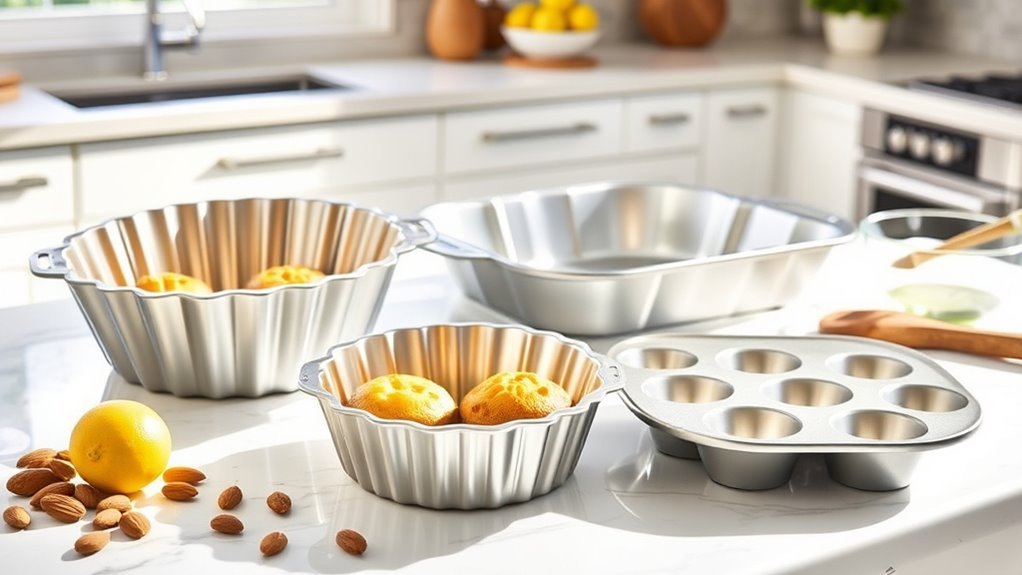
On one hand, Nordic Ware aluminum bakeware is praised for its durability and even baking; on the other, concerns about aluminum’s safety linger. Understanding the materials and construction behind this bakeware can clarify its role in your kitchen. While many enjoy the performance, questions about leaching and reactions with acidic foods often arise. What do you really need to know to guarantee you’re using it safely and effectively?
What Materials Are Used in Nordic Ware Aluminum Bakeware?
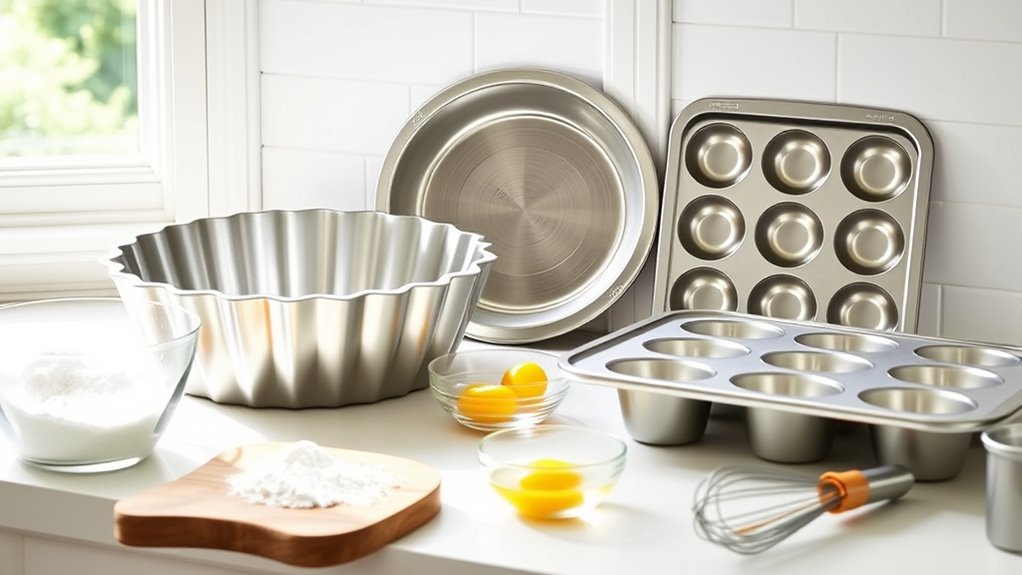
Nordic Ware aluminum bakeware is crafted from pure, uncoated aluminum, which guarantees rapid and even heat conduction for superior baking results. This material isn’t only rust-resistant but also designed for longevity, with much of its production occurring in Minneapolis, Minnesota.
The use of pure aluminum enhances thermal efficiency, allowing your baked goods to cook evenly. Additionally, Nordic Ware incorporates encapsulated rims in its designs to prevent warping, ensuring durability even during high-heat cooking.
Pure aluminum ensures even cooking, while encapsulated rims enhance durability and prevent warping during high-heat baking.
While the aluminum performs excellently, it’s important to exercise caution when using acidic ingredients, as they might react with the metal. You may notice discoloration over time due to exposure to high heat and oils, but rest assured, this is purely cosmetic and doesn’t affect the bakeware’s performance.
With a focus on food safety and quality, Nordic Ware’s aluminum bakeware stands out as a reliable choice for passionate bakers.
Is Nordic Ware Aluminum Safe for Baking?
When considering bakeware options, the safety of the materials used is paramount. Nordic Ware aluminum bakeware, crafted from pure, uncoated aluminum, excels in heat conductivity, guaranteeing even baking results without harmful nonstick coatings.
This lightweight, durable bakeware can withstand temperatures up to 500°F (260°C) without warping or degrading, making it a reliable choice for your kitchen.
Generally, uncoated aluminum is safe for baking, though you should exercise caution with acidic ingredients that may react with the metal. Any discoloration you notice is cosmetic and doesn’t affect food safety or performance; many bakers even appreciate the patina for its non-stick qualities.
To maintain the integrity of your Nordic Ware products, regular hand washing and proper utensil use are essential. This care not only prolongs the lifespan of your bakeware but also guarantees a safe baking experience.
The Impact of Aluminum on Food Safety With Nordic Ware Bakeware
When using Nordic Ware aluminum bakeware, it’s important to reflect on how aluminum interacts with food, particularly acidic ingredients.
While some health concerns and myths surround aluminum exposure, the scientific consensus suggests that occasional use is generally safe, especially with quality products.
Aluminum Interaction With Food
While uncoated aluminum bakeware like that from Nordic Ware offers excellent heat conductivity and even baking, it’s essential to take into account how aluminum interacts with certain foods.
Cooking with uncoated aluminum can pose risks, especially when dealing with acidic foods such as tomatoes or citrus. These foods can react with the metal, leading to leaching of aluminum into your dishes.
Although studies suggest that occasional exposure is generally safe, long-term exposure raises health concerns, including possible links to neurodegenerative diseases.
To minimize these risks, it’s advisable to properly care for your bakeware by greasing or lining pans. This practice not only enhances your cooking experience but also helps mitigate potential leaching issues.
Health Concerns and Myths
How safe is it to use Nordic Ware’s aluminum bakeware amidst concerns about aluminum exposure?
Rest assured, Nordic Ware’s pure, uncoated aluminum is designed for maximal safety and heat conductivity.
While health concerns about aluminum leaching exist, studies show that the amounts are minimal and considered safe for occasional use.
It’s important to note that there’s no conclusive evidence linking aluminum to serious health issues like Alzheimer’s, despite popular myths.
Unlike traditional nonstick options that may contain harmful coatings like PFAS, Nordic Ware’s bakeware is free from such chemicals.
Any discoloration you see is cosmetic and doesn’t impact the safety or performance.
When you choose Nordic Ware, you’re opting for a healthier alternative without compromising on quality.
Common Worries About Aluminum Bakeware
Concerns about aluminum bakeware often stem from its reactivity with acidic foods, which can lead to the leaching of aluminum into your dishes. This has raised health concerns among consumers, especially with studies linking long-term exposure to aluminum to conditions like Alzheimer’s disease.
However, the safety of uncoated aluminum, as found in Nordic Ware products, is generally regarded as acceptable since it lacks harmful chemicals or coatings that could leach into your food.
Moreover, while aluminum’s reactivity with acidic ingredients is valid, it’s important to note that many bakers appreciate its lightweight and durable nature, as well as its excellent heat conduction.
Over time, uncoated aluminum may develop a bronzed patina from baked-on oils, but this cosmetic change doesn’t compromise the safety or performance of the bakeware.
Understanding these factors can help you make informed choices about aluminum bakeware.
Maintaining Your Nordic Ware Bakeware for Lasting Quality
To keep your Nordic Ware bakeware in top shape, it’s essential to follow proper cleaning techniques and use the right utensils.
Hand washing with warm soapy water and avoiding metal tools will help maintain the surface quality.
Additionally, storing your bakeware carefully guarantees it remains damage-free for consistent baking results.
Proper Cleaning Techniques
Maintaining the quality of your Nordic Ware bakeware requires careful cleaning techniques that preserve its durability and performance.
Hand wash your aluminum bakeware with warm soapy water and a soft sponge, steering clear of abrasive scrubbers that can scratch the nonstick surface. For stubborn, baked-on residues, consider using a baking soda slurry or Dawn Powerwash Dish Spray for effective cleaning without harm.
Avoid the dishwasher; it may cause oxidation and discoloration, affecting aesthetics. Regularly check for signs of wear, embracing the natural patina as a normal aging process that doesn’t impact baking.
Lining your sheets with parchment paper or aluminum foil can greatly reduce cleanup time, ensuring your bakeware remains in top condition for years to come.
Recommended Utensil Use
Proper cleaning techniques set the stage for preserving your Nordic Ware bakeware, but the utensils you choose also play a key role in maintaining its longevity.
To protect your nonstick bakeware, opt for nylon, wood, or silicone utensils. These materials prevent nicks, scuffs, and scratches that can degrade the surface. Avoid metal utensils, as they can damage the aluminum, compromising your pans’ durability.
Regularly inspect your bakeware for wear and tear to guarantee it remains both functional and visually appealing. Hand wash your Nordic Ware with warm, soapy water and a soft sponge to maintain its quality.
Additionally, consider using protective liners between stacked pans to prevent scratches during storage, safeguarding their condition for years to come.
Storage and Care Tips
While it may be tempting to toss your Nordic Ware bakeware into a drawer without a second thought, taking the time to store and care for it properly can greatly enhance its lifespan.
Always hand wash your aluminum bakeware with warm, soapy water and a sponge to prevent discoloration and maintain its finish. Avoid the dishwasher; it can lead to oxidation and diminish the appearance over time.
For easy cleanup and to protect the nonstick surface, line your pans with parchment paper or aluminum foil.
Regularly inspect for signs of wear, and steer clear of metal utensils to prevent scratches.
Embrace the bronzed patina that develops; it’s cosmetic and won’t affect the safe baking performance of your aluminum bakeware.
Unique Features of Nordic Ware’s Aluminum Bakeware
Nordic Ware’s aluminum bakeware stands out for its unique blend of performance and durability. Designed for both amateur and professional bakers, this bakeware offers several distinctive features:
- Heat Conductivity: Crafted from pure, uncoated aluminum, it guarantees rapid and even heat distribution, promoting consistent baking results without harmful coatings.
- Durability: The encapsulated rims prevent warping, enhancing the longevity of your bakeware. With proper care, it can last a lifetime, making it a reliable kitchen companion.
- Lightweight Design: Despite its robust construction, the aluminum bakeware remains lightweight, allowing for easy handling during baking and serving.
Additionally, you might notice a bronzed patina developing over time, which is purely cosmetic and doesn’t affect performance.
This blend of features makes Nordic Ware’s aluminum bakeware a favored choice among seasoned bakers seeking excellence in their culinary creations.
Using Nordic Ware Bakeware With Acidic Ingredients: What You Need to Know?
When using Nordic Ware bakeware with acidic ingredients, what should you be aware of to guarantee the best results?
While uncoated aluminum bakeware is generally safe for many acidic foods, like tomatoes and citrus, prolonged exposure can cause pitting or discoloration. To minimize reactions that may impart a metallic taste, consider lining your bakeware with parchment paper or applying a light coat of grease.
It’s essential to remember that the maximum safe temperature for Nordic Ware is 500°F (260°C). Sticking to this limit helps maintain the integrity of the aluminum while achieving ideal cooking results.
Regular use of acidic ingredients may develop a natural patina on your bakeware; this is cosmetic and doesn’t affect performance but should be monitored for damage.
Cleaning and Caring for Your Aluminum Bakeware
To keep your aluminum bakeware in ideal condition, it’s crucial to adopt proper cleaning and care techniques. Follow these guidelines to maintain its appearance and longevity:
- Hand wash your aluminum bakeware with warm, soapy water using a sponge or dishcloth. Avoid the dishwasher, as it can lead to discoloration.
- Regularly inspect your pans for signs of wear or damage, as these can impact performance over time.
- For light residue, wash immediately; tougher, baked-on foods may require a baking soda slurry or Dawn Powerwash Dish Spray for effective cleaning.
While discoloration from oils or food is cosmetic, it doesn’t affect performance. Many users even appreciate the “patina” that develops.
To prolong the life of your bakeware, use nylon, wood, or silicone utensils instead of metal to prevent scratches.
Benefits of Non-Coated Aluminum Bakeware
Non-coated aluminum bakeware offers several advantages that make it a top choice for home bakers and professional chefs alike. Choosing products like Nordic Ware’s Naturals® collection guarantees safe and consistent baking results, thanks to their superior heat conduction.
| Feature | Benefits | Considerations |
|---|---|---|
| Material | Pure aluminum for even heating | Can develop a patina over time |
| Health | No chemical coatings | Safe for high temperatures |
| Durability | Designed to last a lifetime | Requires proper care |
| Versatility | Effective for baking, roasting, etc. | Suitable up to 500°F (260°C) |
With non-coated aluminum, you’re not only investing in durability but also in healthier cooking options. This bakeware’s resilience guarantees it remains a staple in your kitchen for years, providing exceptional baking results every time.
Frequently Asked Questions
What Is the Least Toxic Bakeware?
The least toxic bakeware includes uncoated stainless steel, clear borosilicate glass, and cast iron.
Stainless steel alternatives are durable and safe at high temperatures.
Glass baking advantages come from its inert nature, ensuring no chemical leaching.
Ceramic bakeware benefits include non-reactivity with food.
Silicone mold safety is also worth noting, as it’s free from harmful chemicals.
Gradually replacing your bakeware with these materials enhances your kitchen’s overall safety and performance.
Should I Avoid Aluminum Cookware?
You don’t need to completely avoid aluminum cookware, but be mindful of aluminum health concerns.
If you often cook acidic foods, consider alternatives like stainless steel or cast iron to prevent reactivity issues.
Keep in mind that scratching can affect performance, so use appropriate utensils.
For high cooking temperatures, make certain your aluminum pans are well-maintained.
Moderation is key; balance your cookware choices to enjoy the benefits without undue risk.
Why Did People Stop Using Aluminum for Pots and Pans?
People stopped using aluminum for pots and pans because of health concerns surrounding aluminum exposure, which some linked to Alzheimer’s disease.
As alternatives like stainless steel and non-stick coatings emerged, many preferred these options, believing them safer.
Aluminum cookware history shows its excellent heat conductivity, but cooking with aluminum became overshadowed by fears.
While chefs still appreciate it, public perception shifted, fueling a decline in aluminum’s popularity in kitchens everywhere.
Should I Throw Away Aluminum Pans?
You don’t need to throw away your aluminum pans just yet. While aluminum toxicity concerns exist, occasional use poses minimal health effects, especially if you avoid cooking highly acidic foods.
Focus on proper maintenance—hand wash them and steer clear of metal utensils to prolong their life. If you notice significant wear, consider alternatives like stainless steel or cast iron.
Properly cared for, your aluminum pans can still be safe and effective for cooking.
Conclusion
To sum up, Nordic Ware aluminum bakeware stands out not only for its reliable performance but also for its safety and durability. Coincidentally, as you embrace this bakeware in your kitchen, you’re investing in a tool that balances tradition with modern culinary needs. By understanding its materials and maintenance, you can confidently create delightful baked goods while minimizing concerns about food safety. Ultimately, this choice enhances both your baking experience and the quality of your creations.
