
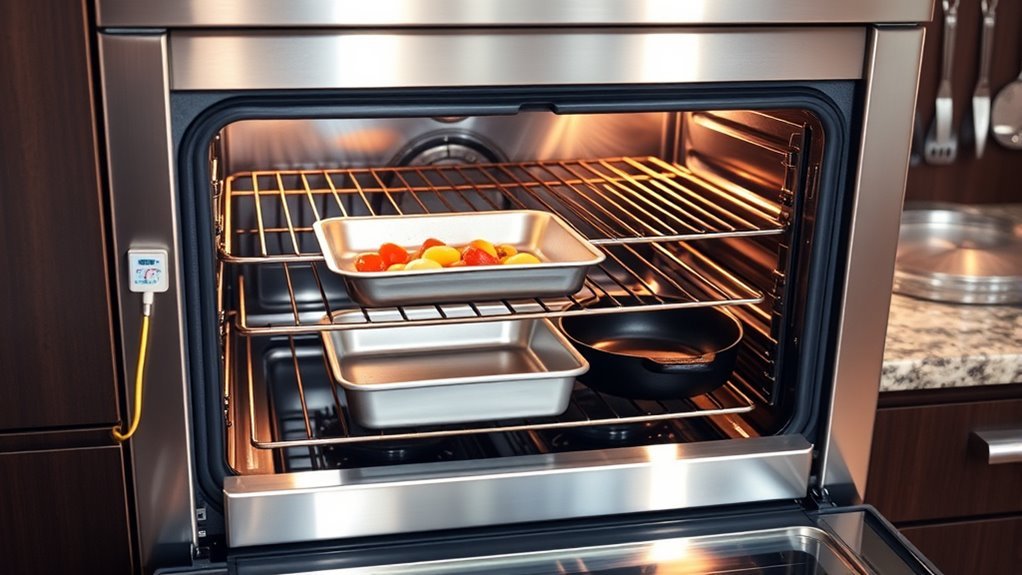
When it comes to using metal cookware in the oven, knowing which types are safe is essential. Many people wonder about the limits of various metals and coatings. You can avoid mishaps by understanding specific temperature tolerances and manufacturer guidelines. Also, taking care of your cookware can extend its lifespan. Curious about which metals can handle the heat and how to protect your investment? Let’s explore the details.
Which Metal Cookware Is Safe for Oven Use?
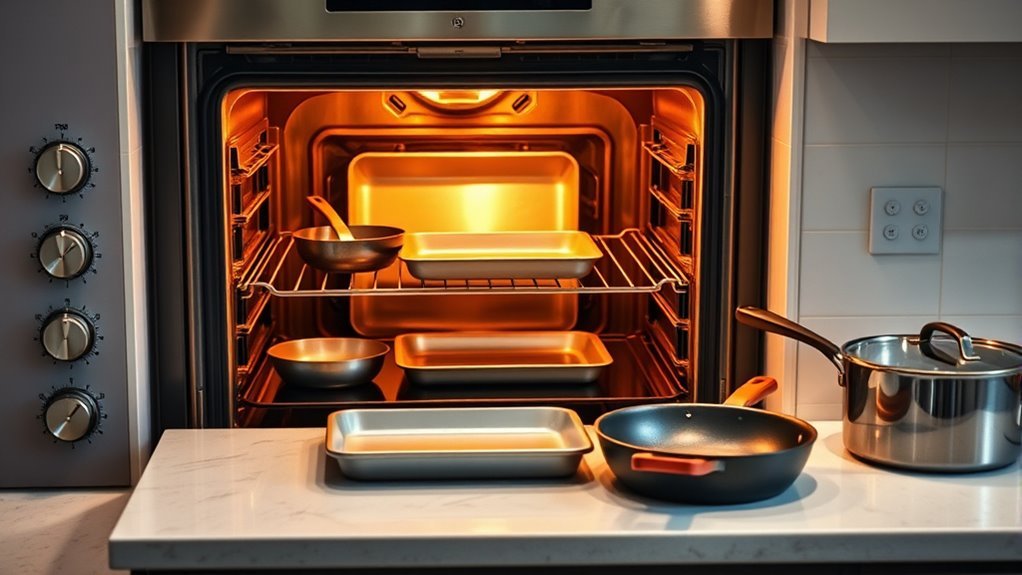
When choosing metal cookware for the oven, it’s essential to know which materials can withstand high temperatures safely.
Stainless steel is a solid choice, enduring maximum temperatures of 500°F-550°F without warping or releasing toxins.
Stainless steel withstands temperatures up to 550°F, ensuring durability and safety in your oven cooking adventures.
Anodized aluminum, while lightweight and quick to heat, is typically safe up to 450°F, but avoid non-stick coatings unless specified as oven-safe.
Cast iron is your go-to for durability, handling temperatures over 500°F, perfect for baking or roasting.
Copper cookware excels in heat conduction, but check manufacturer guidelines for oven use, as it’s usually suitable at moderate temperatures.
Finally, while some non-stick cookware can be oven-safe, it’s essential to verify temperature limits—many don’t exceed 400°F due to potential coating degradation.
Choose wisely to liberate your cooking experience!
What Are Safe Oven Temperatures for Metal Cookware?
Understanding safe oven temperatures for metal cookware is vital for successful cooking. Most stainless steel cookware is oven-safe, handling temperatures up to 500°F-550°F without issue.
Anodized aluminum pans are also dependable, but always verify if any non-stick coating is present, as it may have lower heat tolerances. Copper cookware, often lined with stainless steel, is another excellent option, though you should be cautious about the lining’s temperature limits.
Always refer to manufacturer guidelines for specific temperature recommendations and safety tips tailored to your cookware.
Remember, avoiding sudden temperature changes is essential; placing hot metal pans into cold water can lead to thermal shock, causing warping or damage.
Common Errors to Avoid When Using Metal Cookware in the Oven
Using metal cookware in the oven can lead to mishaps if you’re not careful. Always check the manufacturer guidelines to confirm the oven-safe temperature limits for your metal items. Some materials can’t withstand high heat or sudden temperature changes, which can cause warping or cracking.
Avoid using metal cookware with nonstick coatings in the oven unless it’s specified as safe; high temperatures can degrade the coating and release harmful chemicals.
Verify your cookware isn’t too close to heating elements, especially in conventional ovens, to prevent burning.
Preheating metal cookware gradually helps prevent thermal shock, which can damage your pans.
Regularly inspect your metal cookware for signs of wear, like discoloration or warping, as these can affect performance and safety.
How to Protect Your Metal Cookware
Protecting your metal cookware is key to maintaining its performance and safety. Always check the manufacturer’s guidelines to verify your cookware is oven-safe and know the maximum temperature limits for your specific materials.
To prevent thermal shock, avoid sudden temperature changes that can warp or damage your pans. When you handle the heat, use heat-resistant gloves to prevent burns while safely removing hot cookware from the oven.
Regularly inspect your metal cookware for signs of warping, discoloration, or loose handles, as these issues can impact both performance and safety.
To further protect your metal cookware, store your pans in a dry place and use protective liners when stacking them. This simple practice helps prevent scratches and maintains their longevity.
Caring for Metal Cookware After Oven Use
After you’ve finished cooking, letting your metal cookware cool gradually is essential to prevent warping or thermal shock. Once cooled, follow these care tips to keep your metal pans in top shape.
| Task | Details |
|---|---|
| Regular Cleaning | Use warm water and mild detergent. Avoid abrasives. |
| Dry Thoroughly | Prevent water spots and rust, especially in aluminum. |
| Inspect Metal Cookware | Look for warping, discoloration, or loose handles after each use. |
| Store Properly | Keep in a dry place; use protective liners when stacking. |
| Maintain Performance | Regular checks guarantee safety and functionality. |
Frequently Asked Questions
How to Tell if Metal Is Oven Safe?
To tell if metal is oven-safe, check the manufacturer’s guidelines for the specific metal types and their temperature limits.
Look for labeling on oven materials indicating safety, as some safe cookware, like 304 stainless steel, can handle high heat.
Avoid items with plastic parts or coatings that mightn’t withstand the oven’s heat.
Inspect for any signs of warping or damage, as these can compromise safety during use.
Can I Bake a Cake in a Metal Mixing Bowl?
Sure, you can bake a cake in a metal mixing bowl, but isn’t it ironic how something meant for mixing can double as a baking vessel?
Just keep in mind that the cake texture might differ due to heat conduction.
Verify your bowl’s oven-safe and check for any non-stick coatings.
Adjust your baking times since metal heats up faster, and you’ll have a delightful cake ready to impress!
Can You Put Stainless Steel in the Oven at 400 Degrees?
Yes, you can put stainless steel in the oven at 400 degrees. This type of cookware is designed for oven use, adhering to oven safety guidelines.
Compared to other metal types, stainless steel offers excellent heat conductivity without warping. Just make sure to avoid sudden temperature changes to prevent thermal shock.
Check for any heat-sensitive parts, like plastic handles, that mightn’t be oven-safe, ensuring a smooth cooking experience.
Can I Put Aluminum Foil in the Oven at 450?
Yes, you can put aluminum foil in the oven at 450°F (232°C). For oven safety, use it to line baking sheets or wrap food, as it reflects heat and reduces sticking.
Just remember a few cooking tips: avoid covering oven racks completely to maintain airflow, and keep foil away from exposed heating elements to prevent fires.
Opt for heavy-duty aluminum foil for better durability during cooking. Enjoy your meal prep!
Conclusion
In the kitchen, metal cookware can be your best ally or a source of frustration. By knowing which types are safe for the oven and their temperature limits, you can confidently whip up delicious meals. Avoid common pitfalls, like sudden temperature changes, to protect your cookware’s integrity. With proper care after use, your metal pots and pans can last for years. Embrace the versatility of metal cookware, and elevate your culinary creations with ease!
