
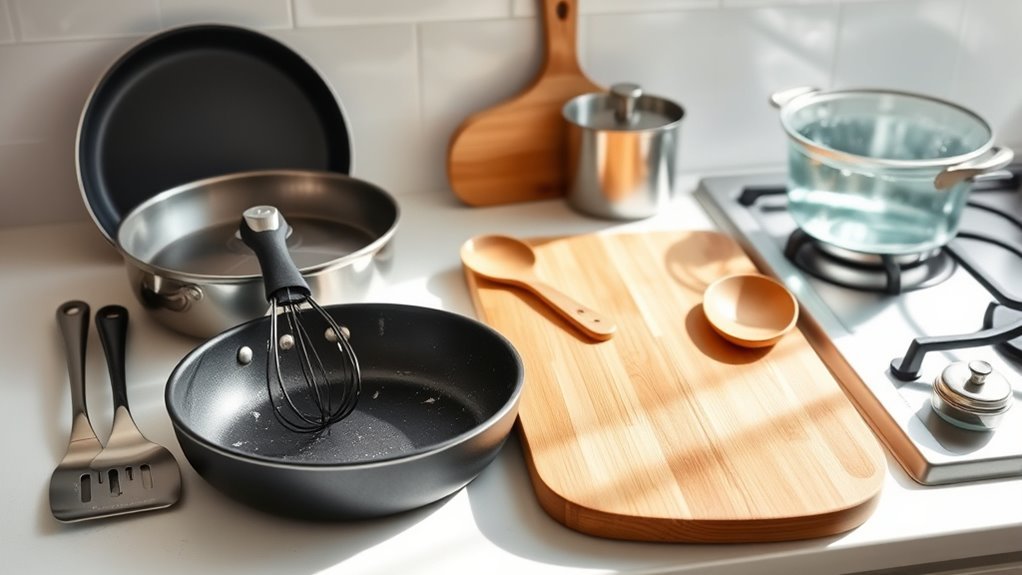
When it comes to cooking, the utensils you choose can greatly impact your food’s safety and quality. Using the right materials can prevent harmful reactions and guarantee your meals remain healthy. However, not all utensils are created equal, and some materials can pose risks. Understanding what to look for and what to avoid is essential for a safe cooking experience. Let’s explore the best options and what could be lurking in your kitchen.
What to Look For in Safe Cooking Utensils
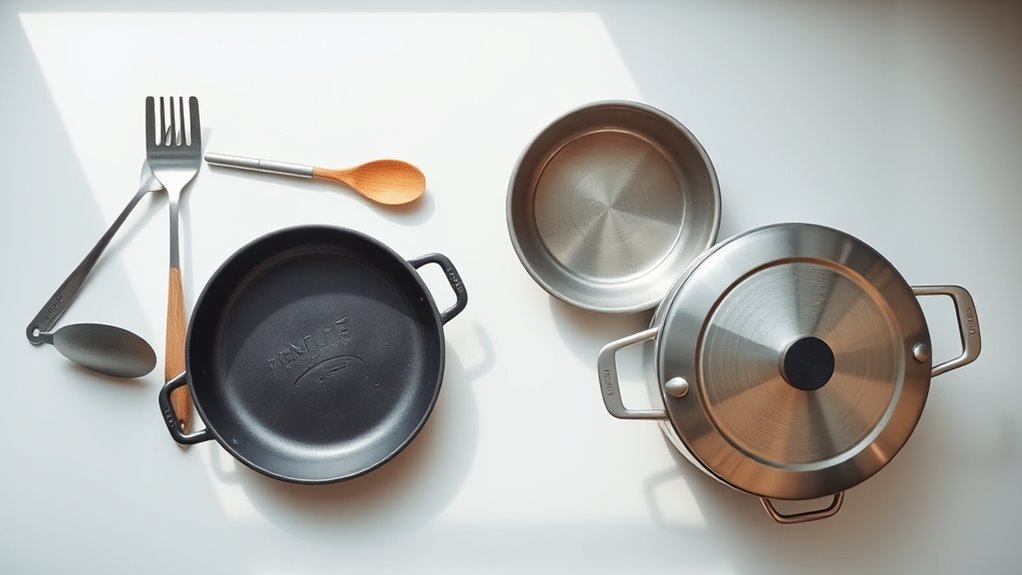
When you’re choosing cooking utensils, it’s essential to prioritize safety and quality. Look for high-quality materials like stainless steel, food-grade silicone, and wooden utensils. These options are typically non-toxic and free from harmful substances.
Always verify your utensils are BPA-free to avoid low-quality plastics that can degrade and release microplastics during cooking.
Opt for silicone utensils and stainless steel that are dishwasher safe, making them easy to clean and hygienic. Choose utensils tailored for specific tasks; for instance, use wooden spoons for stirring and silicone spatulas for scraping. This enhances functionality while verifying safety.
Be cautious with utensils that have coatings or treatments, as these may leach harmful substances at high temperatures. By focusing on these key factors, you can equip your kitchen with safe, durable tools that support your cooking lifestyle.
Best Non-Toxic Materials for Safe Cooking Utensils
Choosing the right materials for cooking utensils is essential for both safety and performance in the kitchen. Opting for non-toxic options can enhance your cooking experience while addressing health concerns.
- Stainless Steel: Durable and non-reactive, perfect for high-heat tasks.
- Food-Grade Silicone: Flexible and heat-resistant (up to 600°F), ideal for nonstick cookware when selecting platinum-cured silicone.
- Wooden Utensils: Biodegradable and naturally antimicrobial, gentle on cookware.
Avoid plastic and nylon utensils, as they can degrade under heat and release harmful microplastics, jeopardizing your health.
By choosing stainless steel, food-grade silicone, and wooden utensils, you embrace non-toxic cooking. These materials not only guarantee safety but also promote longevity and functionality in your kitchen.
Empower yourself with the knowledge of safe choices and elevate your culinary adventures!
Cooking Utensils to Avoid for Safe Cooking
To guarantee safe cooking, it’s crucial to steer clear of certain utensils that can compromise your health. First on the list are plastic utensils, which often degrade with heat, releasing harmful microplastics and additives into your food.
Likewise, nylon utensils can shed microplastics and warp at high temperatures, posing additional risks. Be cautious with black plastic utensils, as they may contain toxic flame retardants sourced from recycled electronics.
Unfinished wood utensils can harbor bacteria if not meticulously maintained, requiring regular oiling and hand-washing to prevent issues.
Finally, avoid cheaper silicone utensils, as they may contain fillers that leach harmful chemicals. Instead, opt for food-grade silicone or platinum-cured silicone for non-toxic cooking.
Must-Have Cooking Utensils You Can’t Live Without
Every kitchen needs a few essential utensils that make cooking efficient and enjoyable. Investing in quality cooking tools guarantees you’re well-equipped for any culinary adventure without unnecessary duplicates.
- Silicone utensils: Heat-resistant and gentle on nonstick surfaces, perfect for delicate tasks.
- Stainless steel cookware: Durable and non-reactive, ideal for high-heat cooking with acidic foods like tomato sauce.
- Wooden utensils: Made from sustainably sourced materials, these are gentle on cookware and naturally antimicrobial.
With a curated set of essential cooking utensils, you’ll cover a wide range of tasks while guaranteeing safe cooking practices.
Each tool contributes to a seamless cooking experience, whether you’re stirring, flipping, or serving. Embrace these must-haves to elevate your culinary creations, knowing you’re using safe, effective materials in your kitchen.
Caring for Your Cooking Utensils
Proper care for your cooking utensils is essential if you want them to last and perform well.
For wooden utensils, hand wash them with warm, soapy water and dry immediately to prevent warping and cracking. Regularly condition them with food-grade mineral oil to maintain their integrity.
Hand wash wooden utensils with warm, soapy water, dry immediately, and condition with food-grade mineral oil for lasting integrity.
When it comes to silicone utensils, choose high-quality, food-grade options that are often dishwasher-safe, making cleaning easy.
Stainless steel utensils also require hand washing to preserve their appearance and durability. Avoid using abrasive cleaners or metal utensils on nonstick surfaces, as this can damage coatings and shorten their lifespan.
Emphasizing proper maintenance guarantees your utensils remain durable and effective, allowing you to enjoy the freedom of cooking without worrying about wear and tear.
Your Questions About Safe Cooking Utensils Answered?
When choosing safe cooking utensils, it’s essential to focus on materials that won’t leach harmful chemicals into your food.
Opt for food-grade silicone, stainless steel, wood, or bamboo, while steering clear of plastic and nylon, which can degrade and release toxins.
Understanding these guidelines will help you make informed choices for a healthier cooking experience.
Safe Materials To Choose
Choosing safe cooking utensils is essential for both your health and the longevity of your cookware.
Opt for these materials to guarantee non-toxic cooking:
- Stainless Steel: Durable and non-reactive, perfect for high-temperature cooking.
- Food-Grade Silicone: Heat-resistant and nonporous, ideal for protecting nonstick surfaces.
- Wooden Utensils: Naturally antimicrobial and biodegradable, particularly those made from hardwoods like maple or beech.
Bamboo utensils are also a fantastic choice; they’re lightweight and free from toxic chemicals when sourced sustainably.
Always avoid plastic, as it can degrade under heat and leach harmful substances.
Utensils To Avoid
Several cooking utensils can compromise your health and safety in the kitchen. Avoid plastic utensils, as they can degrade with heat, releasing harmful microplastics and additives into your food.
Nylon utensils aren’t much better; they can also shed microplastics and aren’t recommended for high-temperature cooking. Black plastic utensils pose additional risks, often containing toxic flame retardants from recycled electronics.
These utensils are unsafe for regular use due to their chemical risks and potential health issues. Instead, opt for safer alternatives like stainless steel, wood, or high-quality silicone.
Frequently Asked Questions
What Are the Healthiest Cooking Utensils to Use?
The healthiest cooking utensils for you include wooden spoons, bamboo utensils, and stainless steel tools.
Opt for ceramic cookware and cast iron for frying or baking, as they’re durable and non-toxic.
Use glass measuring cups to avoid harmful chemicals, and choose heat-resistant silicone mats for easy clean-up.
Non-toxic spatulas complement your eco-friendly options, ensuring safe cooking without compromising your health.
Embrace these materials for a liberated, conscious kitchen experience.
Which Is Safer, Silicone or Stainless Steel?
Both silicone and stainless steel are safe, but they excel in different areas.
Silicone offers heat resistance and non-stick properties, making it gentle on cookware and BPA-free. Its flexibility benefits tasks like scraping.
Conversely, stainless steel boasts durability and longevity, ideal for high-heat cooking and versatile applications. It requires minimal maintenance and is nonreactive, ensuring flavors stay true.
Choose silicone for eco-friendliness and gentle use, while stainless steel shines in heavy-duty scenarios.
What Cooking Utensils Don’t Have Microplastics?
If you’re keen on avoiding microplastics, consider using bamboo utensils, stainless steel tools, or wooden spoons.
These eco-friendly options don’t degrade like plastic. For cookware, glass and ceramic dishes are excellent choices, while silicone spatulas provide flexibility without harmful particles.
Cast iron pans, with their non-toxic coatings, also stand out. Embrace these alternatives to guarantee your cooking remains safe and sustainable, giving you peace of mind with every meal you create.
What Type of Utensils Are Best for Health?
For health-conscious cooking, opt for wooden spoons, ceramic spatulas, and bamboo utensils.
These eco-friendly options are non-toxic and gentle on your cookware. Use glass measuring cups for safe ingredient handling, and rely on stainless steel and cast iron for durability and heat resistance.
Silicone baking tools are excellent for their versatility.
Conclusion
In a world where convenience often trumps safety, choosing the right cooking utensils can feel like a radical act. You might think plastic is just fine until it starts leaching chemicals into your meals. By opting for stainless steel, food-grade silicone, or sustainably sourced wood, you’re not only protecting your health but also elevating your cooking experience. So, while others cling to their cheap, harmful tools, you can confidently wield your safe, durable utensils—because in the kitchen, safety should never be an afterthought.

