

When you attempt to fry eggs in stainless steel cookware, you might find them sticking stubbornly to the surface. This common issue highlights the need for caution with certain foods when using this type of cookware. Understanding what not to cook can enhance your culinary experience and prevent frustrating mishaps. Let’s explore the best practices, why some foods fail, and how to maintain your stainless steel for peak performance.
Best Practices for Cooking With Stainless Steel Cookware
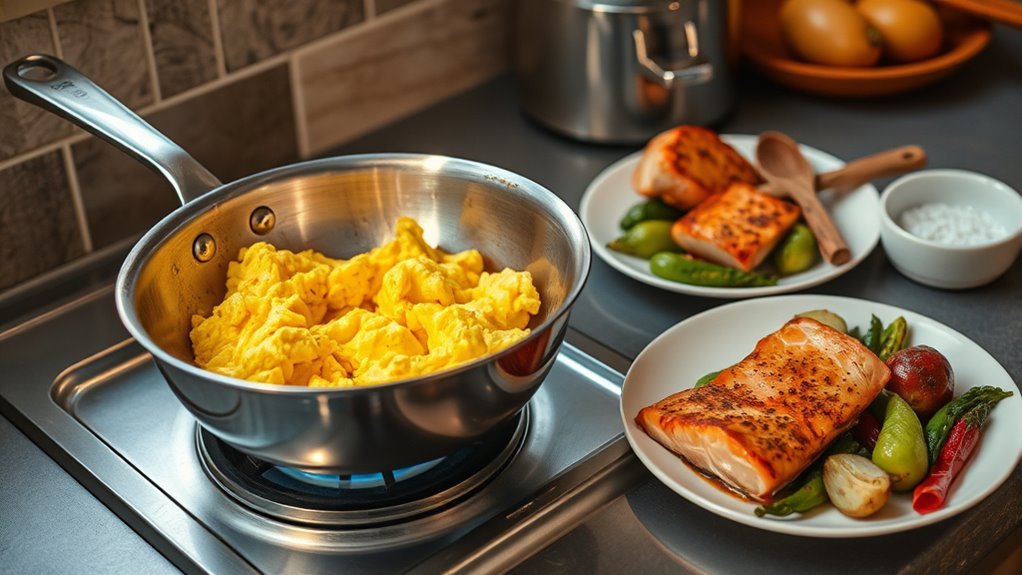
When you cook with stainless steel cookware, understanding best practices is vital for achieving ideal results. Start by preheating your pan over medium heat for 2-3 minutes. This step is important to prevent food from sticking and guarantees even cooking throughout the process.
To check if your pan is ready, conduct the water test: add a few drops of water; if they dance and bead, it’s time for oil. Use oils with high smoke points, like canola or grapeseed, and add them only after the pan is hot to maintain a non-stick surface.
Allow your food to cook undisturbed, as it will naturally release when it forms a golden crust. Finally, avoid overcrowding the pan; this keeps the temperature ideal and allows for proper searing or browning, enhancing the flavors of your ingredients.
Following these guidelines will elevate your cooking experience with stainless steel.
What Foods Should You Skip in Stainless Steel Cookware?
When cooking with stainless steel, you should skip eggs and delicate proteins, as they tend to stick easily at lower temperatures.
Acidic dishes, like tomato sauce, can also cause metallic flavors and discoloration due to prolonged contact with the pan.
Opt for nonstick or non-reactive cookware for these types of foods to guarantee better results and easier cleanup.
Eggs and Delicate Proteins
Although stainless steel cookware is prized for its durability and heat retention, it’s not the best choice for cooking eggs and other delicate proteins. Eggs tend to stick due to their chemical bonding with the pan at lower temperatures.
To guarantee success, start with a properly preheated pan; a simple water test can help—droplets should bead up and dance before adding oil. Use adequate oil or fat to create a barrier and minimize sticking; wait for it to shimmer.
Remember, patience is key—let your eggs cook undisturbed until golden brown for natural release.
For easier cleanup and food release, consider using a nonstick pan or a well-seasoned cast-iron skillet instead.
Acidic Tomato-Based Dishes
Cooking acidic tomato-based dishes in stainless steel can lead to several undesirable outcomes, as the high acidity interacts negatively with the metal.
Tomato sauce can cause discoloration, often resulting in a metallic taste that detracts from your meal. Prolonged contact with tomatoes may also promote leaching of nickel and chromium from stainless steel, raising potential health concerns.
Additionally, the acidity can etch the stainless steel surface over time, leading to pitting and reducing the cookware’s lifespan.
To avoid these issues, opt for non-reactive cookware like enameled cast iron or nonstick pans for your tomato-based dishes. This choice preserves flavor and guarantees the longevity of your cookware, allowing you to enjoy your meals without worry.
Why Do Delicate Foods Stick in Stainless Steel?
Delicate foods like eggs and fish stick to stainless steel primarily due to their lower cooking temperatures, which cause proteins to bond with the pan’s surface.
If you don’t preheat your stainless steel skillet properly, the cold metal can exacerbate sticking issues, preventing that natural release you need. Adding oil or fat only after the pan is adequately heated creates a non-stick barrier essential for delicate ingredients. Insufficient oil leads to more sticking, so don’t skimp.
Moreover, overcrowding the pan can lower the temperature, making it harder for those delicate items to sear properly.
This not only increases the likelihood of sticking but also hampers the Maillard reaction, which enhances browning. The result? Uneven cooking and frustration.
How Acidic Ingredients Affect Your Stainless Steel Cookware
When you use acidic ingredients like tomatoes or vinegar in stainless steel cookware, you might inadvertently set yourself up for a few challenges. Prolonged cooking can lead to unwanted effects, compromising both flavor and cookware integrity.
- Discoloration of the cookware surface
- A metallic taste in your food
- Pitting that damages the cookware
- Nickel and chromium leaching, posing health risks
While quick sautéing with acidic ingredients is generally safe, long simmering can cause significant issues. The high acidity can result in pitting, making it harder to clean and permanently harming your cookware.
While quick sautéing is safe, long simmering with acidic ingredients can lead to pitting and permanent damage to your cookware.
For dishes that require extended cooking with acidic ingredients, consider non-reactive options like enameled cast iron or glass. This approach not only preserves the flavor of your food but also protects your stainless steel from damage, ensuring a longer lifespan for your cookware.
Cooking With Sugary Glazes: Why It’s Challenging
Acidic ingredients aren’t the only challenge for stainless steel cookware; sugary glazes can pose their own set of difficulties.
When cooking with sugary glazes in stainless steel pans, you risk sticking and burning. Sugar bonds tenaciously to metal surfaces at high heat, leading to frustrating cleanup. The caramelization process demands precise temperature control, and sugary glazes can quickly exceed the smoke point, resulting in unwanted discoloration and residue.
Once sugar crystallizes on a stainless steel surface, it becomes a nightmare to remove, often requiring soaking or extensive scrubbing.
To mitigate these issues, consider using heavy-bottomed pans specifically designed for sugar work, as they maintain even heat and reduce the risk of burning.
Alternatively, incorporating a nonstick option or enameled cast iron for your sugary dishes can guarantee easy release and make cleanup a breeze.
Embrace these strategies to elevate your cooking experience while avoiding the pitfalls of stainless steel.
Alternatives to Stainless Steel Cookware for Specific Dishes
Many home cooks find that certain dishes require alternatives to stainless steel cookware for the best results.
Using the right materials can enhance your cooking experience and outcomes, especially with:
- Eggs: Opt for nonstick skillets or well-seasoned cast iron to prevent sticking.
- Tomato Sauce: Enameled cast iron or nonstick pans work best for acidic sauces, avoiding leaching and flavor alteration.
- Pancakes: Use nonstick griddles or cast iron skillets for easy flipping of delicate pancakes.
- Delicate Fish: Nonstick or well-seasoned cast iron pans help avoid tearing when cooking fish fillets.
In professional kitchens, these alternatives allow for high-heat cooking without compromising the integrity of your dishes.
Remember, for tasks involving cold water or high-sugar dishes, selecting the right cookware guarantees better flavor and easier cleanup.
Embrace these alternatives to elevate your culinary skills!
Tips for Maintaining Your Stainless Steel Cookware
To keep your stainless steel cookware in top shape, focus on proper cleaning techniques and storage practices.
Always let your pans cool before washing to avoid warping, and use mild soap with a soft sponge to maintain their finish.
Additionally, store them in a dry place and avoid stacking to prevent scratches and preserve their performance.
Cleaning Techniques for Longevity
Proper maintenance is essential to prolong the life of your stainless steel cookware. Here are some effective cleaning techniques:
- Always allow pans to cool completely before washing to prevent warping.
- Use warm water and mild soap with a non-abrasive sponge to clean.
- For tough residue, simmer equal parts white vinegar and water in the pan.
- Buff out stains with a baking soda paste to avoid scratching.
Avoid using harsh dishwasher detergents, as they can etch the surface.
If you shift from stovetop to oven, make sure the cookware is clean and dry.
Proper Storage Practices
While you might think that simply cleaning your stainless steel cookware is enough, proper storage plays an essential role in maintaining its longevity and performance.
Store your clean stainless steel pans in a dry space to prevent moisture accumulation, which can lead to rust or corrosion. Avoid stacking pans directly on top of each other; instead, use protective liners or paper towels to maintain their surface integrity.
Make sure pans are completely cooled before storing to avoid warping. Designate a cabinet or shelf for your stainless steel cookware, minimizing exposure to harsh chemicals.
Regularly check for signs of pitting or discoloration during storage to address any issues promptly, making certain your cookware remains in excellent condition for years to come.
Frequently Asked Questions
What Is the Healthiest Metal to Cook With?
The healthiest metal to cook with is often considered cast iron, as it adds iron to your diet and offers excellent heat retention.
Nonstick pans are convenient but can release harmful chemicals if scratched.
Copper cookware provides precise temperature control but needs a lining to prevent reactions.
Aluminum foil is lightweight but can react with acidic foods.
For safer options, consider ceramic dishes or glass baking, which are non-reactive and promote healthier cooking.
Can I Use Olive Oil in a Stainless Steel Pan?
Sure, you can use olive oil in a stainless steel pan—if you’re not trying to evoke the smoke gods!
Keep your cooking temperatures in check to avoid that oil smoking point disaster, which can ruin your meal and your pan’s seasoning.
Embrace olive oil’s benefits for flavor and health, but remember to monitor the heat.
With proper stainless steel maintenance, you’ll reveal delicious olive oil flavors without chaos in your kitchen!
Does Stainless Steel Release Toxins When Heated?
No, stainless steel doesn’t release toxins when heated under normal cooking conditions. Its safety lies in its stable composition, ensuring minimal metal leaching, primarily with acidic foods.
To maintain cookware longevity, avoid extreme cooking temperatures and harsh chemicals.
While stainless steel offers excellent heat conductivity, if you prefer non-stick alternatives, consider options that suit your cooking style.
Do Tomatoes React With Stainless Steel?
Oh, sure! Let’s toss those beautiful tomatoes into stainless steel and watch them dance a tango of tomato acidity and metallic flavor. Spoiler alert: it’s not pretty!
For sauce preparation and flavor preservation, you’re better off with non-reactive cookware. Stainless steel care demands you avoid acidic foods like tomatoes, or risk pitting and leaching.
Conclusion
In summary, while stainless steel cookware shines for browning and sautéing, it’s not the ultimate choice for everything. Avoid cooking delicate proteins, acidic dishes, and sugary glazes to prevent sticking and flavor issues. By recognizing these limitations, you’ll elevate your culinary game to stratospheric heights. Proper maintenance and choosing the right dishes will guarantee your cookware remains a reliable partner in the kitchen for years to come. Happy cooking!

