
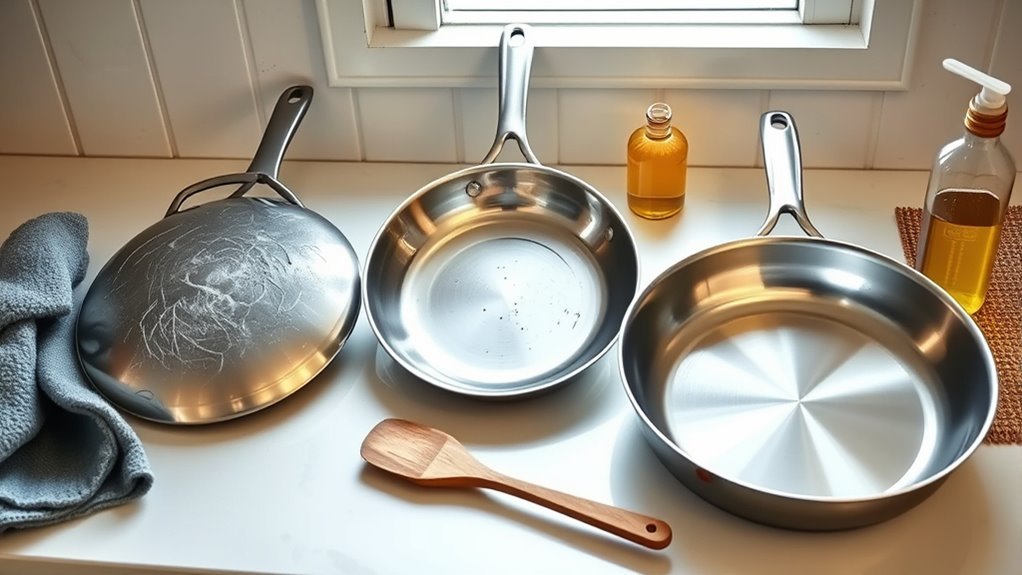
You might find it surprising that the right stainless steel pan can outlast a kitchen appliance or even a few relationships. Understanding how long these pans last isn’t just about the material; it’s also about how you treat them. With proper care, they can be reliable for decades, but neglect can shorten their lifespan considerably. So, what should you watch for to guarantee your cookware remains in top shape? Let’s explore that.
How Long Can Stainless Steel Pans Last?
When you invest in high-quality stainless steel pans, you can expect them to last for several decades if you care for them properly. Unlike low-quality versions that may only last a couple of years, premium stainless steel pans are built to endure.
The grade of steel plays a vital role, with thicker, fully clad pans offering superior durability and heat retention. To maximize longevity, regular maintenance is essential. Avoid abrasive cleaners, and be proactive in addressing stains or discoloration.
Keep an eye out for signs to replace your pans, such as warping, loose handles, or significant scratches and pitting that expose the core layers. By understanding these factors, you empower yourself to maintain your cookware effectively, ensuring that your stainless steel pans remain a reliable ally in your culinary journey for many years to come.
Key Factors Influencing the Lifespan of Stainless Steel Cookware
The lifespan of your stainless steel cookware hinges on several key factors.
Material quality, your cooking habits, and maintenance practices all play vital roles in determining how long your pans will last.
Material Quality Matters
Material quality plays an essential role in determining how long your stainless steel cookware lasts. Higher-grade stainless steel greatly boosts durability and corrosion resistance, ensuring your pans endure through years of cooking.
Thicker pans are less likely to warp and provide better heat retention, both of which enhance longevity. Fully clad stainless steel cookware, featuring a core of aluminum or copper, offers superior heat distribution and stands the test of time compared to impact-bonded alternatives.
With proper care, high-quality pans can last decades, while lower-quality options may need replacing within a few years. Regular maintenance, like avoiding extreme temperature changes and using non-abrasive cleaning methods, further extends the life of your stainless steel cookware.
Cooking Habits Impact Longevity
High-quality stainless steel cookware can last for decades, but your cooking habits play a significant role in determining their actual lifespan. Factors like heat distribution, utensil choices, and cleaning methods are essential. Excessive high heat can warp or discolor your pans, while non-abrasive utensils prevent scratches that might expose core materials. Cleaning methods matter too; using gentle scrubbing techniques and avoiding dishwashers can help maintain the surface. Additionally, the foods you cook—especially acidic ones—can lead to pitting if left in contact for too long. Proper storage, like avoiding stacking without protective layers, also preserves integrity.
| Cooking Habit | Impact on Lifespan | Recommended Practice |
|---|---|---|
| Temperature Control | Prevents warping/discoloration | Use medium heat |
| Utensil Type | Reduces scratches | Use wooden or silicone utensils |
| Cleaning Method | Maintains surface integrity | Hand wash with gentle scrubbers |
| Food Type | Prevents pitting | Avoid prolonged contact with acids |
| Storage Technique | Prevents physical damage | Use protective layers when stacking |
Maintenance Practices Enhance Durability
To guarantee your stainless steel cookware lasts as long as possible, incorporating effective maintenance practices is crucial.
Regularly clean stainless steel cookware with warm, soapy water and non-abrasive sponges to prevent buildup and avoid scratches. Preheating your pans before use and steering clear of drastic temperature changes helps maintain their structural integrity and prevents warping.
Additionally, using adequate cooking oil and stirring consistently during cooking reduces sticking, minimizing wear on the surface. Keep an eye out for signs of damage, such as scratches or warping, to guarantee timely replacement.
When to Replace Your Stainless Steel Pans?
Knowing when to replace your stainless steel pans is essential for safe and effective cooking.
If you notice warping, loose handles, or scratches that expose the core material, it’s time to reflect on a replacement.
These issues can compromise not just your cooking performance, but also your health and safety in the kitchen.
Signs of Warping
While cooking with stainless steel pans, you might notice subtle changes that indicate warping, which can greatly affect your culinary results.
Warping occurs when the pan bends or develops curvatures, disrupting even heat distribution. Look for signs like a visible wobble when the pan’s placed on a flat surface or if food cooks unevenly in certain areas.
These issues can compromise your cooking performance and may pose safety risks, as a warped pan may not sit securely on the stovetop.
Regularly inspecting your stainless steel pans for warping is crucial; if you spot any signs, it’s time to replace them.
Prioritizing quality pans will help guarantee you maintain peak results in your kitchen adventures.
Loose Handle Concerns
Warping isn’t the only concern with stainless steel pans; loose handles can also signal it’s time for a replacement. Loose handles can indicate wear and pose safety risks, jeopardizing your cooking experience. Regularly monitor handle stability; if a handle feels wobbly or can’t be tightened securely, it may compromise the pan’s integrity. A loose handle can lead to spills, especially when moving hot pans.
| Handle Condition | Safety Risk | Recommended Action |
|---|---|---|
| Secure and Tight | Low | Continue Using |
| Slightly Wobbly | Moderate | Monitor Regularly |
| Very Loose | High | Replace Immediately |
| Detached | Critical | Replace Immediately |
Prioritize safety and consider replacement to guarantee enjoyable cooking.
Scratches and Pitting Issues
Scratches and pitting on stainless steel pans can be more than just cosmetic issues; they signal potential health risks and compromised cooking performance.
When you notice significant scratches or pitting, it’s a clear indication that the protective layer is damaged, meaning replacement might be necessary. Pitting often occurs from using abrasive cleaning materials, underscoring the importance of proper care.
If pitting leads to rust, which contaminates food, you should replace the pan immediately. Additionally, deep scratches or extensive pitting can impair heat distribution, affecting your cooking quality.
Regularly inspect your pans to guarantee they remain safe and effective; don’t hesitate to replace them when you spot these issues. Your health and cooking experience deserve the best!
How Warping Affects Your Cooking
When your stainless steel pan warps, it can greatly disrupt your cooking process. Warping leads to uneven heat distribution, making it tough to achieve that perfect sear or simmer.
A pan that doesn’t sit flat creates hot spots, complicating your culinary endeavors. Here’s how it can impact your cooking:
- Food may burn in certain areas while remaining undercooked in others.
- Precision cooking becomes nearly impossible.
- The pan’s integrity may be compromised, risking further damage.
- High heat can exacerbate existing warping, shortening the pan’s lifespan.
- Regular checks for warping can prevent safety issues and guarantee effective cooking.
The Dangers of Loose Handles and Solutions
Loose handles on your stainless steel pans can create serious safety hazards in the kitchen. When handles become loose, they increase the risk of spills or accidents while cooking, which can lead to burns or injuries.
Over time, repeated heating and cooling can weaken the screws and connections that hold the handle in place. This is why regular maintenance is essential; check your pans often for any signs of loose handles. If you notice one, tighten it immediately to prevent further damage or injury.
Regularly check your pans for loose handles; tightening them promptly can prevent serious injuries and extend their lifespan.
In cases where the handle can’t be tightened or is damaged, replacing the pan may be your safest option. By staying vigilant and ensuring your cookware is in good condition, you not only enhance your safety but also extend the lifespan of your stainless steel pans.
Prioritize your cooking environment—it’s all about liberation in the kitchen!
When to Worry About Scratches and Pitting
When you notice scratches or pitting on your stainless steel pan, it’s time to assess the damage carefully.
While minor scratches mightn’t be a concern, deep scratches or significant pitting can expose the underlying metal, increasing the risk of harmful leaching.
Regular inspections are essential; replacing pans with serious damage helps guarantee safe cooking and performance.
Signs of Serious Damage
Scratches and pitting on stainless steel pans aren’t just cosmetic issues; they can signal serious underlying problems. Ignoring these signs can lead to health and safety risks in your kitchen. Here’s what to watch for:
- Visible rust or discoloration indicating deterioration.
- Warping that affects heat distribution and cooking efficiency.
- Loose handles suggesting structural integrity issues.
- Sharp edges from layer separation, increasing injury risk.
- Pitting that exposes core layers, raising metal leaching concerns.
If you notice any of these signs, it’s time to contemplate replacing your pan.
Protecting your health and ensuring safe cooking should always take priority.
Don’t compromise on quality; your kitchen deserves better.
Health Risks of Pitting
While stainless steel pans are known for their durability, pitting can pose significant health risks that shouldn’t be ignored.
Pitting exposes core layers of the pan, increasing the chance of harmful metals leaching into your food. This not only raises health concerns but can also create surfaces where bacteria accumulate, complicating your cleaning stainless steel routine.
If you notice extensive or deep pitting, it’s wise to replace the pan to guarantee food safety. Regular inspections for signs of pitting, especially in frequently used areas, are essential.
Ignoring these issues could lead to serious health risks, emphasizing the importance of monitoring your cookware’s condition. Stay vigilant to enjoy safe, healthy cooking with your stainless steel pans.
Rust and Discoloration: Health Risks and Solutions
Rust and discoloration in stainless steel pans can undermine both their appearance and safety, making it essential to address these issues promptly.
Ignoring them could pose serious health risks, so take action when you notice signs of wear. Here are some important considerations:
- Rust can leach harmful metals into your food.
- Discoloration often signals improper maintenance.
- Regular inspections can extend your pans’ lifespan.
- Thoroughly dry your pans after washing to prevent rust.
- Use a vinegar-water mixture or a stainless steel cleaner to restore their shine.
How to Properly Care for Stainless Steel Pans?
To maintain the longevity and performance of your stainless steel pans, it’s essential to adopt proper care techniques. Regularly wash your pans with warm, soapy water and a soft sponge. This prevents scratches and keeps their appearance intact.
Avoid abrasive cleaners or sponges, as these can damage the surface and cause pitting over time. Always allow your pans to cool completely before washing; sudden temperature changes can warp them.
When cooking, preheat your stainless steel pans gradually and use adequate cooking oil to minimize food sticking and guarantee even cooking.
Additionally, store your cookware carefully, ideally preventing stacking that may lead to scratches. By following these care methods, you’ll guarantee your stainless steel pans are properly maintained and can last longer, enhancing your cooking experience.
Investing time in their upkeep pays off, allowing you to enjoy their benefits for years to come.
Common Mistakes That Shorten the Life of Your Cookware
Many cooks unknowingly make mistakes that can greatly shorten the lifespan of their stainless steel cookware. By being aware of these common mistakes, you can enhance your cooking experience and prolong your pans’ life.
- Over-relying on dishwashers accelerates wear and discoloration.
- Washing warm pans with cold water can cause warping.
- Neglecting calcium buildup leads to stains and decreased performance.
- Using abrasive cleaners or sponges scratches the surface, risking metal leaching.
- Ignoring preheating can result in food sticking and damage.
Each of these missteps can compromise not just your cookware but also your culinary creations.
Embracing mindful care practices frees you from frustration in the kitchen and empowers your cooking journey. By avoiding these pitfalls, you guarantee your stainless steel pans remain reliable companions for years to come.
Comparing Stainless Steel Alternatives: Pros and Cons
While stainless steel pans are celebrated for their durability and longevity, it’s essential to evaluate the pros and cons of alternative cookware materials.
Ceramic cookware, like Xtrema, offers a natural, non-reactive surface that’s easier to clean and less prone to stains. However, it requires careful handling to avoid chipping or cracking, especially since lower-grade ceramic can suffer from thermal shock and poor heat retention.
Ceramic cookware provides a non-reactive, easy-to-clean surface, but requires careful handling to prevent chipping and thermal issues.
In contrast, high-quality stainless steel pans withstand high temperatures and resist warping, making them ideal for everyday cooking. While they can develop scratches and discoloration over time, they’re generally a better long-term investment.
If you prioritize cookware that will last, stainless steel is your best bet. Just remember, proper maintenance is key to preserving the appearance and functionality of both materials, ensuring you make the right choice for your kitchen needs.
Frequently Asked Questions
What’s the Downside of Stainless Steel Cookware?
Stainless steel cookware has its downsides. You’ll find that maintaining its appearance requires effort, as heat stains and discoloration can occur.
While stainless steel offers excellent cooking performance, it doesn’t provide non-stick properties, so food may stick without proper preheating or oiling.
Additionally, lower-quality pans can warp from extreme heat changes, affecting heat retention. Scratches and pitting can also develop, exposing underlying metals and compromising your cooking experience.
When to Throw Away a Stainless Steel Pan?
You should throw away a stainless steel pan when you notice signs of wear like warping, which affects cooking performance, or loose handles that pose safety risks.
If you see scratches or pitting exposing the core, it’s time to discard it to avoid metal leaching into your food.
Rust or discoloration also signals deterioration; don’t compromise your health.
Follow pan maintenance tips to prolong their life, but know when to let go.
What Is the Life Expectancy of Stainless Steel?
The life expectancy of stainless steel pans often stretches beyond a decade, depending on durability factors like steel grade and thickness.
To guarantee they shine like Excalibur in your kitchen, follow maintenance tips such as gentle cleaning and avoiding extreme temperature shifts. This care not only prolongs their life but also enhances cooking performance, empowering you to whip up culinary masterpieces.
Invest wisely, and your cookware will serve you well for years to come.
Which Cookware Will Last the Longest?
If you’re looking for cookware that lasts the longest, cast iron tops the list, often lasting a lifetime with proper care.
Copper cookware also boasts incredible durability and heat conductivity but requires more maintenance.
While nonstick options are convenient, they generally don’t match the longevity of cast iron or copper.
Investing in high-quality pieces and understanding their care can guarantee you enjoy your cookware for many years to come.
Conclusion
So, if you thought your stainless steel pans were just for frying eggs, think again! With the right care, they can outlast your favorite kitchen gadgets by decades. It’s almost ironic how something so simple can become a lifelong companion, yet neglect them, and they’ll show signs of wear faster than a new smartphone. Embrace the art of proper maintenance, and you’ll not only keep them shining but also guarantee your cooking remains first-rate for years to come!

