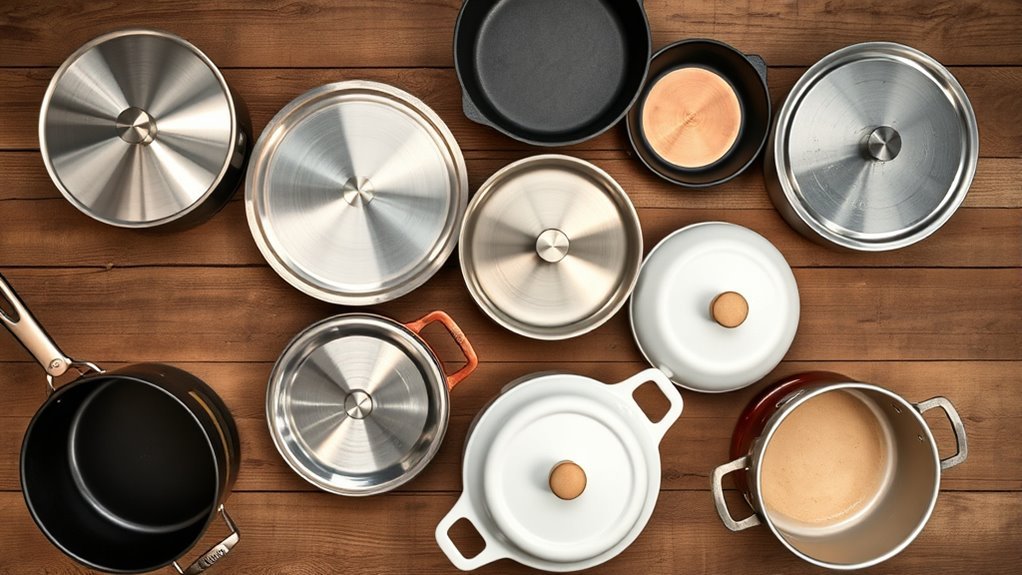
When it comes to cooking pots, the materials you choose can greatly impact your culinary experience. From the durability of stainless steel to the heat retention of cast iron, each option has its own strengths. You might find that aluminum’s lightweight nature makes it ideal for everyday use, while copper offers unparalleled conductivity. Understanding these materials can transform your cooking, but there’s more to ponder when selecting the right pot for your kitchen.
Understanding the Basics of Cooking Pots
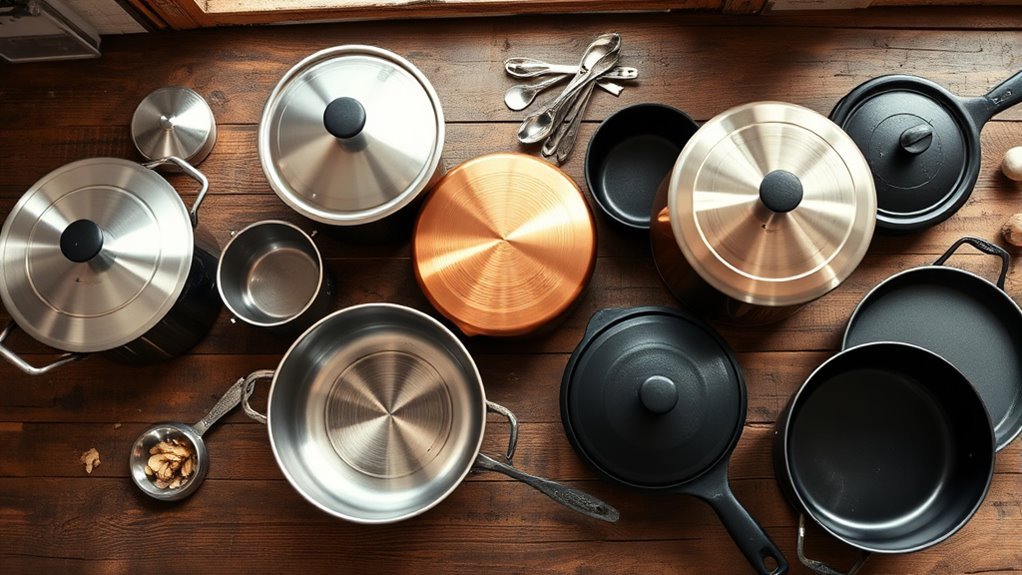
When it comes to cooking pots, understanding the different materials can greatly enhance your culinary experience. Your choice of cookware materials—like stainless steel, aluminum, cast iron, or copper—affects everything from heat conductivity to cooking properties.
Stainless steel pots are durable and non-reactive, often featuring a clad construction that combines aluminum or copper for improved heat conductivity.
Stainless steel pots offer durability and a non-reactive surface, often enhanced with aluminum or copper for better heat conductivity.
If you prefer lightweight options, aluminum pots excel in heat conduction but may need nonstick coatings to handle acidic foods effectively.
For slow-cooking or high-heat techniques, cast iron pots are perfect; they retain heat exceptionally well and can develop a natural nonstick surface with proper seasoning.
Finally, copper pots are prized for their superior heat conductivity, allowing precise temperature control, but remember they usually require lining with a non-reactive metal to prevent food reactions.
Understanding these materials empowers you to make informed choices in your kitchen.
The Advantages of Stainless Steel Cooking Pots
When you choose stainless steel cooking pots, you’re investing in durability and longevity.
These pots resist rust and staining, ensuring they stand the test of time in your kitchen.
Plus, their non-reactive surface means you can cook acidic foods without worrying about unwanted flavors or harmful chemicals leaching into your meals.
Durability And Longevity Benefits
Stainless steel cooking pots stand out for their remarkable durability and longevity, making them a smart choice for any kitchen.
These pots can last for decades with proper care, proving to be a long-term investment. The 18/10 stainless steel composition enhances strength and resistance to corrosion, ensuring they withstand high temperatures without warping.
- Resistant to rust and corrosion
- Safe for cooking acidic foods
- Dishwasher-safe for easy maintenance
- Non-reactive surface preserves food flavor
- Suitable for ovens and broilers
Non-Reactive Cooking Surface
While many cookware options can react with certain ingredients, stainless steel pots provide a safe and dependable choice for your culinary adventures.
Their non-reactive surface, crafted from a mix of steel, chromium, and nickel, guarantees that flavors remain pure, even with acidic foods like tomatoes or vinegar.
Opt for 18/10 stainless steel, known for its excellent corrosion resistance and durability. The clad construction often features conductive metals, enhancing heat distribution and cooking performance.
Plus, these pots are dishwasher safe and low-maintenance, resisting scratches and dents effortlessly.
With stainless steel, you can enjoy the freedom of cooking without worrying about unwanted reactions, making it the ideal companion in your kitchen.
The Benefits of Copper Cooking Pots
Copper cooking pots offer remarkable benefits that can elevate your culinary experience. Known for their exceptional heat conductivity, these pots guarantee rapid and even heating essential for precision cooking. They respond quickly to temperature changes, making them a top choice among professional chefs who demand control over their cooking environment.
- Excellent heat conductivity for even cooking
- Quick response to temperature changes
- Aesthetic appeal with a bright, mirrored finish
- Requires lining with nonreactive metals to handle acidic foods
- Considered a worthwhile investment for serious cooks
While copper cookware can be expensive, its performance and beauty make it desirable.
Copper cookware stands out for its exceptional performance and stunning beauty, making it a prized possession for any serious cook.
Regular maintenance, including handwashing and polishing, keeps your pots looking great and functioning at their best. Embrace the artistry of cooking with copper, and let it enhance your culinary journey!
Why Aluminum Cooking Pots Are a Popular Choice
Aluminum cooking pots are a popular choice because they’re lightweight and budget-friendly, making them perfect for everyday cooking.
Their excellent heat conductivity guarantees even cooking, so you won’t have to worry about hot spots.
Plus, their affordability means you can stock your kitchen without breaking the bank.
Lightweight And Affordable
When it comes to cooking pots, aluminum is a top choice for many home cooks, and for good reason. These pots are lightweight, making them easy to handle during everyday cooking tasks. Plus, they’re affordable, ensuring that quality cookware is accessible to everyone.
Here are some key benefits of aluminum cookware:
- Excellent heat conductivity for even cooking
- Nonstick coatings prevent food from sticking
- Durable options like hard-anodized aluminum resist scratches and dents
- Lightweight for easy maneuverability
- Budget-friendly compared to other materials
With their enhanced performance and versatility, aluminum pots have become a staple in kitchens everywhere.
Whether you’re a novice or an experienced cook, they make cooking enjoyable and efficient.
Excellent Heat Conductivity
One of the standout features of aluminum cooking pots is their remarkable heat conductivity, which allows for quick and even heating. This excellent heat conductivity boosts cooking efficiency, cutting down your cooking times considerably.
Plus, aluminum pots are lightweight and affordable, making them a favorite among both home cooks and professional chefs. While natural aluminum can react with acidic foods, high-quality options often come with nonstick coatings or are made from hard-anodized aluminum.
This hard-anodized variety isn’t only twice as strong as steel but also offers a non-reactive surface that prevents sticking. Although not induction compatible unless they’ve a steel exterior, aluminum cooking pots are versatile for various cooking methods on traditional stovetops.
Why Cast Iron Cookware Is Worth the Investment
Investing in cast iron cookware pays off in countless ways, especially when you consider its remarkable heat retention and even distribution. This durable cookware is perfect for high-heat cooking and slow-cooked dishes like stews and braises.
When properly seasoned, cast iron develops a natural nonstick surface, reducing the need for added fats and oils.
Here are some key benefits of cast iron cookware:
- Exceptional heat retention and distribution
- Naturally seasoned for a nonstick surface
- Adds trace amounts of iron beneficial for health
- Highly durable, lasting for generations
- Enameled cast iron eliminates seasoning needs and works with acidic foods
Whether you choose traditional or enameled cast iron, you’re making a worthwhile investment that enhances your culinary experience and supports a healthier lifestyle.
With proper care, this cookware can become a cherished heirloom in your kitchen.
Using Ceramic and Glass Cookware: Best Practices and Tips
Using ceramic and glass cookware can elevate your cooking experience, especially since both materials offer unique benefits.
Ceramic cookware is non-reactive, making it ideal for baking and casseroles, while glass cookware, like Pyrex, withstands high temperatures and sudden changes. Both are microwave-safe, adding convenience to reheating meals.
To maintain their integrity, follow these best practices: clean gently with non-abrasive sponges to avoid scratches and chips.
To keep your ceramic and glass cookware in top shape, use non-abrasive sponges for gentle cleaning.
When using glass cookware, be cautious of thermal shock; never place a hot dish into cold water, as this can lead to cracking.
For ceramic pieces, avoid metal utensils that may damage the glaze.
What You Need to Know About Nonstick Coatings: Types and Care
When you’re looking to simplify cooking and cleanup, nonstick coatings can be a game changer in your kitchen. The two main types are PTFE (Teflon) and ceramic. PTFE is known for its durability and excellent food release, while ceramic is safer and eco-friendly but has a shorter lifespan.
To get the most out of your nonstick cookware, keep these tips in mind:
- Use non-metal utensils to protect the coating.
- Avoid stacking pans without liners to prevent scratches.
- Hand wash with non-abrasive cleaners for proper maintenance.
- Steer clear of high temperatures; PTFE can degrade at 260°C (500°F).
- Enjoy healthy cooking by using less oil, perfect for delicate foods like eggs and pancakes.
How to Care for Different Types of Cookware
Maintaining your cookware’s performance and longevity requires a bit of attention to detail, especially as you shift from nonstick options to other materials.
For stainless steel, clean with warm soapy water and steer clear of steel wool to avoid scratches; for tough stains, a baking soda mixture works wonders.
Cast iron needs regular seasoning with a thin layer of oil post-cleaning to keep its nonstick surface and prevent rust—never soak it or toss it in the dishwasher.
Copper cookware demands handwashing with a soft sponge and mild detergent; a copper cleaner or a vinegar-salt mix can restore its shine.
When using nonstick cookware, opt for wooden or silicone utensils and avoid high heat.
Finally, with aluminum, sidestep cooking acidic foods in uncoated pans, and use mild soap for cleaning while avoiding abrasives to maintain its finish.
How to Choose the Best Cookware Material for Your Cooking Style?
Choosing the right cookware material can significantly enhance your cooking experience, as each type offers unique benefits tailored to different culinary techniques. Here’s how to pick the best one for your style:
- Consider heat conductivity: Copper excels for precision cooking; stainless steel is versatile and durable.
- Assess reactivity with foods: Go for non-reactive materials like stainless steel or enameled cast iron to keep flavors intact.
- Evaluate maintenance needs: Cast iron offers great heat retention and natural nonstick properties but requires more upkeep than stainless steel.
- Prioritize safety and health: Stainless steel is the healthiest option, free from harmful coatings often found in nonstick cookware.
- Match cookware to cooking techniques: Use carbon steel for high-heat methods like searing, while nonstick is perfect for delicate foods like eggs.
Frequently Asked Questions
What Is the Healthiest Material for Cooking Pots?
The healthiest materials for cooking pots include stainless steel for its durability and non-reactive nature, and cast iron, which adds iron to your diet.
Ceramic cookware offers nonstick safety without harmful chemicals, while glass cookware is eco-friendly and safe, though not ideal for heat retention.
Avoid uncoated aluminum due to health concerns.
For long-lasting use, focus on maintenance tips like seasoning cast iron and avoiding harsh abrasives on ceramic surfaces.
What Were Old Cooking Pots Made Of?
Old cooking pots were crafted from a mix of materials that show a fascinating ceramic history.
You’d find clay origins in ancient civilizations, evolving to stoneware and bronze usage as techniques advanced.
Iron techniques became popular for their durability, while cast iron and enamelled pots offered versatility.
Tin lining added extra protection, showcasing their historical significance.
Each pot tells a story of innovation and adaptation, reflecting the needs of the time in your kitchen.
Why Did People Stop Using Copper Pots?
People stopped using copper pots mainly due to their high maintenance needs and cost. While copper pots offer excellent conductivity and aesthetic appeal, the regular polishing and care required detracted from their convenience.
Alternatives like stainless steel emerged, providing durability and low upkeep. The reactive nature of copper also raised safety concerns, especially with acidic foods.
Ultimately, the practicality of modern cookware overshadowed copper pot benefits, leading to their decline in everyday usage.
What Cooking Pots Are Non-Toxic?
When choosing non-toxic cooking pots, consider stainless steel, cast iron, and glass alternatives.
Stainless steel is durable and safe, while cast iron offers health benefits when seasoned.
For non-stick concerns, look into ceramic safety and silicone options, which are often PFAS-free.
Bamboo utensils and enamel coatings add eco-friendly appeal.
Titanium benefits include strength without harmful chemicals.
Embrace these materials for a healthier cooking experience and to liberate your kitchen from toxins!
Conclusion
In the quest for the perfect cooking pot, you might think you need a crystal ball. Irony strikes, though—each material promises culinary magic, yet it’s really about your cooking style. A lightweight aluminum pot can feel like a feather, while a heavy cast iron skillet transforms you into a culinary warrior. So, as you choose, remember that the pot you select might just decide whether your dinner’s a masterpiece or a kitchen disaster. Happy cooking!