
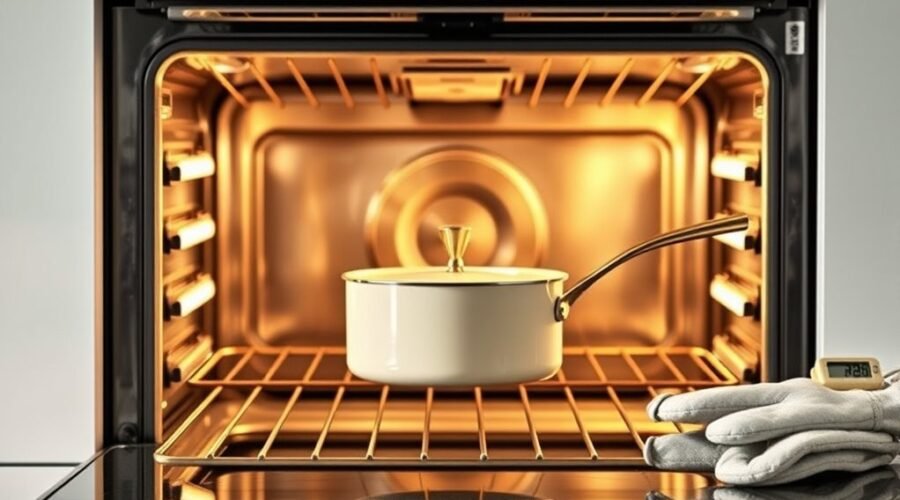
Think of your oven as a kiln: it’s powerful and precise, and your cookware needs to be up to the task. You can safely use Caraway pans in the oven up to 550°F, but you’ll want to confirm which pieces and handles are rated, preheat properly, and avoid thermal shock to protect the ceramic coating. Keep following to learn exact prep, common mistakes to avoid, and safe cooling and cleanup steps.
Can You Put Caraway Pans in the Oven? (Yes : Up to 550°F)
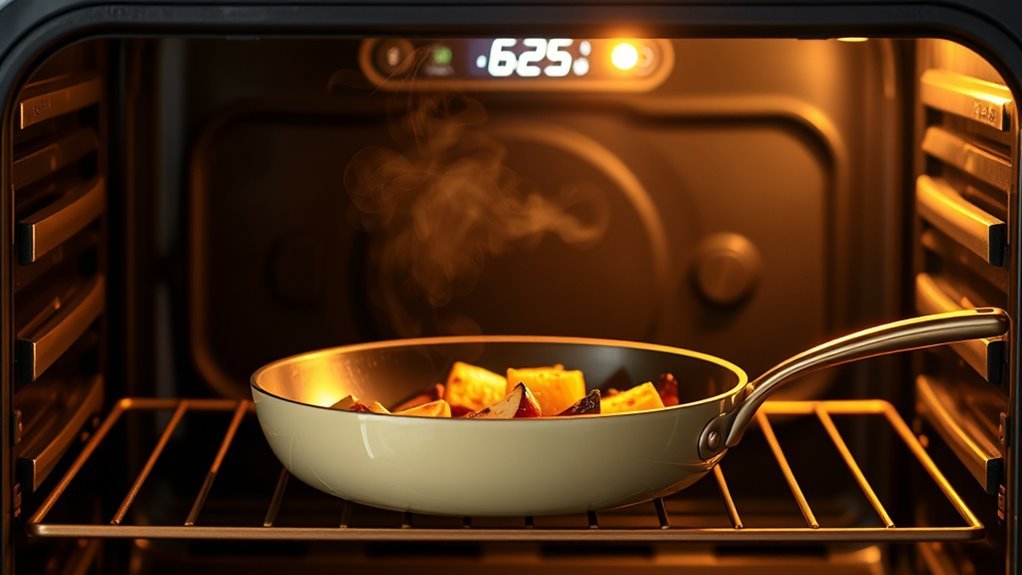
Wondering whether you can put Caraway pans in the oven? Yes — you can safely roast, braise, or finish dishes at temperatures up to 550°F.
Wondering if Caraway pans are oven-safe? Yes — use them up to 550°F to roast, braise, or finish dishes.
When you use your Caraway pans, trust that the ceramic coating is non-toxic and holds up under high heat without releasing harmful fumes, so you can cook boldly and protect your health.
These pans shift from stovetop to oven seamlessly, giving you freedom to sear then bake in one vessel.
Be methodical: set the oven within the 550°F limit, avoid sudden thermal shocks, and don’t use metal utensils on the surface while it’s hot to preserve the coating’s integrity.
Even though the stainless steel handles stay cool on the range, assume they’ll heat in the oven and use a towel or oven mitt when removing the pan.
Follow these safety-focused steps, and you’ll extend the life of your non-toxic cookware while cooking with confidence and autonomy.
Which Caraway Pieces Are Oven-Safe and How the Handles Behave
Which Caraway pieces can go from stovetop to oven, and how will their handles behave when you do? All Caraway cookware — the 10.5” fry pan, 3‑quart saucepan, 4.5‑quart sauté pan, and 6.5‑quart Dutch oven — are oven-safe up to 550°F, so you can confidently shift cooking methods from sear to bake.
Note the behavior of the stainless steel handles: they stay cool during stovetop use but will heat in the oven, so always use oven mitts when removing cookware.
- You’ll feel liberation using one set for multiple cooking methods, from induction to baking.
- You’ll trust the ceramic coating for versatile, low-stick performance while avoiding metal utensils.
- You’ll respect safety: handles heat in the oven, so protect your hands and your workflow.
Keep cleaning and maintenance deliberate—hand wash to preserve the ceramic coating and extend the life of your Caraway pieces while you cook boldly and safely.
How to Prepare Caraway Pans for the Oven
Before you preheat the oven, check that handles and lids are securely attached and free of damage so they won’t loosen or overheat.
Preheat to the recommended temperature (no higher than 550°F) to prevent thermal shock and guarantee even cooking.
Use only oven-safe accessories and nonmetal tools to protect the ceramic coating during cooking.
Inspect Handles And Lids
When you’re preparing Caraway pans for the oven, inspect the handles and lids to guarantee everything is safe for high heat: feel that handles are cool before lifting, confirm both pan and lid are rated for oven use (Caraway pans are safe to 550°F), and replace or omit any lid that isn’t explicitly oven-safe.
Check handles for cracks, loose screws, or warped fittings that could fail at high temperature. Verify lids’ material and manufacturer guidance; glass or silicone lids may have lower maximum temperature ratings.
Always grab hot cookware with oven mitts; never assume a cool handle once the pan has been in the oven. Freedom in the kitchen comes from disciplined safety—control temperature and equipment so your cooking stays bold and risk-free.
- Inspect for damage
- Confirm oven-safe rating
- Use oven mitts
Preheat To Recommended Temperature
How hot should your oven be? Preheat to the temperature required by your recipe, up to Caraway’s oven-safe limit of 550°F.
You’ll get even cooking when you let the oven reach the set point before introducing the pan. Verify pans are clean—no food residue that could compromise the nonstick cookware surface or the ceramic coating.
Don’t rush: avoid placing cold pans from the fridge into a hot oven, since sudden temperature shifts can crack the coating.
When you slide a Caraway pan in, use mitts and place it on a stable rack toward the center for balanced heat.
Preheating properly protects performance and extends the life of your oven-safe Caraway pieces while giving you predictable, liberated results.
Use Oven-Safe Accessories
Once your oven’s at the right temperature and the pan is room temperature, check that every accessory you plan to use is oven-safe up to 550°F.
You’ll prepare deliberately: verify lids, racks, and utensils won’t degrade or trap heat against the ceramic coating.
Avoid metal utensils with rough edges that can scratch; choose silicone or wooden tools rated for heat.
Use oven mitts when handling hot pans; handles get hot and sudden temperature changes can warp metal and damage coatings.
- Confirm each accessory’s oven-safe rating to 550°F — freedom comes from control.
- Swap rough metal for gentle tools to protect the ceramic coating — preserve your craft.
- Preheat gradually and use oven mitts to prevent warping from temperature changes — stay empowered.
Mistakes That Damage Caraway’s Ceramic Coating (And How to Avoid Them)
Don’t use metal utensils with sharp edges, since they can scratch the ceramic and reduce non-stick performance.
Avoid consistent high heat—cook on low to medium to prevent overheating and degradation of the coating.
Clean by hand with warm soapy water and a non-abrasive sponge, using a baking soda paste for stubborn spots rather than abrasive cleaners, dishwashers, or aerosol sprays.
Using Metal Utensils
Although metal utensils may seem convenient, they can quickly scratch and compromise Caraway’s delicate ceramic nonstick surface, so you should avoid them.
You bought a Caraway cookware set for its non-toxic ceramic finish and liberated cooking experience—protect it. Use wooden, silicone, plastic, or nylon tools to maintain the nonstick ceramic cookware’s integrity and performance.
Don’t use metal utensils with rough edges; they accelerate wear and create weak points where food sticks and coating fails. Clean gently with a non-abrasive sponge and hand wash to further preserve the surface. Small habits now prevent frustration later.
- Replace metal utensils immediately to protect longevity and safety.
- Choose right-feel tools to keep freedom in the kitchen.
- Inspect pans regularly for wear and act promptly.
Overheating Ceramic Surface
When you regularly expose Caraway’s ceramic surface to temperatures above its 550°F limit or cook on high heat for long stretches, you risk permanent discoloration and accelerated wear of the nonstick coating.
You want freedom in the kitchen, but safety and longevity matter: treat the pans as oven safe only within specified limits and avoid prolonged high heat stovetop cooking.
Overheating the ceramic coating causes visible browning on frequently used pans and gradual degradation of the non-stick surface.
To preserve performance, use low to medium heat settings, preheat gently, and avoid searing at extreme temperatures.
Don’t rely on quick, intense blasts of heat for liberation—control your heat to extend the life of the ceramic coating and keep your cookware functioning as intended.
Harsh Cleaning Methods
Having kept heat under control to protect Caraway’s ceramic, you’ll also need to guard against everyday cleaning mistakes that can shave years off the nonstick surface.
Be deliberate: never use metal utensils with rough edges or abrasive cleaners on ceramic-coated cookware. They scratch the finish and defeat your freedom to cook without worry. Favor hand washing with warm, soapy water and a soft sponge to preserve the coating.
- Don’t reach for harsh chemicals or scouring pads; they accelerate wear and strip the non-toxic layer.
- Resist the dishwasher habit; repeated cycles can degrade the nonstick performance over time.
- When you need to clean stubborn spots, make a baking soda paste and gently scrub—save the surface, reclaim your kitchen.
Removing and Cooling Caraway Pans Safely After Baking
Because Caraway pans withstand temperatures up to 550°F, you should still use oven mitts or a thick towel to remove them and set the pan on a heat-safe surface for a few minutes to cool. When you remove a pan after baking, handle with care: the handle and body retain heat. Let the pan rest to allow gradual cooling and avoid thermal shock that can harm the ceramic coating. Don’t place a hot pan on cold countertops; choose wood, trivet, or stovetop instead. Move deliberately, free from haste, to protect the pan and yourself.
| Action | Reason | Timing |
|---|---|---|
| Use mitts/towel | Prevent burns | Immediate |
| Set on heat-safe surface | Avoid thermal shock | 0–5 minutes |
| Allow gradual cooling | Preserve ceramic coating | 5–15 minutes |
| Handle with care | Extend pan life | Ongoing |
After cooling, you’ll be ready to proceed with gentle care that preserves non-stick performance and supports your culinary freedom.
Cleaning Caraway Pans After Oven Use to Preserve Nonstick Performance
Although the pan should be fully cool before you touch it, cleaning Caraway cookware is straightforward: use warm water, a soft sponge, and a drop of dish soap to gently remove food residue without scratching the ceramic nonstick.
After oven-safe use, you’ll prevent thermal shock and protect the ceramic coating by waiting until it’s room temperature. Hand washing is recommended even though the pans are technically dishwasher safe — you’ll extend nonstick performance and keep the finish vivid.
- Embrace control: rinse, sponge, soap — no scrubbing with metal or abrasives.
- Reclaim freedom: for stubborn bits, apply a baking soda paste, wait briefly, then rinse.
- Preserve trust: dry thoroughly and store without stacking sharp objects.
Follow these steps each time you clean the pan to maintain nonstick performance and the oven-safe integrity of the ceramic coating.
You’ll free yourself from premature wear and keep cookware reliable for years.
Troubleshooting Discoloration, Sticking, and When to Stop Using a Pan
Once you’ve let the pan cool and cleaned it gently, inspect its surface for signs of discoloration, sticking, or physical damage—these tell you whether performance has changed or the cookware needs retirement. Discoloration alone doesn’t compromise safety—Caraway pans are oven-safe to 550°F—but mark it mentally and continue to maintain the finish by avoiding metal utensils and abrasive cleaners. If food begins sticking despite correct technique, inspect for scratches or coating loss; that’s a clear signal to replace the pan.
| Issue observed | Action |
|---|---|
| Discoloration | Continue using; deep clean if desired |
| Light sticking | Use nonmetal utensils; re-evaluate technique |
| Scratches/warping | Replace pan; stop using |
Regularly examine edges and base for warping or excessive wear; these reduce performance and justify retirement. You’re entitled to cookware that empowers freedom in the kitchen—maintain what’s safe, replace what’s compromised, and keep cooking boldly within oven-safe limits.
Best Oven Uses for Caraway Pans (Roasting, Braising, Baking : and Limits)
When you need cookware that can move from stovetop searing to oven finishing, Caraway pans work well up to 550°F for roasting, braising, and baking; their non-toxic ceramic coating promotes even heat distribution so foods brown and cook uniformly.
You’ll find freedom in one pan that sears, then goes into the oven without hassle. Use oven-safe confidence for tight, controlled recipes and avoid temperature extremes beyond 550°F.
- Roasting: Sear meats on the stove, then transfer to the oven to finish; the non-toxic cookware surface keeps juices sealed and browning even, freeing you from multi-pot fuss.
- Braising: Start with a hot stovetop sauté, add liquid, cover, and braise in the oven—Caraway pans hold heat steadily so flavors deepen without sticking.
- Baking: Small casseroles and frittatas bake well; the non-stick surface reduces oil use, letting you cook cleaner, lighter, and with fewer compromises.
Always use oven mitts—handles get hot—maintain safety while embracing liberated cooking.
Frequently Asked Questions
Why Is Caraway Being Sued?
You’re being told Caraway is being sued because plaintiffs allege caraway cookware quality claims were misleading and harmful.
You’ll see caraway lawsuit details citing toxic chemical exposure, disputed caraway product reviews, and alleged false advertising that damaged caraway brand reputation.
You’ll want to weigh caraway customer experiences, regulatory evidence, and testing.
You should demand transparency, insist on safety verification, and seek accountability to protect liberated consumer choices.
My Caraway Pan Warped in the Oven. Is This Normal?
Yes — pans can warp, and it’s not uncommon.
You’ll want pan maintenance tips: avoid thermal shock, preheat gradually, and don’t set hot cookware on cold surfaces.
Follow oven usage guidelines to minimize heat distribution issues and use moderate temperatures to protect finish.
These warping prevention methods extend cookware lifespan concerns into practical action.
You’re reclaiming control by handling cookware safely and extending its useful life through disciplined care.
What Are the Negatives of Caraway Cookware?
You’ll face Durability concerns: pans can discolor, warp, or show wear.
Cooking performance is solid but sticky residues can appear with syrups.
The Nonstick coating needs gentle utensils and careful Care instructions—hand wash and avoid metal.
Price comparison rarely favors Caraway versus stainless steel if you’re budget-conscious.
You’ll want safety-first handling to protect coating and freedom to cook without worrying about premature replacement or cosmetic flaws.
Why Is Everything Sticking to My Caraway Pan?
Your food’s sticking because the non stick surface needs better care and technique.
You’ll preheat properly, use minimal oil, and match food compatibility to avoid high-heat browning.
Even heat distribution matters—avoid hotspots by moderating flame and letting the pan warm evenly.
Don’t use metal utensils or abrasive scrubbing; follow maintenance tips like soft sponges and gentle cleaners.
Do this and you’ll reclaim reliable, liberated cooking performance.
Conclusion
You can confidently use Caraway pans in the oven up to 550°F—just preheat, make sure pans are clean, and expect stainless steel handles to warm. Prepare pans by wiping dry and avoiding sudden temperature shifts; don’t use metal tools or abrasive cleaners that’ll damage the ceramic finish. When removing pans, use sturdy mitts and let them cool gradually to avoid thermal shock. Careful cleaning and mindful use will keep your pans performing safely and looking polished for years.