
Imagine your cookware as a shield, protecting your meals from unwanted substances. Stainless steel has long been a favored choice due to its durability and heat conductivity. However, concerns exist about metal leaching, especially when cooking acidic foods. Understanding the materials and safety measures can make a significant difference in your cooking experience. Are you aware of how to choose the right grade and maintain your stainless steel to guarantee it’s safe for your meals?
The Risks of Metal Leaching: What You Should Know
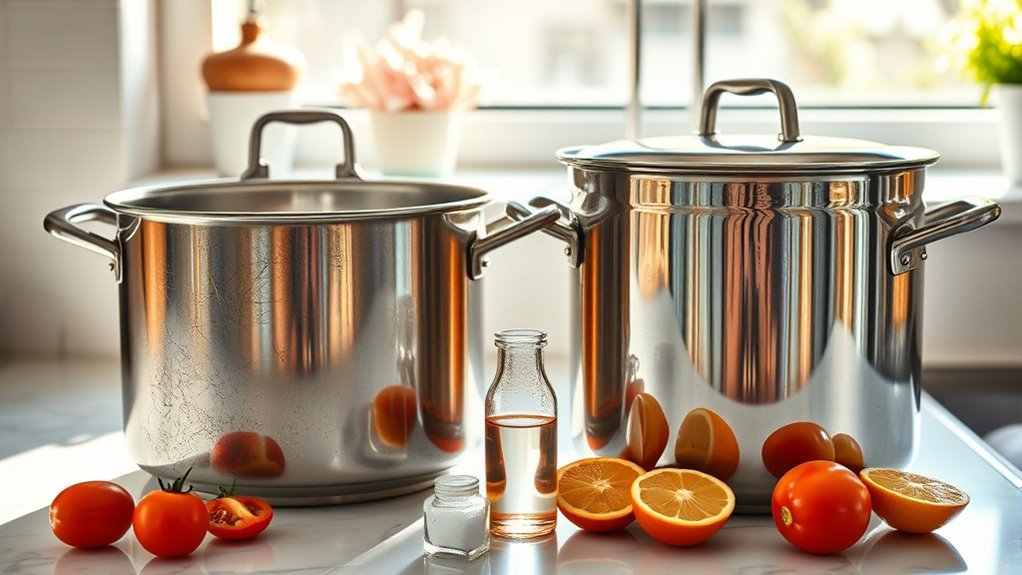
When cooking with stainless steel, it’s crucial to understand the potential risks of metal leaching, especially if you’re preparing acidic foods for extended periods.
Stainless steel cookware can leach nickel and chromium into your meals, which is a concern for those with nickel sensitivity—affecting about 10% of the population. This sensitivity can lead to dermatitis or inflammation from exposure to leached metals.
The 304-grade stainless steel, known for its high nickel content, poses a greater risk compared to the nickel-free 400-series, although the latter is more prone to rust.
The high nickel content of 304-grade stainless steel increases leaching risks, unlike the nickel-free 400-series, which is more rust-prone.
Regular wear and tear, like micro-scratches from abrasive cleaning, can also increase the surface area for acid exposure, leading to higher metal migration into food.
While some argue that the amounts leached are negligible, cumulative exposure, particularly in children, can be significant, making it wise to exercise caution.
Understanding Stainless Steel Composition and Grades
Understanding the composition and grades of stainless steel is vital for making informed choices about cookware. Here’s what you should know:
- Alloy Composition: Stainless steel primarily consists of iron, chromium (at least 10.5%), and often nickel. Variations affect durability and leaching potential.
- 304-Grade Stainless Steel: This grade is popular for cookware due to its high nickel content, but it can leach into food, especially with acidic ingredients over time.
- 400-Series Stainless Steel: Nickel-free and less prone to rust, but it’s not ideal for long-term use in cookware.
- Metal Sensitivities: Awareness of composition is important, especially for those with metal sensitivities; about 10% of people are allergic to nickel.
Being informed about these factors can help you choose cookware that aligns with your health needs and cooking habits.
How Stainless Steel Prevents Food Contamination
The unique properties of stainless steel make it a top choice for preventing food contamination. Its non-reactive surface guarantees that there are no chemical reactions with the foods you cook, preserving flavors while minimizing contamination risks.
The protective chromium oxide layer formed by stainless steel inhibits rust and corrosion, considerably reducing the chances of chemical leaching into your meals. Unlike other materials, stainless steel doesn’t harbor bacteria or absorb food particles, creating a safer cooking environment.
Studies show that when properly maintained, stainless steel cookware limits the transfer of harmful metals into food, making it a reliable option. Regular cleaning and maintenance are key to guaranteeing its effectiveness in preventing food contamination.
Advantages of Stainless Steel Cookware
Stainless steel cookware offers impressive durability and longevity, making it a smart choice for any kitchen.
Its excellent heat conductivity guarantees even cooking, allowing you to achieve perfect searing every time.
With proper care, you’ll enjoy reliable performance and a polished look for years to come.
Durability and Longevity
When you choose stainless steel cookware, you’re investing in a durable kitchen essential that can last decades without warping or rusting. Its impressive qualities provide a great cooking experience, making it a smart choice for anyone.
- Exceptional Durability: Stainless steel can endure high temperatures and resist scratching.
- Corrosion Resistance: Premium grades, like 18/10, enhance longevity, especially in humid environments.
- Non-Reactive Surface: It won’t leach harmful chemicals, preserving the true flavors of your food.
- Simple Maintenance: Regular care, like using gentle cleaners, keeps your cookware looking new.
With proper maintenance, your stainless steel cookware won’t only perform well but also maintain its appearance for years to come.
Heat Conductivity Benefits
Heat conductivity is one of the standout advantages of stainless steel cookware, offering you even cooking and precise temperature control.
The alloy composition of stainless steel excels at withstanding high temperatures without warping, making it ideal for searing and browning. This rapid heat conduction facilitates the Maillard reaction, essential for developing those rich, complex flavors you love in cooked dishes.
Plus, stainless steel won’t react with acidic or alkaline ingredients, ensuring your food’s flavor remains intact. Its non-porous surface is another benefit, as it doesn’t harbor bacteria and is easy to clean, promoting safety and hygiene in your kitchen.
With stainless steel, you’re not just cooking; you’re enhancing your culinary experience.
Top Cooking Tips for Stainless Steel
When cooking with stainless steel, mastering best practices can elevate your dishes and guarantee safety.
Preheating your pan and using the right oils are key to preventing sticking and achieving that perfect sear.
Additionally, maintaining your cookware properly keeps it looking great and performing well for years to come.
Best Cooking Practices
To achieve the best results with stainless steel cookware, mastering a few essential cooking practices is key. Here are some top tips to elevate your cooking experience:
- Preheat your stainless steel pan: Use the water droplet test to find the right heat before adding oil and food for ideal searing and to prevent sticking.
- Choose high-smoke-point oils: Opt for oils like canola or avocado to avoid burning and enhance flavor.
- Avoid cooking acidic foods for long: These can damage the protective chromium layer, risking metal leaching.
- Let proteins sear: Allow them to cook undisturbed for 2-3 minutes to form a crust, preventing sticking.
Remember to clean your stainless steel cookware promptly to maintain its durability!
Maintenance Essentials
Proper maintenance is essential for ensuring the longevity and performance of your stainless steel cookware.
Always preheat your stainless steel pan on low to medium heat for several minutes before adding oil; this prevents food from sticking and promotes even cooking. Use high-smoke-point oils like canola or avocado to enhance flavor without risking degradation.
After use, clean it promptly with non-abrasive materials to maintain its shine and avoid chlorine-based cleaners that can harm the protective layer.
Regularly inspect for deep pitting or scratches, as these can lead to corrosion and increase the risk of chromium and nickel leaching, especially with acidic foods.
Limit prolonged exposure to acidic ingredients to keep your meals safe and delicious.
Stainless Steel Maintenance Tips for Longevity and Safety
Maintaining your stainless steel cookware is essential for both longevity and safety. Following these tips will help you keep your cookware in top shape:
- Clean promptly: After cooking, rinse your stainless steel pans with hot water to prevent burnt food buildup and warping.
- Use gentle cleaners: Avoid abrasive cleaning materials that scratch the surface, compromising the protective layer. Instead, opt for alkaline or non-chlorinated products.
- Check for damage: Regularly inspect for deep pitting or corrosion. These signs may indicate exposure to iron and nickel, which can leach into your food.
- Vinegar and baking soda: For stubborn stains, a mixture of vinegar and water or a baking soda paste can effectively clean stainless steel cookware without damaging it.
When Should You Skip Stainless Steel?
While stainless steel cookware is celebrated for its durability and versatility, there are situations when it’s best to reconsider its use. If you’re cooking acidic foods, such as tomatoes or vinegar-based sauces, for extended periods, it’s wise to skip stainless steel. Prolonged exposure can compromise the protective chromium layer, leading to metal leaching that may pose health risks.
Additionally, if you have a nickel sensitivity, avoid high-nickel 304-grade stainless steel, as it can trigger dermatitis or inflammation. Older cookware with wear and tear, like deep pitting or corrosion, may expose iron and nickel to your food, further increasing risks.
Lastly, using stainless steel for food storage isn’t recommended, as it can promote metal migration into your meals. For lengthy cooking with acidic ingredients, consider alternatives like enameled cast iron to minimize potential health concerns.
How Does Stainless Steel Compare to Other Cookware?
When deciding which cookware to use, it’s essential to understand how stainless steel stacks up against other materials. Here’s a quick comparison:
- Durability: Stainless steel, especially 304-grade, withstands hot temperatures without warping or chipping, while non-stick coatings can wear out quickly.
- Heat Tolerance: Unlike non-stick pans, stainless steel is non-reactive, making it perfect for high-heat cooking and achieving that flavorful Maillard reaction.
- Nickel Content: 304-grade stainless steel contains nickel, which can leach into food, especially with acidic ingredients. This is a concern for those with sensitivities.
- Maintenance: While stainless steel is generally safe, wear and tear can increase the risk of metal leaching, unlike aluminum, which may rust but doesn’t leach as much.
Frequently Asked Questions
What Should You Not Cook in Stainless Steel?
You shouldn’t cook highly acidic ingredients, like tomatoes or citrus, in stainless steel for long periods, as they can weaken the protective layer.
Foods with high salt content and dairy can also cause sticking or burning if not monitored closely.
For best results, maintain your pans properly and avoid high heat, which can warp them.
Is It Healthy to Cook in Stainless Steel?
Cooking in stainless steel can be a wise choice for your culinary adventures. Its durability benefits and excellent heat conductivity enhance your cooking techniques, allowing you to achieve perfectly seared dishes.
To keep your cookware in top shape, remember some maintenance tips—avoid abrasive cleaners and tackle acidic foods mindfully. By doing so, you can enjoy the freedom of cooking without worrying about harmful leaching, ensuring a healthier kitchen experience.
Is Stainless Steel the Least Toxic Cookware?
Stainless steel isn’t necessarily the least toxic cookware, but it offers notable benefits. Its excellent heat conductivity guarantees even cooking, making it a popular choice.
While alternatives like cast iron or ceramic can be safer for certain individuals, regular stainless steel care is essential to prevent metal leaching.
Does Stainless Steel Release Toxins When Heated?
Yes, stainless steel can release trace amounts of metals like nickel and chromium when heated, particularly with acidic foods.
Curiously, studies show that 304-grade stainless steel, which contains higher nickel, leaches more than its nickel-free counterparts.
While its heat resistance and surface durability make it a popular choice, you should be cautious about prolonged cooking.
Regular maintenance can help minimize food interaction and maintain the cookware’s integrity, ensuring a safer cooking experience.
Conclusion
In conclusion, stainless steel cookware stands strong as a safe and stylish solution for your kitchen needs. By being mindful of metal leaching, maintaining proper care, and selecting the right grade, you can enjoy its numerous benefits without worry. Remember, though, to steer clear of prolonged cooking with acidic ingredients. With a little diligence, you can savor the satisfaction of superior stainless steel while ensuring safety and longevity for your culinary creations.

