
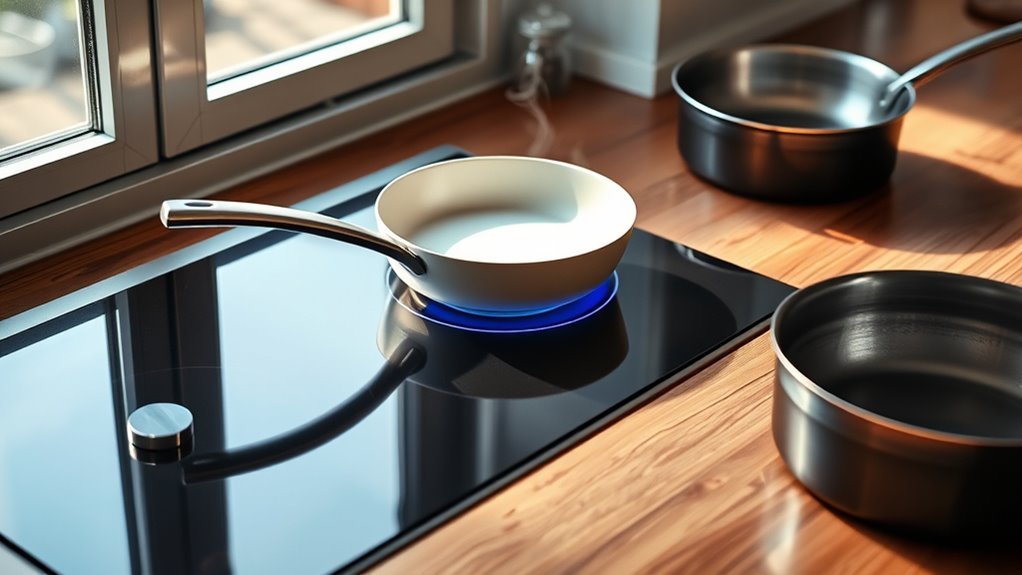
It’s not magic—your Caraway won’t levitate on an induction hob—but it can work quite reliably if it has the magnetic stainless‑steel base Caraway uses. You’ll want to pick their fry pans or saucepans, confirm magnet attraction, and expect even heating from the aluminum core plus a PTFE/PFOA/PFAS‑free ceramic surface. Keep going to see how to test compatibility, which pieces perform best, and how to avoid common pitfalls.
Does Caraway Work on Induction?
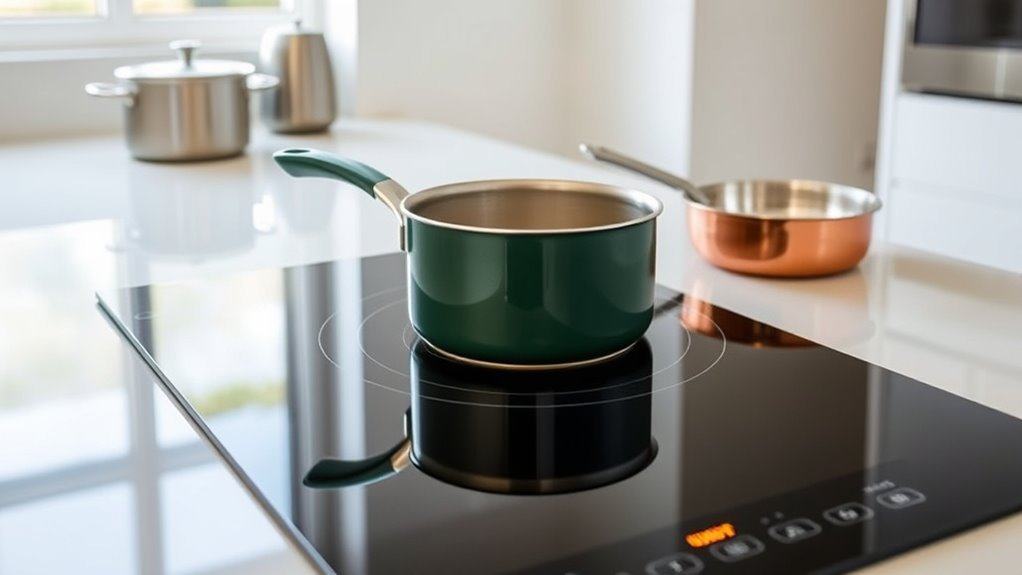
Curious whether Caraway works on induction? You can rely on Caraway cookware largely for induction compatibility because each piece includes a stainless steel base that links the aluminum construction to magnetic cooktops.
You’ll get nonstick performance from the ceramic coating while the aluminum construction beneath guarantees even heat distribution—important for efficient induction cooking. In practice, most cookware sets from Caraway perform well, though documented compatibility issues mean you shouldn’t assume every piece will work.
To be certain, test with a magnet: if it sticks to the base, the pan will engage the induction element. You’ll appreciate that the design balances a durable stainless steel base with the ceramic nonstick surface, so you don’t trade performance for compatibility.
Test with a magnet—if it sticks, the stainless base will engage induction, preserving nonstick performance and compatibility.
Still, check individual pieces before you commit; return options or set-specific specs protect you if one item doesn’t couple properly. This methodical check keeps your kitchen liberated from surprises and secures reliable induction cooking.
Why Caraway Cookware Is Induction‑Friendly
Because Caraway pairs a magnetic stainless-steel base with a ceramic-coated aluminum body, you get cookware that reliably engages induction elements while still delivering even heat and strong nonstick performance.
You’ll find Caraway cookware built from compatible materials that meet induction requirements without sacrificing the slick surface you want for low-fat cooking. The stainless steel base provides the magnetic response induction needs; the ceramic-coated aluminum core supplies rapid, even heating and light weight for agile handling.
Design and testing confirm induction-friendly behavior across Caraway’s cookware options, so you can pick saucepans and skillets engineered for ideal use on your cooktop.
That combination—stainless steel base plus ceramic-coated aluminum—balances durability, heat distribution, and nonstick performance in a way that’s practical and intentional.
If you seek liberation from temperamental pans, Caraway gives predictable induction response, consistent temperatures, and cookware that’s as functional as it’s stylish.
Best Caraway Pans for Induction Cooking
When you need reliable induction performance, start with Caraway’s fry pans and saucepans—the stainless‑steel bases guarantee magnetic coupling while the ceramic‑coated, hard‑anodized aluminum bodies deliver even heat and strong nonstick release.
You’ll find these pans among the best options for induction cookware because they pair compatible materials with practical design. Choose a cookware set that includes multiple sizes so you can scale meals and reduce appliance dependence.
Among the top induction choices—materials that match the cooktop and smart sizing to scale meals efficiently
The ceramic surface gives nonstick release without PTFE, PFOA, or PFAS, supporting healthy cooking and easier cleanup.
The stainless steel base optimizes heat distribution and rapid response to induction controls, letting you cook intentionally and efficiently. If you want freedom from clingy pans and toxic coatings, Caraway’s combination of style and substance liberates your kitchen routine.
Evaluate sizes and lids, prioritize pieces you use daily, and invest in the fry pans and saucepans first—those deliver the most consistent induction performance.
How to Test, Use, and Care for Caraway on Induction
Although Caraway pans are built with a stainless‑steel base that makes them induction‑compatible, you should still verify each piece and adopt specific use and care habits to maximize performance and longevity.
First, test with a magnet on the base to confirm induction compatibility before regular use. The ceramic-coated surface gives reliable nonstick properties and is PTFE-free, but it needs respectful handling.
Use Caraway cookware on low heat settings for most tasks; although oven-safe to 550°F, frequent high heat shortens coating life. Preheat briefly, then cook gently to preserve the nonstick properties and avoid warping.
Care and maintenance are straightforward: do hand washing with gentle sponges and mild detergent to prevent abrasion and chemical damage.
Dry thoroughly after washing to avoid mineral spots on the stainless base.
- Test with a magnet on each piece before first use.
- Prefer low heat settings; reserve oven use sparingly.
- Hand washing only; no abrasive pads.
- Follow maintenance to extend PTFE-free ceramic life.
Buying Tips and Common Issues When Choosing Caraway for Induction
Looking for induction-ready Caraway? When shopping, prioritize pieces explicitly labeled induction-ready since Caraway cookware uses a stainless steel base with ferrous materials that enable magnetic induction on induction cooktops.
Test compatibility yourself with a magnet: if it sticks to the base, it’ll work. Compare models for consistent nonstick properties; ceramic-coated aluminum performs well but reviews report variation in longevity and cooking performance.
Expect cleaning challenges—stained surfaces can need gentle scrubbing and adherence to care instructions. Avoid metal utensils to reduce abrasion and preserve the coating.
Factor in warranty, replacement part availability, and return policies to protect your purchase if nonstick issues arise.
Adopt rigorous cookware maintenance: cool before washing, use mild detergents, and dry fully to prevent staining.
These evidence-based steps help you claim freedom from common pitfalls and get reliable magnetic induction cooking performance from Caraway cookware.
Frequently Asked Questions
Why Is Caraway Cookware Being Sued?
You’re being sued because the Caraway cookware lawsuit alleges misleading marketing claims and manufacturing defects that spark consumer safety concerns.
You’ll see class action implications tied to product warranty issues, customer feedback analysis, and competitor comparisons amplifying doubts.
You’ll want legal outcomes predictions grounded in evidence, and consumer rights advocacy to push for refunds or fixes.
You’re entitled to transparency, accountability, and remedies if claims prove true.
What Cookware Is Best for Induction Cooktops?
Think of induction efficiency like a compass guiding your freedom: one cast-iron pan saved my dinner and day.
You’ll want cookware materials with magnetic bases—stainless steel or cast iron—for superior heat distribution and energy savings.
Look for flat bottoms, nonstick surfaces if desired, and weigh cooking techniques, maintenance tips, and brand comparisons.
Prioritize durable stainless steel for versatility, cast iron for retention, and evidence-based choices for liberated, efficient cooking.
What Are the Downsides of Caraway Cookware?
You’ll face durability concerns: the lightweight design sacrifices heat distribution and long-term performance.
Non stick performance’s good initially but may wear faster than stainless or cast iron.
Cleaning ease is high, design aesthetics and eco friendly materials appeal, but price comparison often shows premium cost for fewer pieces.
Warranty options vary; user reviews and brand reputation note mixed longevity and occasional induction compatibility issues, so test before committing.
What’s Better, Hexclad or Caraway?
A wise cook knows, “you get what you pay for.”
You’ll choose Hexclad if you want Hexclad durability, superior heat distribution, and top cooking performance; expect higher price comparison and strong user reviews.
You’ll pick Caraway for Caraway design, material quality that’s lighter, eco-friendly options, and easier maintenance ease; it’s more affordable.
Base your decision on brand reputation, long-term durability needs, and how much liberation you want from heavy upkeep.
Conclusion
You can use Caraway on induction if the piece has a magnetic stainless‑steel base—so check with a magnet and buy pieces labeled “induction‑ready.” You might worry ceramic coatings aren’t durable, but Caraway’s aluminum core and ceramic finish give even heat and reliable nonstick performance when cared for properly. Choose fry pans or saucepans for best results, avoid high heat, and follow gentle cleaning to preserve induction compatibility and long‑term performance.
