
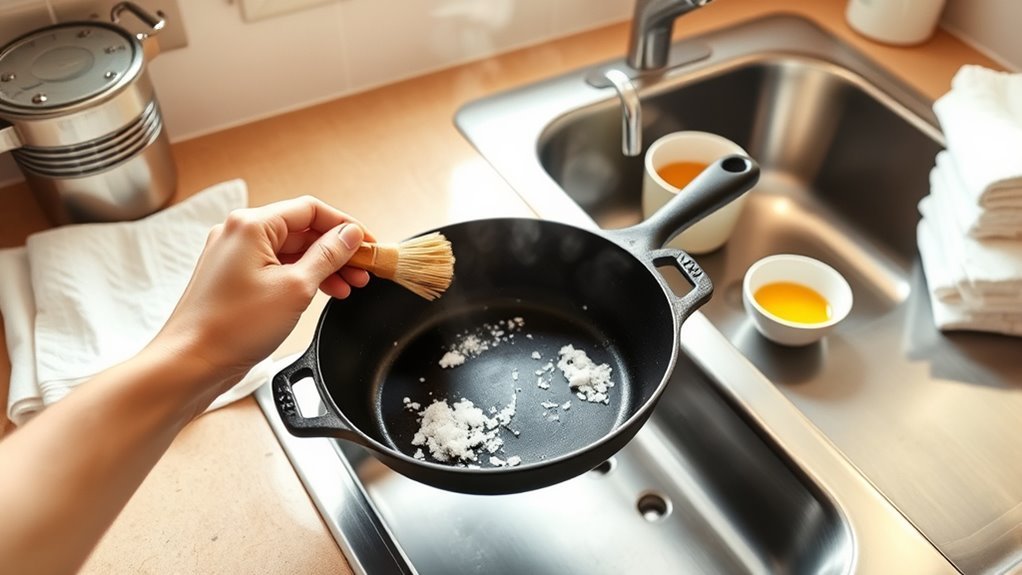
Nearly half of American homes own at least one cast iron pan, and if yours looks dull or sticky you can bring it back in an hour. You’ll feel the grit of kosher salt under the sponge, inhale warm oil in the oven, and hear the faint crackle as seasoning sets. Follow simple safety steps, choose the right scrub and oil, and learn quick fixes for rust—keep going to get a reliable routine that actually lasts.
Quick How‑To: Clean and Re‑season a Cast Iron Skillet
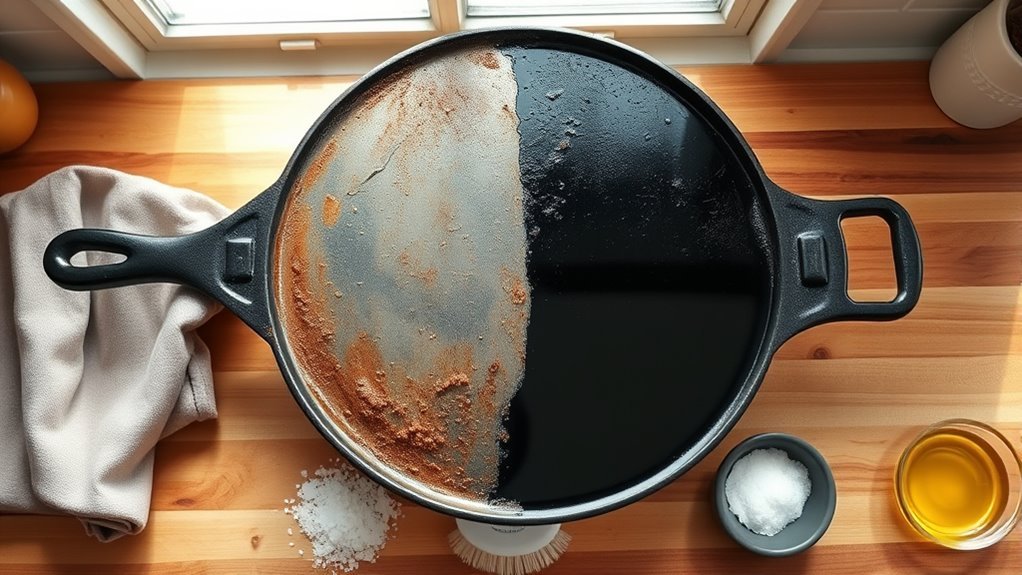
Start by letting the skillet cool slightly, then scrape off stuck bits with a spatula and scrub the surface with coarse salt and a damp sponge until it feels smooth.
Rinse under warm water and dry immediately with a towel, feeling the heat leave the metal so rust can’t take hold.
Rinse with warm water, then dry at once—feel the heat fade so rust never finds a foothold.
When it’s bone-dry, pour a teaspoon of neutral oil and rub a thin, even layer inside and out; you’ll see the metal gleam and feel slick but never greasy.
Place the oiled pan upside down in a preheated 400°F oven for about an hour, catching drips with foil beneath.
That heat bonds the oil into a hard, blackened shield — the seasoning that frees you from sticky frying and constant fuss.
After cooling, wipe any excess oil and keep this ritual light and regular: a quick clean, a swipe of oil.
You’ll prolong the skillet’s life and reclaim kitchen authority with each use.
Safety First: Cool, Protect Yourself, and Ventilate
After you’ve wiped away excess oil and let the skillet cool from the oven, don’t rush into rinsing or scrubbing — let it come down to room temperature so the metal won’t crack or warp. You’ll feel the relief as warmth fades; resist the impulse to plunge it into cold water. cool your pan naturally, and plan for safe handling.
| What to do | Why it matters |
|---|---|
| Wait until fully cool | Prevents thermal shock, warping, cracking |
| Use heat-resistant gloves | protect yourself from burns when moving or tipping |
| Ventilate the area | Clears fumes from oils or cleaners, keeps air sharp |
When you handle the skillet, slide on sturdy mitts, lift with intention, and breathe in the kitchen’s scent without choking on smoke. Keep a fire extinguisher nearby while cooking and during cooling. These small, deliberate acts free you from worry and keep your skillet — and your hands — safe.
Tools You Need : And What to Avoid
You’ll want just a handful of tools: coarse kosher salt for scrubbing, a non-abrasive sponge or stiff-bristled brush for loosening stuck bits, paper towels or a clean cloth for drying and oiling, and a plastic or wooden spatula for gentle scraping — plus a small bottle of cooking oil and a silicone brush to apply a thin, even coat.
These tools you need are simple, tactile, and let you reclaim your pan’s surface without drama. Feel the grit of salt, the spring of bristles, the smooth slide of oil — each helps preserve seasoning and prevent rust.
- Coarse kosher salt
- Non-abrasive sponge or stiff-bristled brush
- Plastic or wooden spatula
- Paper towels or clean cloth
- Small bottle of oil and silicone brush
Avoid using harsh detergents, scouring pads, or prolonged soaking; they’ll strip seasoning and invite rust.
Choose restraint: minimal tools, maximal freedom for your skillet.
Quick Clean: Scrape, Salt‑Scrub, Rinse, and Dry
Let the skillet cool a bit, then scrape off stuck bits with a wooden or plastic spatula so you don’t have to scrub hard later. You’ll feel the relief as heavy crumbs lift away — light scraping preserves seasoning and saves energy. Sprinkle coarse salt, use a non‑abrasive sponge, and salt‑scrub in circular motions; the grit does the work while you keep control. Rinse under warm water, watching particles swirl away, and pat the surface completely dry with a towel or paper towel to prevent rust.
| Step | Action | Sensation |
|---|---|---|
| 1 | scraping with spatula | crisp release |
| 2 | salt‑scrub gently | gritty friction |
| 3 | rinse & dry | clean, warm finish |
Finish by applying a thin film of oil while the pan’s slightly warm. You’re reclaiming a reliable tool — quick, effective care that keeps your cast iron ready and free.
Deep‑Clean Options: Boiled Water, Mild Soap, or Salt
If stuck-on bits won’t budge, bring a few inches of water to a rolling boil in the skillet to loosen residue so you can scrape it away without harming the seasoning.
You can also sprinkle coarse salt and scrub with a soft sponge, or use a small amount of mild soap when grease or bacteria needs removing.
Whatever method you choose, towel-dry and heat the pan briefly to evaporate moisture and prevent rust.
Boiling Water Method
One simple way to loosen baked‑on food is to fill your cast iron with water, bring it to a vigorous boil, then use a spatula to scrape away softened bits—this avoids aggressive scrubbing and helps preserve the seasoning.
You’ll hear the roar, smell steam, and feel relief as stuck food lifts. Use boiling water to free residues, then pour out debris and rinse for a clean dish.
- Heat until rolling boil to loosen crusted food.
- Scrape gently with a metal or heat‑proof spatula.
- Rinse under hot tap water to remove loosened particles.
- Dry immediately with a towel or gentle heat to stop rust.
- Rub a thin layer of oil while warm to restore seasoning and freedom to cook again.
Salt And Soap Options
You’ve got three reliable deep‑clean options—boiling water, coarse salt, or a bit of mild soap—each chosen to lift stubborn residue while protecting your pan’s seasoning.
Start with boiling water to loosen caked bits; you’ll hear the sizzle and see particles float free, then tip and wipe with a cloth.
For grit you can’t force off, sprinkle coarse salt and scrub with a non‑abrasive sponge; the salt abrades without stripping your seasoned surface.
If needed, add a drop of mild soap — not harsh detergent — rinse quickly, and dry immediately.
Finish by warming the skillet to evaporate moisture, then lightly oil.
These choices free you from stuck food while preserving that hard‑earned, nonstick coating.
Remove Rust: Vinegar Soak, Steel Wool, or Strip to Bare Iron
If rust’s taken hold, start by soaking the skillet in equal parts vinegar and water for up to an hour so the corrosion softens and smells tangy.
Then scrub the surface with steel wool to feel the grit lift the rust, rinse, dry, and rub a thin layer of oil to stop it coming back.
For deep pitting you can sand to bare iron and fully reseason to rebuild the pan’s nonstick surface.
Vinegar Soak Method
When rust has taken hold, submerge the skillet in a 1:1 vinegar-and-water solution for up to eight hours to loosen corrosion; you’ll smell a faint tang as the acid works and see flakes lift from the surface.
You’re reclaiming the pan—this vinegar soak method dissolves rust without harsh stripping. After soaking, scrub gently with steel wool or a pad to remove softened scale, rinse thoroughly, and dry immediately so moisture doesn’t reintroduce decay.
If needed, repeat for severe cases or finish over fire to reveal bare iron. Once clean, apply a thin oil layer and bake to lock in protection.
- Soak: 1:1 vinegar and water, up to 8 hours
- Scrub gently after soaking
- Rinse thoroughly
- Dry immediately
- Re-season with thin oil and bake
Steel Wool Abrasion
Grab a pad of fine steel wool and work with steady, firm strokes to scrub away loosened rust—the texture will go from gritty to smooth under your hand as flakes lift and the bare iron starts to show.
After a vinegar soak, the steel wool finishes what’s been loosened; press enough to remove corrosion but not to gouge.
Rinse thoroughly with warm water, feeling the skillet go from rough to clean, and dry it immediately with a towel so new rust can’t form.
When the surface is dry and receptive, apply a thin coat of cleaning oil to protect and begin rebuilding that seasoned layer.
You’re reclaiming your skillet—focused, tactile work that restores freedom to cook without compromise.
Full Strip And Reseason
Because heavy rust won’t respond to a quick scrub, you’ll start by stripping the pan back to raw iron—either with a 1:1 vinegar soak for about 30 minutes to loosen corrosion, followed by firm steel-wool or fine sandpaper work, or by taking harsher measures like a chemical rust remover or sandblasting for badly pitted pieces.
Rinse, dry immediately, then feel the bare metal under your palm—cold, raw, ready. You reclaim control by smoothing the surface until it’s shiny, then rinse and heat-dry to stop new rust.
- Soak in equal parts vinegar and water for ~30 minutes.
- Scrub with steel wool or fine grit until smooth.
- Use chemical stripper or sandblast for extreme pitting.
- Rinse thoroughly and dry instantly.
- Apply a thin oil layer and oven-bake to lock in polymerized oil and clean a cast iron surface.
Re‑Season in the Oven: Temps, Timing, and Oil Choices
If you want a durable, slick surface, preheat your oven to 450°F (232°C) and apply a very thin coat of oil—vegetable, canola, or flaxseed work well—inside and out, wiping off any excess so the pan isn’t sticky. You’re treating your cast iron skillet like a tool of liberation: hot metal, clear intention, and minimal residue. Place it upside down on the middle rack with a baking sheet below to catch drips. Bake for at least one hour so the oil reaches its smoke point and bonds; then let the heat fade and cool completely in the oven.
| Step | Purpose |
|---|---|
| Thin oil coat | Even polymerized layer |
| Upside down | Prevents pooling |
| 450°F (232°C) | Reaches smoke point |
| Cool in oven | Completes bonding |
You’ll feel the surface shift from coarse to slick—a tactile freedom that rewards patience and precise cooking oil choices.
Quick Stove‑Top Touch‑Ups Between Uses
Once the oven job’s done and the pan feels glassy, you’ll still want a quick routine after everyday cooking to keep that surface singing. For quick stove-top touch-ups, work while the skillet’s warm (not hot): sprinkle coarse salt, add a drop of water, and scrub with a damp sponge or cloth. The grit lifts stuck bits without stripping seasoning; don’t reach for soap.
If something’s stubborn, boil a little water in the skillet to loosen residue, then repeat the salt scrub. Rinse with warm water, feel the metal cool and smooth, and dry thoroughly—rust hates speed and heat.
Finish by wiping a whisper of oil across the cooking surface so it gleams and resists sticking.
- Sprinkle coarse salt over the warm surface
- Scrub with a damp sponge or cloth
- Boil water to release stubborn bits if needed
- Rinse with warm water and dry completely
- Lightly oil the pan to preserve seasoning and shine
Store & Care Your Cast Iron Skillet to Protect Seasoning
Think of storage as the final step in seasoning care: keep your skillet dry, uncovered, and away from crowded stacks so the oil layer stays intact and moisture can’t take hold. You’ll feel relief knowing the pan’s surface is safe — wipe it dry, rub a thin film of oil, then let air circulate. If you must stack, tuck a paper towel between pans to absorb humidity and prevent scratches. For longer protection, slip the oiled skillet into the oven; it stays warm, dry, and out of harm’s way.
| Action | Why it helps | Tip |
|---|---|---|
| Dry fully | Prevents rust | Heat briefly to evaporate water |
| Oil lightly | Maintains seasoning | Use neutral oil |
| Separate pans | Avoid scratches & trapped moisture | Paper towel barrier |
Store with intention: simple rituals free you from worry, preserve that slick, seasoned surface, and keep your skillet ready for the next liberated meal.
Troubleshooting: Sticky Surface, Flaking, or Rancid Smell
If your skillet feels tacky, you’ve probably left on too much oil during seasoning—wipe it thin and heat it briefly to cure.
A sour, rancid smell means old oil residue; scrub with coarse salt and a non‑abrasive sponge, rinse, dry, then re‑season with a thin coat.
If the surface flakes after overheating, scrape off loose bits and re‑season to rebuild a smooth, nonstick finish.
Sticky Surface Fixes
1 common cause of a sticky cast iron surface is over-seasoning or using too much oil during maintenance; you’ll notice a tacky feel, flaking, or even a faint rancid odor when old oil has built up.
You can reclaim the pan: scrub away loose flakes, wash with hot water and coarse salt, dry immediately, then perform a focused re-seasoning with a whisper-thin coat of oil. Heat the skillet until the oil polymerizes — you should see a dry, satin finish and feel a smooth, non-tacky surface.
- Scrub flakes and residue with coarse salt
- Rinse, towel-dry, and heat to evaporate moisture
- Apply a very thin oil layer; wipe excess
- Bake until the oil stops pooling and feels dry
- Inspect regularly for rust or stickiness
Rancid Smell Remedies
A sour, greasy smell coming from your cast iron usually means old oil’s gone rancid, and you’ll want to tackle it quickly so the odor doesn’t transfer to food. Strip sticky residue with coarse salt and a non-abrasive sponge, then wash with hot water and mild soap until the scent fades. For stubborn odors, simmer a 1:1 water-and-vinegar mix briefly to neutralize smells, rinse, dry, and re-season with a thin coat of vegetable or flaxseed oil in the oven. Inspect regularly and wipe with oil after cooking to prevent future rancid smell. Reclaim your pan and kitchen freedom with consistent cleaning and seasoning.
| Problem | Fix |
|---|---|
| Rancid smell | Hot water + soap |
| Sticky surface | Salt scrub |
| Stubborn odor | Water + vinegar |
| Re-season | Thin oil, oven bake |
Frequently Asked Questions
What Ruins Cast Iron Seasoning?
Overcooking acidity, harsh soaps, soaking, poor drying, and too much oil ruin cast iron seasoning.
You’ll smell sourness and see sticky patches or rust; prevent damage with rust prevention and simple seasoning tips like wiping excess oil thinly and heating to polymerize it.
Dry your pan hot, avoid long soaks, and skip strong detergents.
You’ll reclaim freedom at the stovetop by treating your skillet gently and confidently.
Is Dawn Dish Soap Good for Cast Iron?
Yes — Dawn effectiveness makes it okay sparingly for cast iron maintenance. You can use mild Dawn to scrub away stuck food, and you’ll feel the pan getting clean under warm water.
Rinse thoroughly, dry and rub a thin oil layer to restore the seasoned surface. Don’t use harsh detergents, and avoid daily soap so your skillet’s nonstick protection stays liberated and strong for bold, assertive cooking.
What Are Some Common Mistakes When Seasoning Cast Iron?
You’ll avoid turning your skillet into a gloopy, smoking mess by skipping these mistakes. You use too much oil, pick poor oil types, or don’t heat enough for proper polymerization.
You skip cleaning first, smear oil on a hot pan, or season at too-low temps. You’ll feel smoke, see sticky residue, and lose non-stick durability.
Follow sound seasoning techniques, apply thin layers, and heat properly for freedom from frustration.
What Should You Not Clean Cast Iron With?
Don’t clean cast iron with harsh detergents, steel wool, abrasive scouring pads, long water soaks, acidic cleaners like vinegar or citrus, or by microwaving.
You’ll strip seasoning, scratch surfaces, and invite rust.
For cast iron maintenance, choose gentle cleaning tools: stiff nylon brush, chainmail scrubber, or coarse salt and a cloth.
Rinse quickly, dry thoroughly, and oil while warm so your skillet feels restored and free.
Conclusion
You’ve got this—cleaning and re‑seasoning cast iron is simple if you stick to the basics. Cool the pan a bit, scrape and salt‑scrub, rinse and dry, then oil and bake to build that glossy, nonstick finish. For stubborn rust or grime, use vinegar or boil water, then reseason. Treat it like an old friend—keep it dry, oiled, and out of harm’s way—and it’ll reward you with even heat and a lifetime of flavorful meals, smooth as silk.
