

You can leave a flat tire overnight if your vehicle is safely parked, but you should arrange repair as soon as possible. The main concern is whether the tire has lost enough pressure to collapse under the vehicle’s weight. Driving on a flat is far more damaging than leaving it stationary, so don’t move the vehicle just to reach a tire shop.
Quick Answer
Yes, a car can sit on a flat tire overnight in an emergency. One night does not automatically ruin the tire or wheel. However, a fully deflated tire may suffer sidewall or bead damage, especially under heavy loads. Keep the vehicle stationary and have the tire inspected before driving again.
Last checked: September 25, 2026. Dates and figures were verified against official sources.
Key Takeaways
- Parking on a flat is generally less damaging than driving on one.
- A fully deflated tire can compress against the rim and develop hidden damage.
- A tire that has been driven flat needs professional internal inspection.
- A puncture may be repairable if it is in the proper tread area and meets industry repair limits.
- Use a suitable spare or roadside assistance rather than driving on a visibly collapsed tire.
Can You Leave a Flat Tire Overnight?
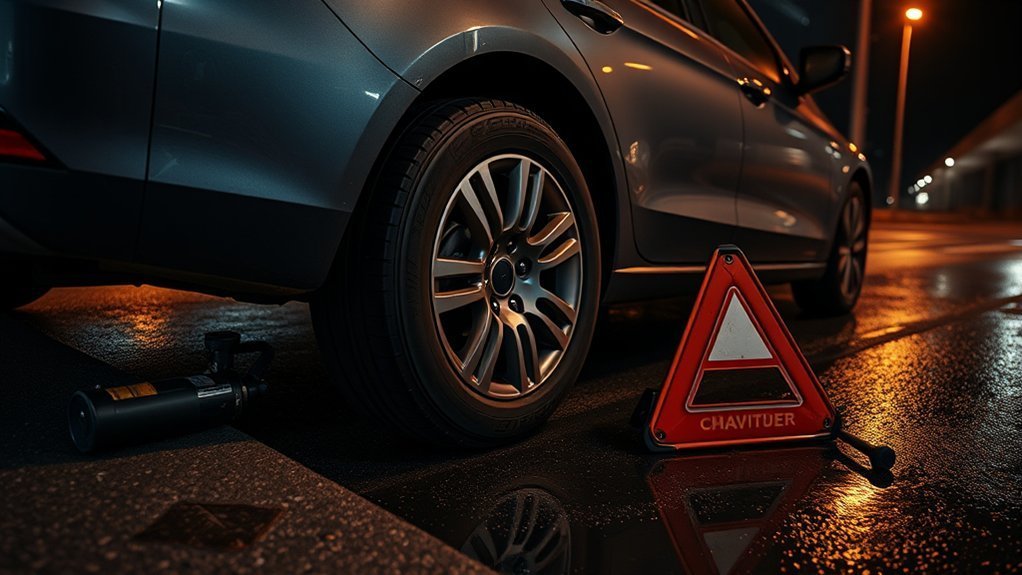
Yes. If your car is already parked in a safe location, leaving a flat tire overnight is usually more sensible than driving on it. However, treat the delay as temporary rather than assuming the tire will be safe to use tomorrow.
The condition of the tire matters more than the number of hours it remains parked. A slow leak with some remaining pressure is different from a fully collapsed tire supporting a heavy vehicle.
Follow these precautions if you must wait until morning:
- Park on firm, level ground, away from moving traffic.
- Put the transmission in Park, or use the appropriate gear for a manual transmission.
- Set the parking brake and switch off the engine.
- Avoid loading the vehicle with additional passengers or cargo.
- Do not roll the vehicle back and forth on the deflated tire.
- Arrange a spare tire installation, professional inspection, or roadside assistance.
If the vehicle is stranded beside a busy road, prioritize personal safety. Use your hazard lights and arrange help rather than attempting an unsafe roadside tire change.
Michelin’s flat tire guidance recommends replacing the damaged tire with a spare and having the original tire examined by a qualified professional.
Warning: Never leave a vehicle supported overnight by its emergency tire-changing jack. If lifting or supporting the vehicle is necessary, use equipment approved for the vehicle and have a qualified professional perform the work when appropriate. Never get underneath a vehicle supported only by a jack.
What Happens to a Flat Tire Overnight?
A flat tire loses the air pressure that normally helps it support the vehicle. As pressure falls, the sidewall compresses and the wheel moves closer to the ground.
The amount of damage depends on the remaining pressure, vehicle weight, tire construction, surface conditions, and whether the vehicle has moved while underinflated.
Air Pressure Loss
A tire with an active puncture may continue losing air overnight. A slow leak can eventually leave the tire completely deflated, even if it looked only slightly low when you parked.
Common sources of pressure loss include:
- A nail, screw, or other object penetrating the tread.
- A damaged valve stem or leaking valve core.
- A poor seal between the tire bead and wheel.
- Wheel corrosion or damage around the sealing surface.
Temperature also changes tire pressure. Michelin’s tire pressure guidance notes that a 10°F temperature drop corresponds to approximately 1 psi less pressure.
However, normal temperature changes alone do not explain a tire becoming completely flat overnight. A major pressure drop usually indicates a leak that needs attention.
Check the tire with a pressure gauge before attempting to drive. Do not rely only on the dashboard tire pressure monitoring system.
Sidewall Stress Damage
When inflation pressure disappears, the vehicle’s weight forces the sidewall into an unusually compressed position. The tire may develop visible folds or creases around the area touching the ground.
Longer periods under heavy compression can contribute to deformation. However, the more serious and immediate damage usually occurs when a severely underinflated tire rotates under load.
Driving causes the collapsed sidewall to flex repeatedly. This can damage the internal cords, inner liner, and other structural components.
Before reusing the tire, check for:
- Deep wrinkles or permanent-looking creases.
- Sidewall cuts, cracks, or exposed reinforcing cords.
- Bulges or unusual changes in shape.
- Damage near the tire bead.
Visible damage is a reason to keep the tire out of service. Even when the outside looks normal, an internal inspection may be necessary after severe pressure loss.
A tire technician must determine whether the casing remains safe to use.
Wheel and Tire Contact
When a tire becomes fully deflated, the wheel rim can press into the collapsed rubber. In severe cases, the rim may approach or contact the pavement.
That contact can place concentrated pressure on the sidewall and bead area, particularly when the vehicle is heavily loaded or parked on an uneven surface.
The risk becomes much greater if the vehicle moves. The rim may pinch the tire against the road, damaging the rubber and potentially scraping or bending the wheel.
Check the rim for visible damage and inspect the valve stem before arranging service.
A wheel that shows cracks, deformation, or significant damage should be examined professionally before another tire is mounted.
Do not assume that the tire is safe simply because it regains its normal shape after inflation.
Can a Flat Tire Damage the Wheel?
Yes, a flat tire can damage the wheel, especially if the vehicle is driven while the tire is deflated. Leaving it stationary overnight is less likely to cause serious wheel damage, but prolonged compression or direct ground contact can still create problems.
The wheel rim normally sits within the inflated tire. Without enough air, the rim can press against the collapsed sidewall and may become exposed to the road surface.
A flat tire does not automatically damage the wheel overnight, but driving on it can quickly damage both the tire and rim.
Possible problems include:
- Rim deformation: A bent flange can prevent the tire from sealing correctly.
- Surface damage: Scratches or gouges may expose metal and increase corrosion risk.
- Bead sealing problems: A damaged sealing surface may cause repeated air loss.
- Vibration: A bent or damaged wheel may not rotate evenly after the tire is replaced.
Inspect both the visible outer rim and the inner rim when the wheel is removed.
A flat tire sitting overnight does not, by itself, mean the vehicle’s wheel alignment has changed. If the vehicle later pulls to one side or develops persistent vibration, ask a technician to check the tire, wheel, balance, and alignment as appropriate.
When Is a Flat Tire Unsafe to Drive On?
A conventional tire is unsafe to drive on when it has lost enough pressure that it cannot support the vehicle correctly. A visibly collapsed tire should not be driven to a repair shop, even at low speed.
Signs of an unsafe tire include:
- The sidewall is crushed against the pavement.
- The tire is completely deflated or cannot hold pressure.
- The wheel rim is touching or nearly touching the road.
- The tire has a sidewall bulge, tear, or exposed cords.
- You hear scraping or heavy flapping while moving.
- The vehicle pulls sharply, wobbles, or becomes difficult to control.
Continuing to drive can generate excessive heat, destroy internal tire components, damage the bead, and harm the wheel.
Some vehicles use specially designed run-flat tires that permit limited movement after pressure loss. These have specific speed, distance, and operating limits that vary by tire and vehicle.
Do not assume ordinary tires have run-flat capability.
If a flat develops while driving, hold the steering wheel firmly, reduce speed gradually, and move to a safe stopping location. Avoid sudden steering or hard braking.
What to Do After Finding a Flat Tire
Start by identifying whether the tire has a minor pressure loss or has become fully deflated. Do not attempt to drive or reinflate a tire that may have suffered structural damage.
A basic flashlight and tire pressure gauge can help with the initial check. You may also need a properly inflated spare, the vehicle’s tire-changing tools, or roadside assistance.
Check Tire Damage
Inspect the tire before moving the vehicle. Look for punctures, damaged sidewalls, exposed cords, bulges, and anything unusual around the wheel.
Follow these steps:
- Look at the tire’s tread and sidewall for nails, screws, cuts, or other visible damage.
- Check whether the tire is merely low or completely collapsed.
- Inspect the visible wheel rim for bending, cracks, and impact marks.
- Look for damage around the valve stem and tire bead.
- Note any signs that the vehicle was driven while the tire was flat.
Leave an embedded nail or screw in place until a technician examines the tire. Removing it may cause faster pressure loss.
A puncture located in the tread may be repairable. Damage extending into the shoulder or sidewall generally requires replacement.
According to the U.S. Tire Manufacturers Association’s repair guidelines, a repairable passenger tire puncture must be confined to the designated tread repair area and cannot exceed 1/4 inch (6 mm) in diameter.
The tire must also pass an internal inspection. A small puncture is not repairable if the casing has suffered unacceptable structural damage.
Inflate If Safe
A tire with a minor pressure loss may be suitable for inflation, but a completely flat or visibly damaged tire needs professional assessment first. Adding air does not repair internal damage.
If the tire has only a small pressure loss, shows no signs of structural damage, and has not been driven while flat, follow these steps:
- Read the recommended cold tire pressure on the driver’s door placard or in the owner’s manual.
- Measure the existing pressure with a reliable gauge.
- Add air to the vehicle manufacturer’s recommended pressure if the tire is suitable for inflation.
- Recheck the reading and watch for continuing pressure loss.
- Arrange professional leak diagnosis and repair.
The NHTSA tire safety guidance explains that the correct inflation pressure comes from the vehicle placard, not the maximum pressure molded into the tire sidewall.
Do not intentionally leave the tire below the recommended pressure because its sidewall looks stressed. Visible sidewall damage is a reason to stop and seek professional help.
Likewise, do not attempt ordinary inflation if the bead has separated from the wheel or the tire may have been damaged while running flat.
If your vehicle includes an emergency sealant and compressor kit, follow its instructions and operating limits. Such kits are temporary mobility measures, not substitutes for a proper tire repair.
Note: A qualified tire technician should inspect any tire that has been completely deflated, driven flat, or exposed to suspected structural damage. Reaching the recommended pressure does not prove that the tire is safe to drive on.
Arrange Repair Soon
Arrange professional service as soon as possible. A technician can identify the leak, remove the tire from the wheel, and inspect its internal condition.
A proper puncture repair involves more than pushing a plug into the hole from outside.
The repair process generally includes:
- Locating the source of pressure loss.
- Removing the tire from the wheel.
- Inspecting the inner liner, sidewalls, bead, and casing.
- Confirming that the puncture meets repair requirements.
- Filling the puncture with suitable repair material and sealing the inner liner with a patch.
- Remounting the tire and checking pressure retention.
A combination plug-and-patch repair addresses both the puncture channel and the inner liner. An outside-only plug is not an acceptable permanent repair under industry guidelines.
If the tire has damaged cords, internal separation, an unsuitable puncture, or an unsafe bead, replacement may be necessary.
How to Prevent Flat Tires in the Future
You cannot prevent every puncture, but regular tire maintenance reduces the risk of avoidable pressure loss and tire failure. The most useful habits are checking inflation pressure, inspecting the tread, and responding to small leaks before they become complete flats.
Use the following maintenance schedule as a practical starting point:
| Action | Interval | Purpose |
|---|---|---|
| Pressure check | Monthly and before long trips | Identify pressure loss and reduce heat buildup |
| Tread inspection | Biweekly | Find embedded debris and visible damage early |
| Rotation | 5,000–7,500 miles, or as specified by the vehicle manufacturer | Promote more even tread wear |
Inspect your valve stems and caps, and address any slow leak promptly. Maintain the recommended pressure rather than relying on how the tires look.
Keep the vehicle within its rated load capacity. Avoid striking potholes and curbs, which can damage sidewalls or bend wheels.
Check your spare tire and emergency equipment as part of your routine maintenance. A usable spare can prevent a minor roadside problem from becoming a towing emergency.
If you notice recurring vibration, abnormal tread wear, or repeated pressure loss, arrange a professional inspection rather than repeatedly adding air.
Frequently Asked Questions
How Do I Tell if the Tire Bead Is Damaged?
A damaged tire bead may cause repeated air loss or prevent the tire from sealing against the wheel. Look for visible cuts, deformation, or damage around the rim. Some bead damage is hidden while the tire is mounted, so a technician should remove and inspect it before deciding whether the tire can be reused.
Can Weather Change a Flat Tire’s Condition Overnight?
Yes, falling temperatures can lower tire pressure overnight. Cold weather can also make temporary tire deformation more noticeable. However, weather alone does not normally explain a tire becoming completely flat. Michelin’s flat-spotting guidance explains how temperature, tire construction, vehicle load, and parking duration affect deformation.
Should I Move a Flat Car on a Donut Spare?
Yes, a suitable, properly inflated donut spare can be used temporarily after the flat tire is removed. Follow the speed, distance, and pressure limits in your owner’s manual and on the spare. AAA’s tire-changing instructions explain how to install a spare safely and when to request professional help.
Is It Safe to Inflate a Tire With a Puncture?
Sometimes, but only when the tire is suitable for inflation and has no suspected structural damage. A minor slow leak is different from a tire that has been driven completely flat. If the tire has collapsed, shows sidewall damage, or may have internal damage, use a spare or arrange professional inspection instead.
How Much Does Roadside Tire Repair Usually Cost?
Roadside tire service has no universal price. As a documented example, AAA Central Penn’s November 2025 service announcement listed $49.95 plus tax for members and $69.95 plus tax for nonmembers, with an additional $110 nonmember service fee. These are regional service prices, not nationwide repair rates. Towing, replacement tires, and permanent shop repairs may cost extra.
Will a Flat Tire Be Ruined After Sitting Overnight?
Not necessarily. A single night of stationary parking does not automatically make a tire unusable. Its condition depends on the amount of pressure lost, vehicle load, existing damage, and whether it was driven flat. A professional internal inspection is the safest way to determine whether the tire remains repairable.
Does Roadside Assistance Repair a Flat Tire?
Roadside assistance often installs a usable spare or arranges towing rather than completing a permanent puncture repair. Coverage depends on the provider and membership. For example, AAA’s published membership terms distinguish spare tire installation from permanent tire repair. Confirm what your service includes when requesting assistance.
Conclusion
You can leave a flat tire overnight when the vehicle is safely parked, but don’t drive on a collapsed tire the next morning. Check for visible damage, use a suitable spare if available, and arrange professional inspection. A tire that looks normal after inflation may still have hidden damage, so proper assessment is the safest next step.
Sources
- Michelin — What to Do With a Flat Tire: Flat tire risks, pressure loss, wheel damage, and professional inspection.
- Michelin — Tire Flat Spotting: Temporary deformation, parking duration, and temperature effects.
- U.S. Tire Manufacturers Association — Tire Repair Basics: Repairable puncture locations, size limits, and internal inspection requirements.
- NHTSA — TireWise: Recommended inflation pressure, tire inspection, rotation, and safety guidance.
- AAA — How to Change a Tire: Safe stopping, spare installation, and roadside procedures.
- Michelin — Tire FAQs: Temperature-related pressure changes and tire maintenance.
- AAA — Membership Terms and Conditions: Spare tire installation and roadside repair coverage.
- AAA Central Penn — Flat Tire Service Announcement: Published November 2025 regional service pricing example.

