
The best cedar raised garden beds give you a durable place to grow vegetables, herbs, and flowers. But not every cedar bed works the same way. Some offer deep soil for larger plants, while elevated models make gardening easier on your back. The right choice depends on your available space, the crops you want to grow, and how much bending you can comfortably manage.
For most backyard gardeners, the Greenes Fence Premium Cedar Raised Garden Bed is our best overall pick. Its spacious planting area, untreated cedar construction, and expandable design make it versatile. For a smaller growing area with thicker boards, the Infinite Cedar Premium Raised Garden Bed is our value pick.
We compared eight cedar raised beds using their dimensions, construction, planting depth, drainage, assembly methods, and available manufacturer information. The comparison below explains where each model works best.
Best Cedar Raised Garden Beds Compared
| Product | Best for | Footprint | Height / Depth |
|---|---|---|---|
|
Budget
|
Compact elevated gardening | 48 x 24 in. | 30 in. overall height |
|
Premium
|
Standing-height gardening | 96 x 24 in. | 29 in. high; 10 in. planting depth |
|
Premium
|
Large gardens with bolted corners | 96 x 48 in. | 17.5 in. frame height |
| Lined elevated planting | 48 x 24 in. | 30 in. overall height | |
|
Mid-range
|
Narrow garden layouts | 96 x 24 in. | 14 in. frame height |
|
Mid-range
|
Thick cedar boards and simple setup | 72 x 36 in. | 11 in. frame height |
|
Premium
|
Best overall; expandable growing area | 96 x 48 in. | 17.5 in. frame height |
|
Premium
|
Deep-rooted vegetables and berries | About 73.5 x 39.5 in. | 16.5 in. frame height |
Best Cedar Raised Garden Beds: Our Top Picks
1. Maple99 Cedar Raised Garden Bed with Legs, 48 x 24 x 30″
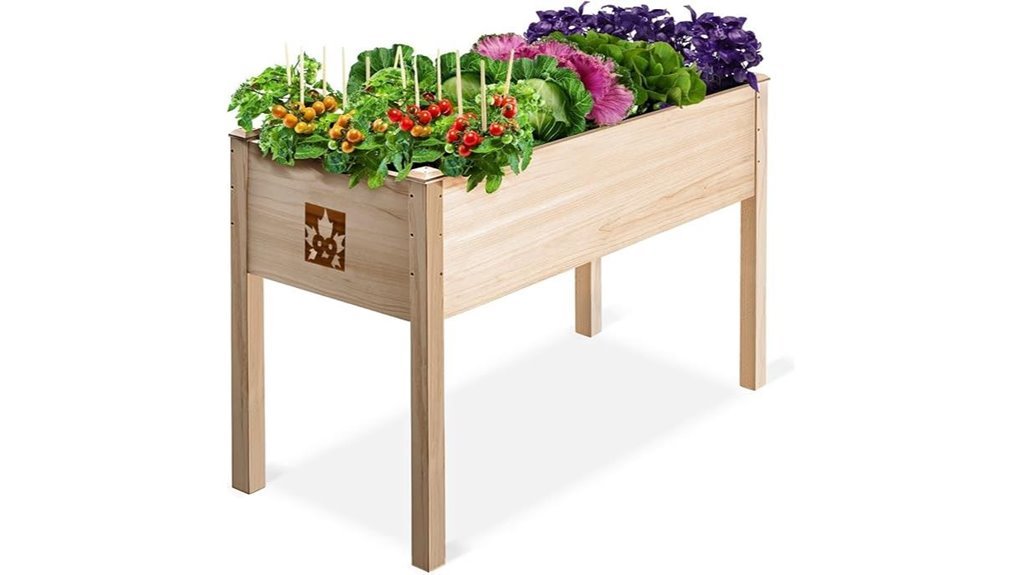
Bottom line: The Maple99 Cedar Raised Garden Bed is a practical choice if you want to grow herbs and vegetables without kneeling. Its compact footprint and 30-inch overall height make it suitable for patios and smaller gardens.
- Footprint: 48 x 24 inches, suitable for compact growing areas.
- Height: 30 inches overall, reducing the need to bend.
- Construction: Cedar wood with a natural, paintable finish.
- Capacity: Supports up to 200 pounds of soil, plants, and water.
- Assembly: Hardware and instructions included, with no cutting required.
The raised planting box keeps your vegetables and herbs at a convenient working height. That makes everyday jobs like watering, weeding, and harvesting more comfortable.
Cedar provides natural resistance to decay and insects. The wood can also be painted if you want the planter to match your patio. Its elevated design helps separate the growing area from ground-level weeds and some animals.
The main limitation is its weight capacity. You need to account for the combined weight of moist soil, water, plants, and accessories. The smaller planting area also makes it better for herbs and modest vegetable crops than for a large garden.
- Comfortable elevated design reduces bending.
- Compact footprint fits many patios and balconies.
- Natural cedar construction can be painted.
- Hardware and assembly instructions are included.
- Limited growing area for larger crops.
- The 200-pound capacity restricts heavy soil loads.
- Wood may require maintenance after extended outdoor exposure.
2. Gardener’s Supply Company Elevated Cedar Raised Garden Bed 2′ x 8′
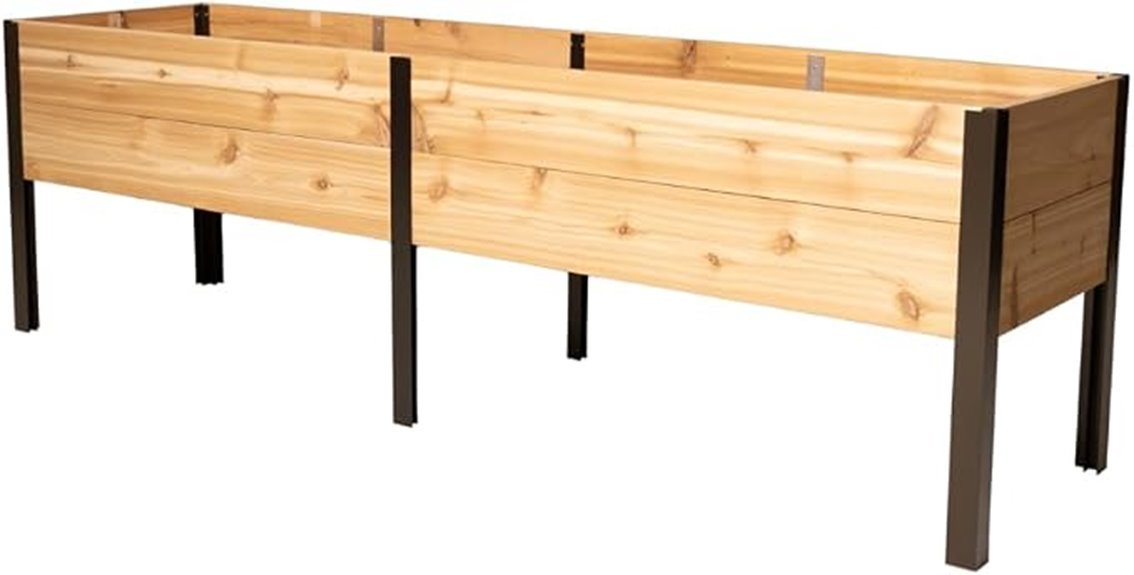
Bottom line: The Gardener’s Supply Company Elevated Cedar Raised Garden Bed offers a long planting area at a comfortable working height. It is especially useful if kneeling or bending makes gardening difficult.
- Footprint: 96 x 24 inches, providing 16 square feet of growing area.
- Height: 29 inches overall, with a 10-inch planting depth.
- Construction: Cedar sides and rust-resistant aluminum corners.
- Soil capacity: Approximately 13.4 cubic feet of potting mix.
- Assembly: Screw-fastened construction with supplied components.
Unlike a ground-level raised bed, this model places its growing compartment above the ground. You can tend plants while standing, and the narrow width allows access from the sides.
The slatted base supports drainage, while side vents help excess moisture escape. These features matter because elevated planters have a contained growing area rather than direct access to garden soil.
One important detail is its actual planting depth. Although the complete planter stands 29 inches high, the soil compartment is only 10 inches deep. Gardener’s Supply recommends lightweight potting mix rather than heavy topsoil, clay, sand, or rocks.
This planter suits herbs, flowers, leafy vegetables, and other crops that fit its root space. The long frame needs adequate room, and its potting-mix requirement increases the amount of material needed during setup.
- Standing-height design reduces kneeling and bending.
- Long, narrow planting area is easy to reach from the sides.
- Cedar and aluminum construction suits outdoor conditions.
- Slatted drainage base and side ventilation help manage moisture.
- Ten-inch planting depth limits some larger root crops.
- The eight-foot length may not fit smaller patios.
- Requires a substantial amount of lightweight potting mix.
3. Infinite Cedar Select Raised Garden Bed 4′ x 8′ x 17.5″
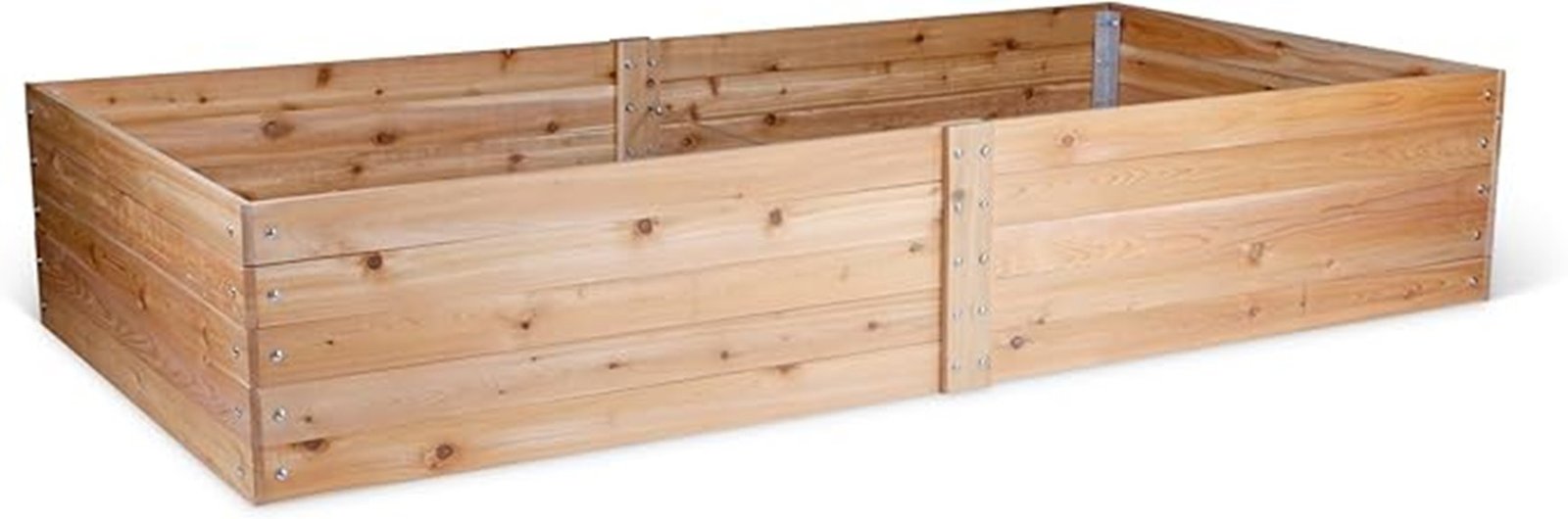
Bottom line: The Infinite Cedar Select 4′ x 8′ Raised Garden Bed is a good match for gardeners who want a spacious, deeper cedar bed with reinforced bolted corners.
- Footprint: 4 x 8 feet, allowing space for mixed plantings.
- Height: 17.5 inches, offering more soil depth than shallow frames.
- Construction: Natural Western Red Cedar with 11/16-inch-thick boards.
- Assembly: Pre-cut, pre-drilled boards connected with bolts and nuts.
This ground-level bed uses Western Red Cedar from North America. The wood is naturally resistant to weathering and decay and does not require pressure treatment. You can leave it unfinished or apply a suitable finish for a different appearance.
Its reinforced corner design uses mechanical fasteners rather than simple dovetail joints. The boards arrive prepared for assembly, reducing measuring and cutting work.
The 17.5-inch frame gives roots more growing space than many shorter raised beds. However, because the bed sits on the ground, you still need to bend or kneel to work at soil level.
Plan for its large footprint before ordering. You should also allow room around the bed so you can reach the planting area without stepping on the soil.
- Spacious four-by-eight-foot planting area.
- Natural Western Red Cedar without pressure treatment.
- Reinforced bolted corners support the frame.
- Pre-cut and pre-drilled components simplify assembly.
- Large footprint is unsuitable for small spaces.
- Bolted assembly takes more effort than interlocking kits.
- Still requires bending because it sits at ground level.
4. SoliWood Cedar Raised Garden Bed with Legs, 48 x 24 x 30″
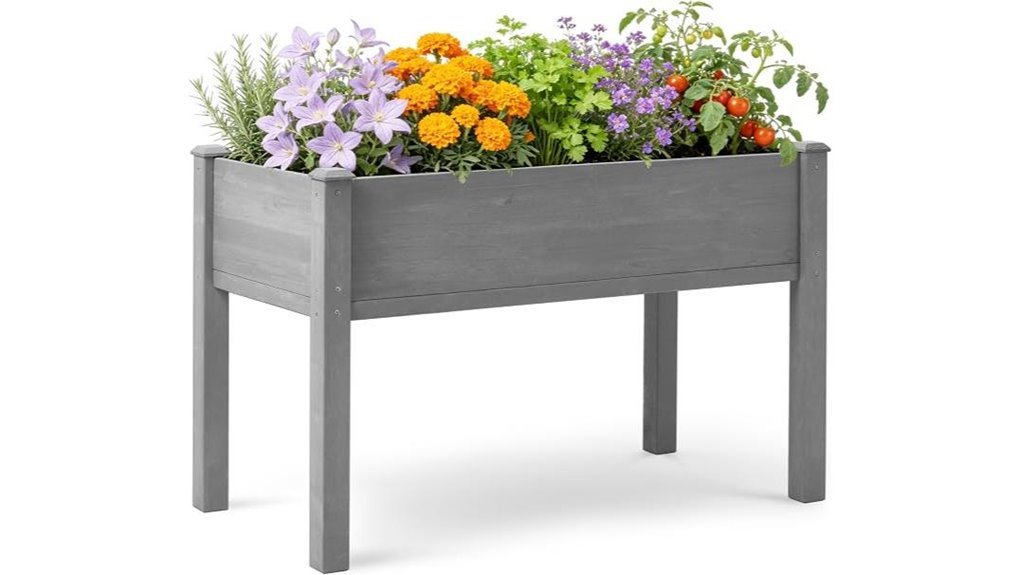
Bottom line: The SoliWood Cedar Raised Garden Bed with Legs combines a standing-height design, a soil liner, and built-in drainage. It is suitable for gardeners who want a compact, self-contained planting box.
- Footprint: 48 x 24 inches, suitable for patios and smaller yards.
- Height: 30 inches overall, allowing more comfortable access.
- Construction: Cedar wood with a water-based protective finish.
- Capacity: Six cubic feet of growing space and a 300-pound support limit.
- Assembly: Pre-drilled components, with a liner included.
The six-cubic-foot growing area provides room for herbs, flowers, vegetables, and some compact fruiting plants. You can place the planter on a porch, balcony, patio, or level backyard surface.
Drainage holes allow excess water to escape, while the included liner helps separate the soil from parts of the wooden structure. The protective finish gives the planter a finished appearance and helps it withstand outdoor use.
Compared with the Maple99 model, this planter has a higher stated weight limit. However, the growing area is still compact, so it is not a substitute for a full-sized garden bed.
Before filling it, consider the combined weight of moist growing mix and mature plants. An elevated planter must support that weight through its frame and legs.
- Standing-height design makes tending plants easier.
- Included liner helps separate soil from the wooden box.
- Drainage holes help prevent trapped water.
- Stated 300-pound load capacity offers room for the filled planter.
- Smaller planting area than ground-level garden kits.
- Requires assembly before filling.
- Filled weight must remain within the support limit.
5. Infinite Cedar Select Raised Garden Bed 2′ x 8′ x 14″
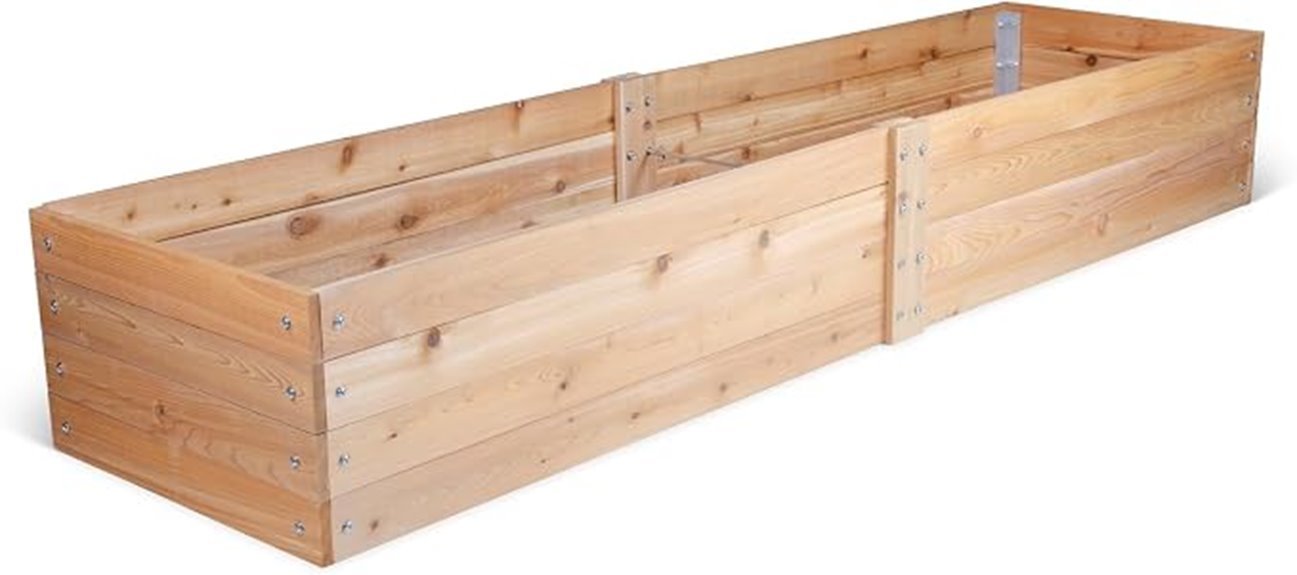
Bottom line: The Infinite Cedar Select 2′ x 8′ Raised Garden Bed is useful for long, narrow planting areas. Its 14-inch height provides more soil depth than shallow frames without taking up a four-foot-wide space.
- Footprint: 2 x 8 feet, suitable for narrow layouts.
- Height: 14 inches, providing moderate planting depth.
- Construction: Natural Western Red Cedar with 11/16-inch-thick boards.
- Assembly: Pre-cut, pre-drilled boards with bolts and nuts.
This model uses the same Select construction approach as the larger Infinite Cedar bed. Its natural cedar boards resist weathering, and reinforced corners provide mechanical connections between the sides.
The two-foot width makes reaching across the bed easier. It works well along a fence, beside a walkway, or in another long planting area, provided you can access the plants comfortably.
Because the frame is left unfinished, its color will change naturally with outdoor exposure. You can paint or stain it if you prefer another appearance.
Its main drawback is length. Although narrow, the bed still requires an eight-foot stretch of level ground. You must also assemble its bolted frame before adding soil.
- Narrow width makes plants easy to reach.
- Natural Western Red Cedar resists outdoor weathering.
- Reinforced corners add structural support.
- Pre-drilled parts simplify assembly.
- Eight-foot length needs considerable room.
- Bolted assembly requires more work than tool-free designs.
- Unfinished wood changes color outdoors.
6. Infinite Cedar Premium Cedar Raised Garden Bed 3′ x 6′ x 11″
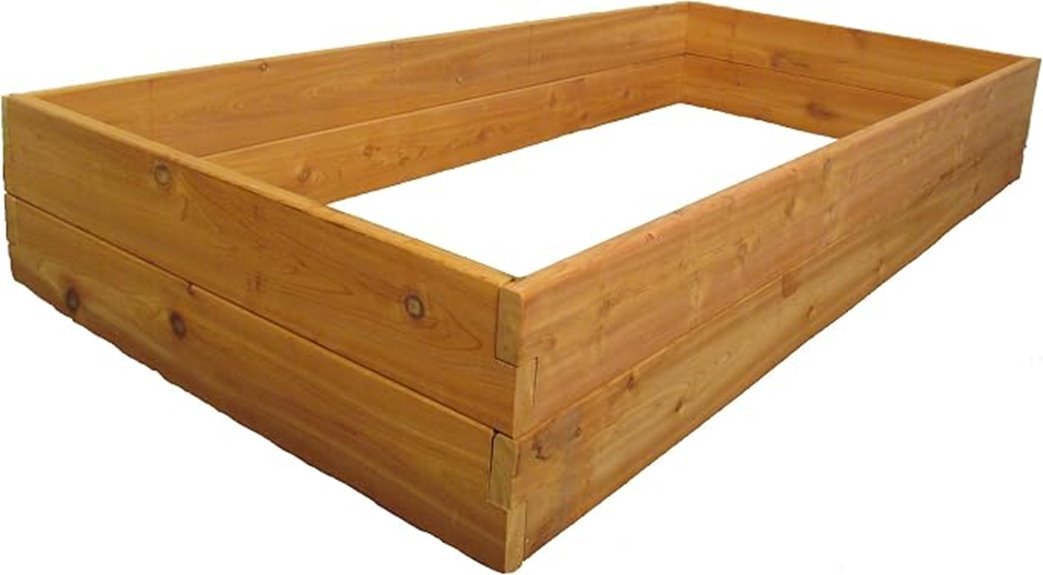
Bottom line: The Infinite Cedar Premium Raised Garden Bed offers thick cedar boards, straightforward assembly, and a manageable footprint. It is a strong option if you want durable materials without complicated hardware.
- Footprint: 3 x 6 feet, providing 18 square feet of planting area.
- Height: 11 inches, suitable for many common crops.
- Construction: One-inch-thick North American cedar boards.
- Soil capacity: Approximately 16.5 cubic feet.
- Assembly: Interlocking construction with aluminum rods; no tools required.
Made in Maine, this raised bed uses natural Western Red Cedar. The one-inch-thick boards offer a sturdy frame, while aluminum rods keep its corner connections together.
The design can be assembled and disassembled without tools. That is helpful if you want to change your garden layout or take the frame apart later.
The rectangular growing space suits vegetables, flowers, and garden borders. It also provides an alternative to larger four-by-eight-foot kits when you have limited ground space.
The main trade-off is its 11-inch height. It offers less contained soil depth than the company’s Deep Root model. Still, its simple assembly and thicker cedar boards make it attractive for everyday raised-bed gardening.
The manufacturer provides a five-year warranty covering workmanship and materials under normal use.
- One-inch-thick cedar boards provide a sturdy frame.
- Tool-free assembly and disassembly.
- Manageable three-by-six-foot footprint.
- Five-year manufacturer warranty.
- Eleven-inch height may be limiting for some deep-rooted crops.
- Untreated cedar will naturally weather to gray.
- Provides less growing area than four-by-eight-foot models.
7. Greenes Fence Premium Cedar Raised Garden Bed 4′ x 8′
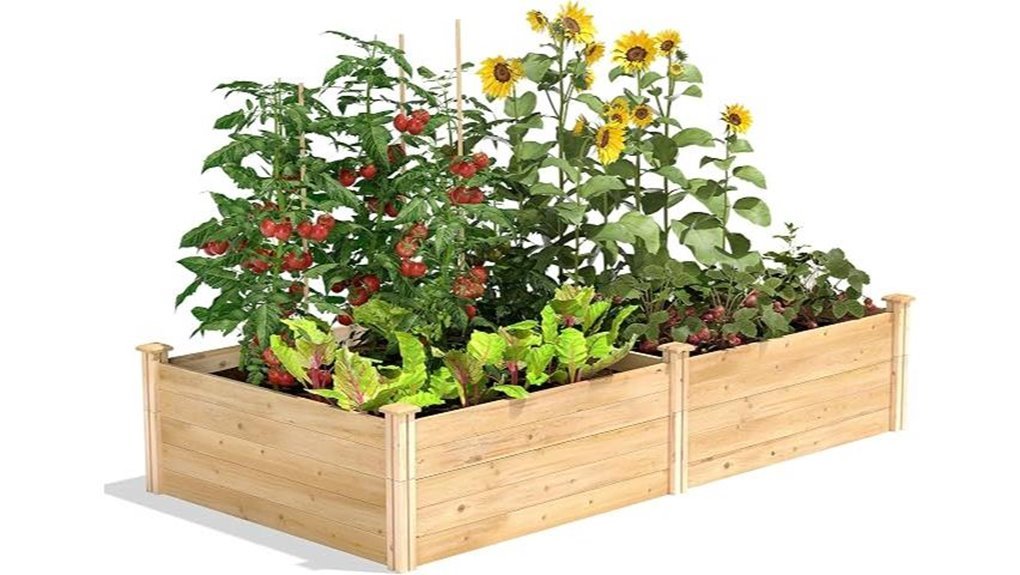
Bottom line: The Greenes Fence Premium Cedar Raised Garden Bed is our best overall choice for backyard gardeners. It combines generous soil capacity, untreated cedar, easy assembly, and expansion options.
- Footprint: 4 x 8 feet, giving ample planting space.
- Height: 17.5 inches, providing deeper contained soil.
- Construction: Untreated North American cedar with 3/4-inch boards.
- Soil capacity: Approximately 46.7 cubic feet.
- Assembly: Interlocking dovetail joints requiring no tools.
Made in the USA, this model uses sanded cedar boards and 2.5-inch-square corner posts. The wood is not pressure-treated, making it suitable for growing vegetables, herbs, and fruit in a garden setting.
Its dovetail joints let you assemble the frame without screws or special tools. Routed corner posts also allow you to connect or stack compatible Greenes Fence kits if you want to expand the garden.
With 46.7 cubic feet of soil capacity, this bed offers considerably more growing volume than the smaller cedar planters in this comparison. You can organize several types of vegetables or flowers in separate planting areas.
The frame is designed for level outdoor ground. Because it has a large footprint, you need enough space to reach the plants from its sides. Untreated cedar will gradually develop a silver-gray finish.
- Large growing area with 46.7 cubic feet of soil capacity.
- Untreated cedar is suitable for edible gardening.
- Tool-free dovetail assembly.
- Expandable corner-post design supports compatible kits.
- Large frame requires considerable ground space.
- Substantial soil volume increases the work needed for filling.
- Untreated cedar changes appearance with weather exposure.
8. Infinite Cedar Deep Root Cedar Raised Bed Garden Kit
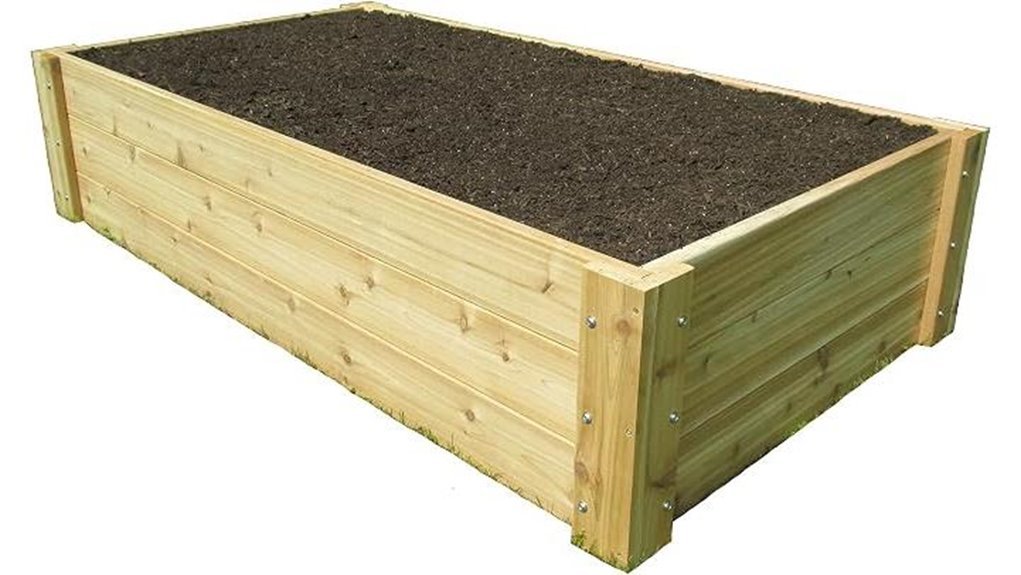
Bottom line: The Infinite Cedar Deep Root Raised Garden Bed is a strong choice for tomatoes, blueberries, and other plants that benefit from deeper prepared soil. It combines a 16.5-inch frame with thick cedar boards and reinforced connections.
- Footprint: About 73.5 x 39.5 inches overall.
- Height: 16.5 inches, offering room for deeper root systems.
- Construction: One-inch-thick rot-resistant cedar boards.
- Soil capacity: Approximately 25 cubic feet, according to the manufacturer.
- Assembly: Hardware included, with a frame that can be disassembled.
This made-in-USA kit uses natural cedar without chemical pressure treatment. Its reinforced corner construction helps the frame resist movement and bowing under moist soil.
The deeper frame is useful when you want a controlled growing area for larger vegetables or berry plants. It gives you more prepared soil above the native ground than the shorter Infinite Cedar Premium model.
Infinite Cedar lists approximately 25 cubic feet of soil capacity for this model. Plan for that filling requirement before assembly, especially if you are using bagged soil.
The bed weighs about 50 pounds before filling. Once filled, it is not practical to move without removing the soil first.
The manufacturer offers a five-year warranty covering workmanship and materials. You can leave the cedar natural or apply a suitable stain or paint for the appearance you prefer.
- 16.5-inch frame gives plants deeper growing space.
- One-inch cedar boards provide solid construction.
- Reinforced joints help resist bowing.
- Five-year manufacturer warranty.
- Requires a large amount of soil to fill.
- Approximately 50-pound frame can be difficult to reposition.
- Assembly and soil filling require time and effort.
Greenes Fence vs Infinite Cedar Premium: Is the Upgrade Worth It?
The Greenes Fence Premium bed offers much more planting volume, while the Infinite Cedar Premium model is more compact and uses thicker boards. Both offer untreated cedar and tool-free assembly, but their footprints and soil requirements are very different.
- Growing area: Greenes Fence provides 32 square feet compared with Infinite Cedar Premium’s 18 square feet.
- Frame height: Greenes Fence stands 17.5 inches high; Infinite Cedar Premium stands 11 inches high.
- Board thickness: Infinite Cedar Premium uses one-inch boards, while Greenes Fence uses 3/4-inch boards.
- Assembly: Both avoid complicated tool requirements, using different corner-connection systems.
Which Cedar Raised Garden Bed Should You Buy?
Your best choice depends on where you garden and what you want to plant. Use these recommendations to narrow the options.
- Best all-around backyard bed: Get the Greenes Fence Premium Cedar Raised Garden Bed for its large soil capacity and expandable design.
- Best value for thick cedar boards: Choose the Infinite Cedar Premium Raised Garden Bed.
- Best for comfortable access: Get the Gardener’s Supply Company Elevated Cedar Raised Bed.
- Best for small patios: Consider the Maple99 Cedar Raised Garden Bed with Legs.
- Best for narrow garden layouts: Choose the Infinite Cedar Select 2′ x 8′ Raised Garden Bed.
- Best for deeper prepared soil: Get the Infinite Cedar Deep Root Raised Garden Bed.
How We Chose These Cedar Raised Garden Beds
We compared product specifications and construction details rather than claiming hands-on testing. Our selection focused on these practical buying factors:
- Material quality: Cedar species, board thickness, untreated wood, and outdoor durability.
- Growing space: Bed footprint, actual planting depth, and stated soil capacity.
- Comfort: Whether the growing area sits at ground level or at a standing-friendly height.
- Assembly and drainage: Corner connections, included hardware, liners, drainage openings, and maintenance requirements.
- Safety and product information: Available manufacturer specifications and relevant Consumer Product Safety Commission recall information.
Manufacturer sources used for cross-checking include Maple99, Gardener’s Supply Company, Infinite Cedar, and Greenes Fence. Safety information was checked against the CPSC gardening-product recall resources.
Factors to Consider When Choosing Cedar Raised Garden Beds in 2026
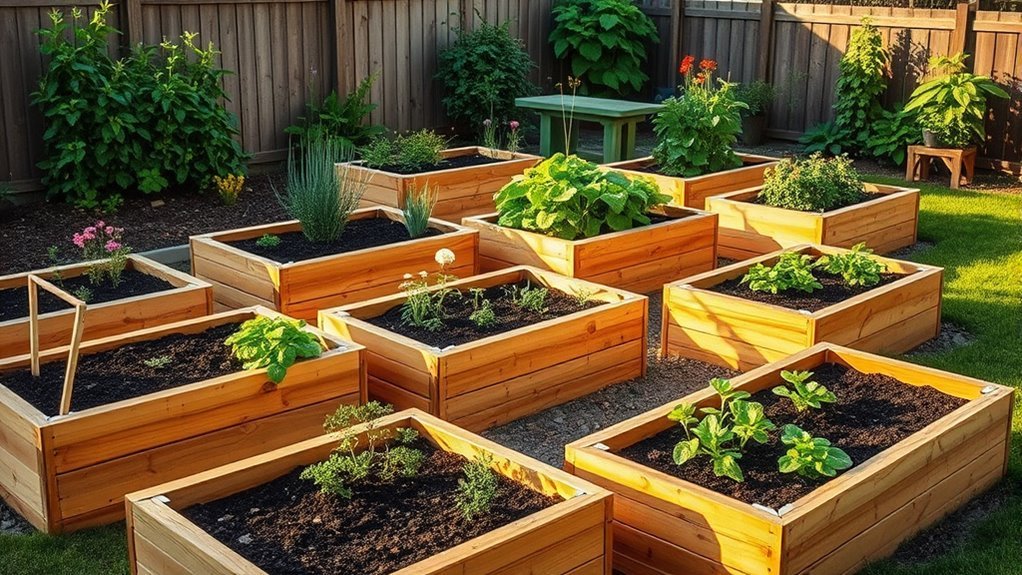
The best cedar raised garden bed should fit your space, provide enough root room, and make routine gardening comfortable. Before buying, compare the actual planting depth, cedar quality, construction, drainage, and soil requirements.
Cedar Grade Quality
Good cedar helps a raised garden bed withstand outdoor moisture, insects, and seasonal changes. Western Red Cedar is especially popular because its natural properties help resist decay without pressure treatment.
Board thickness also affects construction strength. The Infinite Cedar Premium and Deep Root models use one-inch cedar boards, while the Infinite Cedar Select range uses boards about 11/16 inch thick. Greenes Fence uses 3/4-inch boards in its Premium model.
Thickness is not the only factor. Strong corner joints, sound lumber, and proper assembly also help prevent a bed from shifting or bowing as the soil becomes wet.
Look closely at the material description. Some wooden planters use more than one wood species, so confirm the exact construction if having an all-cedar bed is a priority.
Bed Dimensions
The right dimensions depend on your garden area and how easily you can reach the plants. A large four-by-eight-foot bed provides more growing room, while a two-foot-wide design may be easier to fit along a path or fence.
Measure both the bed and the walking space around it. A wide bed can become inconvenient if you must lean too far across the soil to reach the middle.
Also distinguish between a ground-level raised bed and a planter with legs. A 30-inch-tall elevated planter does not necessarily provide 30 inches of soil depth. Much of that height may come from the supporting frame.
Soil Capacity
Soil capacity affects how many plants you can grow, how their roots develop, and how much filling material you need. Larger beds can support more plants, but they also require more soil and more preparation.
These examples show how much capacities differ:
- SoliWood elevated planter: Approximately 6 cubic feet of growing space.
- Gardener’s Supply elevated bed: Approximately 13.4 cubic feet of lightweight potting mix.
- Infinite Cedar Premium 3′ x 6′: Approximately 16.5 cubic feet.
- Infinite Cedar Deep Root: Approximately 25 cubic feet according to the manufacturer.
- Greenes Fence Premium 4′ x 8′: Approximately 46.7 cubic feet.
Choose soil based on the type of bed. Open-bottom garden beds can use suitable raised-bed soil blended with organic matter. Elevated planters with bottoms usually need lighter container mixes that drain well.
Do not confuse a planter’s weight capacity with its soil volume. A bed rated for 200 or 300 pounds must support everything inside it, including wet soil, water, and plants.
Height and Ergonomics
Height affects how comfortable a raised garden bed feels during planting, watering, weeding, and harvesting.
Standing-height planters around 29 to 30 inches tall can reduce deep bending and kneeling. They are particularly helpful if you have back or knee discomfort.
However, the height of a planter does not indicate how deep its soil compartment is. Check both measurements before choosing a planter for vegetables with larger roots.
Ground-level raised beds between 11 and 17.5 inches high still require bending. Their advantage is that the soil can often connect with native ground below, allowing suitable plant roots to grow farther down when conditions permit.
Drainage Features
Good drainage helps prevent water from collecting around plant roots. Standing water can reduce oxygen in the soil and increase the risk of root problems.
For elevated planters, look for drainage holes, slatted bases, or other openings that allow excess water to leave the growing compartment. The Gardener’s Supply model uses a slatted base and ventilation openings, while the SoliWood model includes drainage holes.
Open-bottom raised beds rely on the soil beneath them for drainage. Avoid placing these frames in spots where water remains trapped after heavy rain.
Whatever design you choose, use a suitable growing mix and check moisture before watering.
Assembly Ease
Cedar raised beds use several connection methods. The easiest choice depends on whether you prefer interlocking parts or a bolted structure.
- Tool-free systems: Greenes Fence uses dovetail joints, while Infinite Cedar Premium uses its rod-based corner construction.
- Bolted systems: Infinite Cedar Select models use pre-drilled boards secured with bolts and nuts.
- Elevated planters: Many use additional support pieces, screws, liners, or base components.
Before assembly, place all parts on a clean, level surface and follow the manufacturer’s instructions. Tighten connections as directed and confirm that the completed structure is stable before filling it.
Weather Resistance
Cedar is naturally suited to outdoor garden beds because it resists decay better than many untreated softwoods. However, it is not immune to weather damage.
Constant moisture, poor drainage, and prolonged soil contact can gradually shorten its lifespan. Strong construction and appropriate placement help reduce these problems.
Untreated cedar normally changes from its original warm color to a silver-gray appearance outdoors. This change does not automatically mean that the wood has become unusable.
You can leave cedar unfinished or apply an appropriate exterior finish. If the bed is for vegetables, choose a coating suitable for that use and follow its curing instructions.
Organic Safety
Untreated cedar is generally a suitable material for growing edible plants. It does not require chemical pressure treatment to provide natural resistance to decay.
That makes untreated cedar attractive for gardeners growing vegetables, herbs, fruits, and flowers. Still, avoid wood with an unknown treatment history or coatings that are not intended for use near edible crops.
Remember that the bed material is only one part of a safe growing environment. Soil quality, water quality, drainage, and the products used around plants also matter.
Ground-Level Beds vs Elevated Planters
Although both are called raised beds, they work differently.
- Ground-level raised beds: Usually have open bottoms, provide access to underlying soil, and work well for larger vegetable gardens.
- Elevated planters: Sit on legs, contain their own growing mix, and reduce bending during maintenance.
Choose a ground-level bed if you want a larger growing area and have suitable outdoor ground. Choose an elevated planter if comfortable access matters more than maximum root depth.
Mistakes to Avoid When Buying Cedar Raised Garden Beds
- Confusing total height with planting depth: Check the actual depth of the soil compartment.
- Ignoring soil requirements: Calculate how much growing mix the bed needs before purchasing.
- Choosing an oversized bed: Measure the installation area and leave room for access.
- Overloading an elevated planter: Include water, wet soil, and mature plants when considering the weight limit.
- Assuming all cedar beds are identical: Compare wood species, thickness, corner design, and treatment.
FAQs
How Long Do Cedar Raised Garden Beds Typically Last Outdoors?
Cedar raised garden beds typically last about 8 to 15 years outdoors, although the actual lifespan varies. Wood quality, climate, drainage, and maintenance all affect durability. Naturally rot-resistant cedar can last longer when water drains freely and the boards are not exposed to constant moisture. Inspect the joints and wood condition regularly.
Do Cedar Beds Require Sealing Before Planting Vegetables?
No, untreated cedar raised beds generally do not need sealing before you plant vegetables. Cedar has natural resistance to decay and can be left unfinished. If you prefer a protective coating or want to maintain its original appearance, use a finish suitable for edible-garden applications and allow it to cure according to the manufacturer’s directions.
Can Cedar Beds Sit Directly on Concrete Patios?
Yes, cedar beds can be used on concrete patios when the design includes suitable drainage and soil containment. A simple open-bottom frame is not ideal for concrete because soil and water can escape underneath. An elevated planter or a properly lined, draining container is generally a more practical choice. Consider the combined weight and the patio’s ability to support it.
What Soil Depth Suits Root Vegetables in Cedar Beds?
Many root vegetables grow well with about 12 to 18 inches of loose growing soil, depending on the crop and variety. Longer carrots and parsnips benefit from deeper, obstruction-free soil. Radishes and some beets can grow in shallower beds. In an open-bottom raised bed, suitable roots may also grow into the soil underneath.
Are Cedar Raised Beds Safe for Organic Gardening?
Yes, untreated cedar is generally a good choice for organic gardening because it naturally resists decay without chemical pressure treatment. It is commonly used for vegetables, herbs, and fruit. For a garden managed under a formal organic certification program, you should also follow the program’s requirements for soil, coatings, amendments, and other materials.
Do Cedar Raised Garden Beds Need a Liner?
No, a cedar raised garden bed does not always need a liner. Open-bottom ground beds usually do not require one because roots and water can move into the underlying soil. Elevated planters may use liners to contain the growing mix and protect parts of the structure. Any liner should allow adequate drainage and be suitable for the intended planting use.
What Soil Should You Use in an Elevated Cedar Planter?
Use a lightweight, well-draining container mix recommended for the planter. Elevated beds have limited support capacity and a contained growing compartment. Heavy garden soil, clay, sand, or rocks may overload some models. Gardener’s Supply specifically recommends potting mix for its elevated cedar planter. Follow your model’s guidance and keep its drainage openings clear.
Can You Put a Cedar Raised Garden Bed Directly on Grass?
Yes, many open-bottom cedar raised beds can be placed over a grassy area after suitable preparation. Remove or suppress existing grass and weeds, level the location, and consider how roots will enter the soil underneath. The bed should have good drainage and enough depth for your crops. Elevated planters can also sit over grass when their legs have stable support.
Final Verdict
The best cedar raised garden beds combine durable materials, adequate soil depth, and a design that fits your gardening habits. For a spacious backyard vegetable garden, the Greenes Fence Premium Cedar Raised Garden Bed stands out because of its untreated wood, large growing area, and simple assembly.
If you have a smaller space or need comfortable access, choose a model designed around those needs rather than buying the largest bed.
For a smaller, sturdy frame, consider the Infinite Cedar Premium Raised Garden Bed. If you want to avoid kneeling, the Gardener’s Supply Company Elevated Cedar Raised Bed is a better fit.
