
Training tables in 2027 are expected to balance mobility, durability, and flexible design across classrooms, conference rooms, and seminar spaces. From folding plastic models to modular options with casters and flip tops, each choice serves a different need. Some stand out for easy storage, while others favor a more polished look. The real question is which table delivers the best mix of function and value.
BTEXPERT 6-Foot White Folding Training Tables (Set of 10)

The BTEXPERT 6-Foot White Folding Training Tables stand out as a practical choice for buyers who need a large, portable setup for classrooms, conferences, receptions, or multi-table event spaces. Each 72-by-18-inch table weighs 19 pounds and arrives fully assembled, with folding legs for quick transport and storage. The granite-white plastic top pairs with a powder-coated steel frame, dual braces, and locking straight legs for stability. Rated for 220 pounds static load, it seats three chairs and supports indoor or outdoor settings. The set of 10 offers stackable convenience and easy cleaning.
Best For: Schools, offices, event organizers, and anyone needing a lightweight, foldable 6-foot training table set for classrooms, conferences, receptions, or group work.
Pros:
- Set of 10 tables provides flexible coverage for larger events or multiple rooms.
- Lightweight, fully assembled, and folding design makes transport and storage easy.
- Durable plastic top and steel frame with locking legs offer solid stability and easy cleaning.
Cons:
- Narrow 18-inch width may feel limited for some workspaces or seated setups.
- Best kept indoors to avoid moisture-related wear over time.
- 220-lb static capacity is useful, but it may not suit very heavy-duty applications.
Folding Mobile Conference Table with Flip Top Wheels

With flip-top wheels and a 440-pound capacity, it suits busy teams needing flexible, durable meeting space. The Folding Conference Table with Wheels & Flip Top measures 55 by 20 by 30 inches and weighs 40 pounds, making it manageable for indoor conference rooms. Its folding design allows fast stacking and compact storage between sessions. Precision edges support gap-free modular splicing, so users can arrange U-shaped, L-shaped, or linear layouts. Built from high-density board, reinforced aluminum alloy, and cold-rolled steel, it resists tipping while serving as a writing station, study area, or dining surface.
Best For: Teams, schools, and home offices that need a durable, space-saving mobile conference table with flexible layouts.
Pros:
- Folding flip-top design makes storage and setup quick and easy.
- Modular splicing supports U-shaped, L-shaped, and linear configurations.
- Strong construction and 440 lb capacity provide stability for heavy use.
Cons:
- At 40 pounds, it may still be cumbersome for some users to move frequently.
- Best suited for indoor use only.
- The 55 x 20 inch surface may be too narrow for larger group setups.
Flash Furniture 6 ft Plastic Folding Training Table, Black
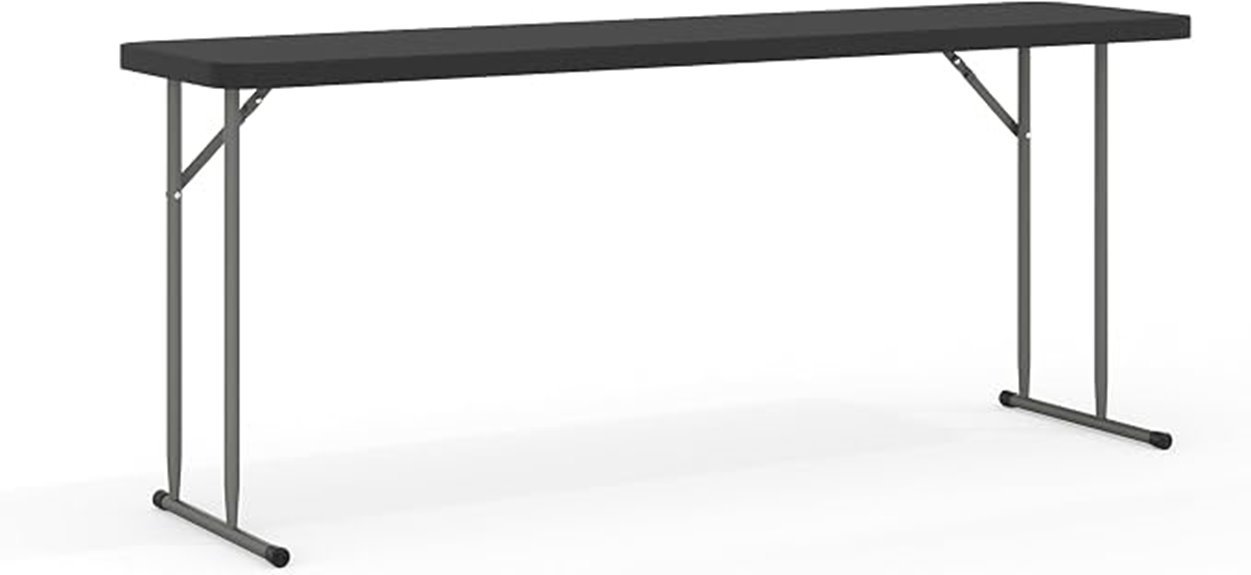
Flash Furniture’s 6-foot black training table suits compact, flexible setups needing lightweight durability. Its rectangular 70.8-by-18-inch surface seats up to three adults on one side, while the 1.75-inch waterproof plastic tabletop handles daily use in classrooms, training rooms, and event spaces. Powder-coated locking legs and non-marring caps add stability and surface protection. Weighing 22 pounds, it folds easily for transport and storage. Rated for 220 pounds of static weight, it supports materials, food, and supplies indoors or outdoors. A 1-year limited warranty and customer service support add practical reassurance.
Best For: Individuals, schools, and event organizers who need a lightweight, durable folding table for compact indoor or outdoor setups.
Pros:
- Lightweight 22-pound design makes it easy to fold, move, and store.
- Waterproof plastic tabletop and locking powder-coated legs offer solid everyday durability.
- Non-marring caps help protect floors, and the table works well for a variety of uses.
Cons:
- Narrow 18-inch width may feel limited for larger workspaces or group setups.
- Seats only up to three adults on one side, so capacity is modest.
- Limited to 220 lbs of static weight, which may not suit heavier equipment or loads.
Modular Conference Table,Folding Training Table with Modesty Panel,6ft

Ideal for flexible teams, the GEZYXDD modular conference table adapts quickly to changing room layouts. This modern rectangular 6-foot training table combines a folding design, modesty panel, and casters with locking wheels for mobility and stability. Its dark grey surface with walnut finish suits conference rooms, classrooms, offices, and training facilities. The aluminum alloy frame and 25mm particle board desktop support up to 550 pounds while remaining easy to clean and water resistant. It can be configured for U-shape, conference, or workshop setups and seats up to 30 people, with extended length reaching 70.8 inches.
Best For: Teams, schools, and offices that need a flexible, mobile conference table for meetings, training sessions, and modular room layouts.
Pros:
- Folding design makes storage and reconfiguration quick and convenient.
- Locking casters provide easy mobility with added stability during use.
- Durable, easy-to-clean tabletop and sturdy frame support heavy use.
Cons:
- At 85 pounds, it may still be somewhat heavy to move frequently.
- The 3-month warranty is relatively short.
- Best suited for larger spaces, since it can seat up to 30 people.
BTEXPERT 6-Foot White Granite Folding Seminar Table Set of 5

The BTEXPERT 6-foot white granite folding seminar table set of 5 suits high-traffic spaces needing durable, portable seating. Each table measures 72 inches long, 18 inches wide, and 29 inches high, weighs 19 pounds, and seats three chairs. The 45mm plastic top has a smooth textured finish, while the 1.0mm powder-coated steel frame adds strength. Dual support braces, locking legs, and non-slip feet improve stability. With 220-pound static capacity and quick folding storage, it fits classrooms, meetings, receptions, buffets, and outdoor events. Fully assembled, it stores best indoors away from moisture.
Best For: Schools, offices, event organizers, and hosts who need a durable, portable folding table set for meetings, classrooms, receptions, buffets, and outdoor gatherings.
Pros:
- Set of 5 tables offers great value for larger spaces or repeated use.
- Lightweight, fully assembled design with folding legs makes transport and storage easy.
- Strong construction with dual braces, locking legs, and non-slip feet improves stability.
Cons:
- Best stored indoors, so it’s not ideal for long-term outdoor exposure.
- 18-inch width may feel narrow for some users or setups.
- 19-pound weight per table is manageable, but still may be bulky when moving multiple tables at once.
Lorell Flip Top Training Table with Charcoal Top
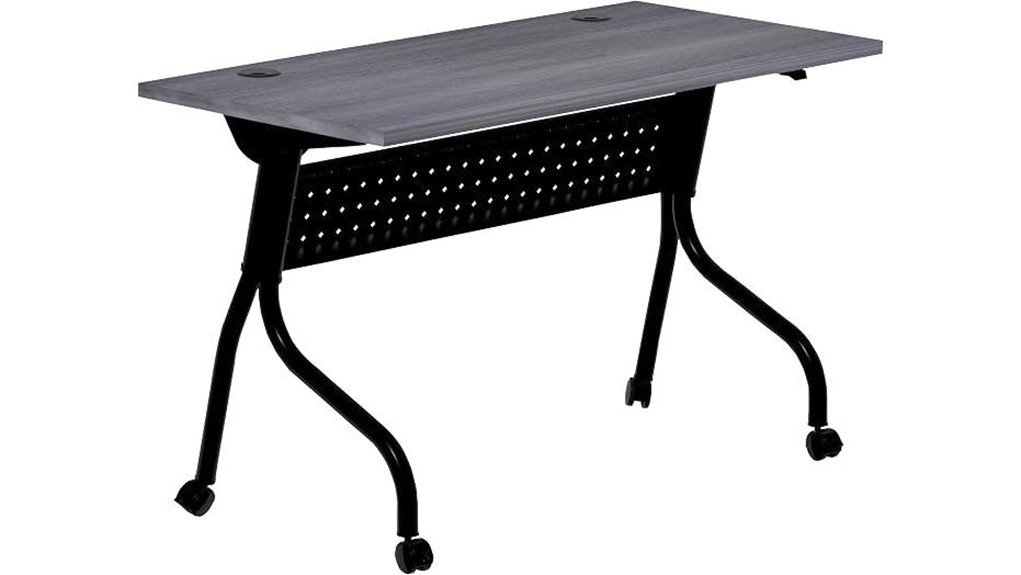
With flip-top storage and rolling casters, the Lorell table suits teams that need fast room changes. Its 23.6 x 48 x 29.5-inch rectangular frame pairs a charcoal melamine top with a black steel base for a restrained professional look. The four-leg alloy-steel construction includes a modesty panel, two grommets for cable routing, and nylon casters with brakes. It can stand alone or connect in rows, then flip up for compact storage without removing connectors. Designed for indoor training, it seats up to four people and arrives ready to use with a five-year limited warranty.
Best For: Teams, trainers, and workplaces that need a mobile, space-saving training table for indoor rooms that change layouts often.
Pros:
- Flip-top design makes it easy to store compactly without removing connectors.
- Rolling nylon casters with brakes support quick room reconfiguration and stability.
- Built-in grommets, modesty panel, and professional finish make it practical for training spaces.
Cons:
- Designed for indoor use only, so it is not suitable for outdoor settings.
- Seats up to four people, which may be too small for larger group meetings.
- At 49.6 pounds, it may still be somewhat heavy to move frequently despite the casters.
Lorell Mahogany Flip Top Training Table
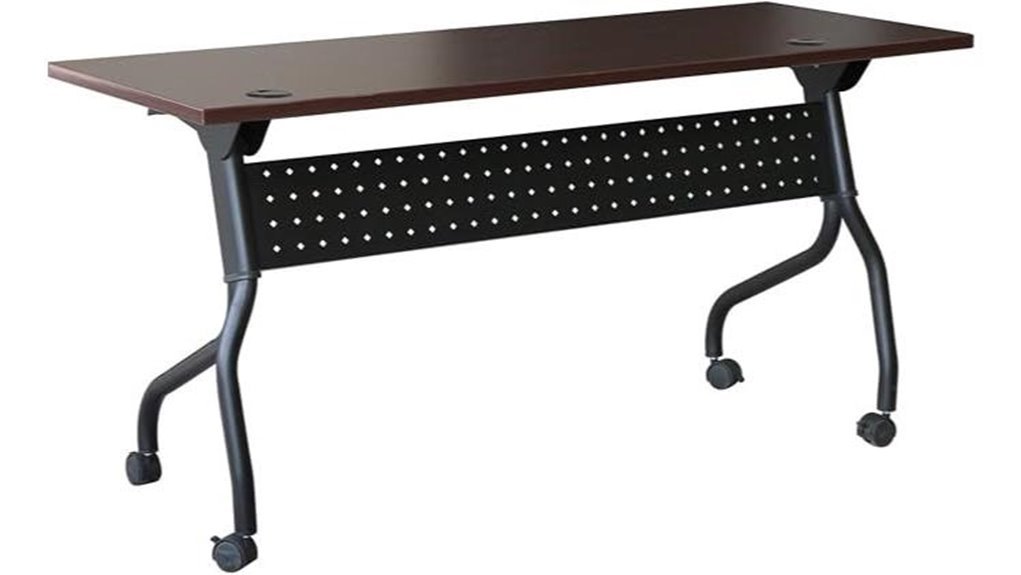
Lorell’s Mahogany Flip Top Training Table suits teams needing flexible room layouts and quick storage. Its versatile design supports individual use or grouped setups, with a metal connector securing multiple tables together. The top flips up for compact storage without removing the connector, helping rooms reset faster. Four nylon casters with brakes provide smooth movement and stable placement. An all-metal four-leg base adds durability, while the modesty panel offers added privacy. The mahogany finish gives it a traditional look suited to training rooms, classrooms, and multipurpose spaces needing convenient, adaptable furniture.
Best For: Teams, classrooms, and multipurpose spaces that need a flexible, easy-to-store training table for individual or grouped use.
Pros:
- Flip-top design makes storage quick and easy without removing the connector.
- 4 nylon casters with brakes provide mobility and stable positioning.
- All-metal four-leg base and modesty panel add durability and privacy.
Cons:
- Mahogany finish may not match every modern workspace style.
- Best suited for spaces that need flexibility, so it may be more than needed for fixed setups.
- Casters and connectors add convenience, but may require occasional maintenance.
Lorell White Laminate Flip Top Training Table
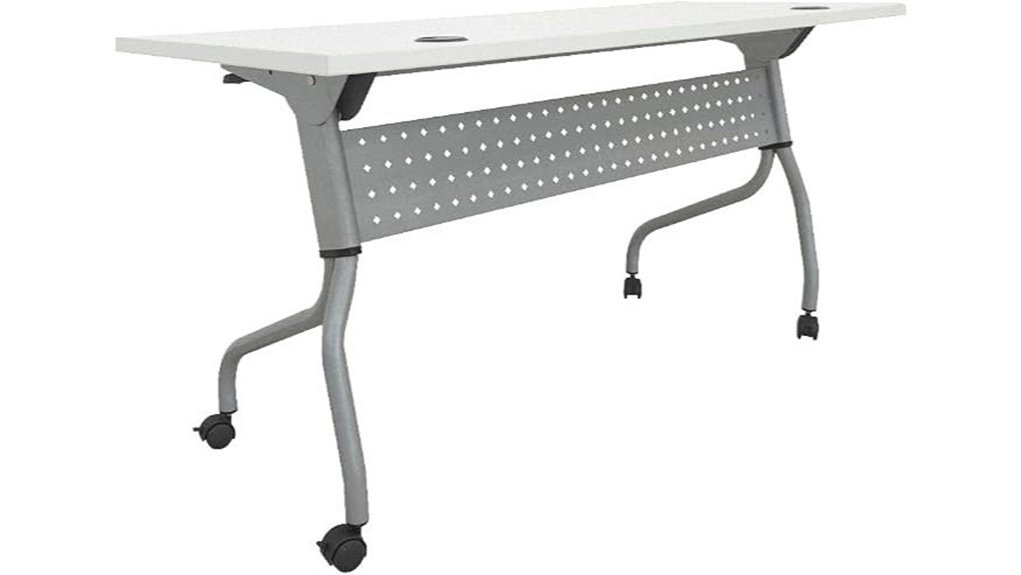
Ideal for adaptable meeting rooms, the Lorell White Laminate Flip Top Training Table emphasizes flexible setup and compact storage. Its white laminate surface suits training areas that need a clean, neutral look, while the flip-top design allows the top to raise for storage without removing the connector. A 4-leg all-metal base and modesty panel support stability, and the 1-way fold mechanism simplifies handling. Four nylon casters with brakes improve mobility and secure placement. It functions well as a standalone table or linked with others using a metal connector for collaborative layouts.
Best For: Teams, trainers, and offices that need a flexible training or meeting table with easy storage and the option to connect multiple tables together.
Pros:
- Flip-top design makes storage quick and convenient without removing the connector.
- 4-leg all-metal base with modesty panel adds stability and a professional look.
- Four nylon casters with brakes improve mobility and help keep the table securely in place.
Cons:
- Best suited for training or meeting spaces rather than everyday home use.
- White laminate surface may show scuffs or dirt more easily over time.
- Connector-based collaborative setups may require multiple tables to get the full benefit.
Factors to Consider When Choosing Training Tables in 2026
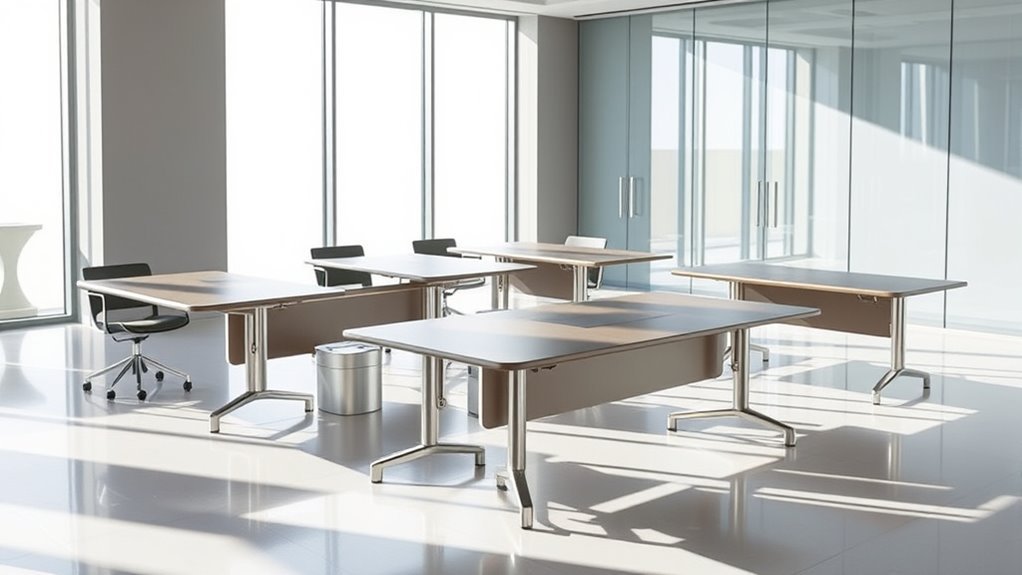
When choosing training tables in 2026, attention should first go to table size and shape, since these affect room layout and seating flexibility. Weight capacity, folding and storage features, and mobility with casters also play a major role in daily use and setup efficiency. Material quality and overall durability remain essential for ensuring long-term performance and reliability.
Table Size And Shape
Table dimensions shape how comfortably a training room functions. A table meant for training sessions often needs to seat three to four chairs, which usually calls for at least 6 feet of length so participants have enough elbow room. Rectangular tables, especially 72-inch by 18-inch models, remain common because their linear layout preserves seating capacity and supports direct interaction. Smaller tables, around 48 to 55 inches long, suit intimate groups and make rearranging the room easier. Shape also affects use: U-shaped and L-shaped setups can improve collaboration and discussion by keeping participants facing one another. Height matters as well; a standard 29-inch table generally aligns with common seating and helps maintain a comfortable ergonomic posture throughout the session.
Weight Capacity Limits
Weight capacity is a key specification in training tables, with most models supporting roughly 220 to 550 lbs depending on materials and construction. This range reflects differences in frame strength, surface materials, and overall engineering. Static-rated tables suit fixed installations, while dynamic-rated designs perform better where tables are moved or repositioned often. Heavy-duty options usually include reinforced frames and stronger support systems, allowing them to handle equipment, documents, or several users with less strain. Load balance also matters, since uneven placement can reduce stability. Models with non-slip feet and dual support braces generally maintain better control under pressure. Manufacturer specifications should always be reviewed carefully to confirm the table can meet intended demands in busy or multi-purpose settings.
Folding And Storage
Folding and storage capabilities often determine how practical a training table will be in shared or compact spaces, especially after weight limits and overall strength have been considered. A well-designed folding table should collapse quickly and stack efficiently so it occupies minimal room between uses. Flip-top and fold-in-half designs are especially useful where storage area is limited, since they reduce footprint without sacrificing function. The mechanism should feel secure, with straightforward operation that supports rapid setup and takedown while maintaining stability. Construction also matters, because lightweight materials can ease handling, but sturdiness remains important for repeated use. Tables built for frequent folding should balance portability with durability, making them suitable for versatile environments that require efficient storage and dependable everyday performance.
Mobility And Casters
When mobility is a priority, training tables with casters make it easier to reconfigure rooms for different activities without unnecessary strain. In training environments, this flexibility supports quick shifts between lectures, group work, and testing. Locking casters are especially important because they keep the table stable once positioned, preventing unwanted movement during use. Flip-top or foldable tabletops further improve portability, allowing tables to be stored or transported efficiently between classrooms and conference spaces. Some models also include adjustable height settings, which help create a more ergonomic arrangement for different users. Lightweight construction combined with integrated wheels reduces the effort needed to move each unit, making frequent layout changes practical in active, multipurpose settings where space must adapt quickly and safely.
Material And Durability
Material choices shape how long a training table will last under repeated use, with high-density plastic and reinforced steel frames offering stronger durability and stability in demanding settings. Thicker tabletops, especially those around 1.75 inches and made of waterproof plastic, resist dents, scratches, and moisture more effectively than thinner alternatives. Powder-coated steel frames add rust resistance and preserve structural integrity through frequent transport and changing conditions. Non-slip feet or caps help keep the table steady, reducing shifting that can accelerate wear. For models using particle board components, careful maintenance matters; cleaning regularly and limiting moisture exposure can extend service life and protect appearance. Durability depends not only on the core materials but also on how well each element withstands repeated training use.
Setup And Assembly
Setup and assembly can shape how practical a training table is in real-world use, especially in environments where speed and flexibility matter. Fully assembled models reduce preparation time and support immediate use after delivery. Folding designs add convenience because legs tuck underneath, making storage and transport simpler. Built-in locking mechanisms also matter, since they improve stability during sessions without requiring extra hardware or complicated installation. Lightweight materials further ease handling, allowing staff to move and reposition tables with minimal effort. Selection should also account for how readily the table can be arranged into different seating and layout configurations. A design that supports quick changes helps maintain efficient workflows while keeping setup straightforward and controlled in busy training settings.
Versatile Room Use
Versatile room use becomes a key consideration once assembly and mobility have been addressed, because a training table must also adapt to changing room layouts and meeting styles. Tables that can shift into U-shape or L-shape arrangements offer practical flexibility for lectures, breakout sessions, and collaborative exercises. Models with folding frames and casters simplify reconfiguration when storage space is limited. Seating capacity also matters; designs that fit three to four chairs per side support group work without crowding. High weight capacity, sometimes reaching 550 pounds, allows the same table to handle meals, laptops, or equipment. Durable surfaces such as waterproof plastic or melamine finishes improve maintenance and extend usefulness indoors or outdoors, making the table more adaptable overall.
Frequently Asked Questions
What Warranty Coverage Do Training Tables Typically Include?
Training tables typically include a limited warranty covering defects in materials and workmanship, often for one to ten years depending on the manufacturer. Some warranties also protect against structural failure, laminate peeling, or hardware issues, while excluding normal wear, misuse, and accidental damage. Premium models may offer extended coverage for frames or tops. The exact terms vary, so reviewing warranty documents before purchase remains important for buyers.
Are Training Tables Easy to Transport Between Rooms?
Most training tables are easy to transport between rooms, especially models with folding frames and casters. About 68% of buyers prioritize mobility features, making relocation a common design focus. Lightweight materials and lockable wheels usually help staff move them quickly through halls, elevators, and doorways. Heavier fixed-leg tables, however, can be awkward and may require two people. Overall, portability depends on construction, size, and whether the table is designed for frequent repositioning.
Which Tables Allow Combining Multiple Units for Larger Setups?
Modular training tables with linking hardware allow multiple units to combine into larger setups. Flip-top and nesting tables often include ganging clips, end connectors, or alignment locks that keep rows stable. Rectangular models with uniform frames are usually easiest to join, while semicircular or trapezoidal pieces can create curved layouts. Tables with caster locks and consistent heights also make reconfiguration simpler. Built-in modesty panels may help maintain a continuous appearance.
How Do Training Tables Handle Heavy Daily Use?
How do training tables handle heavy daily use? They rely on reinforced frames, scratch-resistant surfaces, and stable locking mechanisms to endure constant movement and repeated setup. High-quality models usually resist wobbling, moisture, and impact, even under crowded training conditions. Would a weak table survive that routine? Usually not. Durable designs prioritize maintenance-friendly finishes and replaceable parts, helping them stay reliable through long schedules and frequent handling.
Can Training Tables Be Used for Hybrid Meeting Setups?
Yes, training tables can be used for hybrid meeting setups when they offer power access, cable management, and flexible layouts. Their modular design helps place cameras, microphones, and laptops efficiently, while sturdy surfaces support repeated device use. Adjustable configurations make it easier to combine in-person collaboration with remote participation. However, sound quality, sightlines, and seating arrangement still need planning to keep both audiences engaged and connected effectively.
Conclusion
In a world where even the horseless carriage would approve, these training tables prove that smart design never goes out of style. From BTEXPERT’s dependable folding sets to Lorell’s polished flip-top options, each choice brings portability, durability, and flexibility to modern learning and meeting spaces. The best table depends on your room, workload, and storage needs, but all of these options offer practical value for years to come.
