
The best trellises for climbing vegetables in 2027 include the Green Metal Arch Cucumber Trellis, Heavy Duty Cucumber Trellis 2-Pack, 50×50 Cucumber Trellis, Heavy Duty Adjustable A-Frame Trellis, Garden Cucumber Trellis, Cucumber Trellis 2 Pack, and the 63″ Tall Garden Trellis. These options offer sturdy support, easy setup, and space-saving vertical growth for cucumbers, beans, and other vines. The right choice depends on plant size, garden space, and durability needs. More helpful comparisons follow.
Cucumber Trellis for Climbing Plants, Green Metal Arch
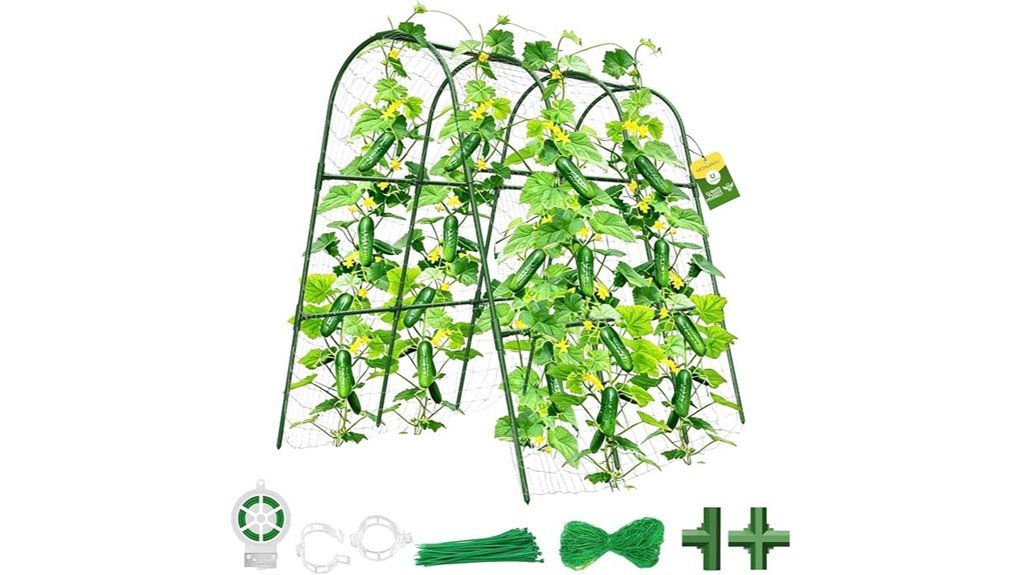
The green metal arch cucumber trellis is a practical choice for gardeners who want a stable, space-saving support for climbing vegetables in a raised bed. Its U-frame design provides better stability than typical A-frame models, while the arch shape allows planting on both sides. Measuring 47.2 by 47.2 by 21.6 inches, it offers ample vertical support. A stainless steel core with plastic coating resists rust and helps prevent plant burn. Assembly is straightforward with the cross-shaped connector, and the set includes clips, ties, netting, and a manual for cucumbers, peas, beans, tomatoes, flowers, pumpkins, and melons.
Best For: Gardeners with raised beds who need a stable, space-saving trellis for cucumbers and other climbing vegetables.
Pros:
- U-frame arch design offers better stability than typical A-frame trellises.
- Space-efficient shape allows planting on both sides and maximizes growing area.
- Rustproof coated metal construction with included clips, ties, netting, and manual makes setup and use convenient.
Cons:
- Best suited for raised beds or similar garden setups, so it may not fit every space.
- At 47.2 x 47.2 x 21.6 inches, it may be too large for small gardens.
- Assembly, while straightforward, still requires putting together multiple parts and accessories.
Heavy Duty Cucumber Trellis, 2-Pack A-Frame Trellis
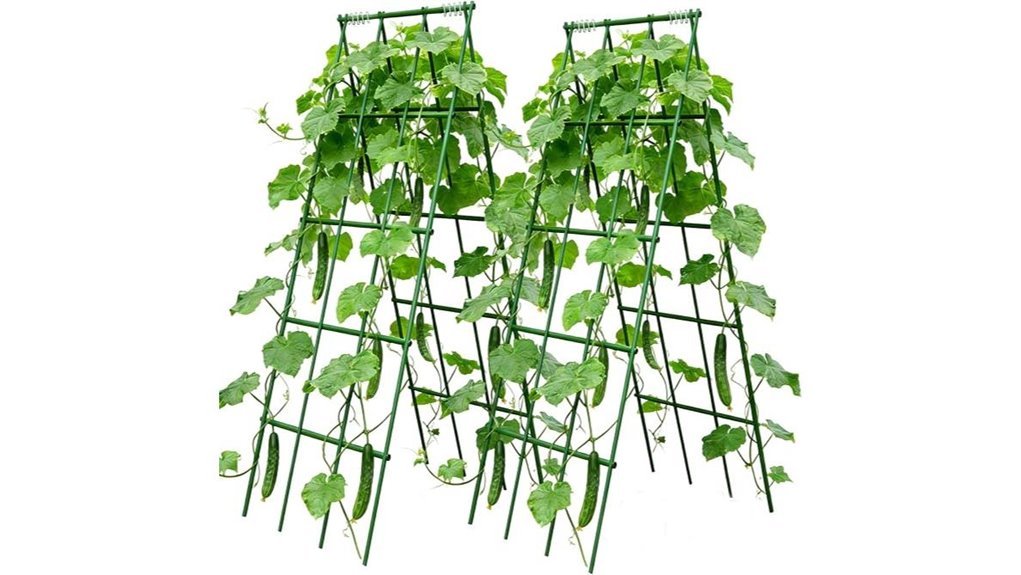
Ready to use in minutes, the Heavy Duty Cucumber Trellis 2-Pack suits gardeners needing quick, sturdy vertical support. Each galvanized steel A-frame stands 39.37 inches high and 15.6 inches wide, expanding to 31.2 inches when paired. No assembly is required, and setup takes about three minutes. The foldable design stores easily under beds or shelves. It supports cucumbers, peas, beans, tomatoes, pumpkins, melons, and flowering vines in gardens, patios, or other outdoor spaces. The package includes two trellises, four connection springs, and ten twist ties, with a 30-day return guarantee available.
Best For: Gardeners who want a quick, sturdy, space-saving trellis solution for cucumbers and other climbing plants in small outdoor spaces.
Pros:
- No assembly required, so it’s ready to use in about three minutes.
- Galvanized steel construction offers durable, heavy-duty support.
- Foldable design makes storage simple under beds or shelves.
Cons:
- At 39.37 inches tall, it may be too short for some taller vining plants.
- Best suited for lightweight to moderate climbing plants rather than very heavy crops.
- Comes as a 2-pack, which may be more than some small gardeners need.
50×50 Cucumber Trellis for Raised Bed- A Frame Vegetable Garden Trellis
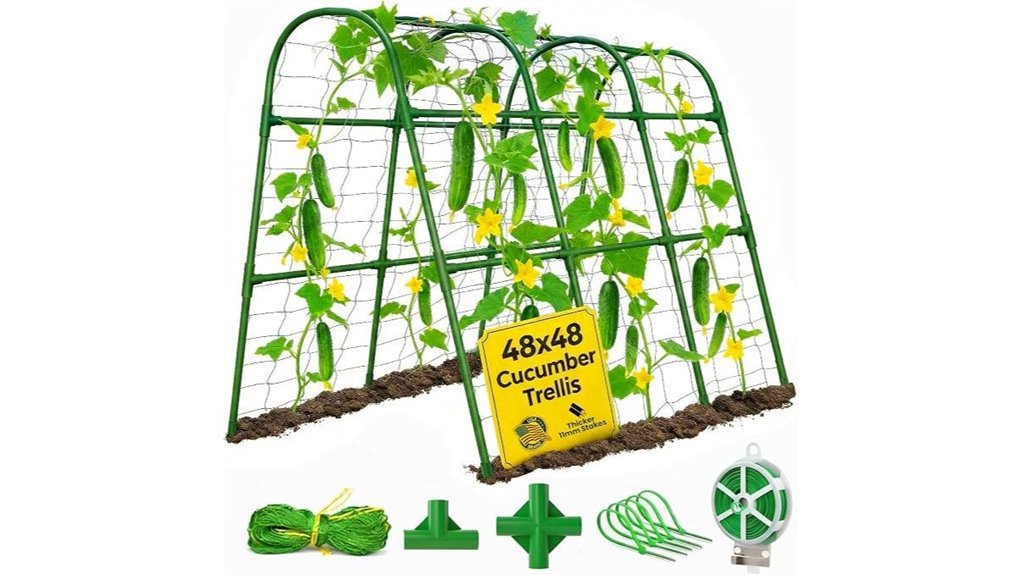
Built for raised beds, this A-frame trellis suits gardeners needing sturdy vertical support fast. The 50×50 Cucumber Trellis measures 48 by 48 inches and uses a durable steel frame with a rust-resistant, powder-coated finish. Its metal-and-plastic construction weighs 1.89 kg, yet it assembles in minutes without tools through easy-connect joints and clear instructions. The U-shaped design supports cucumbers, beans, tomatoes, peas, squash, zucchini, melons, and pumpkins. It fits raised beds, gardens, and large containers, while included netting, twist ties, and cable ties create a complete growing setup for season-long use.
Best For: Gardeners with raised beds, large containers, or small garden spaces who want a quick-to-assemble, sturdy trellis for climbing vegetables and melons.
Pros:
- Easy, tool-free assembly with clear instructions and quick-connect joints
- Durable, rust-resistant steel frame built for season-long outdoor use
- Comes with netting, twist ties, and cable ties for a complete setup
Cons:
- Best suited for climbing plants, so it’s less useful for non-vining crops
- At 48 x 48 inches, it may be too small for larger growing areas or very heavy plants
- The lightweight build may need extra anchoring in windy conditions
Heavy Duty Adjustable A-Frame Trellis for Climbing Plants
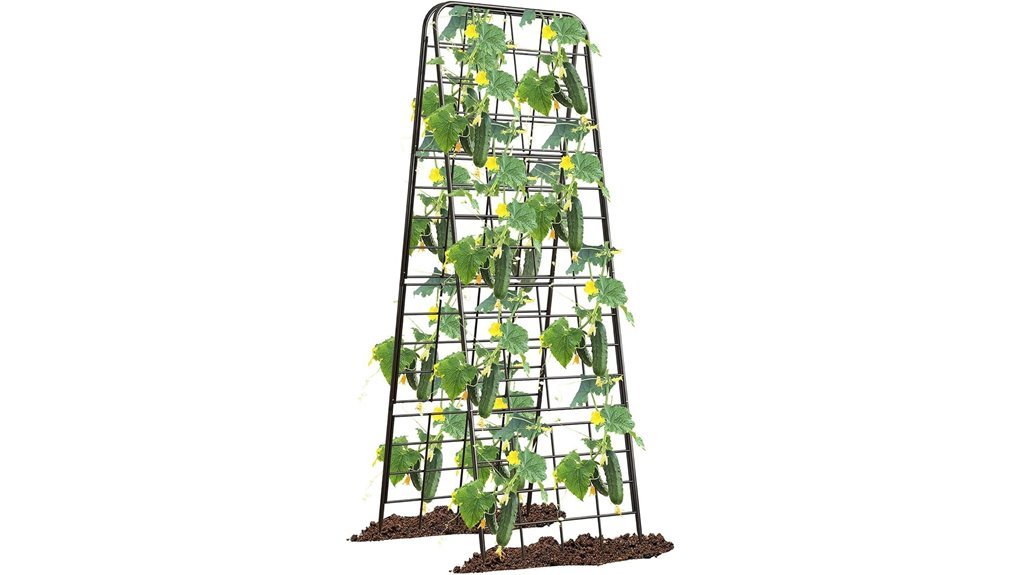
With adjustable height from 17 to 50 inches, this A-frame trellis suits growing vines at every stage. Reinforced steel grids measuring 3.15 by 3.94 inches support dense foliage and heavy fruit without sagging. The forged steel hinge is factory-fused, avoiding weak bolt joints and improving stability under load. A 1 cm thick outer frame adds strength against wind and weather, while the rust-proof powder-coated finish resists rain, snow, and UV exposure. It folds flat for storage, sets up in about a minute, and needs only six hand-tightened bolts for adjustment in raised beds, containers, or gardens.
Best For: Gardeners growing climbing plants, vines, tomatoes, cucumbers, or heavy-fruiting crops who need a sturdy, adjustable trellis for raised beds, containers, or garden plots.
Pros:
- Adjustable height from 17″ to 50″ supports plants from seedling stage to mature growth.
- Heavy-duty reinforced steel grid and forged hinge provide strong support and stability under load.
- Rust-proof, weather-resistant, and folds flat for convenient storage.
Cons:
- May be more trellis than needed for small or lightweight plants.
- Requires some bolt-tightening for final setup and adjustment.
- Larger size may be less convenient for very compact growing spaces.
Garden Cucumber Trellis for Climbing Plants
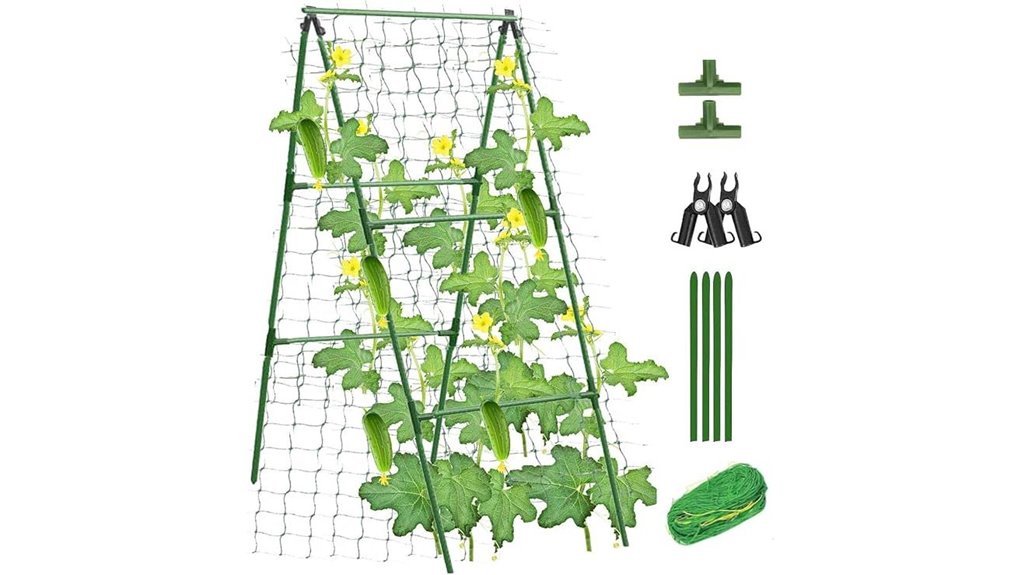
The Garden Cucumber Trellis for Climbing Plants suits gardeners needing a lightweight, adjustable A-frame for raised beds. Measuring 47 by 16 inches, it uses robust hollow steel with a fade-resistant green plastic coating to resist wind, rain, and rust. Its 8 Tee and Cross connectors, plus 17 metal stakes and two A-shaped connectors, improve stability while supporting cucumbers, beans, tomatoes, grapes, and squash. The included bird net adds protection. At 0.65 kg, it is easy to assemble, modify, and position for better sunlight and air circulation. A 30-day return policy is available.
Best For: Gardeners with raised beds who want a lightweight, adjustable A-frame trellis for supporting climbing plants like cucumbers, beans, tomatoes, grapes, and squash.
Pros:
- Lightweight at 0.65 kg, making it easy to handle and position
- Adjustable design with connectors for modifying size to fit different plants
- Durable hollow steel frame with fade-resistant coating for better protection against weather and rust
Cons:
- Best suited for smaller garden setups due to its 47 x 16 inch size
- Assembly may still require some time and attention because of multiple connectors and stakes
- Included bird net may not be sufficient for all pest or bird protection needs
Cucumber Trellis 2 Pack A-Frame Garden Support
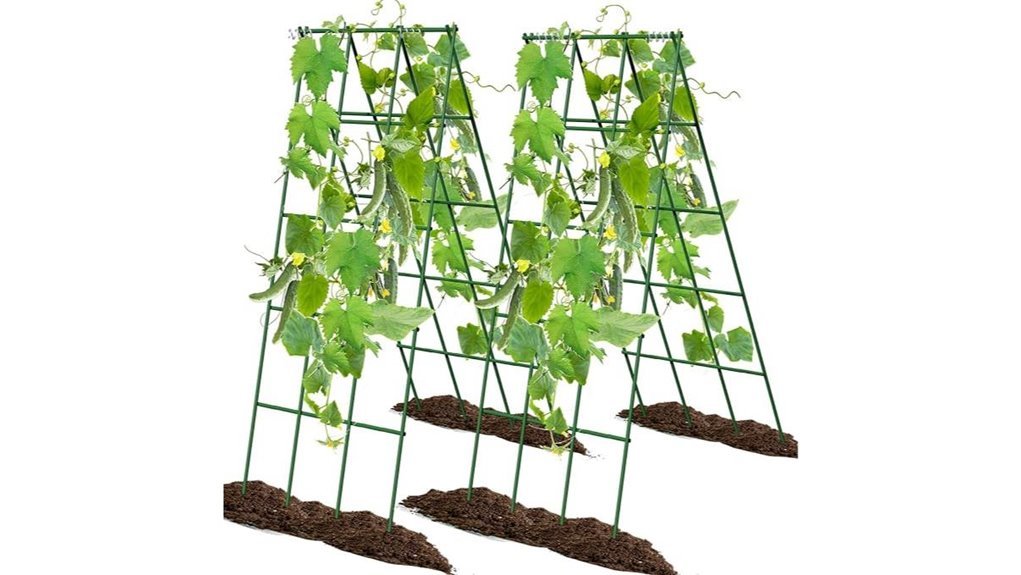
Ready to use out of the box, this no-assembly cucumber trellis suits gardeners who want instant support for climbing vegetables. The 2-pack A-frame garden support is built from PVC-coated steel, giving it rust resistance and dependable strength through changing weather. Its triangular shape adds stability in strong winds, while the open grid improves airflow around cucumbers, peas, tomatoes, squash, and melons. Each frame measures 15.75 inches wide by 39.37 inches high; used together, they span 31.5 inches. The design helps reduce disease risk and supports healthier, more productive vines in compact garden spaces.
Best For: Gardeners growing cucumbers and other climbing vegetables in compact spaces who want a sturdy, ready-to-use trellis with no assembly required.
Pros:
- No assembly required, so it’s ready to use straight out of the box
- PVC-coated steel construction offers rust resistance and durable weather protection
- A-frame design with open grid improves airflow and stability for healthier plants
Cons:
- Each trellis is relatively narrow, so coverage may be limited for larger planting areas
- Best suited for lightweight climbing plants rather than very heavy crops
- Fixed size offers less flexibility for custom garden layouts
63″ Tall Garden Trellis for Climbing Plants
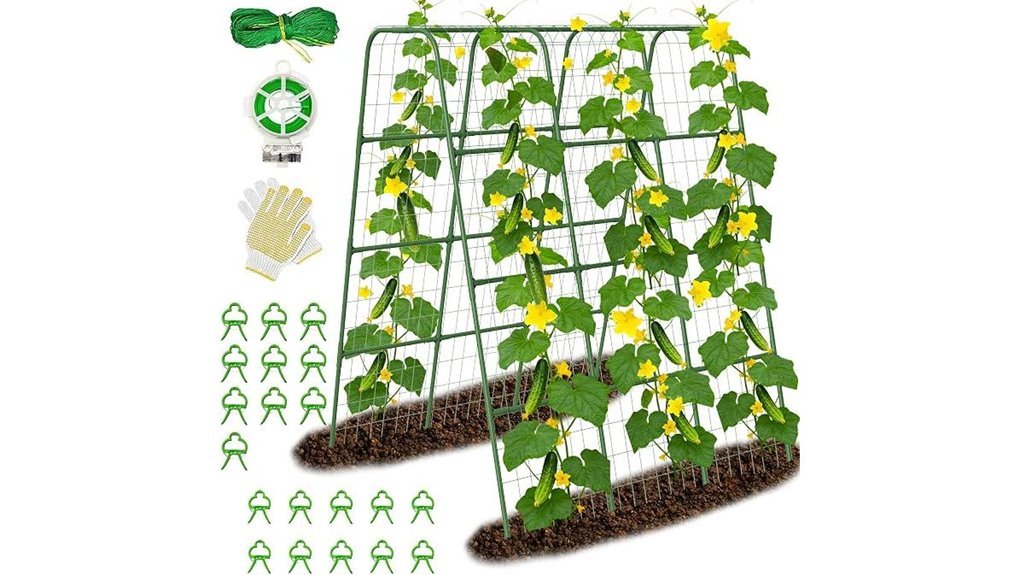
Standing 63 inches tall, this BAG WIZARD trellis suits gardeners needing extra vertical support. Its 48-inch width and 16mm plastic-coated steel tubing create a heavy-duty frame that outperforms thinner 11mm alternatives. Pointed legs help anchor it deeply in soil, improving wind resistance and overall steadiness. The snap-fit design allows tool-free assembly, while the lightweight build makes repositioning simple. Included clips, netting, twist ties, and gloves support tidy training. By lifting tomatoes, beans, and peas off the ground, it improves airflow, keeps produce cleaner, and eases harvesting in raised beds or in-ground plots.
Best For: Gardeners who want a tall, sturdy, easy-to-assemble trellis for supporting climbing plants like tomatoes, beans, and peas in raised beds or in-ground gardens.
Pros:
- Heavy-duty 16mm steel tubing provides stronger support than standard thinner trellises.
- Tool-free snap-fit assembly makes setup quick and easy, with lightweight repositioning.
- Included clips, netting, twist ties, and gloves help train plants neatly and efficiently.
Cons:
- At 63 inches tall, it may still be too short for some very vigorous or indeterminate climbers.
- The 48-inch width may not suit very large planting areas or wider garden layouts.
- Best performance depends on soft, workable soil for secure leg anchoring.
Factors to Consider When Choosing Trellises for Climbing Vegetables in 2026
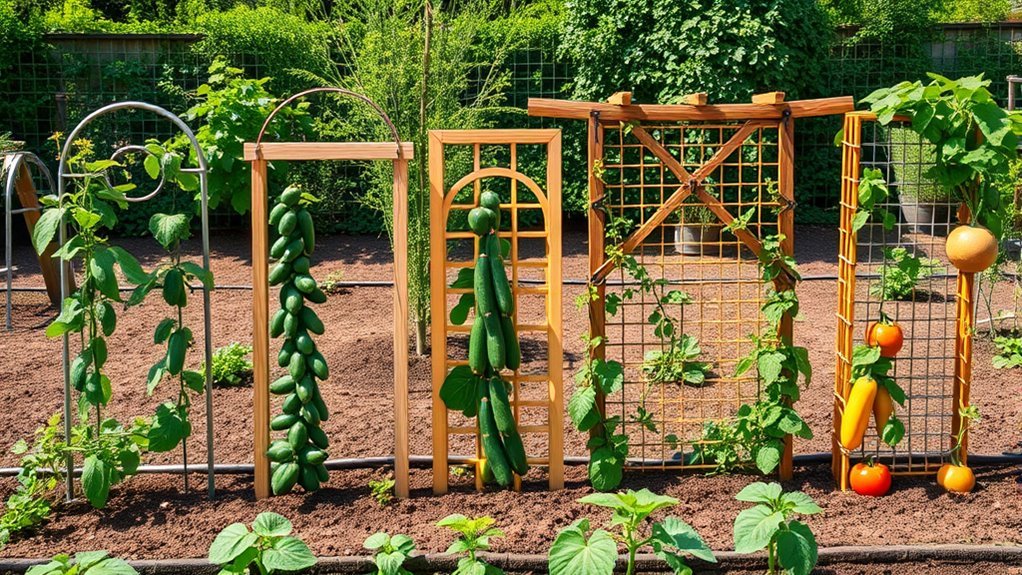
When choosing trellises for climbing vegetables in 2026, plant load capacity and frame stability remain essential for supporting heavy, fast-growing vines. Weather resistance and assembly ease also matter, since durable materials and simple setup can reduce maintenance over the season. Garden space fit should be matched to the layout available so the trellis supports growth without overcrowding the area.
Plant Load Capacity
A sturdy trellis must match the plant load it is expected to carry, especially for heavy crops like pumpkins and melons that can strain lightweight supports. Load capacity should be judged by material, frame design, and frame thickness. Reinforced steel usually provides the strength needed for oversized fruits, while 16mm frames generally support more weight than 11mm versions. A-frame trellises tend to carry less than U-frame designs, which benefit from a broader base and stronger structural support. Adjustable height can help as vines mature and fruit becomes heavier, keeping the support suitable through each growth stage. Solid anchoring also matters; pointed legs driven deep into soil help prevent failure when plants reach full size.
Frame Stability
Frame stability is essential for trellises that must hold climbing vegetables as they mature and set heavy fruit, since weak supports can sag, shift, or fail under load. A sturdy frame helps keep vines upright and prevents structural stress as plants gain height and density. Galvanized steel and reinforced metal frames are often preferred because they combine durability with rust resistance, supporting long-term use. Adjustable height features can improve stability by matching support to changing plant size from seedlings to mature vines. U-frame designs usually distribute weight more evenly than A-frame models, giving better balance under pressure. Pointed legs that sink deeply into soil also strengthen anchoring, lowering the chance of tipping or uprooting when foliage becomes heavy.
Weather Resistance
Weather resistance is a key consideration for trellises that must remain strong through rain, wind, and intense sun without warping, rusting, or weakening over time. Materials such as galvanized steel and powder-coated metal are often preferred because they resist corrosion and preserve durability in harsh outdoor conditions. Trellises with reinforced frames and secure anchoring systems are better able to handle strong gusts and the weight of dense foliage. UV-resistant coatings also matter, since they reduce fading and surface breakdown caused by prolonged sunlight. In addition, good drainage and ventilation help prevent moisture from lingering on structural surfaces, lowering the risk of mold and corrosion. A weather-resistant trellis maintains both function and appearance through changing seasons, supporting climbing vegetables with dependable long-term performance.
Assembly Ease
Assembly ease has become a major consideration for gardeners who want a trellis that performs well without wasting time during setup. Many modern options use snap-fit connections or improved connectors, which let pieces lock together quickly without tools. Some arrive pre-assembled, so they can be put to use immediately after unpacking. Adjustable models also help by offering straightforward height and width changes through simple mechanisms, reducing effort as plants develop. Clear step-by-step instructions further improve the process, making installation manageable for beginners and experienced gardeners alike. Trellises that include ties, netting, and other needed accessories also streamline setup by limiting extra purchases and preparation. In practice, easy assembly supports faster planting and smoother seasonal maintenance, making the trellis more convenient from the start.
Garden Space Fit
Garden fit should be the first test when choosing a trellis for climbing vegetables in 2026. Width matters because models may span from 15.6 inches to 48 inches, changing where they can sit between beds, paths, or containers. Height also deserves attention, since trellises from 39 inches to over 63 inches can shape how far vines climb and how much overhead room remains. The frame style affects usable area as well: A-frame designs suit narrow plots, while U-frame layouts let planting occur on both sides, making small gardens more efficient. Space planning should also account for stability, with pointed legs or reinforced frames helping the structure stay upright. Foldable trellises add convenience by storing flat when growing season ends.
Material Durability
After fit and placement are set, material durability becomes the next key filter for climbing vegetable trellises in 2026. Rustproof metals such as stainless steel or galvanized steel offer strong protection against oxidation, making them better suited to damp gardens and longer service lives. A high-quality powder-coated finish adds another layer of defense, shielding surfaces from UV exposure, weather stress, and wear from repeated use. Structural strength also matters: heavy-duty frames and reinforced joints are better able to carry dense foliage and heavy fruits without sagging. Trellises built with durable assemblies withstand wind and severe weather more reliably. Low-maintenance materials further reduce seasonal upkeep, avoiding frequent touch-ups or replacement and preserving value over multiple growing seasons.
Plant Compatibility
Plant compatibility should guide trellis selection from the start, because climbing vegetables place different demands on support systems. Cucumbers and beans often need sturdier frames to handle weight and vigorous growth, while peas, tomatoes, and melons can thrive on versatile A-frame designs that offer two planting faces and efficient use of space. Taller crops, especially tomatoes, perform better with higher structures that allow vertical expansion without crowding. Support material also matters, since mature vines and fruit can strain weak frames; heavy-duty steel or rustproof options provide needed strength. Open-grid trellises help maintain spacing and airflow, reducing disease pressure and improving plant health. Matching trellis form, height, and strength to crop requirements leads to more reliable harvests and easier garden management.
Frequently Asked Questions
Which Vegetables Grow Best on Trellises Besides Cucumbers?
Besides cucumbers, pole beans, peas, tomatoes, squash, melons, and indeterminate cherry varieties grow well on trellises. Their climbing or vining habits benefit from support, improving airflow, saving space, and easing harvest.
How Do I Secure a Trellis in Windy Conditions?
Drive stakes deep, anchor the trellis with guy lines, and add ground screws or weights. Even a lightweight frame stays steady; some may object that it’s overkill, yet wind damage costs far more.
Can Trellises Help Reduce Vegetable Disease?
Yes, trellises can reduce vegetable disease by improving airflow, keeping foliage off damp soil, and making watering cleaner. They do not eliminate disease, but they often lower fungal risk and help plants dry faster.
What Trellis Materials Last Longest Outdoors?
Which trellis materials endure outdoors longest? Galvanized steel and powder-coated aluminum usually last longest, followed by rot-resistant cedar or redwood; vinyl is durable too. Untreated wood, bamboo, and thin wire weather faster.
Do Climbing Vegetables Need Pruning for Better Trellis Growth?
Yes, many climbing vegetables benefit from pruning; removing excess foliage, side shoots, and damaged growth can improve airflow, direct energy toward fruiting, and help vines attach more efficiently to a trellis structure.
Conclusion
In choosing the right trellis, gardeners look for strength, height, and ease of use; they look for designs that support heavy vines, fit raised beds, and withstand the season’s demands. The best options do more than hold plants upright: they improve airflow, simplify harvesting, and maximize space. Whether it is an arch, an A-frame, or an adjustable support, the right trellis turns climbing vegetables into a cleaner, healthier, and more productive garden.
