
Homeowners in 2027 will likely want a gas lawn mower that balances power, ease of use, and cutting control. Models like the SENIX 22” self-propelled mower and the BILT HARD lineup stand out for different yard sizes and needs, while the PowerSmart 18-inch offers a compact option for tighter spaces. The real question is which features matter most when choosing between convenience, durability, and performance.
SENIX 22” Self Propelled Gas Lawn Mower, 170cc Gas Lawnmower,Easy Start
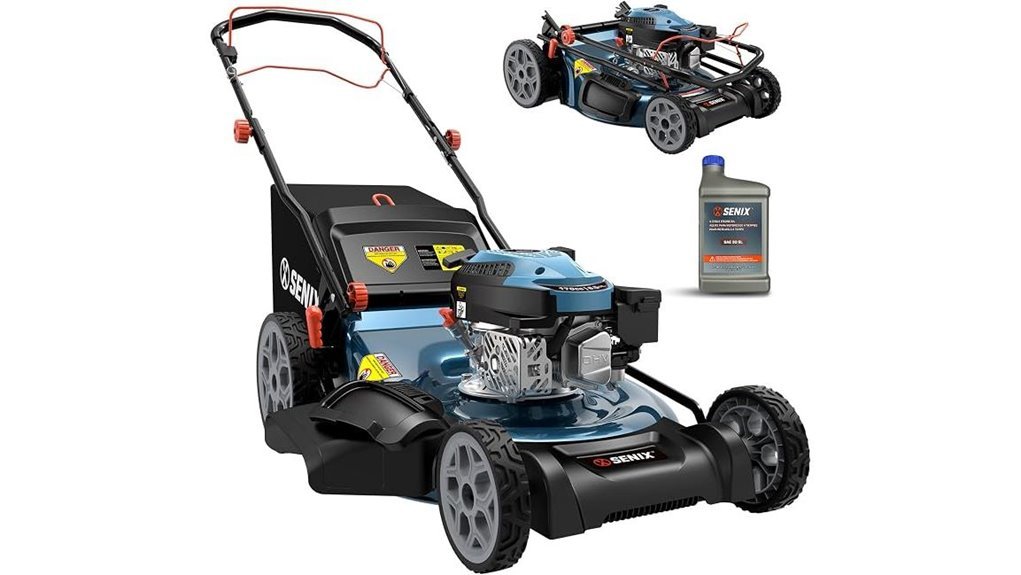
The SENIX 22” Self Propelled Gas Lawn Mower is a practical fit for homeowners who want a dependable, easy-start machine with strong all-around performance. Its 170cc 4-cycle OHV engine and rear-wheel-drive, single-speed system provide steady power across varied lawns. A 22-inch cutting deck, six height settings, and 3-in-1 capability support mulching, side discharge, or rear bagging with the included 19-gallon bagger. Rugged 8-inch front and 11-inch rear wheels aid movement on uneven ground. The ergonomic handle, washout port, foldable storage design, and two-year warranty add convenience and value.
Best For: Homeowners who want a dependable, easy-start self-propelled gas mower with flexible cutting options and solid performance on varied lawns.
Pros:
- 170cc 4-cycle OHV engine with rear-wheel drive delivers steady cutting power and easier handling.
- 3-in-1 cutting system with mulching, side discharge, and rear bagging for versatile lawn care.
- Convenient features like a washout port, foldable handle, and included bagger add value and ease of use.
Cons:
- Gas-powered design requires fuel, oil, and more maintenance than battery mowers.
- At 72.8 pounds, it may be heavy for some users to maneuver or lift.
- Single-speed self-propelled drive offers less speed control than variable-speed models.
BILT HARD 20-Inch Gas Lawn Mower, 144cc
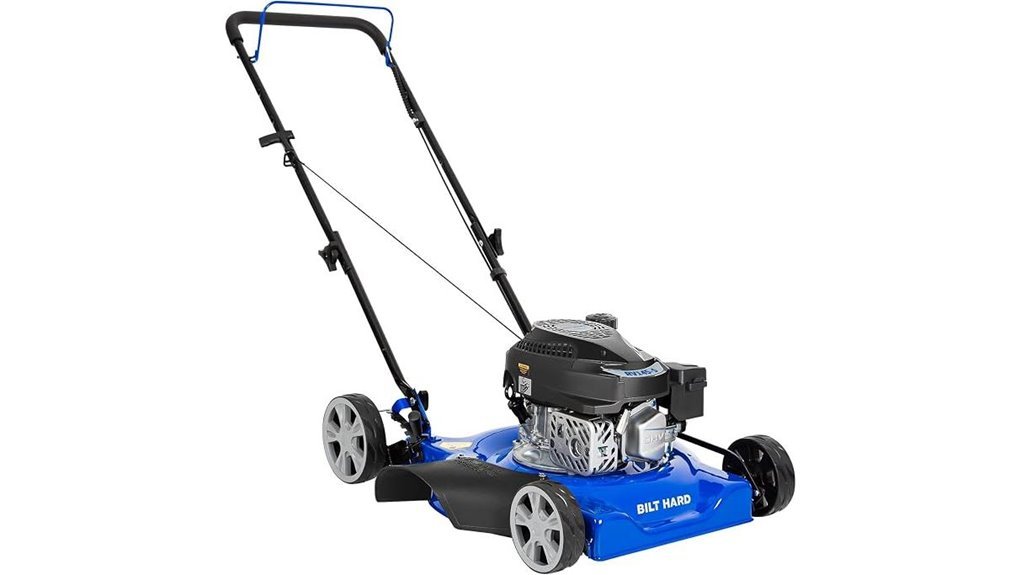
With a 20-inch deck and 144cc engine, the BILT HARD mower suits homeowners managing medium yards. This push model uses a 4-cycle OHV engine delivering 5.8 ft.lb of torque, offering dependable cutting power for routine weekly maintenance. Its 8-position height adjustment, ranging from 0.7 to 3.2 inches, is controlled by a single lever with synchronized wheels. The metal deck, double ball-bearing wheels, and foam-wrapped angled grip support smoother handling. At 51 pounds, it remains manageable. Owners should avoid tipping it over to protect the engine’s oil system.
Best For: Homeowners with medium-sized yards who want a reliable, easy-to-handle gas push mower for routine lawn maintenance.
Pros:
- 20-inch deck is well-suited for medium yards and efficient mowing.
- 8-position single-lever height adjustment offers flexible cutting control.
- Metal deck, double ball-bearing wheels, and foam-wrapped grip improve durability and comfort.
Cons:
- Gas-powered engine requires regular maintenance and fuel handling.
- At 51 pounds, it may still be somewhat heavy for some users.
- Must not be tipped or dumped, which can make storage and cleaning less convenient.
BILT HARD 21-Inch Gas Push Lawn Mower
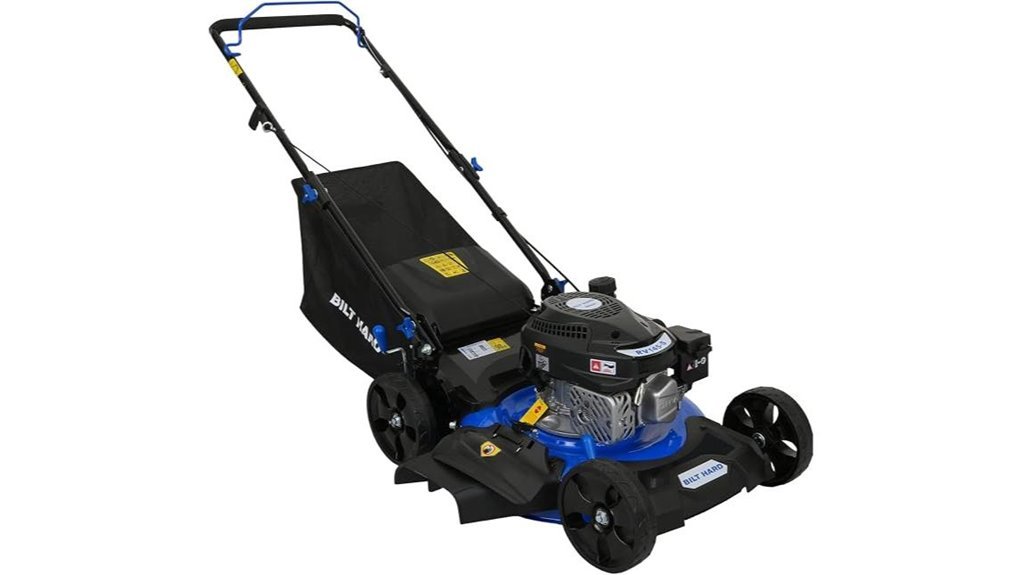
BILT HARD’s 21-inch gas push mower suits homeowners managing medium to large yards. Its 144cc four-cycle engine delivers 3.4 horsepower and 5.75 ft-lb of torque, while the 27.1-ounce fuel tank supports longer mowing sessions. The steel deck promotes fast cutting, and the 3-in-1 system handles bagging, mulching, or side discharge. Six cutting heights, from 1.0 to 3.0 inches, adjust to changing grass conditions. Oversized wheels improve traction, and the included bag, chute, plug, oil, and tools simplify setup for quick use.
Best For: Homeowners with medium to large yards who want a versatile, gas-powered push mower with multiple cutting options and adjustable height settings.
Pros:
- 3-in-1 mowing system offers bagging, mulching, and side discharge for flexible lawn care.
- 144cc 4-cycle engine provides solid power and longer mowing sessions with the 27.1 fl. oz. fuel tank.
- Oversized wheels and steel deck improve traction and durability for regular use.
Cons:
- Gas-powered operation requires fueling, oil, and more maintenance than electric models.
- Push mower design may be harder to use on very large or hilly yards.
- Cutting height range may be limiting for users wanting very short or very tall grass settings.
PowerSmart 18-Inch Gas Lawn Mower, 144cc Engine
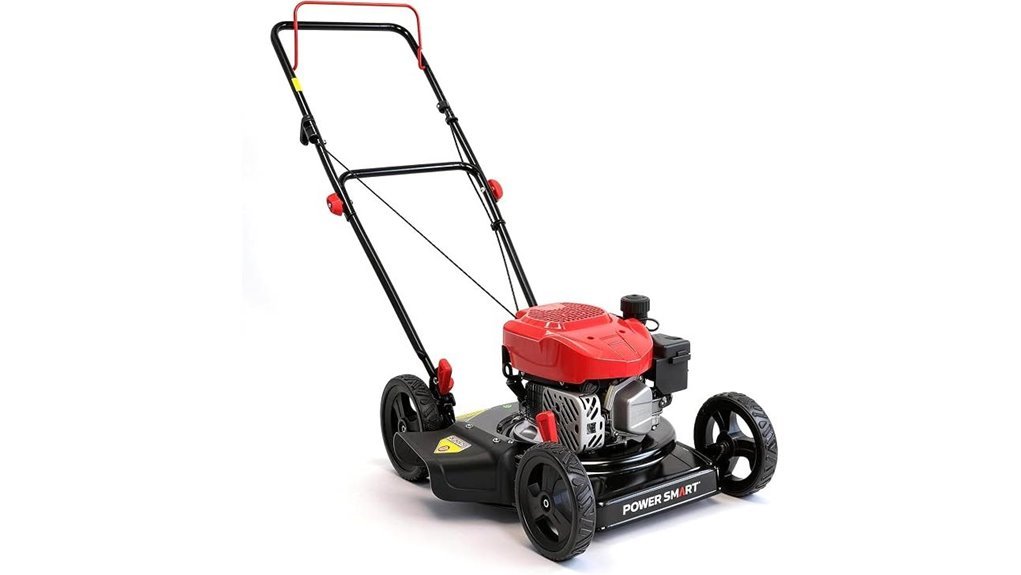
PowerSmart’s 144cc engine and 18-inch deck suit homeowners managing small yards. The PowerSmart EasyCut is a walk-behind push mower built with a 144cc 4-cycle OHV engine, auto choke, and primer for easier starting. Its steel cutting deck delivers a clean 18-inch path, while side discharge helps handle tall or thick grass without clogging. Five cutting heights, from 1.5 to 3.9 inches, provide useful flexibility. With 8-inch rear wheels and 7-inch front wheels, it navigates around trees and flower beds smoothly. It weighs 58.4 pounds and includes a two-year limited warranty.
Best For: Homeowners with small yards who want an easy-start push mower with a compact 18-inch deck for simple, efficient cutting.
Pros:
- 144cc 4-cycle OHV engine with auto choke and primer for easier starting
- 18-inch steel deck provides a clean cut and durable build
- Five height settings and maneuverable wheel size help it handle obstacles and different grass conditions
Cons:
- Side discharge only, so it does not offer mulching or bagging
- Best suited for small yards, not larger lawns
- Push mower design requires more effort than a self-propelled model
BILT HARD 201cc 21-Inch 3-in-1 Gas Lawn Mower
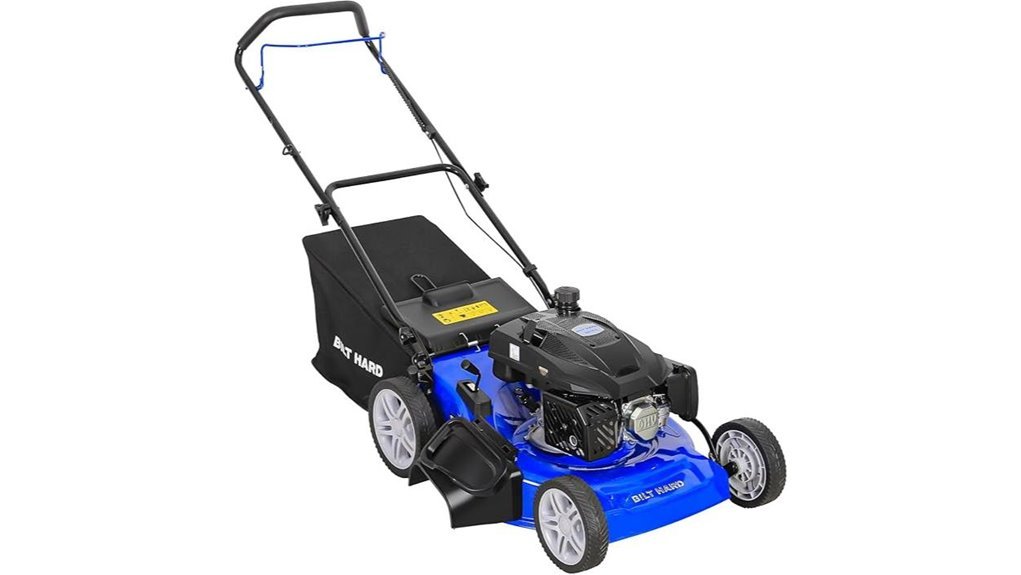
Homeowners wanting straightforward mowing versatility will appreciate this 21-inch 3-in-1 gas mower. The BILT HARD 201cc push mower uses a 201cc four-stroke OHV engine with 9.0 ft.lb of torque, giving it solid cutting power for routine yard work. Its deck supports mulching, side discharge, and rear bagging, while 10 height settings from 1.2 to 3.75 inches help match different grass conditions. A no-choke, no-primer start simplifies operation. Double ball-bearing wheels and a foam-wrapped angled handle improve control. At 73.8 pounds, it remains manageable for manual use.
Best For: Homeowners who want a versatile, easy-to-start 21-inch gas mower for routine yard maintenance with mulching, bagging, and side-discharge options.
Pros:
- 3-in-1 cutting system offers mulching, side discharge, and rear bagging flexibility.
- No-choke, no-primer design makes starting simpler and more convenient.
- 10 height settings and large wheels improve adjustment and maneuverability.
Cons:
- At 73.8 pounds, it may be tiring for some users to push over larger lawns.
- Gas-powered operation requires more upkeep than electric or battery mowers.
- Manual push design may not suit those looking for self-propelled assistance.
Factors to Consider When Choosing Gas Lawn Mowers for Homeowners in 2026
In 2026, homeowners will likely weigh engine power and cutting width first, since these features shape mowing speed and performance. Height adjustments and the drive system will also matter for comfort and control across different yard conditions. Deck material will remain an important factor because it affects durability, weight, and long-term maintenance.
Engine Power
Engine power should be matched to yard size and mowing conditions, since higher cc ratings often signal stronger performance; gas mowers commonly range from about 144cc to over 200cc, with larger engines better suited to thick grass, slopes, and wider cutting decks. A 4-cycle engine is usually favored because it burns fuel more efficiently and typically needs less upkeep than a 2-cycle design. Torque, measured in foot-pounds, also matters because it shows how well the mower can maintain cutting force in dense grass or on uneven ground. Easy-start features such as auto choke and primer systems improve convenience by reducing pull effort. Overall, stronger engines support faster mowing and more consistent results when conditions are demanding.
Cutting Width
Cutting width is one of the most practical factors in choosing a gas lawn mower, since it affects both mowing speed and maneuverability. Most gas models fall between 18 and 22 inches, a range that shapes how efficiently grass can be cut in fewer passes. A 21- to 22-inch deck suits medium and large lawns because it covers more ground and shortens mowing time. By contrast, an 18-inch width works better in tight spaces, around landscaping, or on smaller yards with obstacles. Wider mowers are usually heavier, which can make pushing and turning more demanding. Homeowners should match the width to lawn size and layout to achieve an even cut with manageable handling and practical efficiency.
Height Adjustments
Height adjustments matter just as much as deck width when choosing a gas lawn mower, because they determine how closely the grass is cut and how well the lawn recovers afterward. Most gas mowers provide 6 to 10 positions, usually ranging from about 1.0 to 4.0 inches, so the cut can match grass type and seasonal growth. Taller settings help protect turf during warm weather, while lower settings suit neatly trimmed lawns. A single-lever system is often preferable because it changes all wheels at once, saving time and reducing effort. The best choice balances range, ease of use, and lawn health, since cutting too short can stress grass, encourage weeds, and increase dryness over time.
Drive System
The drive system has a major effect on how easy a gas lawn mower is to handle, especially on larger or sloped yards. Push mowers demand more physical effort, while self-propelled models reduce strain by providing powered assistance. Among self-propelled options, front-wheel drive suits flat lawns because it is easier to steer and turn. Rear-wheel drive offers stronger traction and stability, making it better for uneven ground and hills. Some mowers use a single speed, while others let the operator adjust pace to match walking speed. That flexibility can improve comfort during longer cuts. Regular maintenance also matters. Inspecting belts and drive wheels helps preserve performance and extends the mower’s service life over time.
Deck Material
Deck material shapes a gas lawn mower’s durability and long-term performance as much as the drive system affects handling. Steel decks typically deliver greater strength and impact resistance than plastic or composite alternatives, making them better suited to rough lawns and repeated contact with stones or branches. Heavy-duty steel can also support more consistent cutting performance and a longer service life. Alloy steel offers a useful middle ground, combining reduced weight with dependable durability for owners who want solid construction without unnecessary bulk. Deck thickness matters as well: thicker decks are usually sturdier, though they add weight and can affect stability. Regular cleaning and rust prevention help preserve the deck, protect cutting efficiency, and extend the mower’s usable life.
Maneuverability Features
Maneuverability features play a major role in how a gas lawn mower handles around trees, flower beds, slopes, and uneven ground. Larger rear wheels, such as 9.5-inch models, help the mower roll more smoothly over bumps and rough patches, while smaller front wheels around 7 inches support tighter turns in confined spaces. Lighter units, typically weighing 51 to 58 pounds, are easier to steer and lift as needed, which benefits smaller yards and users who prefer less strain. Self-propelled drive systems further improve control on inclines and uneven turf by reducing the effort required from the operator. Ergonomic, foam-wrapped handles also aid comfort and steering precision. Multiple height adjustment settings add versatility, allowing smoother movement across changing grass conditions and terrain.
Warranty Coverage
Reliability often starts with warranty coverage, making it an important factor when comparing gas lawn mowers for home use in 2026. Most gas lawn mowers include warranties lasting one to three years, which can protect buyers from defects and early failures. Coverage is often limited, however, and may apply only to major parts such as the engine and cutting deck while excluding wear items that naturally age. Some brands also sell extended warranties for longer protection beyond the standard term. Homeowners should review the terms carefully, since required maintenance can affect eligibility. It is also useful to confirm whether customer service support is included, because responsive assistance can simplify repairs, claims, and questions when problems arise during ownership.
Frequently Asked Questions
How Often Should I Sharpen Gas Mower Blades?
Gas mower blades should generally be sharpened every 20 to 25 hours of use, or at least once per mowing season. If grass appears torn, uneven, or brown at the tips, sharpening may be needed sooner. Frequent mowing on sandy soil, rocky ground, or thick growth can dull blades faster. Regular inspection helps maintain clean cuts, healthier grass, and reduced strain on the mower’s engine.
Can Gas Mowers Handle Wet Grass Safely?
About 30% of lawn mower injuries involve slippery conditions, making wet grass a real safety concern. Gas mowers can handle damp grass better than many expect, but they should not be used on soaked lawns. Wet clippings clump, clog the deck, reduce traction, and increase slip risk. A detached assessment would note that mowing only when grass is merely damp, and the ground is firm, is the safer choice.
What Fuel Stabilizer Works Best for Winter Storage?
A premium fuel stabilizer made for small engines works best for winter storage, with ethanol protection and long shelf life being key features. Products like STA-BIL Storage or Sea Foam often perform well when added to fresh gasoline before the final run. The mower should then run briefly to circulate treated fuel through the system. Draining the tank is usually unnecessary if stabilized fuel is used properly and stored correctly.
How Loud Are Gas Mowers Compared With Electric Models?
Gas mowers are usually much louder than electric models, often reaching around 90 to 105 decibels, while battery or corded electrics commonly stay closer to 60 to 75 decibels. That difference is noticeable in neighborhoods and can affect hearing comfort over time. Gas engines also produce more vibration and exhaust noise. Electric mowers tend to sound softer, more consistent, and less disruptive during routine lawn care.
What Maintenance Schedule Keeps a Gas Mower Reliable?
Routine attention keeps a gas mower dependable. The machine prefers fresh oil after about 25 hours or each season, clean air filters monthly, sharp blades every 20 to 25 hours, and a spark plug replacement yearly. Fuel should be stabilized if stored, while the deck and wheels benefit from regular clearing. Before each use, a quick inspection of cables, fasteners, and fuel lines helps prevent unwelcome surprises and lingering trouble.
Conclusion
In the end, the right gas lawn mower becomes more than a machine; it is a quiet partner in shaping order from growth. The SENIX, BILT HARD, and PowerSmart models stand like different tools in the same garden of choice, each suited to a distinct path. For homeowners, the mower symbolizes stewardship: the steady trimming of chaos, the patient tending of space, and the simple promise that a well-kept lawn can reflect a well-kept life.
