
Large-capacity washing machines are becoming more practical for busy households that need fewer loads and better stain removal. In 2027, a few models stand out for combining size, efficiency, and useful wash options, including advanced front-load and top-load designs from LG and Kenmore. Some emphasize steam cleaning, while others focus on energy savings and flexible cycles. The question is which ones actually deliver the best overall value, and the answer may not be obvious.
LG WM4200HWA Front-Load Washer with Steam Wash
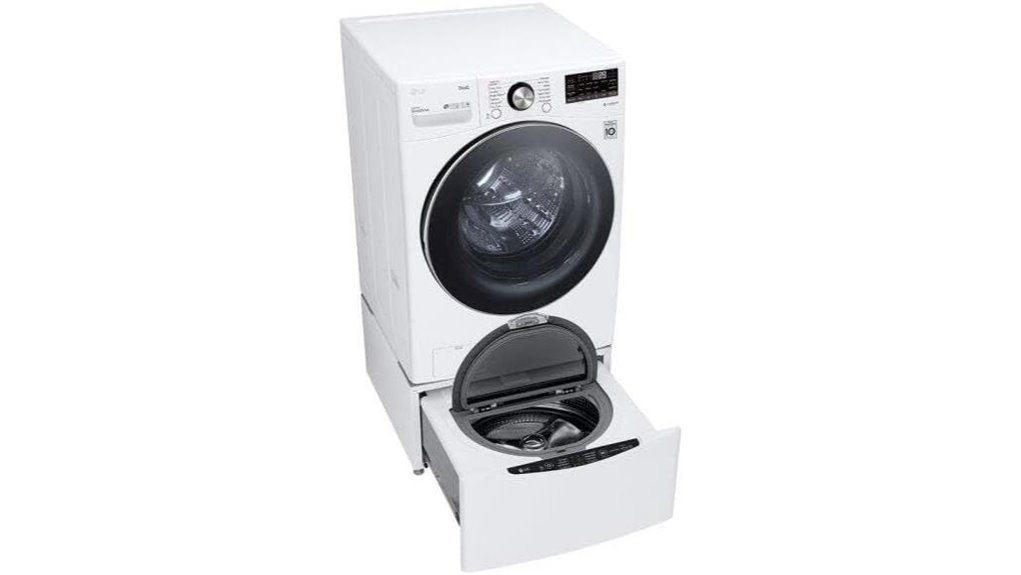
The LG WM4200HWA is a strong choice for households that need serious laundry capacity without sacrificing efficiency or convenience. Its 5.0 cubic foot drum handles bulky loads such as king-size comforters and oversized towels with ease. ENERGY STAR certification supports lower energy and water use, helping reduce utility costs. Steam Wash targets stains and allergens, while the Allergiene cycle adds another layer of cleaning for sensitive households. TurboWash 360° shortens wash times without reducing performance. SmartThinQ Wi-Fi enables remote monitoring, and Google Assistant and Alexa compatibility adds voice control.
Best For: Households that need a large-capacity, energy-efficient washer with steam cleaning, smart controls, and fast cycle performance.
Pros:
- 5.0 cu ft capacity easily handles bulky items like comforters and oversized towels
- Steam Wash and Allergiene cycle help tackle stains and allergens
- SmartThinQ Wi-Fi, Google Assistant, and Alexa compatibility add convenient remote and voice control
Cons:
- Front-load washers can require more maintenance to prevent odor buildup
- Large capacity and premium features may come at a higher price point
- Smart features may be unnecessary for users who prefer a simpler washer
Kenmore 4.5 cu. ft. Top Load Washer with Triple Action Impeller – White
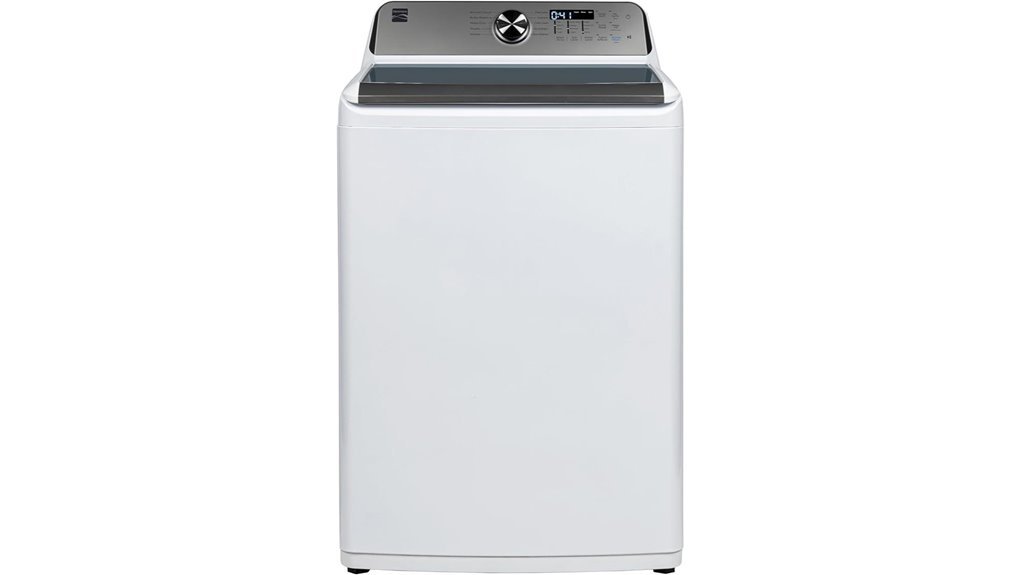
With 4.5 cubic feet of space, this Kenmore top-load washer suits families and bulky laundry loads. Its Triple Action Impeller combines spray, basket movement, and circular impeller motion to lift soil from several angles. Ten cycles cover heavy duty, whites, towels, delicates, and express care, while four temperature choices add flexibility. Express Wash handles small loads in 30 minutes, and Accela Wash shortens full-size cycles by up to 51%. Cold Clean Technology can cut energy use by up to 90%, and an Extra Rinse option supports sensitive skin. A white steel cabinet and stainless steel drum complete the design.
Best For: Families or anyone with frequent bulky laundry loads who want a large-capacity top-load washer with fast cycle options and energy-saving features.
Pros:
- 4.5 cu. ft. capacity handles large and bulky loads well.
- Triple Action Impeller and multiple cycles provide versatile cleaning performance.
- Express Wash, Accela Wash, and Cold Clean Technology offer speed and energy savings.
Cons:
- Top-load design may not be ideal for users who prefer front-load ergonomics.
- Fewer temperature settings than some higher-end washers.
- No advanced smart features or app connectivity mentioned.
Kenmore 4.5 cu. ft. Front Load Washer – White
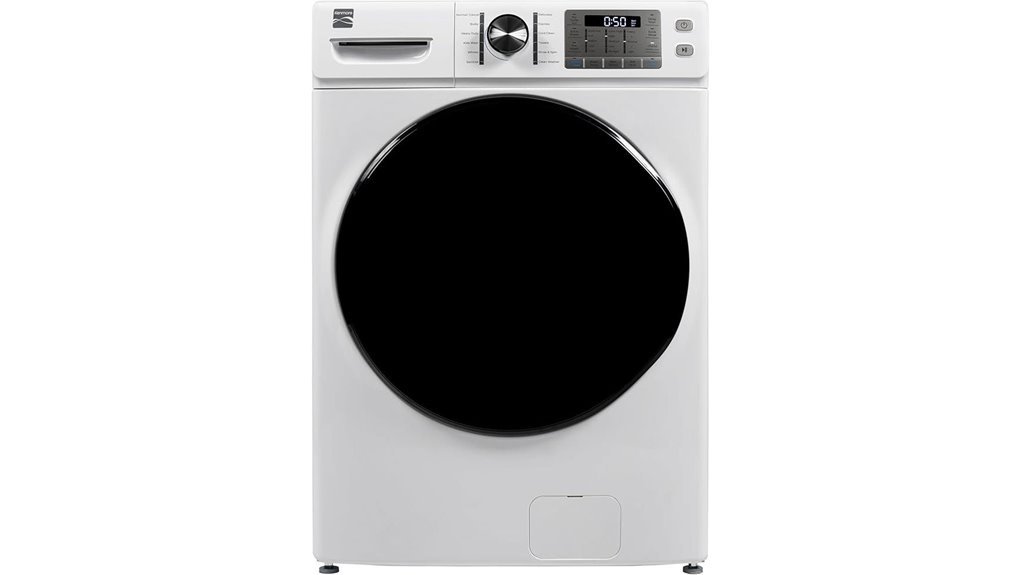
Kenmore’s 4.5 cu. ft. front load washer suits busy households needing fast, efficient laundry care. Its Express Wash handles small 3-lb loads in 25 minutes, while Accela Wash cleans full-size loads up to 26% faster than a standard cycle. Steam Treat helps lift everyday stains, and 12 wash cycles, including Kids Wear, Whites, Delicates, and Express Wash, add flexibility. Five temperature settings and Extra Rinse support sensitive skin. Light-touch controls and LED indicators simplify operation. Cold Clean reduces energy use, and ENERGY STAR certification helps lower utility costs.
Best For: Busy households that want a fast, efficient front load washer with strong stain removal, flexible cycle options, and energy-saving features.
Pros:
- Express Wash cleans small loads in just 25 minutes, and Accela Wash speeds up full-size loads.
- Steam Treat and multiple cycle/temperature options provide strong cleaning versatility.
- ENERGY STAR certification and Cold Clean help reduce energy use and utility costs.
Cons:
- Front load washers may require more maintenance to prevent odor buildup.
- The faster wash options may not be ideal for heavily soiled or bulky items.
- Touch controls and LED indicators may be less intuitive for users who prefer simple manual dials.
Kenmore 4.4 cu. ft. Top Load Washer with Triple Action Agitator – White
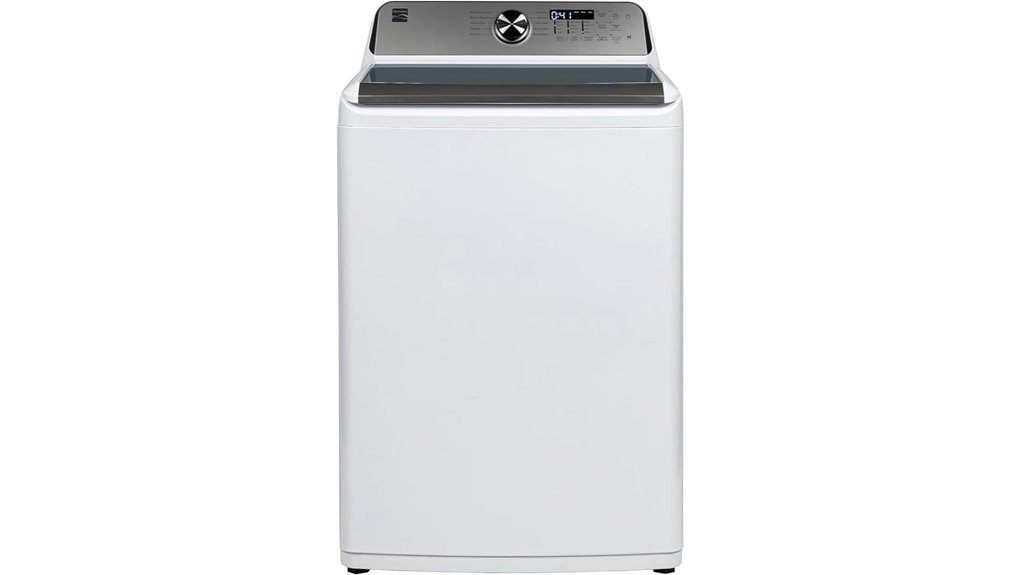
Families handling frequent, bulky loads will appreciate this 4.4-cubic-foot Kenmore washer. Its top-load, fully automatic design pairs a triple action agitator with targeted spraying, basket movement, and circular circulation to lift stains efficiently. Ten cycles cover heavy duty, whites, towels, delicates, and express loads, while four temperature settings add flexibility. Express Wash handles small loads in 28 minutes, and Accela Wash shortens full-size cycles by up to 51%. A Cold Clean option can use up to 90% less energy. The tempered-glass soft-close lid, LED display, and light-touch controls improve everyday use.
Best For: Families and households that regularly wash bulky or frequent loads and want a large-capacity, easy-to-use top-load washer with fast cycle options and strong stain-fighting performance.
Pros:
- 4.4 cu. ft. capacity handles bulky family loads with ease.
- Triple Action Agitator, targeted spraying, and basket movement help improve stain removal.
- Quick options like Express Wash and Accela Wash save time, and Cold Clean can reduce energy use.
Cons:
- Top-load design may not be ideal for users who prefer a front-load washer.
- No advanced smart features or app connectivity.
- Noise level and 125.7-lb weight may be less convenient for some spaces or installations.
Kenmore 4.1 cu. ft. Top Load Washer with Triple Action Agitator – White
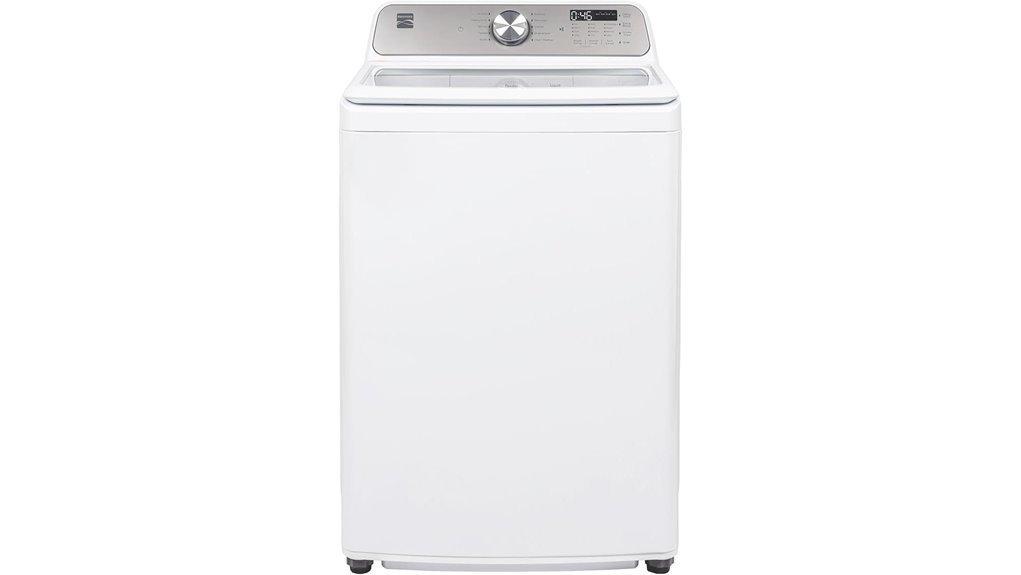
The Kenmore 4.1 cu. ft. top load washer suits households needing faster, high-capacity laundry days. Its Triple Action Agitator pairs spraying action, wash basket action, and agitator action to improve stain removal. Express Wash handles small loads in 28 minutes, while Accela Wash finishes full-size loads up to 14% faster than standard settings. The 4.1 cu. ft. drum fits up to 20 bath towels, and the 18.7-pound DOE capacity reduces extra loads. Ten cycles, four temperatures, light-touch controls, LED indicators, and a soft-close tempered glass lid round out a practical, durable design.
Best For: Busy households that want a high-capacity top-load washer with fast cycle options, flexible settings, and dependable stain-fighting performance.
Pros:
- Triple Action Agitator helps improve stain removal with combined spraying, wash basket, and agitator action.
- Large 4.1 cu. ft. capacity fits up to 20 bath towels, reducing the number of loads needed.
- Express Wash and Accela Wash provide faster cycle times for small and full-size loads.
Cons:
- Top-load design may use more water than some high-efficiency front-load alternatives.
- Fewer advanced smart features compared with more premium washer models.
- The agitator style may take up space in the drum versus impeller-based designs.
Factors to Consider When Choosing Large-Capacity Washing Machines in 2026
When choosing a large-capacity washing machine in 2026, drum capacity remains a primary factor because it determines how much laundry can be handled per load. Wash technology, energy efficiency, and cycle speed also matter, as they affect cleaning performance, utility costs, and overall convenience. Smart features can further improve control and monitoring, especially for households seeking more automation and flexibility.
Drum Capacity
Drum capacity remains one of the most important factors in choosing a large-capacity washing machine, especially for households that regularly wash bulky items such as king-size comforters and large towels. Capacities in the 4.5 to 5.0 cubic-foot range generally provide enough room to handle these loads in a single cycle, reducing the total number of washes needed. That added volume can improve efficiency for busy homes by saving time, water, and energy across repeated laundry cycles. Drum size should still align with household needs, since families often benefit from larger models while smaller households may not. Drum shape also matters, because front-load machines usually offer more usable space than top-load designs, affecting both capacity and overall cleaning performance.
Wash Technology
Wash technology now plays a major role in how well large-capacity washing machines perform, with many models using steam wash, triple action agitators, and similar systems to improve stain removal and overall cleaning power. These options help larger drums clean bulky bedding, towels, and heavily soiled loads more thoroughly. Express Wash and Accela Wash settings also matter, since they shorten cycle times for smaller loads without sacrificing basic cleaning performance. Buyers should also look for machines with multiple wash programs and adjustable temperatures, because fabric care varies widely between delicates, synthetics, and work clothes. Smart features such as Wi-Fi and voice control add convenience by allowing remote monitoring and cycle management. In a large-capacity washer, the best technology balances cleaning strength, speed, and flexibility.
Energy Efficiency
Energy efficiency is another major factor to weigh in large-capacity washing machines, especially as bigger drums can use more water and power if they are not designed well. ENERGY STAR certification offers a useful benchmark, showing that a model meets strict U.S. efficiency standards and may reduce utility costs. Some washers also use Cold Clean technology, which can cut energy use by up to 90% versus traditional methods, particularly for smaller loads or default settings. Efficiency-focused cycles such as TurboWash or Accela Wash help limit water and electricity use while maintaining performance. Smart Wi‑Fi controls can support off-peak scheduling and remote monitoring. Over time, efficient machines lower bills and shrink environmental impact, making them a practical long-term investment for households.
Cycle Speed
Cycle speed is a key consideration in large-capacity washing machines, since quicker programs can make it easier to finish laundry efficiently without sacrificing results. A useful model should offer a range of wash times, from Express Wash settings that handle small loads in about 25 to 30 minutes to faster full-load cycles powered by technologies such as TurboWash or Accela Wash. Some systems can clean large loads up to 51% faster than standard programs. Specialized cycles for different fabrics also help balance speed with proper care. Adjustable cycle speed gives users the flexibility to match wash duration to load size and soil level. Shorter cycles may also reduce water and electricity use, adding practical efficiency alongside time savings.
Smart Features
Smart features add another layer of convenience to large-capacity washing machines, especially after considering how cycle speed affects everyday laundry routines. Wi‑Fi connectivity lets users monitor and control cycles from a smartphone app, making it easier to manage laundry without being near the machine. Voice integration with smart home assistants supports hands-free commands for starting, pausing, or checking progress. Timely notifications can signal when a load is finished or when an issue needs attention, reducing unnecessary delays. Smart diagnostics may identify problems through the app, helping limit service calls and downtime. Some models also connect with broader smart home systems to schedule washes during off-peak hours, which can improve energy management and lower utility costs over time for households.
Load Types
Large-capacity washing machines, typically ranging from 4.5 to 5.0 cubic feet, are designed to handle bulky items such as king-size comforters and large towels in fewer loads. For households with heavy laundry demands, this capacity reduces the number of wash sessions and simplifies weekly routines. Front-load models are often preferred for heavier fabrics because they usually deliver stronger cleaning performance and greater energy efficiency than top-load designs. Many machines also include specialized cycles, such as allergen removal or quick wash options, to match different load types and time limits. Adjustable wash settings and temperature controls further improve results by letting users adapt each cycle to fabric sensitivity, soil level, and load size.
Durability and Design
Beyond wash settings and load types, durability and design play a major role in how well a large-capacity washer performs over time. A stainless steel drum is generally the best choice because it resists rust, chipping, and wear better than lesser materials. Heavier models often signal sturdier construction and can remain more stable during high-speed cycles. A freestanding design also adds flexibility, making installation simpler in different laundry spaces. Convenience matters too: light-touch controls and LED displays improve ease of use and readability. A soft-close tempered glass lid reduces slamming, protects the machine from repeated impact, and can extend service life. Together, these design features help a washer stay reliable, practical, and easier to operate for years.
Frequently Asked Questions
Which Washer Is Best for Bulky Comforters and Blankets?
For bulky comforters and blankets, a large-capacity front-load washer is usually best. It gives more drum space, stronger tumbling, and better water distribution for heavy bedding. A model with at least 5.0 cubic feet, a bedding or bulky cycle, and a high spin speed helps reduce drying time. If frequent oversized loads are expected, an extra-large top-loader with an impeller can also work well.
Do Large-Capacity Washers Use More Water and Electricity?
Yes, large-capacity washers generally use more water and electricity, though not always proportionally more per load; larger tubs often save energy when washing fewer oversized items. Like a bigger bucket filling faster, they may consume extra resources if run half-empty, but they can reduce the need for multiple cycles with bedding or bulky laundry. Efficiency depends on model, cycle choice, and how full the drum is.
Are Front-Load Washers Better Than Top-Load Washers for Large Families?
Front-load washers are often better for large families because they usually clean more efficiently, use less water, and handle bigger loads well. Their higher spin speeds can reduce drying time, which helps when laundry piles up. Top-load washers may be faster to load and unload, though some use more water and can be harder on fabrics. The better choice depends on space, budget, and how often heavy laundry is done.
How Much Floor Space Do These Washers Typically Require?
Like a well-packed trunk in an age of steam, these washers typically require about 27 to 30 inches in width and 30 to 34 inches in depth, plus clearance for doors and hoses. Front-load models often need extra space for door swing, while top-loaders demand more vertical room. A laundry area should usually allow at least 4 to 6 feet of total width for comfortable access, ventilation, and maintenance.
What Maintenance Helps Prevent Mold and Odor Buildup?
Regular maintenance helps prevent mold and odor buildup by keeping the washer dry, clean, and ventilated. The door or lid should be left open after use, and the gasket, drum, and detergent drawer should be wiped regularly. Monthly hot washes with washer cleaner or vinegar can remove residue. Filters and drain pumps should be checked, and only the recommended detergent amount should be used to reduce buildup.
Conclusion
In 2027, these five large-capacity washing machines stand out for combining space, efficiency, and dependable cleaning power. The LG WM4200HWA leads with steam technology and a generous drum, while the Kenmore models deliver flexible cycles and practical energy-saving features. For busy households, choosing the right washer can feel like revealing a whole new level of laundry convenience. By weighing capacity, performance, and efficiency, shoppers can find a machine that fits their needs remarkably well.